
TL;DR

Get kitchen gear delivered free with Prime
- Fast, free delivery on millions of items
- Prime Video, Amazon Music and more included
- Member-only deals all year
An Ideal Home writer reports that closing curtains shortly before sunset helped rooms in her home feel warmer and recorded temperature differences across window treatments. An energy expert quoted by the outlet says curtains can add insulation, but the energy and bill savings vary by home and were not quantified.
An Ideal Home report says closing curtains shortly before sunset may help households retain heat and rely less on heating, based on a writer’s observations at home. The report recorded different temperature readings around several types of window coverings, but it did not measure resulting energy use or bill savings.
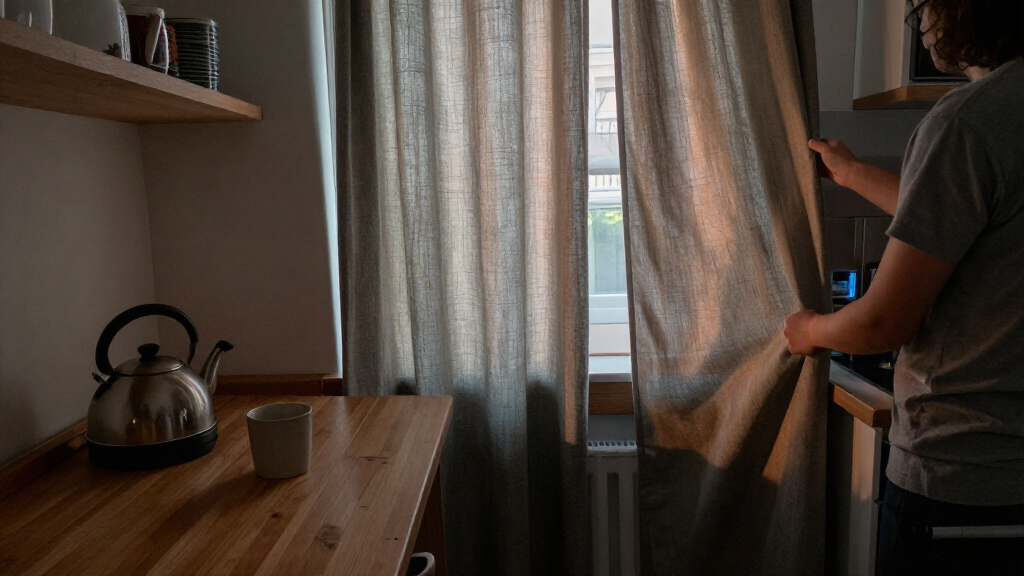
The writer said she resumed closing curtains in the early evening and found her home felt warmer for longer, sometimes avoiding an additional hour of central heating. She measured a 2°C difference in temperature in front of and behind thermal curtains after sunset. The report describes this as a household observation, not a controlled test of whole-room temperatures or heating consumption.
Her comparison across coverings found a difference of just under 1°C around wooden blinds and about half a degree around standard curtains. She said thermal curtains and blinds performed best in her home. The figures are specific to her rooms and setup; they do not establish how much heat or energy another household would save.
Stuart Middleton, identified by Ideal Home as So Energy’s consumer energy expert, said curtains add a layer that can slow heat escaping through windows. He said thick, well-fitting or thermally lined curtains can be particularly effective. Middleton also said the benefit depends on window type, curtains and the home’s insulation, making an exact saving difficult to calculate.
Curtains May Reduce Evening Heat Loss
For households trying to manage heating use, the report points to a no-cost habit that may improve comfort in rooms with cold or draughty windows. If rooms stay warmer, residents may be less inclined to extend heating or use a separate electric heater, as the writer said happened in her home. That is a plausible effect described in the report, not a measured reduction in energy bills.
The practical value varies. Homes with effective insulation, double glazing or already-warm rooms may see a different result from homes with draughty windows. Curtains also need to fit well to limit airflow near the glass. The report’s temperature readings offer an example, but they cannot predict a particular household’s savings or replace advice based on its own heating system and energy use.
thermal insulated curtains for windows
As an affiliate, we earn on qualifying purchases.
As an affiliate, we earn on qualifying purchases.
Timing and Window Coverings Matter
The report recommends closing curtains just before sunset, rather than leaving them open after daylight fades. Its explanation is that this keeps the benefit of daylight and solar warmth during the day while adding a barrier as outdoor temperatures fall. Sunset time changes with location and season; the writer gave 4:30 p.m. as a reminder time ahead of a 4:52 p.m. sunset on the day she described.
For people away from home at that time, the article mentions motorised curtain devices and scheduling functions. It also describes an Aqara product with a light sensor and a driver for roller shades. These are options discussed by the publication, not evidence that automation itself produces additional energy savings. The central recommendation is about closing suitable coverings at the right time, not buying a particular device.
The outlet’s report refers to energy-price increases and forecasts as reasons readers may be looking for ways to manage costs. It does not provide a detailed bill analysis tied to the curtain test. Its core evidence is the writer’s short home trial and comments from an energy expert, so the price context does not establish the financial return from this measure.
“Closing your curtains at dusk is a simple way to help keep your home warm as temperatures drop.”
— Stuart Middleton, So Energy’s consumer energy expert, quoted by Ideal Home
thermal curtain liners for existing curtains
As an affiliate, we earn on qualifying purchases.
As an affiliate, we earn on qualifying purchases.
Savings Were Not Measured
The report does not say how much heating energy the writer used before and after changing her routine, or whether her bills fell. It also does not detail the thermometer method, repeated readings, room conditions or outdoor temperatures during the comparison. The temperature differences are observations, not proof of a specific reduction in household energy consumption.
It remains unclear how much the practice would help in other homes, especially those with different glazing, curtain fit, insulation and heating habits. The report gives no cost or payback estimate for purchasing thermal curtains or automation devices. Its expert says savings vary by property, and the available material does not establish a single expected figure.
As an affiliate, we earn on qualifying purchases.
Households Can Test the Routine
The report suggests checking local sunset times and closing curtains shortly beforehand, then paying attention to comfort and heating use. Households can compare their own energy consumption across similar periods, while accounting for weather and changes in how they heat rooms; a short informal test will not isolate the effect as a formal study would.
Ideal Home’s account does not announce a follow-up measurement or a broader trial. Any further conclusion about bill savings would require more systematic data, including energy use before and after the change. For now, the supported takeaway is limited: curtains may slow heat loss, with the effect depending on the home and window coverings.
insulated blackout curtains with thermal lining
As an affiliate, we earn on qualifying purchases.
As an affiliate, we earn on qualifying purchases.
Key Questions
Does closing curtains before sunset save energy?
It may help slow heat loss through windows, according to energy expert Stuart Middleton, quoted by Ideal Home. The report does not quantify energy savings or establish that every home will use less heating.
When should curtains be closed?
The report recommends closing them just before local sunset, so daylight can enter during the day and curtains can act as an extra layer as evening temperatures fall.
Which window coverings performed best in the report?
The writer said thermal curtains and blinds performed best in her home, followed by wooden blinds. Her readings were specific to her rooms and do not guarantee the same result elsewhere.
How much money could the habit save?
The report provides no bill-saving estimate. Middleton said results depend on the windows, curtains and insulation, and the writer did not measure energy consumption before and after the change.
Source: rss
Halloween Picks
halloween
As an affiliate, we earn on qualifying purchases.