TL;DR

Get kitchen gear delivered free with Prime
- Fast, free delivery on millions of items
- Prime Video, Amazon Music and more included
- Member-only deals all year
A Livingetc report describes preserved-flower resin appearing in recent hospitality interiors and collectible design, including a Paris herbal infusion house and works by Marcin Rusak. The report frames the material’s renewed visibility as a design trend, but provides no market data to measure its scale.
Preserved flowers embedded in resin are appearing in a range of recent interiors and collectible design projects, according to a Livingetc report that points to installations in Paris and works by international designers. The examples suggest a renewed design interest in floral resin, though the report does not establish how widespread the trend is across the industry.
One featured project is Apoticari’s La Tisanerie, a herbal infusion house that opened in September in Paris’s Haut-Marais. The report describes a floral-enriched resin bar counter as a focal point of the space, where botanical materials support the venue’s emphasis on herbal tea and ritual. The article calls it Paris’s first dedicated herbal infusion house, a characterization attributed to the source rather than independently verified here.
The report also highlights furniture and lighting. The Gelo side tables, made by Monologue and Paraforma, are described by creative agency founder Romain Casella as hand-cast resin pieces with finishes ranging from glossy to frosted and colors including amber and blush violet. Casella also points to resin work by Dutch designer Sabine Marcelis and Austrian designer Laurids Gallée, whose Node 01 light he describes as holding resin and light in suspension.
Polish botanical artist and designer Marcin Rusak is presenting works from his Flora Herbarium series at Salon Art + Design in New York, scheduled for November 4–8 at the Park Avenue Armory, according to the report. His pieces use flowers as preserved material, while his comments frame them as records that might carry meaning for future viewers.
Resin Turns Flowers Into Interior Focal Points
The projects show how resin can make botanical material part of a room’s architecture, rather than using flowers only as temporary decoration. A bar counter, table or light can hold petals in a fixed form and function as furniture or a design object at the same time.
That approach may appeal to venues and collectors seeking objects with a visible link to nature and time. Casella told Livingetc that the appeal includes nostalgia and the idea of freezing a moment. That is an interpretation of the trend, not evidence that buyers broadly share the same motivation or that sales are rising.
Products Worth Considering
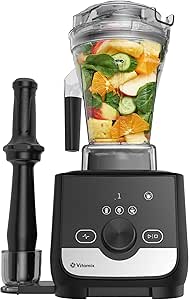
Vitamix Ascent X3 Professional-Grade Blender, 3 Programs, Shadow Black

Instant Pot InstantChill Ice Cream Maker Plus Rolled, No Pre-Freezing, 2‑Pt

Instant Pot Pro 8-Quart 10-in-1 Electric Pressure Cooker, Black
As an affiliate, we earn on qualifying purchases.
A Material With Earlier Design Revivals
Livingetc traces floral epoxy-resin furniture to the 1940s, with a revival in the 1980s, and describes renewed interest alongside broader attention to amber-colored interiors. The report places the current examples within a wider design conversation, including its own Style Pulse S/S27 report, which names “One Decorative Gesture” among trends it expects to shape interiors.
The article connects the material’s appeal to the way it preserves organic forms. Rusak has written that flowers can carry knowledge, memories and emotions, and wondered what future viewers might infer from them. His perspective gives the work a conceptual dimension, but the available source does not provide sales figures, production data or independent trend research.
““We’re deliberately choosing to freeze time — and there’s something reassuring in that in such unstable times: it doesn’t move; it’s there, still.””
— Romain Casella, founder and director of MAY, speaking to Livingetc
The Trend’s Scale Is Not Yet Measured
The source identifies several projects and practitioners, but does not give sales figures, market research or a count of recent commissions. It is not clear whether floral resin is gaining broad commercial traction or is especially visible within the particular venues, fairs and design networks covered by the report.
Descriptions such as “everywhere” and “unexpected comeback” are the article’s framing, not quantified findings. The material composition, durability and environmental impact of each featured resin piece are also not detailed in the source, so readers cannot compare those attributes across projects.
Upcoming Shows Will Add New Examples
The next cited public milestone is Salon Art + Design in New York, November 4–8, where Rusak is scheduled to present works from Flora Herbarium. The report also lists Sabine Marcelis’s exhibition, “Light and Color,” at Zurich’s Museum für Gestaltung from October 30, 2026, to April 4, 2027.
Those presentations may bring further attention to resin-based work, but the source does not say whether the designers or venues plan additional projects. Future reporting would be needed to assess whether the current examples develop into a sustained market trend.
Key Questions
What is floral resin design?
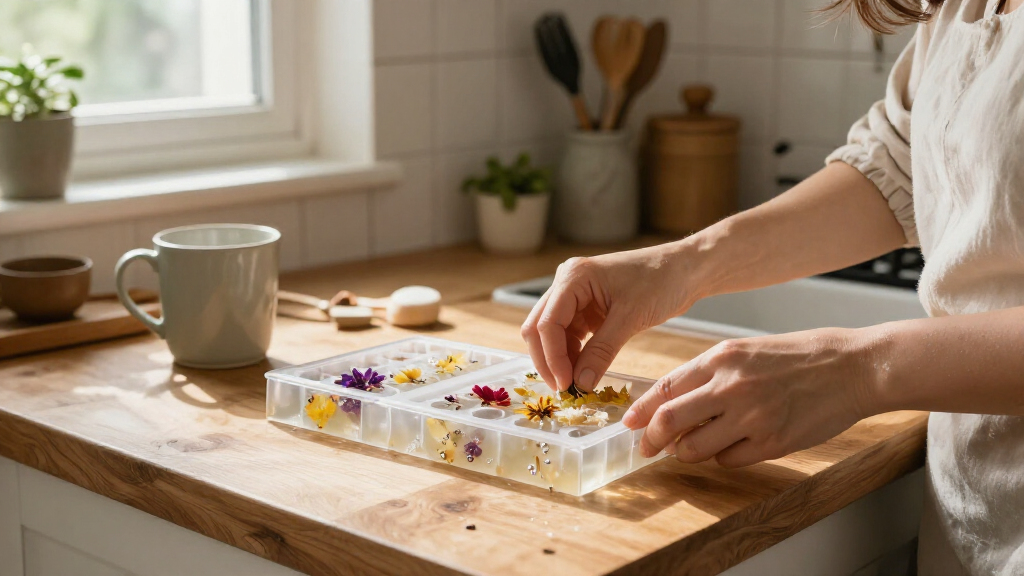
Floral resin design suspends flowers or other botanical material within resin, which is then shaped into objects such as tables, lights or counters.
Where is the Paris project featured in the report?
The report describes a resin bar counter at Apoticari’s La Tisanerie, a herbal infusion house in Paris’s Haut-Marais that opened in September.
Which designers are associated with the projects?
The report names Marcin Rusak, Sabine Marcelis and Laurids Gallée, as well as the Monologue and Paraforma collaboration behind the Gelo side tables.
Is floral resin proven to be a widespread trend?
No market data is supplied. The report documents several recent examples, but does not establish the trend’s size or growth across the wider design industry.
Source: livingetc.com