
TL;DR

Get kitchen gear delivered free with Prime
- Fast, free delivery on millions of items
- Prime Video, Amazon Music and more included
- Member-only deals all year
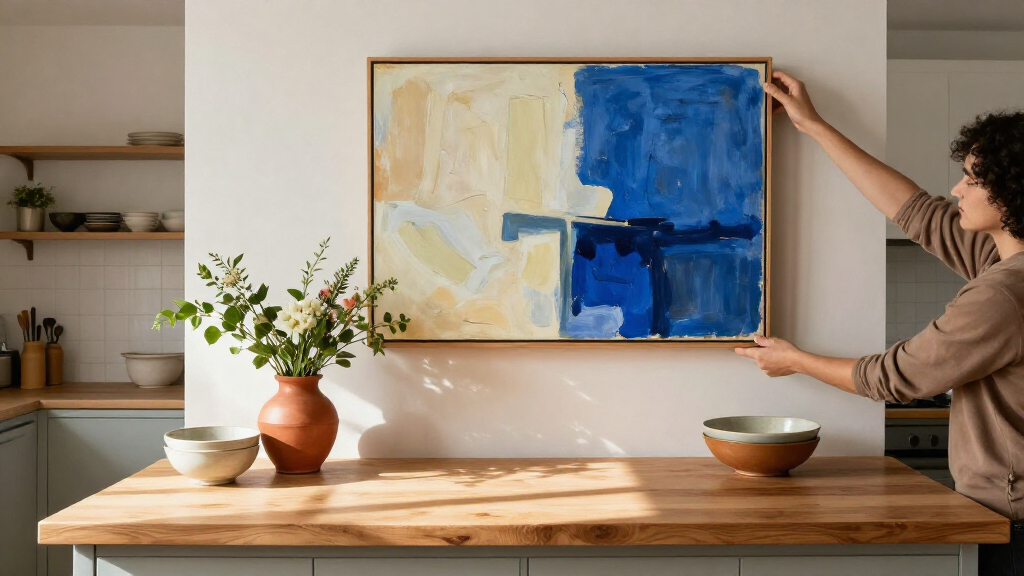
Art in the home can influence mood, but responses vary with personal taste and memory, according to art historian Susie Hodge and decorator Cameron Jones. They say color, shape and placement can help people create a desired atmosphere, though art is not a guaranteed way to produce a particular emotional effect.
Art at home can shape how a room feels, but its emotional effect is personal rather than predictable, according to art historian Susie Hodge and Raleigh-based decorator Cameron Jones, interviewed in a report by Veranda. Their advice is to choose work in light of the mood residents want in a space while recognizing that color, form and individual memories can produce different responses from one viewer to another.
Hodge, author of How Art Can Change Your Life, said people who find an artwork pleasing may experience a dopamine response. She compared a strong positive reaction to feelings of euphoria, but the report does not present this as a clinical finding or as an effect that every viewer will experience. A painting can instead prompt discomfort or anxiety if it carries personal associations.
Jones said she asks clients how they want to feel in a room before helping select its design. In bedrooms, she suggested that greens, blues and soft neutrals may support a calm atmosphere; yellow could add energy to a breakfast room, while reds and oranges may suit a space used for socializing. She said artwork can bring in color without requiring a bold wall or a room full of bright furnishings.
Shape and composition can also matter, the two said. Jones has found that some clients respond calmly to abstract works with rounded shapes and soft lines. Hodge said softer colors, smooth lines, circles and horizontal compositions may feel peaceful to some viewers, while sharp angles, jagged lines or bold patterns could energize one person and unsettle another. These are observations, not universal rules.
Choosing Art for Everyday Moods
The report’s practical point is that artwork is part of how people experience rooms they use every day, not simply a finishing touch. Thinking about whether a space should feel restful, lively or welcoming can help residents choose art that fits how they want to use it. Small color accents may be an option for people who prefer neutral furnishings or are not ready to repaint.
But the experts’ cautions matter as much as their suggestions. A color or image that feels soothing to one person may bring up an unwelcome memory for someone else. That makes personal response a better guide than fixed decorating rules. The article does not establish that a particular artwork will treat depression, anxiety or another health condition.
Products Worth Considering

Le Creuset Signature Enameled Cast Iron Round Dutch Oven, 5.5 qt, Deep Teal

Le Creuset Signature 6.5-Quart Deep Round Dutch Oven with Light Gold Crucible Knob, Enameled Cast Iron, Bleu Riviera

Instant Pot InstantChill Ice Cream Maker with Rolled Ice Cream, No Pre-Freezing, 2-Pint
As an affiliate, we earn on qualifying purchases.
Color, Form and Personal Associations
Hodge pointed to artists whose work uses color to communicate emotion. She discussed Agnes Martin’s blue painting Night Sea, which is on display at the San Francisco Museum of Modern Art, and said Martin aimed to encourage calm, positive thoughts. She also cited Henri Matisse’s belief in color’s effects and Mark Rothko’s interest in expressing basic human emotions through large fields of layered pigment.
Those examples show how artists and viewers may think about emotional effects; they do not establish that audiences will respond in the same way. Hodge said viewers bring their own experiences to what they see. Jones similarly described interpretation as personal, shaped by memories and imagination. That subjectivity is why there is no single formula for choosing emotionally effective art.
“When we see art that we find pleasing, it gives us a dopamine rush.”
— Susie Hodge, art historian and author of How Art Can Change Your Life
Why Reactions Differ by Viewer
The report offers expert commentary and decorating observations, not a controlled study showing that specific art reliably produces particular emotional or physiological effects. It does not provide measurements, research methods or a comparison of viewers’ responses. The strength and duration of any effect are not established in the supplied material.
It is also unclear how much a response depends on the art itself versus the room, the viewer’s mood, cultural background or memories. The experts’ color and shape suggestions are described as tendencies or personal observations, not rules. The report does not claim that home art can replace professional care for mental health concerns.
Applying the Advice at Home
The next step for readers is personal rather than a scheduled development: notice how different works feel in the rooms where they will hang, and choose pieces that fit the intended use of each space. Residents can try an artwork as a modest color accent before making larger decorating changes, then reconsider if it does not feel right. No specific follow-up study or expert announcement was identified in the source material.
Key Questions
Can art at home affect mood?
Hodge and Jones say it can influence how a room feels, but responses differ by person. The report does not establish a guaranteed effect.
Which colors are associated with calm?
Jones suggested greens, blues and soft neutrals for restful rooms. Hodge also described soft colors and smooth forms as potentially calming. These are general suggestions, not universal rules.
Can the same artwork make people feel differently?
Yes. The experts said viewers bring personal memories and experiences to art, so one person may find a work soothing while another feels unsettled by it.
Does the report say art can treat anxiety or depression?
No. It discusses possible emotional responses and decorating choices, but does not show that artwork treats a mental health condition.
Source: veranda.com