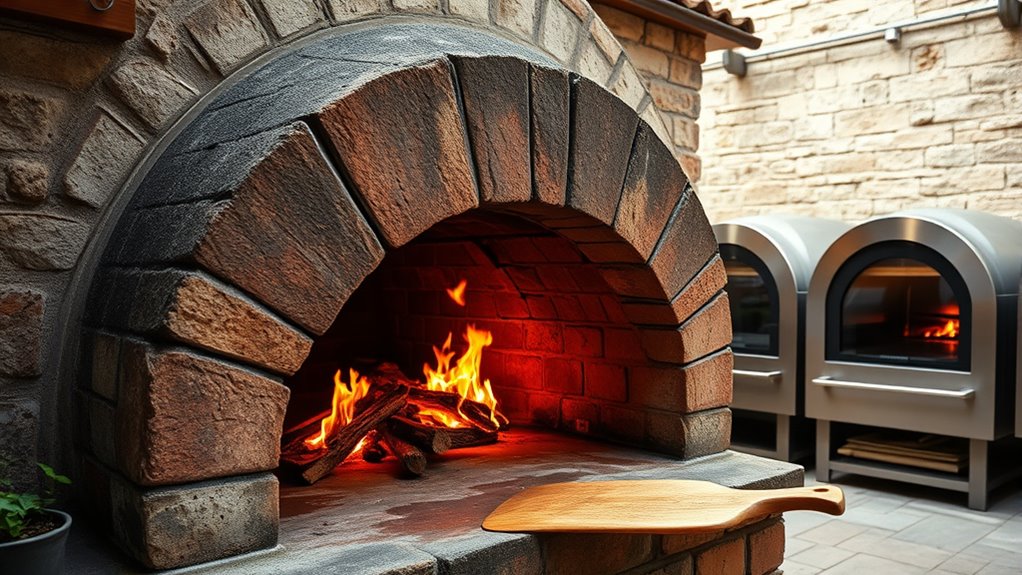

Wood-fired pizza ovens have a long history, dating back to ancient times when communities used locally built brick, stone, or clay structures fueled by wood gathered from nearby forests. These ovens created the flavorful, crispy pies we cherish today. Over centuries, they became essential in Italy’s culinary culture, with modern innovations focusing on improving heat efficiency and sustainability. If you continue exploring, you’ll uncover how traditional methods evolve to balance flavor and environmental impact.
Key Takeaways
- Wood-fired pizza ovens have ancient origins, especially in Italy, where they were built using local materials like brick, stone, or clay.
- They historically served as communal or family kitchen centers, relying on sustainable wood gathered from nearby forests.
- Traditional designs emphasized heat retention and fuel efficiency, reducing wood consumption and environmental impact.
- Modern innovations incorporate advanced insulation and insulation materials to improve energy efficiency while maintaining traditional flavors.
- Today, sustainable sourcing and design improvements aim to balance authentic culinary qualities with environmental conservation.
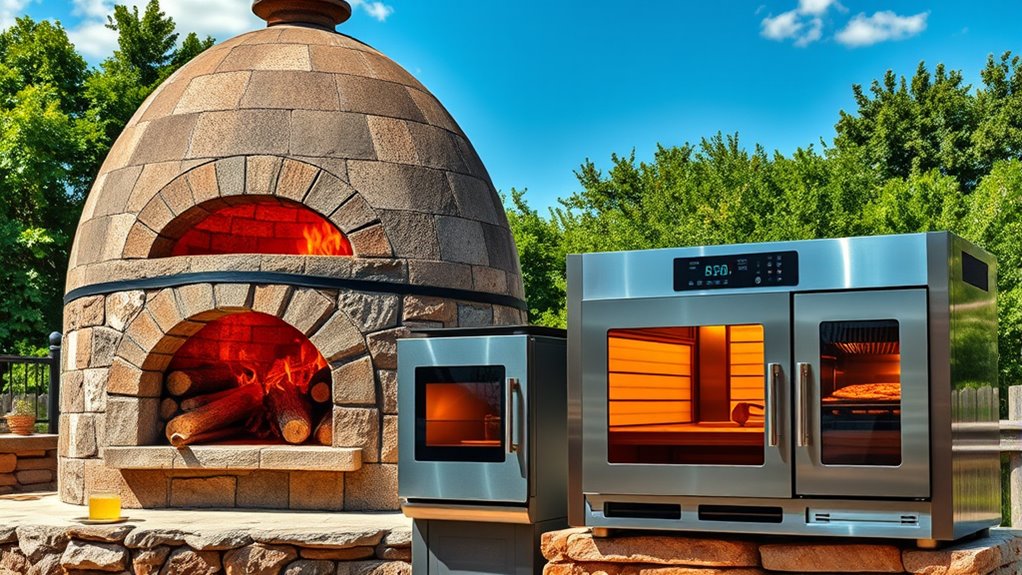
Throughout history, wood-fired pizza ovens have remained a beloved method for creating flavorful, crispy pies. Their popularity endures because they produce a unique taste and texture that modern appliances struggle to replicate. However, as you explore their evolution, it’s important to consider how their design and use impact the environment, especially regarding climate impact and fuel efficiency. Historically, these ovens were built with locally sourced materials like brick, stone, or clay, making them sustainable options in their time. Their fuel efficiency was naturally high because they relied on wood, a renewable resource, and their designs often maximized heat retention, reducing the amount of wood needed to achieve the perfect pizza. This efficiency meant less fuel was consumed per cooking session, which was vital in eras when resource conservation was essential for survival.
As civilizations advanced, wood-fired ovens became more sophisticated, especially in Italy, where they gained prominence in medieval towns and villages. These ovens were primarily constructed in communal settings or family homes, often fueled by wood gathered from nearby forests. Their design focused on retaining heat for extended periods, which improved fuel efficiency and reduced the environmental footprint of each use. Still, the climate impact depended heavily on how the wood was sourced and burned. Burning wood releases carbon dioxide and other pollutants, contributing to climate change when not managed sustainably. Historically, communities using local, well-managed forests could keep the environmental impact relatively low, but overharvesting and deforestation increased concerns about sustainability. Today, sustainable forest management plays a crucial role in reducing the climate impact of wood-fired ovens.
In modern times, the design of wood-fired pizza ovens has evolved to balance tradition with environmental considerations. Contemporary artisans and manufacturers pay attention to fuel efficiency by creating well-insulated ovens that require less wood to reach and maintain optimal cooking temperatures. Some modern ovens incorporate advanced insulation materials to minimize heat loss, making each use more energy-efficient. As a result, you can enjoy the artisanal qualities of a wood-fired pizza while reducing your carbon footprint. However, climate impact remains a concern because burning wood still releases greenhouse gases. The key to mitigating this is sourcing wood responsibly—preferably from sustainable forests—and using ovens that maximize heat retention. This way, you enjoy the flavor and texture you love, but with a conscious effort to lessen environmental harm.

Ooni Karu 12 Multi-fuel Outdoor Portable Pizza Oven – Reaches 950°F and Cooks 12 Inch Pizzas in 60 Seconds. Versatile Wood or Propane Gas Fired Grill with Pizza Stone
HOT NEW FEATURES – A custom designed fuel tray that maximises airflow and delivers a powerful blast of…
As an affiliate, we earn on qualifying purchases.
As an affiliate, we earn on qualifying purchases.
Frequently Asked Questions
How Do Wood-Fired Ovens Influence Pizza Flavor Profiles?
Wood-fired ovens influence your pizza’s flavor profiles by adding a smoky aroma through wood smoke, which enhances the overall taste. The high heat creates a unique flavor infusion, giving your crust a distinct, slightly charred flavor. As you cook, the wood smoke interacts with the toppings, imparting a rich, complex depth that can’t be replicated with other ovens. This natural infusion elevates your pizza to a truly authentic and flavorful experience.
What Are the Environmental Impacts of Wood-Fired Oven Use?
You know what they say, “Every rose has its thorn.” Using a wood-fired oven impacts the environment by increasing carbon emissions and raising deforestation concerns. Burning wood releases greenhouse gases, contributing to climate change. Additionally, sourcing wood sustainably is vital to prevent habitat loss. While these ovens create authentic flavors, you should also consider their environmental footprint and explore eco-friendly alternatives or responsible sourcing to minimize harm.
Are Modern Wood-Fired Ovens Energy-Efficient Compared to Gas or Electric?
Modern wood-fired ovens are generally less energy-efficient than gas or electric models due to higher energy consumption and longer heating times. However, if you value authentic flavor and traditional cooking methods, you might find the unique taste worth the extra cost. While gas and electric ovens offer better cost efficiency and quicker heat-up, a wood-fired oven provides a distinctive experience that many enthusiasts prefer despite the higher energy use.
How Do Different Wood Types Affect Cooking Temperature and Pizza Quality?
Oh, the irony—your choice of wood can make or break your pizza! Denser woods, like oak, burn hotter and longer, giving you that perfect high temperature for crispy crusts. Softer woods, like pine, produce more smoke flavor but lower temps, risking soggy slices. So, pick wisely; your pizza’s quality depends on wood density and how much smoky goodness you crave.
What Maintenance Is Required to Preserve a Wood-Fired Pizza Oven’s Longevity?
To preserve your wood-fired pizza oven’s longevity, you should regularly inspect and maintain the oven insulation to prevent heat loss and damage. Additionally, chimney cleaning is essential to remove creosote buildup, reducing fire risk and ensuring proper airflow. Cover your oven during off-seasons to protect it from the elements, and check for cracks or damage to keep it in ideal condition for years of delicious pizzas.

Authentic Pizza Ovens Pizzaioli Stone Finish Premium Wood-Fired Pizza Oven Handmade in Portugal Triple-Insulated Brick Oven, Drop-Down Door, Stainless Steel Chimney, Thermometer & Baking Dish Included
FULL STONE FINISH WITH NATURAL CHARACTER – Featuring a complete stone façade and dome with blended gray natural…
As an affiliate, we earn on qualifying purchases.
As an affiliate, we earn on qualifying purchases.
Conclusion
Imagine firing up a wood-fired oven just like ancient bakers did centuries ago. Whether you’re recreating a family tradition or creating new memories, this timeless method connects you to history. Picture your first perfectly baked pizza, its smoky aroma filling your home and heart. Just like that family in Italy, you too can experience the magic of authentic, rustic cooking. Embrace the craft, and let each pizza tell its own story.

Pizza Oven & Cooking Wood – Mini Kiln-Dried Oak, 6-Inch Logs, 15lb Box – Bark-Free Firewood for Ooni, Gozney, Solo Stove & More – High Heat, Long-Lasting Burn for Grilling, BBQ & Smoking
Expertly Kiln-Dried for Ultimate Quality:Each stick is expertly kiln-dried to an ideal moisture level, ensuring resistance to pests…
As an affiliate, we earn on qualifying purchases.
As an affiliate, we earn on qualifying purchases.
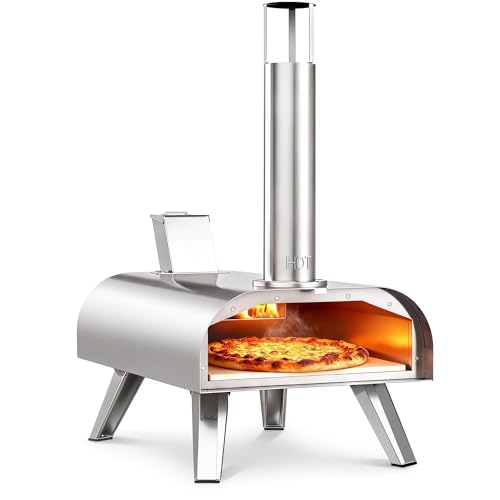
BIG HORN 12" Multi-Fuel Outdoor Pizza Oven Reach up to 1110℉– 3-in-1 Wood,Gas&Electric Compatible(Burners Sold Separately),Pellet Pizza Oven Portable Pizza Maker for Backyard,Camping&Tailgating,Silver
【Premium & Safe Stainless Steel】Outdoor pizza oven is constructed with high-quality stainless steel. This sturdy and compact oven…
As an affiliate, we earn on qualifying purchases.
As an affiliate, we earn on qualifying purchases.