To fix soggy crust or burnt edges, focus on controlling your oven temperature and dough consistency. Make sure your oven heats to around 850°F and preheat your pizza stone or steel thoroughly. Position the pizza correctly, avoiding placing it too close to the heat source, and resist opening the oven unnecessarily. Pay attention to dough — it should be elastic and slightly tacky. Keep these tips in mind, and you’ll master balancing crispy and evenly cooked pizza.
Key Takeaways
- Ensure dough is properly kneaded and rested for optimal elasticity and moisture balance.
- Preheat the oven and baking surface thoroughly to achieve consistent, high temperatures.
- Use an accurate oven thermometer to monitor and maintain optimal heat levels.
- Position the pizza correctly, avoiding direct heat exposure to prevent burnt edges.
- Adjust baking time and oven rack placement to balance crispness and prevent sogginess.
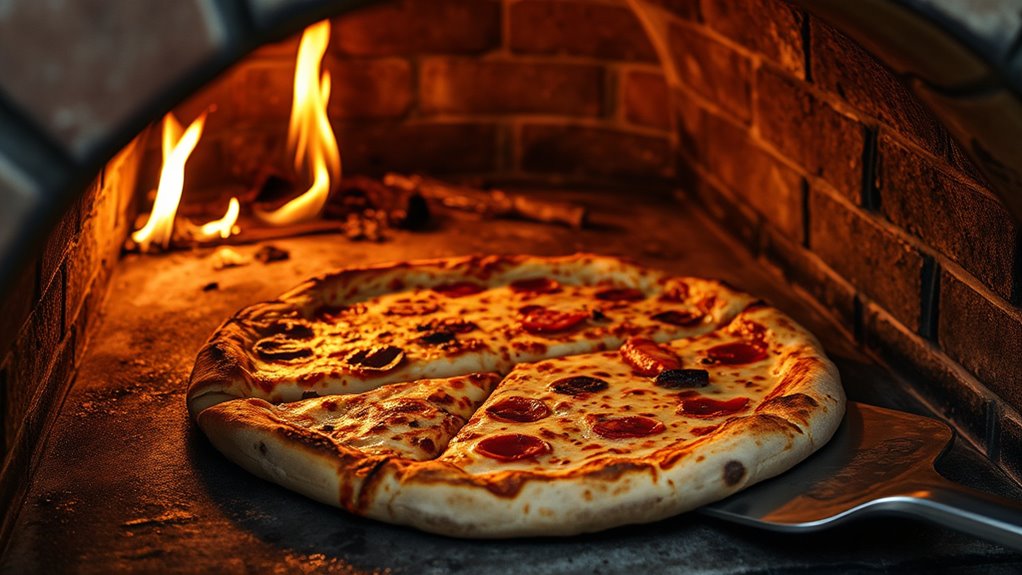
If your pizza oven isn’t performing as expected, troubleshooting can help identify and fix common issues quickly. One of the most frequent problems is ending up with a soggy crust or burnt edges, and often, the root cause comes down to dough consistency and oven temperature. Start by examining your dough. If it’s too wet or sticky, it won’t crisp properly, leading to a soggy crust. Conversely, if it’s too dry, the pizza might burn too quickly or develop uneven cooking. To get the perfect crust, aim for a dough that’s elastic and slightly tacky but not overly sticky. Proper kneading and resting time are essential to develop the right dough consistency. When your dough is just right, it will stretch easily without tearing, and it will hold its shape during baking.
Next, consider your oven temperature. Many home or commercial pizza ovens need to reach high temperatures—around 450°C (850°F)—to cook pizza evenly and quickly. If your oven isn’t hot enough, the pizza will cook slowly, giving moisture enough time to seep into the crust, resulting in sogginess. On the other hand, if the oven is too hot or unevenly heated, certain parts of the pizza may burn while others remain undercooked. Use an infrared or oven thermometer to monitor the temperature accurately, as built-in gauges can sometimes be misleading. Adjust the heat source or the position of the pizza within the oven to promote even cooking. Preheating your oven thoroughly before baking guarantees the heat is evenly distributed, helping you avoid burnt edges and soggy centers.
Another common mistake is placing the pizza incorrectly. If you put it too close to the heat source, the edges may burn before the center is cooked. Moving the pizza to a slightly cooler zone or adjusting the height of the oven rack can help balance the cooking process. Also, consider the type of baking surface you’re using. A pizza stone or steel absorbs and radiates heat more effectively, promoting a crispy crust without over-baking the edges. Preheat the stone or steel well before placing the pizza on it, and avoid opening the oven door repeatedly during baking, as this causes temperature fluctuations that can affect dough consistency and overall cooking. Additionally, maintaining consistent oven temperature is crucial for achieving an evenly cooked pizza.

TempPro TempScan Infrared Thermometer Gun for Pizza Oven Griddle HVAC
- High Accuracy with Adjustable Emissivity: Measures with ±1.5% accuracy, adjustable for surfaces
- Fast Response Time: Responds in under 500ms with 12:1 ratio
- Wide Temperature Range: Measures from -58°F to 1022°F for various tasks
As an affiliate, we earn on qualifying purchases.
As an affiliate, we earn on qualifying purchases.
Frequently Asked Questions
How Do I Prevent My Pizza From Sticking to the Oven Surface?
To prevent your pizza from sticking, start by adding a flour barrier on your work surface and the pizza peel. This creates a non-stick layer that helps slide the pizza easily onto the oven. Additionally, use oven parchment beneath your dough for extra protection. These simple steps guarantee your pizza lifts smoothly, avoiding sticking and making the baking process much more manageable and enjoyable.
What’s the Best Way to Clean Grease Buildup in My Pizza Oven?
To clean grease buildup in your pizza oven, start by removing any loose debris. Use a grill brush or scraper to scrape off hardened grease, then apply a mixture of warm water and mild dish soap for grease removal. For stubborn spots, a pumice stone or specialized oven cleaner works well. Regular oven cleaning prevents grease buildup, keeps your oven in top shape, and guarantees delicious, safe pizzas every time.
How Can I Tell if My Oven’s Temperature Gauge Is Accurate?
Imagine placing an oven thermometer inside your pizza oven, watching the needle settle. To check if your temperature gauge is accurate, compare its reading to the thermometer’s. If they differ, your oven’s temperature calibration might be off. Regularly testing with an oven thermometer helps you maintain precise heat, ensuring your pizzas come out perfect every time. Trust this simple test to keep your oven performing at its best.
Are There Specific Dough Types That Work Better for Certain Ovens?
You’ll find that certain dough types work better for specific ovens. For example, high-hydration doughs with more water create a lighter, crisper crust in wood-fired ovens, while lower hydration doughs suit electric ovens for a sturdier crust. Experiment with different flour types like bread flour for chewier textures or 00 flour for a tender, authentic pizza. Adjust your dough hydration and flour choice based on your oven’s heat and baking style.
How Long Should I Preheat My Pizza Oven for Optimal Results?
Preheat your oven for about 15-20 minutes to guarantee ideal results. During this time, focus on oven temperature calibration to maintain consistent heat. This preheating duration allows the oven to reach the right temperature, preventing soggy crusts or burnt edges. Make sure to monitor the temperature gauge and give it enough time to stabilize before baking your pizza. Proper preheating is key to a perfectly cooked pie every time.

Old Stone Round Pizza Stone, 16-Inch
- Creates restaurant-quality dishes: Pizzas, bread, pastries, vegetables
- Durable and non-cracking: Made from lead-free clay blend
- Even heat transfer: Absorbs and distributes oven heat
As an affiliate, we earn on qualifying purchases.
As an affiliate, we earn on qualifying purchases.
Conclusion
Now that you’ve learned how to troubleshoot common pizza oven issues, you’re ready to perfect your pie. Remember, a soggy crust or burnt edges are just signs to tweak your technique. With a little patience and practice, you’ll master the art of pizza baking. So, next time your crust isn’t quite right, ask yourself—are you adjusting the temperature and timing enough? What delicious creation will you craft when everything lines up perfectly?

ThermiChef 16" x 16" Pizza Steel – 1/4" Steel, 17.6 lbs
- Fast, Even Cooking: Cooks pizza in under 8 minutes with efficient heat transfer
- Generous 16×16 Size: Fits most standard ovens and 15-inch pizzas
- Optimal Thickness: 1/4 inch steel balances heat retention and weight
As an affiliate, we earn on qualifying purchases.
As an affiliate, we earn on qualifying purchases.

Hotloop Digital Oven Thermometer Heat Resistant up to 572°F/300°C, LCD
- Easy-to-Read LCD Display: Shows actual oven temperature clearly
- High Temperature Accuracy: Measures 32~572°F with ±1.8°F precision
- Simple Setup and Use: Probe fits through oven door or grill lid
As an affiliate, we earn on qualifying purchases.
As an affiliate, we earn on qualifying purchases.