To reverse sear on a pellet grill, start by preheating it to 225°F–250°F and season your steak. Place it on the grill and cook slowly until it’s about 10-15°F below your desired doneness, monitoring the internal temp closely. Rest the steak for 10 minutes, then crank the grill to high heat. Sear each side for 1-2 minutes to develop a crust, then let it rest briefly before serving. Keep going to master each step!

Get kitchen gear delivered free with Prime
- Fast, free delivery on millions of items
- Prime Video, Amazon Music and more included
- Member-only deals all year
Key Takeaways
- Preheat your pellet grill to 225°F–250°F for indirect, low-temperature cooking.
- Season the steak and cook it on the grill until it’s about 10-15°F below your target internal temperature.
- Remove the steak, let it rest for 10 minutes, then pat dry to promote browning.
- Increase grill heat to 500°F or higher, then sear the steak 1-2 minutes per side for a crust.
- Rest the steak briefly after searing before slicing and serving for maximum juiciness and flavor.
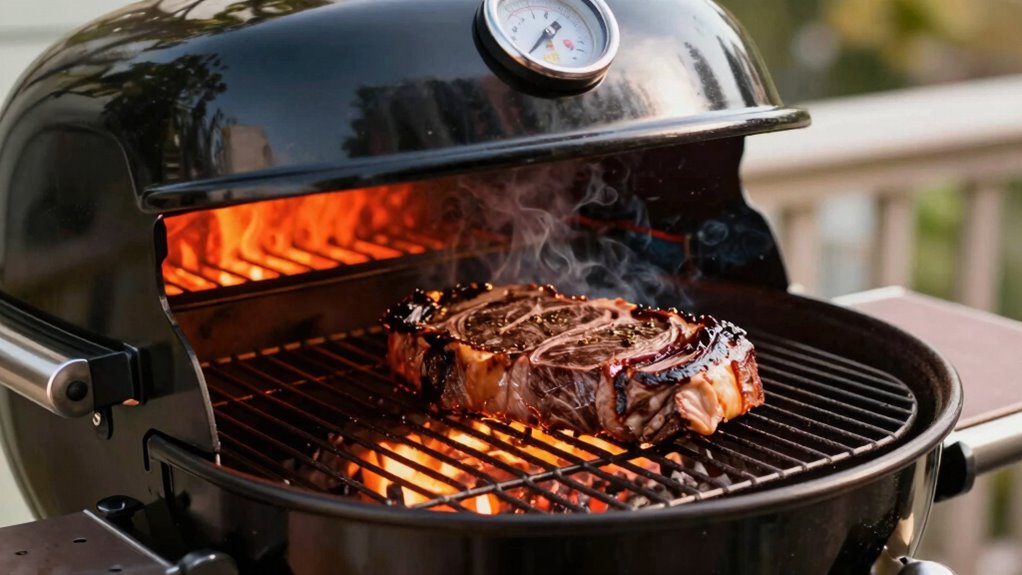
If you want perfectly cooked, restaurant-quality steaks on your pellet grill, mastering the reverse sear technique is crucial. This method involves cooking the steak at a low temperature first, then searing it over high heat to create a flavorful crust. To do this effectively, you need to understand the right cooking techniques and keep your grill in top shape through proper grill maintenance. Getting these steps right guarantees your steak turns out juicy, tender, and evenly cooked.
Start by preheating your pellet grill to a low temperature, around 225°F to 250°F. While it heats up, season your steak generously with salt and pepper or your favorite rub. The key to a great reverse sear is slow, indirect cooking, which allows the heat to penetrate evenly, preventing the common problem of overcooked edges. Place the steak on the grill grates and close the lid, maintaining a steady temperature. During this phase, monitor the internal temperature using a reliable meat thermometer. The goal is to bring the steak up to about 10-15°F below your target doneness—around 115°F for rare, 125°F for medium-rare, and so on.
Preheat to 225-250°F, season generously, and cook slowly to ensure even, juicy perfection.
While the steak cooks, it’s a good time to pay attention to your grill’s maintenance. Regularly clean the grates and check the pellet hopper to ensure consistent pellet flow. A well-maintained grill delivers even heat and prevents flare-ups, which can ruin your steak’s crust. Proper grill maintenance also impacts the overall performance and longevity of your equipment. This focus on grill performance can significantly influence the outcome of your cooking process. Once the internal temperature hits the desired range, remove the steak and let it rest for about 10 minutes. Resting allows the juices to redistribute, making your final product more succulent.
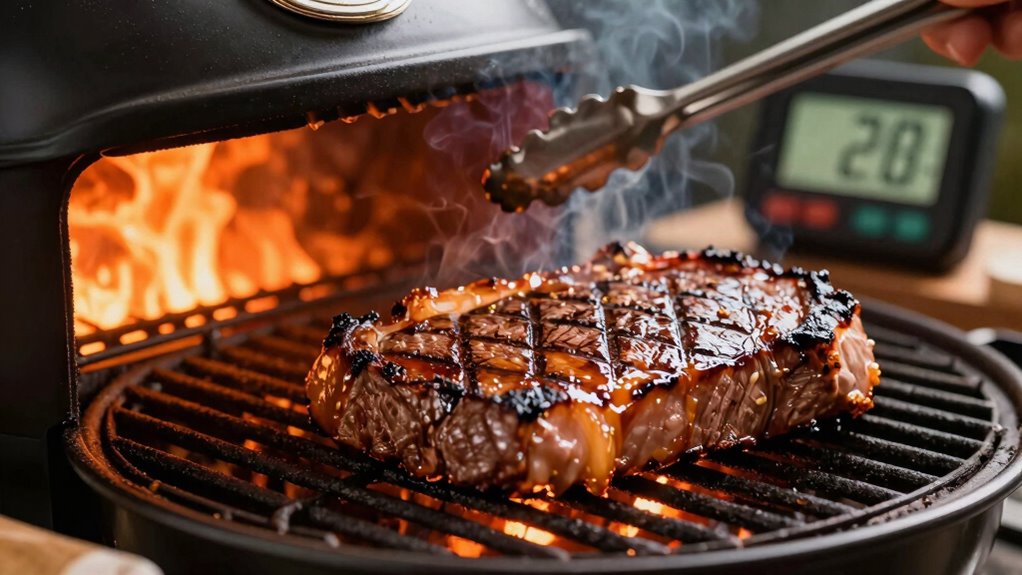
Next, crank your pellet grill to high heat—around 500°F or higher—to prepare for the searing process. Searing is what gives the steak that beautiful, flavorful crust. Pat the steak dry with paper towels to remove excess moisture, which helps achieve ideal browning. Place the steak back on the hot grill and sear each side for 1-2 minutes until you see a deep brown crust form. Keep a close eye during this step to prevent burning. Once seared, remove the steak and let it rest again briefly. This final resting period ensures the juices stay locked in and your steak remains tender.
Products Worth Considering

Traeger Pro 22 Wood Pellet Grill & Smoker

Le Creuset Enameled Cast Iron Rectangular Roaster, 5.25 qt, Riviera

Le Creuset Alpine Enameled Cast Iron Fondue Set, 2.5 qt., Nuit
As an affiliate, we earn on qualifying purchases.
Frequently Asked Questions
Can I Reverse Sear on Any Type of Pellet Grill?
Yes, you can reverse sear on most pellet grills. They typically offer good temperature control, which is essential for this technique. Make sure your grill can maintain low and high heat settings, and consider using cooking accessories like a cast-iron skillet for searing. With proper temperature control, you can reverse sear any type of pellet grill, ensuring your steak or roast gets that perfect crust and tender interior.
What’s the Ideal Thickness for Reverse Searing?
The ideal thickness for reverse searing is about 1.5 to 2 inches of meat. This thickness allows you to cook the meat evenly at a lower cooking temperature, ensuring a tender interior. When reverse searing, maintain a consistent cooking temperature around 225°F to 275°F. Thinner cuts may cook too quickly, risking overcooking, while thicker cuts need more time for proper heat penetration and a perfect sear.
How Long Should I Rest the Meat After Reverse Searing?
Rest your meat for about 5 to 10 minutes after reverse searing—this tiny pause is the secret to releasing juicy, flavorful perfection. During this time, let the meat rest, allowing the juices to redistribute and ensuring every bite is tender and delicious. Keep the searing temperature high enough to develop a beautiful crust, but don’t rush the resting stage—it’s the final step in achieving barbecue greatness.
Is Reverse Searing Suitable for All Cuts of Meat?
Reverse searing is suitable for many cuts of meat, especially thicker ones like ribeye, brisket, or tenderloin. You control the cooking temperature carefully, which helps achieve even doneness and enhances meat tenderness. However, very lean or thin cuts may not benefit as much because they can overcook quickly during the searing process. For best results, choose cuts with adequate thickness and marbling to enjoy ideal tenderness and flavor.
How Do I Achieve a Smoky Flavor During Reverse Searing?
To achieve an amazing smoky aroma during reverse searing, subtly sprinkle wood chips or chunks onto your pellet grill’s fire pot. This sparks smoke that infuses your meat, imparting rich flavor enhancement. For ideal results, soak your wood in water beforehand, then add it at the right moment. This simple technique amplifies the smoky flavor, making your meat irresistibly aromatic and authentically delicious.
Conclusion
Just as the alchemists sought to turn base metals into gold, mastering the reverse sear transforms a simple cut into a culinary treasure. With patience and precision on your pellet grill, you’ll release flavors that sing like a siren’s call. So, step into the kitchen with confidence, and let each perfectly seared piece be a proof of your newfound mastery—an epicurean legend in the making, right in your backyard.