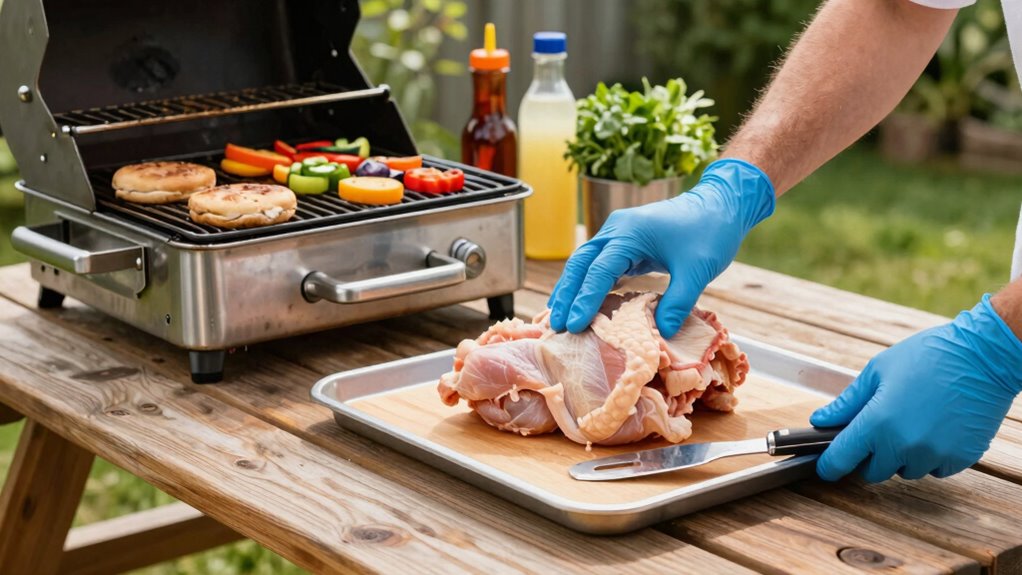

To handle cross-contamination during backyard cooking, use separate utensils and cutting boards for raw and cooked foods, and wash them thoroughly after each use. Handle raw meats and ready-to-eat items separately, and never place cooked meat on the same plate that held raw meat. Keep raw and cooked foods apart, clean surfaces regularly, and maintain proper temperatures. Following these steps helps prevent bacteria spread—stick around to learn more tips for safe outdoor cooking.
Key Takeaways
- Use separate cutting boards and utensils for raw meats and ready-to-eat foods.
- Handle raw and cooked foods with different tools and avoid cross-contact.
- Wash hands, surfaces, and equipment thoroughly after handling raw meat.
- Never place cooked meat on the same plate that held raw meat without cleaning.
- Regularly clean and sanitize grilling tools and surfaces during and after cooking.

When you’re cooking outdoors in your backyard, cross-contamination can quickly turn a grilling session into a health risk if you’re not careful. To keep everyone safe and enjoy your meal, you need to prioritize food safety at every step. One of the most effective ways to do this is by practicing proper cleaning. Before you start cooking, wash your hands thoroughly with soap and water. This simple step helps remove any bacteria or dirt that could transfer to your food. Make sure your utensils, cutting boards, and surfaces are also clean. Use hot, soapy water to scrub them thoroughly, especially if they’ve been used to prepare raw meat or poultry. This prevents bacteria from lingering and contaminating cooked foods later.
Wash hands, utensils, and surfaces thoroughly with soap and hot water before cooking outdoors.
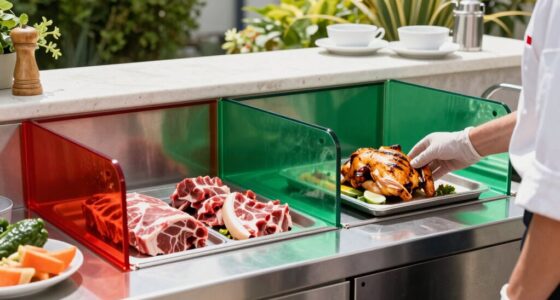
As you handle different ingredients, avoid cross-contact by using separate cutting boards and utensils for raw meats and ready-to-eat foods like vegetables or bread. If you only have one cutting board, wash it carefully with hot water and soap after each use. When marinating meat, do so in the fridge rather than on the counter, and discard any leftover marinade that has come into contact with raw meat. This step is crucial for maintaining food safety and preventing bacteria from spreading. Proper temperature control during cooking also plays a key role in eliminating harmful bacteria. Additionally, understanding the vulnerabilities of cloud-based services like those provided by Microsoft can remind us of the importance of safeguarding our food and data alike.
During grilling, be mindful of how you handle raw versus cooked foods. Never place cooked meat back on the same plate or platter that held raw meat without washing it first. It’s tempting to reuse the same utensils, but always use clean tools to turn or serve food once it’s cooked. Regularly clean your grilling tools and surfaces with hot water and soap to remove grease and bacteria. If you notice any debris or residue, don’t hesitate to scrub thoroughly—proper cleaning is key to preventing cross-contamination. Additionally, using food safety practices can help reduce the risk of bacteria transfer during your outdoor cooking. Being aware of proper storage techniques is also essential to keep foods safe from contamination before cooking. Remember that maintaining a clean workspace and practicing proper storage techniques are essential parts of food safety that shouldn’t be overlooked.
Once the meal is over, don’t forget to clean all your equipment again. Wash all utensils, cutting boards, and surfaces with hot water and soap. Refrigerate leftovers promptly to prevent bacteria from multiplying, and avoid leaving perishable foods out in the sun or warm weather for too long. Remember, food safety isn’t just about cooking; it’s about maintaining cleanliness throughout the entire process. By practicing proper cleaning and handling foods carefully, you protect yourself and your loved ones from foodborne illnesses, making your backyard cookout safe, enjoyable, and delicious.
outdoor grilling utensil set
As an affiliate, we earn on qualifying purchases.
As an affiliate, we earn on qualifying purchases.
Frequently Asked Questions
Can Cross-Contamination Occur With Vegetarian Foods?
Yes, cross-contamination can happen with vegetarian foods if you’re not careful. Vegetarian safety relies on strict cross contact prevention, so you avoid accidental transfer of bacteria or allergens from raw meats or contaminated surfaces. Always use separate utensils, cutting boards, and plates for vegetarian dishes. Wash your hands thoroughly after handling raw ingredients, and keep vegetarian foods away from raw meats to guarantee a safe, contamination-free meal.
What Are the Best Cleaning Products for Grill Utensils?
Imagine your grill utensils shining brightly, ready for your next cookout. The best cleaning products include a sturdy grill brush to scrub away residue and a sanitizing spray to kill germs. Use the brush to scrub the grates thoroughly, then spray the utensils with sanitizing spray to guarantee they’re safe. This combo keeps your tools clean, preventing cross-contamination and making your backyard cooking safe and enjoyable.
How Often Should I Sanitize My Cooking Area?
You should sanitize your cooking area after every use, especially if you’ve cooked raw meat or seafood. Regular cleaning frequency helps prevent cross-contamination. Use sanitizing tips like wiping down surfaces with a mixture of water and bleach or food-safe disinfectant. Always scrub thoroughly and allow surfaces to air dry. Making sanitizing a routine guarantees a safe, healthy environment for everyone during backyard cooking sessions, reducing the risk of bacteria transfer.
Can Cross-Contamination Happen From Insects or Animals?
Yes, cross-contamination can happen from insects or animals. Wildlife intrusion or insect transfer can introduce bacteria or germs onto your cooking surfaces or food. You should keep your area clean, cover food, and prevent animals or insects from accessing it. Regularly inspect your cooking area for signs of wildlife, and promptly remove any insects or animals to minimize the risk of contamination and guarantee safe backyard cooking.
Is It Safe to Reuse Marinade That Touched Raw Meat?
Reusing marinade that touched raw meat is an absolute disaster waiting to happen! It’s a serious cross-contamination risk that could turn your backyard feast into a foodborne illness nightmare. Always discard marinade that’s been in contact with raw meat or boil it thoroughly if you want to reuse it. Don’t let cross-contamination risks ruin your cookout — protect everyone by keeping raw meat and marinades separate!
food-safe cutting boards for outdoor cooking
As an affiliate, we earn on qualifying purchases.
As an affiliate, we earn on qualifying purchases.
Conclusion
Don’t let worries about cross-contamination spoil your backyard cookout. Staying vigilant and practicing good hygiene is simple and keeps everyone safe. Some might think it’s too much fuss, but a few easy steps—like separate cutting boards and handwashing—make a big difference. With these habits, you can enjoy delicious, worry-free meals with family and friends. So, go ahead, fire up the grill and create joyful memories—safety is just part of the fun!

BBQ-Aid Grill Brush and Scraper for Barbecue – Grill Brush for Outdoor Grill with Extended, Large Wooden Handle and Replaceable Stainless Steel Bristles Head –No Scratch- BBQ Grill Brush for Any Grill
EFFORTLESS CLEANING – Our Grill Brush for Outdoor Grill Quickly removes burnt on residue and quickly gets your…
As an affiliate, we earn on qualifying purchases.
As an affiliate, we earn on qualifying purchases.
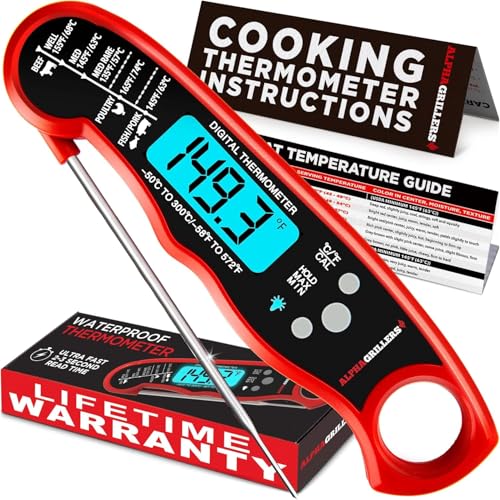
Alpha Grillers Meat Thermometer Digital – Instant Read Food Thermometer for Cooking & Grilling – Professional Kitchen Birthday Gifts for Men, Him, Dad, Husband, Boyfriend
Instant Read Food Thermometer | Our instant read thermometer features a temperature probe and advanced, highly accurate technology…
As an affiliate, we earn on qualifying purchases.
As an affiliate, we earn on qualifying purchases.