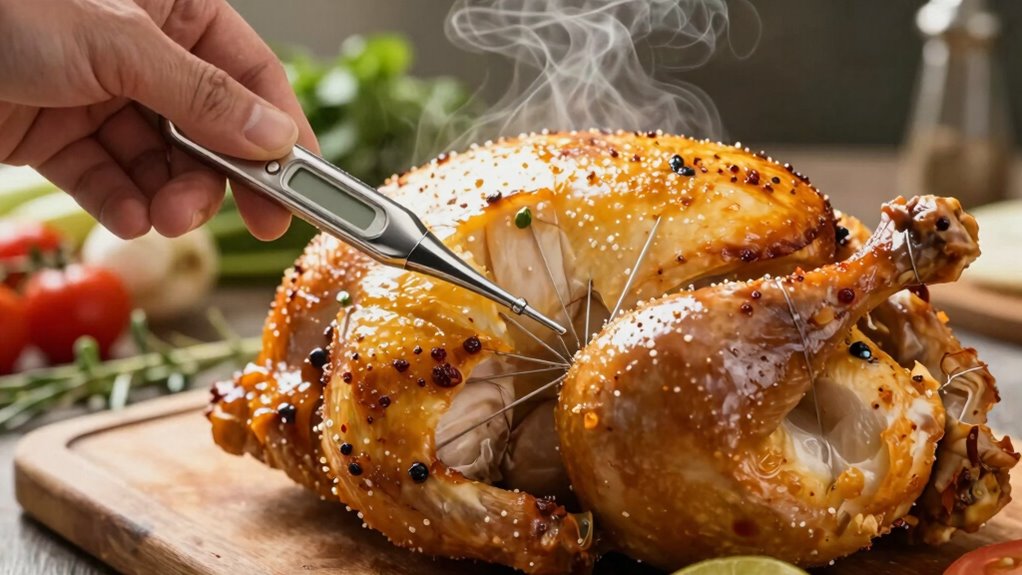
To use multi-probe thermometers effectively, start with regular calibration using boiling water or ice baths to guarantee accuracy. Place probes in the thickest part of the food, avoiding bones and fat for precise readings. Assign each probe to a specific dish, secure them with clips, and keep cables away from heat sources. Clean probes after use to prevent contamination. Mastering proper placement and maintenance will help you achieve consistent results. Keep going to discover more tips for perfect cooking!

Get kitchen gear delivered free with Prime
- Fast, free delivery on millions of items
- Prime Video, Amazon Music and more included
- Member-only deals all year
Key Takeaways
- Assign each probe to a specific food or section and label them for easy identification.
- Ensure proper calibration with boiling water or ice bath before each use for accurate readings.
- Insert probes into the thickest part of the food, avoiding bones and fat for precise temperature measurement.
- Secure probes with clips or holders and keep cables away from heat sources to prevent interference.
- Clean probes thoroughly after each use to maintain accuracy and prevent cross-contamination.
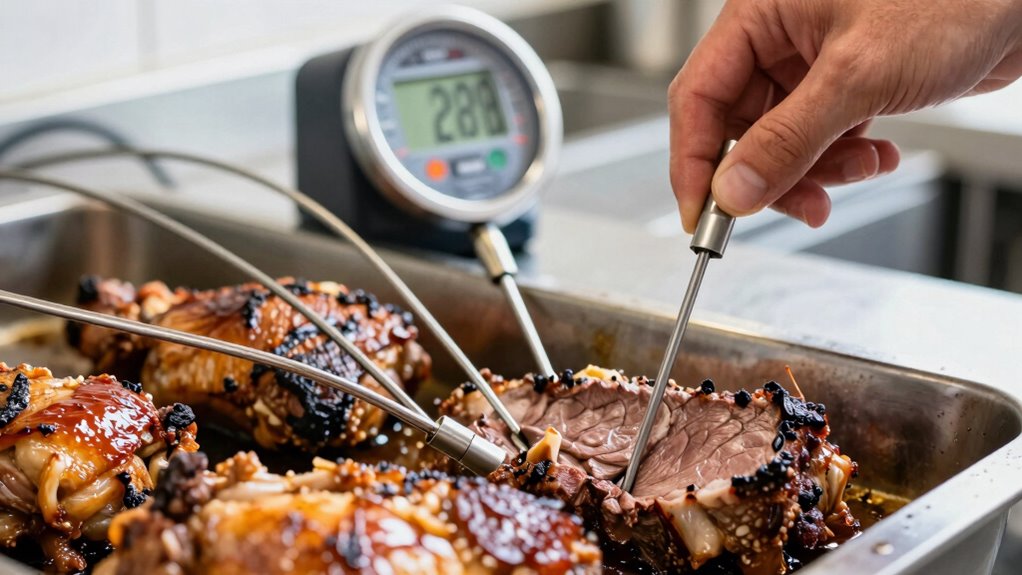
Using multi-probe thermometers can considerably improve your ability to monitor multiple cooking temperatures simultaneously, but only if you know how to use them effectively. The key to maximizing their potential lies in proper sensor calibration and strategic probe placement. Before you start cooking, take a few moments to verify each probe is accurately calibrated. This step is vital because inaccurate readings can lead to undercooked or overcooked food. Most digital thermometers allow for calibration by adjusting the reading through a simple process, often involving placing the probe in boiling water or an ice bath. Regularly calibrate your probes, especially if they’ve been dropped or exposed to extreme conditions, to maintain accuracy throughout your cooking session. Proper sensor calibration is essential to ensure your readings are precise and reliable, especially in complex cooking environments. Additionally, understanding how different foods conduct heat can help you choose the best probe placement for more accurate readings. Recognizing the impact of contrast ratio in your cooking environment can also influence how you view and interpret temperature readings, especially in well-lit or dimly lit spaces.
Calibrate your probes regularly for accurate readings and perfect cooking results.
Probe placement plays a significant role in getting reliable temperature readings. You want each probe to be positioned in the thickest part of the food, away from bone, fat, or gristle, which can skew results. For meats like roasts or whole chickens, insert the probe into the center, ensuring it’s not touching the pan, bone, or fat, which can falsely elevate the temperature. For liquids or sauces, place probes where they won’t interfere with stirring or boiling, and verify they are submerged properly. When monitoring multiple items, assign specific probes to each dish or section of your grill or oven, keeping track of which probe measures what. Use high-quality, heat-resistant probes that can withstand the environment you’re cooking in, whether it’s direct flame, oven heat, or boiling water. Remember, proper probe placement can significantly impact the accuracy of your cooking results and prevent unnecessary guesswork. It’s also helpful to familiarize yourself with the different types of probes available, so you can choose the most suitable for your cooking needs. To further ensure consistent results, consider using probe clips or holders to keep probes steady during cooking.
Effective probe placement also involves minimizing interference. Keep cables away from heat sources that could cause false readings or damage the wires. Secure probes in position with clips or holders if needed, so they don’t shift during cooking. This consistency ensures you’re monitoring the temperature at the right spot, giving you more control over the cooking process. Remember to clean probes after each use with hot soapy water or alcohol wipes to prevent cross-contamination, especially if you’re switching between raw and cooked foods. Developing a consistent approach to probe placement and calibration will significantly enhance your cooking accuracy and confidence. Ultimately, mastering sensor calibration and probe placement will help you get precise readings, avoid guesswork, and cook more consistently. Take the time to calibrate your probes before each use, place them correctly in the food, and keep them well-maintained. These simple steps can make a big difference, transforming your multi-probe thermometer from a basic tool into a powerful ally for perfect results every time.
multi-probe digital meat thermometer
As an affiliate, we earn on qualifying purchases.
As an affiliate, we earn on qualifying purchases.
Frequently Asked Questions
Can Multi-Probe Thermometers Measure Liquids Accurately?
Yes, multi-probe thermometers can measure liquids accurately if you consider liquid temperature accuracy and probe material compatibility. You should select probes designed for liquids, ensuring they’re made from compatible materials that won’t corrode or affect the reading. Properly immerse the probes at the correct depths and avoid air bubbles. Regular calibration enhances accuracy, helping you get precise liquid temperature readings every time.
How Often Should I Calibrate My Multi-Probe Thermometer?
You should calibrate your multi-probe thermometer regularly to maintain accuracy. Follow the calibration schedules recommended by the manufacturer, typically every 3 to 6 months, or whenever you notice inconsistent readings. Use accuracy verification methods, such as testing against a known standard, to confirm it’s functioning correctly. Frequent calibration helps prevent errors, ensuring precise temperature measurements and reliable results during food safety checks or scientific experiments.
Are There Specific Cleaning Protocols for Multi-Probe Thermometers?
Did you know that proper cleaning reduces cross-contamination risks by up to 99%? For your multi-probe thermometer, follow specific cleaning procedures after each use. Use warm, soapy water or alcohol-based wipes for probes, and avoid submerging the entire device unless specified. Sanitation techniques like disinfecting with food-safe solutions guarantee your thermometer stays accurate and hygienic, helping you maintain safety and cleanliness in your food preparation.
What Is the Maximum Number of Probes I Can Connect?
You can typically connect up to six probes with a multi-probe thermometer, but this depends on the device’s probe compatibility and port capacity. Always check your thermometer’s specifications to guarantee compatibility. Proper probe placement is essential for accurate readings, so make sure each probe is correctly positioned in the target area. Overloading the device beyond its maximum probe capacity can cause errors or damage, so stay within the recommended limits.
How Do I Troubleshoot Inconsistent Temperature Readings?
Think of your thermometer as a seasoned sailor steering unpredictable waters. To troubleshoot inconsistent readings, check your probe placement—ensure probes are secure and not touching hot surfaces or air currents. Use calibration techniques like ice water or boiling water tests regularly to keep readings accurate. If readings still fluctuate, verify connections and replace faulty probes. Proper probe placement and calibration are your compass for reliable, steady temperature measurements.
calibrated food thermometer with probes
As an affiliate, we earn on qualifying purchases.
As an affiliate, we earn on qualifying purchases.
Conclusion
Using multi-probe thermometers correctly can greatly improve your cooking accuracy and food safety. Remember, studies show that nearly 60% of home cooks don’t use a thermometer properly, risking undercooked or overcooked meals. By following best practices and monitoring multiple spots, you’ll guarantee your dishes are perfectly cooked every time. So, keep practicing, stay attentive, and enjoy the confidence that comes with precise temperature control—your meals will thank you!
heat-resistant cooking thermometer probes
As an affiliate, we earn on qualifying purchases.
As an affiliate, we earn on qualifying purchases.
professional multi-probe oven thermometer
As an affiliate, we earn on qualifying purchases.
As an affiliate, we earn on qualifying purchases.
Fall Picks
fall essentials
As an affiliate, we earn on qualifying purchases.