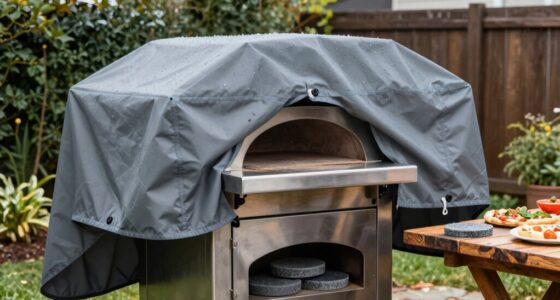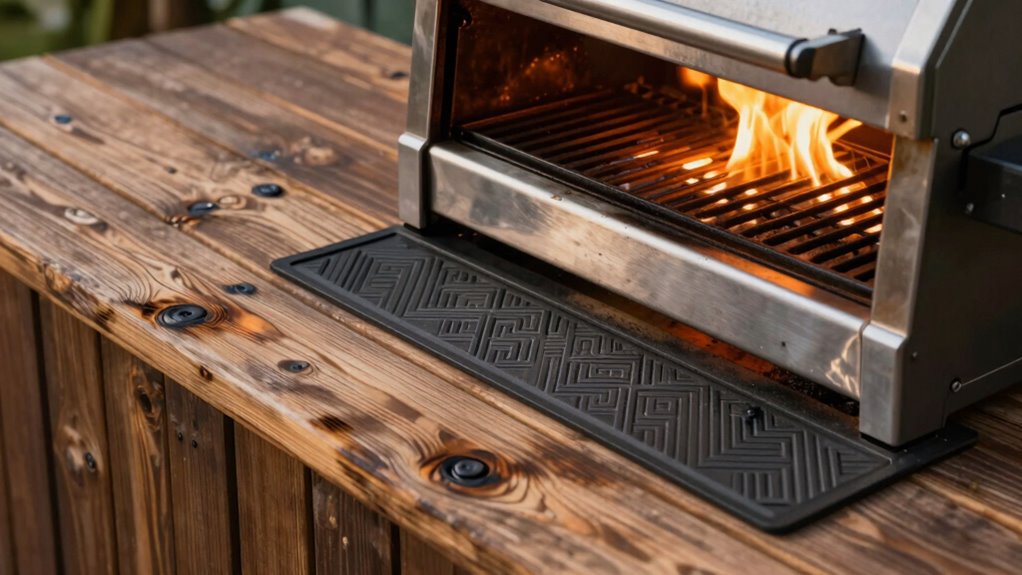

To protect your deck and patio from heat damage, use fire-resistant materials like concrete, stone, or treated wood with fire retardant coatings. Install heat shields or barriers between your grill and the surface to reduce heat transfer. Keep the cooking zone well-ventilated and away from high-traffic areas, and regularly clean grease and spills to prevent flare-ups. Applying heat-resistant coatings and maintaining your outdoor space will help keep it safe and durable—continue to explore how to optimize your setup.
Key Takeaways
- Use fire-resistant materials and install heat shields between grills and deck surfaces.
- Apply high-temperature, outdoor-compatible heat-resistant coatings to protect surfaces.
- Designate a safe, non-flammable cooking zone away from high-traffic areas.
- Regularly clean spills and inspect for cracks to prevent heat-related damage.
- Incorporate proper ventilation and heat management techniques to distribute heat evenly.
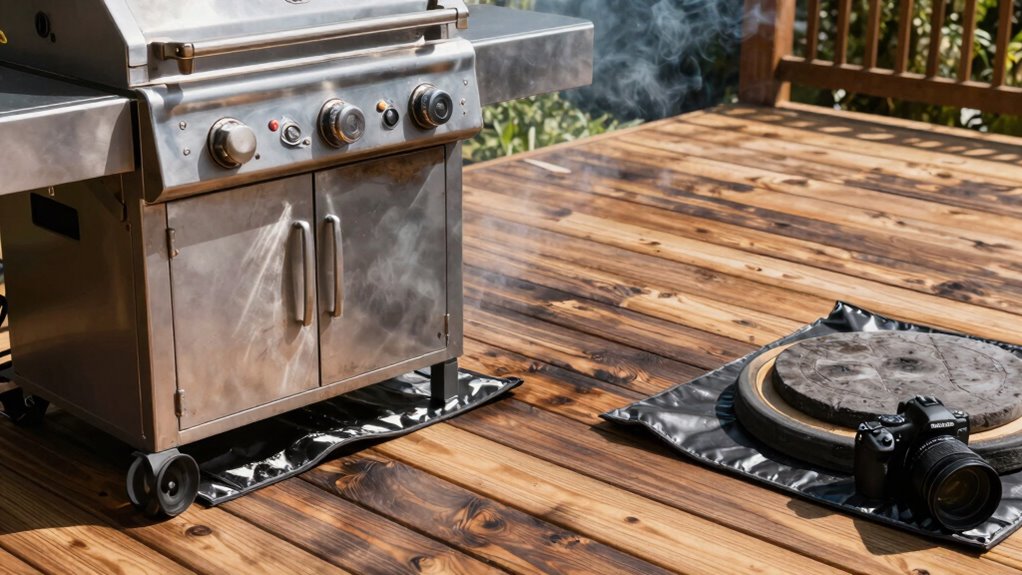
Outdoor cooking can be a great way to enjoy the outdoors, but it also poses a risk to your deck or patio if you’re not careful. The heat from grills, smokers, and other outdoor appliances can cause lasting damage if you don’t take proper precautions. To protect your space, start by choosing fire resistant materials for any furniture or accessories near your cooking area. Materials like concrete, stone, or treated wood with fire retardant coatings can withstand high temperatures better than untreated wood or composite materials. Installing a heat shield or barrier between your grill and your deck surface can also considerably reduce the risk of heat transfer and scorching.
Another smart move is to apply heat resistant coatings on the surface of your deck or patio. These coatings are designed to withstand high temperatures and prevent heat-related damage like discoloration, warping, or cracking. Applying a heat resistant coating creates a protective layer that absorbs or deflects heat, making it easier to clean spills and drips while preserving the integrity of your deck. Be sure to choose a coating that’s compatible with your deck material and suitable for outdoor use to ensure lasting protection. Proper surface preparation is essential for the coating to adhere effectively and provide the best possible protection. Additionally, understanding the thermal properties of your chosen materials can help you select the most effective solutions for heat management. Being aware of heat transfer principles can further optimize your setup for safety and durability.
Additionally, consider setting up a designated cooking zone that’s away from high-traffic areas and flammable materials. Creating a buffer zone with non-combustible materials, like gravel or tile, helps contain heat and sparks. Always keep a fire extinguisher nearby and check that your grill or outdoor cooker is in good working order, with no leaks or damaged parts. Regular maintenance reduces the risk of flare-ups and accidental fires, which can cause damage to your deck or patio. Using fire resistant materials around your cooking area can further enhance safety.
You should also focus on proper cleaning and maintenance routines. Grease and food spills left to sit can ignite or cause heat spots that weaken your surface over time. Use appropriate cleaning agents and tools to regularly remove buildup, and inspect your deck for any cracks or signs of wear that could worsen under heat exposure. If you notice any damage, repair it promptly before it becomes a bigger problem. Routine inspections can help catch issues early and prolong the lifespan of your outdoor space. Incorporating heat management techniques can help distribute heat more evenly and reduce localized damage. Proper ventilation and positioning of appliances also play a key role in managing heat effectively.
Incorporating these safety measures—using fire resistant materials, applying heat resistant coatings, and maintaining a safe setup—helps you enjoy outdoor cooking without risking damage to your deck or patio. By taking these proactive steps, you’ll extend the life of your outdoor space and ensure it remains a beautiful and functional area for all your cooking adventures.

Contego Original Formula Intumescent Fire Resistant Coating (1 gallon) for Homes, Garages, Nurseries, Bedrooms & Kitchens. No VOCs. Restricts Fire Movement, Reduces Smoke
Apply just like regular paint with a brush, roller or airless sprayer to protect your home, family and…
As an affiliate, we earn on qualifying purchases.
As an affiliate, we earn on qualifying purchases.
Frequently Asked Questions
What Materials Are Best for Heat-Resistant Outdoor Decking?
You should choose materials like composite decking, treated concrete, or stone for heat resistance. These options excel in material durability, standing up to high temperatures and minimizing damage from outdoor cooking heat. By selecting these materials, you’ll simplify deck maintenance and guarantee your outdoor space stays beautiful and functional over time. Always verify that your chosen material is rated for outdoor heat exposure to keep your deck safe and long-lasting.
How Often Should I Inspect My Deck for Heat Damage?
Imagine catching the glow of sunset, and as you glance at your deck, you notice subtle signs of wear—faded spots or tiny cracks. You should inspect your deck at least every three to six months, paying close attention to damage signs like discoloration or warping. Regular inspections help you catch heat damage early, preventing costly repairs and extending your deck’s lifespan while ensuring it stays safe and beautiful for outdoor cooking.
Can Plants Near the Patio Help Protect It From Heat?
Yes, plants near your patio can help protect it from heat through strategic garden shading and plant placement. By placing taller, leafy plants or shrubs around the edges, you create a natural barrier that blocks direct sunlight and reduces heat exposure. This not only cools the area but also adds aesthetic value. Properly positioned plants act as a living shield, helping to preserve your deck or patio from heat damage caused by outdoor cooking.
Are There Specific Paints or Coatings for Heat Protection?
Yes, you can use heat resistant paints and protective coatings designed specifically for high temperatures. These coatings create a barrier that reflects or withstands intense heat, preventing damage to your deck or patio surface. When applying, make sure to choose products suitable for outdoor use and follow the manufacturer’s instructions carefully. Regular reapplication may be needed to maintain protection, especially in areas exposed to frequent or intense heat from outdoor cooking.
How Does Weather Affect Heat Damage Prevention Strategies?
Think of your deck as a shielded fortress. Seasonal temperature variations can stress this shield, causing cracks or warping, while wind exposure considerations can strip away protective coatings. To prevent heat damage, adjust your strategies with weather in mind—use more frequent sealants during harsh seasons and shield your surface from relentless wind. By doing so, you bolster your fortress against the elements, maintaining its strength and appearance over time.

FLASLD Heat Shield Behind Grill Heat Shield Mat for Deck Fence, Railing, Grill and Refrigerator, Grey Heavy Duty Fireproof Cover and Screen Protect Deck Railing from Grill, 3'x4', Gray
Heavy Duty Grill Railing Heat Protection – Usually we will place the grill near the deck railing, but…
As an affiliate, we earn on qualifying purchases.
As an affiliate, we earn on qualifying purchases.
Conclusion
To keep your deck and patio looking their best, take proactive steps like using heat-resistant mats and positioning grills away from delicate surfaces. Did you know that a single hot grill can raise surface temperatures by over 150°F? By implementing simple precautions, you can avert costly damage and extend the lifespan of your outdoor space. Protecting your investment ensures you’ll enjoy many more seasons of outdoor cooking without worry.

Rust-Oleum 7778830 High Heat Enamel Spray Paint, Bar-B-Que Black, 12-Ounce
Ideal for updating the exterior of barbeque grills, wood-burning stoves, radiators, engines or other metal items
As an affiliate, we earn on qualifying purchases.
As an affiliate, we earn on qualifying purchases.

Master Flame Class A Fire Retardant Spray for Wood, Fabric, Cotton & More – Non-Toxic Flame Retardant Coating – Meets NFPA 701 & ASTM E84 – Made in USA – Easy to Apply and Dries Clear – 1 Gallon
Certified Fire Safety Standards: Master Flame fire retardant spray has been tested in accordance with NFPA 701, ASTM…
As an affiliate, we earn on qualifying purchases.
As an affiliate, we earn on qualifying purchases.