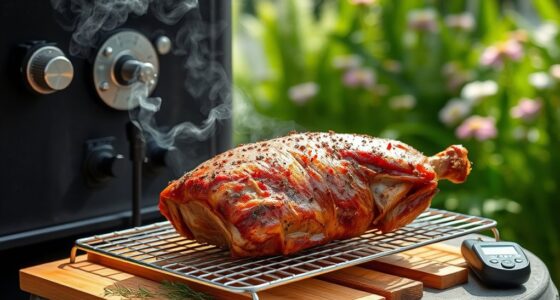
Choosing between store-bought and homemade BBQ rubs depends on your priorities. Store-bought options offer convenience and long shelf life, but they often contain preservatives, fillers, and less vibrant flavors. Making your own allows you to control ingredients, customize flavors, and enjoy fresher seasoning, but it takes time and effort. Whether you prioritize ease or flavor quality, exploring both options can elevate your barbecue game—keep going to discover more tips and tricks.

Get kitchen gear delivered free with Prime
- Fast, free delivery on millions of items
- Prime Video, Amazon Music and more included
- Member-only deals all year
Key Takeaways
- Store-bought BBQ rubs offer convenience and long shelf life, while homemade rubs provide freshness and customization.
- Commercial rubs often contain preservatives and additives, whereas homemade versions reveal all ingredients used.
- Freshly made rubs deliver more vibrant flavors and aromas compared to older store-bought options.
- Homemade rubs allow tailoring flavors to personal preferences and dietary needs, unlike fixed commercial blends.
- The choice depends on prioritizing convenience and longevity versus freshness, transparency, and personalization.

Are store-bought BBQ rubs worth sacrificing freshness and customization? When you buy pre-made rubs from the store, you often have to contemplate their shelf life. These products are typically designed to last for months or even years on the shelf, which means they often contain preservatives or anti-caking agents to maintain their quality over time. While that extended shelf life can be convenient, it also raises questions about ingredient transparency. Many commercial rubs list a long list of additives, fillers, and artificial flavors, making it harder for you to know exactly what’s in your seasoning. If you’re someone who values natural ingredients and wants to avoid unnecessary chemicals, store-bought options might feel like a compromise.
Store-bought BBQ rubs often contain preservatives and artificial ingredients, sacrificing freshness and ingredient transparency.
You might think that the longer shelf life makes store-bought rubs more practical, especially if you don’t cook often or forget to use spices quickly. However, this longevity can come at the cost of freshness. Over time, the flavors in these rubs tend to fade or become dull, especially if they’re not stored properly in airtight containers and away from heat and light. Freshly made rubs, on the other hand, deliver a more vibrant flavor profile because they’re used shortly after mixing. When you make your own rubs, you control the ingredients, ensuring that everything is fresh and free from preservatives. This not only enhances the taste but also allows you to tailor the seasoning to your specific preferences or the type of meat you’re preparing.
Ingredient transparency is another significant factor. Store-bought rubs often obscure what’s inside with vague or generic labels, making it difficult to identify allergens or harmful additives. With homemade rubs, you get to see and select each ingredient—spices, herbs, salt, sugar, and any other flavorings—giving you full visibility into what’s going into your seasoning mix. This transparency allows you to avoid ingredients you dislike or are allergic to and lets you experiment with flavors, adjusting proportions to suit your palate. Additionally, choosing fresh ingredients can contribute to the overall flavor profile and aroma of your barbecue.
Ultimately, the decision between store-bought and homemade BBQ rubs hinges on your priorities. If convenience and long shelf life are more critical, then a commercial rub might serve you well. But if fresh flavor, ingredient transparency, and customization matter more, making your own rubs offers a clear advantage. You’ll enjoy a fresher, more personalized seasoning that elevates your barbecue experience far beyond what pre-made options can provide.
As an affiliate, we earn on qualifying purchases.
Frequently Asked Questions
Can Store-Bought Rubs Be Customized for Personal Taste?
Yes, you can customize store-bought rubs for your personal taste. You can add your favorite spices or adjust the flavor balance for better flavor customization, giving you more control over ingredients. Mixing store-bought rubs with your own additions allows you to create a unique blend that suits your preferences. This way, you get the convenience of pre-made flavors while maintaining ingredient control and tailoring the taste to your liking.
How Long Do Homemade Rubs Stay Fresh?
You might wonder how long your homemade rub stays fresh, and the answer depends on herb longevity and spice freshness. Typically, your rub remains good for 3 to 6 months if stored in an airtight container in a cool, dark place. But beware—herbs can lose potency faster than you think, so for the best flavor, use your homemade blend within this window. Keep it properly stored, and your spices will stay vibrant longer.
Are There Health Differences Between Store-Bought and Homemade Rubs?
You might notice health differences between store-bought and homemade rubs. Store-bought options often contain higher sodium content and artificial flavors, which can impact your health negatively if consumed frequently. Homemade rubs let you control ingredients, reducing additives and salt. By making your own, you can choose healthier spices and avoid unnecessary preservatives, making your BBQ experience both flavorful and better for your well-being.
Which Type of Rub Is Better for Beginners?
For beginners, homemade rubs are your best bet—they’re easier to customize and you won’t be thrown in at the deep end. You can experiment with flavor versatility, tailoring spices to your taste, and save on cost considerations. Plus, making your own rubs gives you control over ingredients, ensuring a healthier option. While store-bought might seem convenient, starting with homemade lets you learn the ropes and develop your signature flavor.
Do Store-Bought Rubs Contain Preservatives or Additives?
Store-bought rubs often contain preservative contents and additives to extend shelf life and enhance flavor. These additives can include artificial colors, flavor enhancers, and preservatives that some people prefer to avoid. If you’re concerned about additive concerns, check the ingredient list on the packaging. Choosing brands with minimal or natural ingredients helps you steer clear of unwanted preservatives, making your BBQ experience healthier and more natural.
As an affiliate, we earn on qualifying purchases.
Conclusion
Whether you choose store-bought or homemade BBQ rubs, remember that the secret to great flavor is your passion. Think of your rub as the brush that paints your masterpiece on each cut of meat, adding depth and character. Whichever path you take, trust your taste buds and let your creativity shine. After all, the best BBQ is a symphony of flavors, crafted by your own hands or trusted brands, simmering with your love for the grill.
As an affiliate, we earn on qualifying purchases.
As an affiliate, we earn on qualifying purchases.
Halloween Picks
halloween
As an affiliate, we earn on qualifying purchases.