
To clean your grill grates without a wire brush, start by scrubbing them with crumpled aluminum foil to remove loose residue. You can also use a mixture of baking soda and water or spray on a vinegar solution to loosen grease. Soaking the grates in hot water helps break down grime. For gentle cleaning, use a sponge with dish soap or natural citrus cleaners. For quick results, try a garden hose or power washer. Keep exploring for more effective ways.

Get kitchen gear delivered free — and shop member deals
- Fast, free delivery on millions of items
- Access to Prime Big Deal Days deals on October 6–7
- Prime Video, Amazon Music and more included
Key Takeaways
- Use crumpled aluminum foil to scrub away residue gently and effectively.
- Apply a baking soda and water paste to loosen stubborn grime before scrubbing.
- Spray a vinegar solution on the grates, let sit, then scrub with a non-wire brush or cloth.
- Soak grates in hot water for 30 minutes to soften baked-on debris for easier removal.
- Clean with a sponge or cloth and dish soap for regular maintenance without a wire brush.
As an affiliate, we earn on qualifying purchases.
Using Aluminum Foil to Scrub Grates
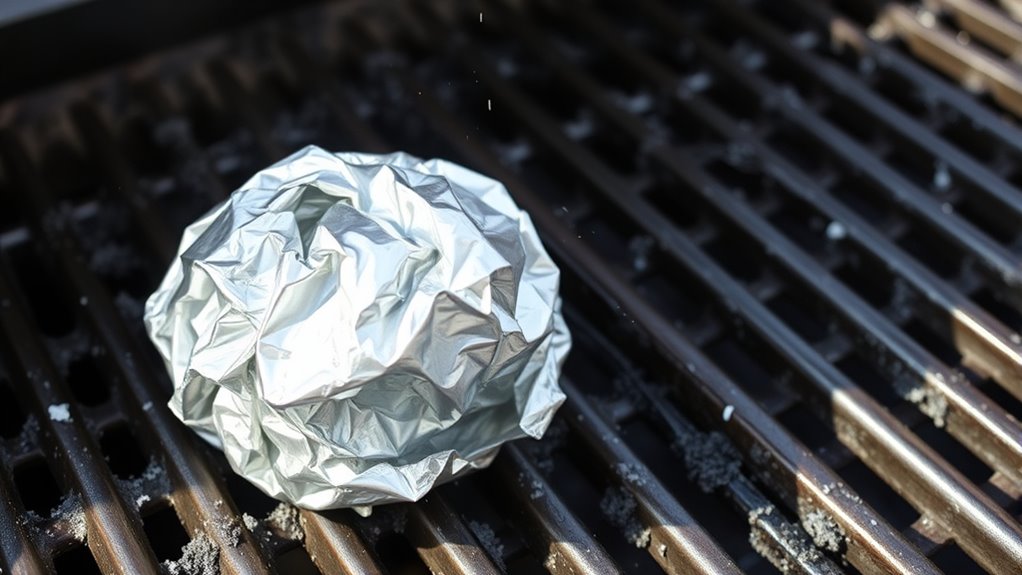
If your grill grates are covered in stubborn residue, using aluminum foil can be an effective cleaning tool. This method offers a simple, cost-effective way to maintain your grill without traditional wire brushes. To start, crumple a sheet of aluminum foil into a ball large enough to hold comfortably. Use it like a scrubber, pressing firmly and rubbing back and forth across the grates to loosen charred debris. Aluminum foil is a popular alternative cleaning tool because it’s abrasive enough to remove residue but gentle enough to avoid damaging the grate’s surface. Regular grill grate maintenance with foil keeps your cooking surface clean and ready for grilling. It’s a quick fix when you want to skip more intensive cleaning methods or don’t have a wire brush handy.
As an affiliate, we earn on qualifying purchases.
Employing a Grill Brush Alternative: Wooden or Metal Scrapers
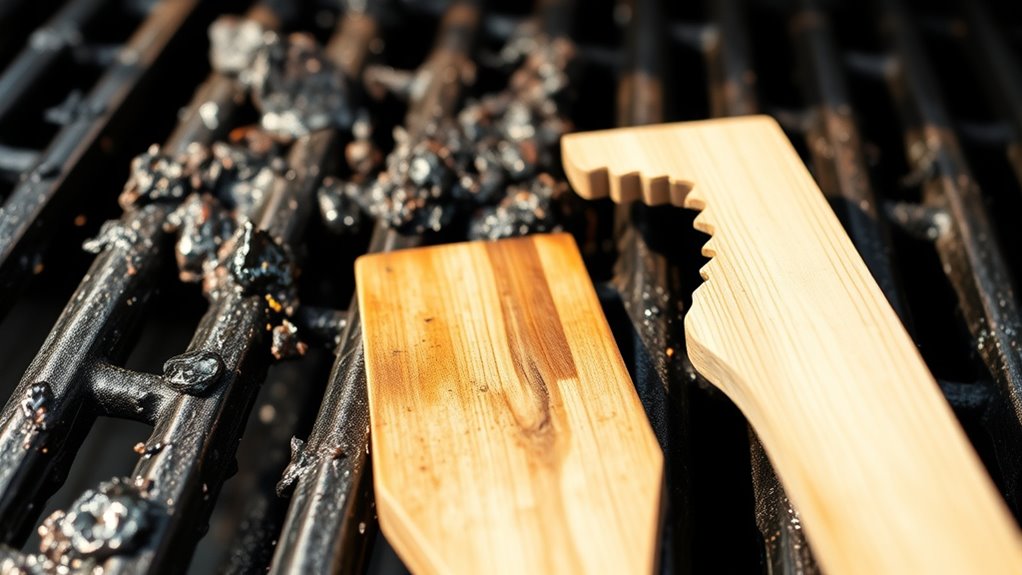
After using aluminum foil to scrub away surface debris, you might find that a more targeted approach can make your grill grates even cleaner. Using a wooden or metal scraper offers an effective alternative to wire brushes. These tools help remove stubborn residue without damaging the grates. Here are some options to contemplate:
After foil scrubbing, try wooden or metal scrapers for gentle, effective grill grate cleaning.
- Wooden scraper – gentle on surfaces, perfect for delicate or coated grates.
- Metal scraper – sturdy and powerful, ideal for heavy buildup.
- Dual-purpose scrapers – combine wooden handles with metal blades for versatility.
Choose the right scraper based on your grill’s material and the level of grime. Both wooden and metal options can clean efficiently, but avoid excessive force to prevent damage. These tools provide a safe, effective way to maintain your grill’s cleanliness.
grill grate scrubber aluminum foil
As an affiliate, we earn on qualifying purchases.
As an affiliate, we earn on qualifying purchases.
Applying Baking Soda and Water Paste for Deep Cleaning
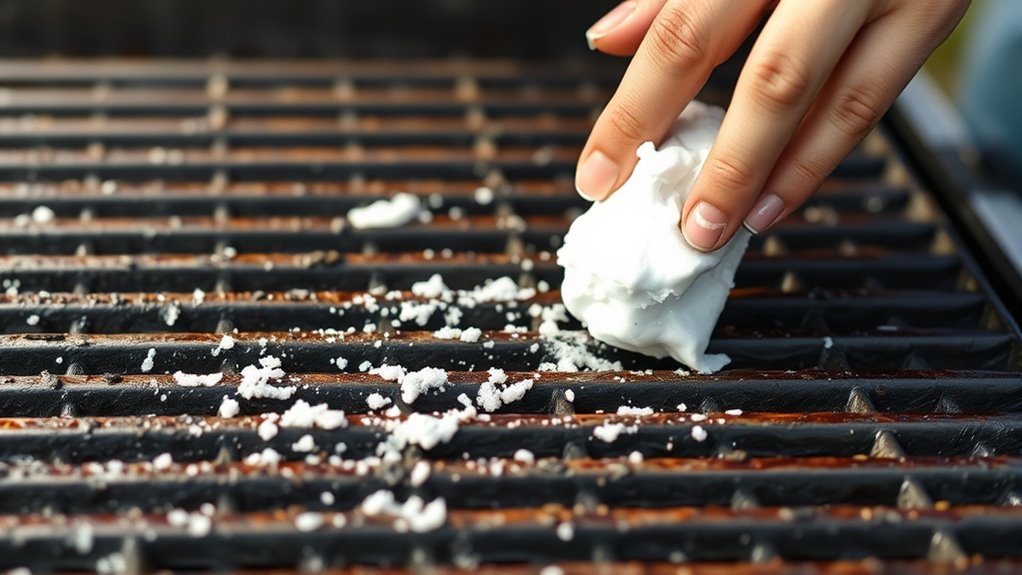
To effectively deep clean your grill grates, applying a baking soda and water paste is an excellent method. Baking soda benefits include its natural abrasive properties that help loosen grime without damaging the surface. To prepare the cleaning paste, mix three parts baking soda with one part water until it forms a thick, spreadable consistency. Once ready, spread the paste evenly over your grill grates, focusing on areas with stubborn residue. Let it sit for 15-20 minutes to break down grease and char buildup. This simple, effective approach leverages baking soda’s cleaning power, making your grates easier to scrub and restore. After the wait, use a scrubbing pad or cloth to wipe away the paste and loosened debris, revealing cleaner, brighter grill grates.
As an affiliate, we earn on qualifying purchases.
Utilizing a Vinegar Solution for Grease and Residue Removal
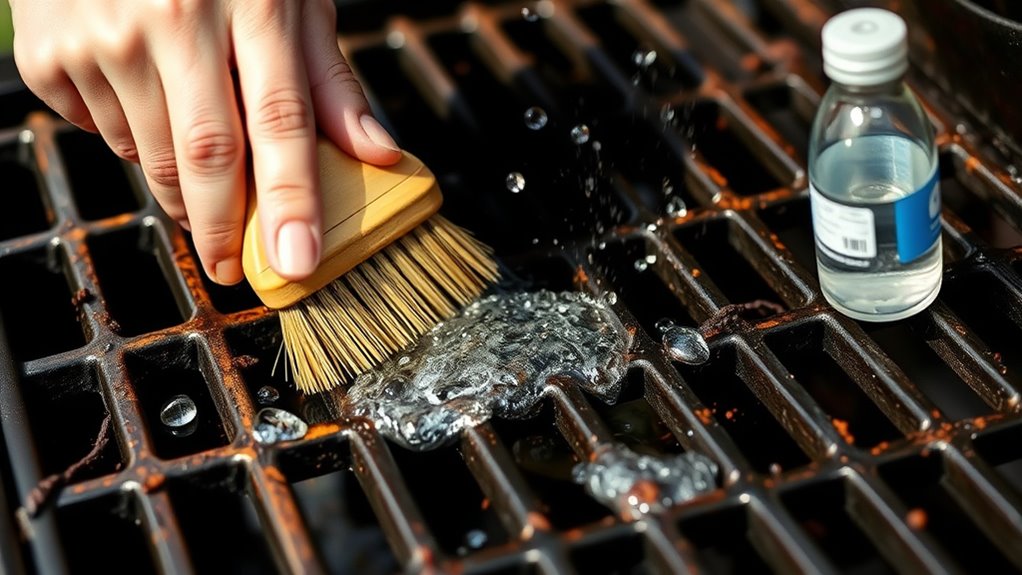
Vinegar is a powerful, natural cleaner that effectively dissolves grease and residue from grill grates. Using a vinegar solution is a simple yet effective cleaning technique for maintaining your grill. It helps break down stubborn grime without harsh chemicals, making your grill maintenance easier. Here are three steps to get you started:
- Mix equal parts white vinegar and water in a spray bottle.
- Spray the solution generously onto your grill grates, focusing on greasy spots.
- Let it sit for 10-15 minutes, then scrub with a non-wire brush or scrubber.
This method helps loosen built-up grease and residue, improving the overall cleanliness of your grill. Incorporate vinegar into your cleaning routine to keep your grill in top shape without damaging the surface.
Employing a Hot Water Soak to Loosen Debris

Soaking your grill grates in hot water is an effective way to loosen stubborn debris and grime. Use water that’s hot enough to help break down grease but not so hot that it damages the material. Fill a large container or your sink with water heated to around 140-160°F. Submerge the grates completely and let them soak for about 30 minutes to an hour. The heat helps to soften baked-on residue, making it easier to remove later. Keep an eye on the soaking duration—too long, and it might cause rust or warping, especially with certain metals. After soaking, you’ll notice the debris has loosened, ready for easier removal without excessive scrubbing. This simple step sets the foundation for a cleaner, more manageable grill grate cleaning process.
Using a Sponge or Cloth With Dish Soap for Gentle Cleaning
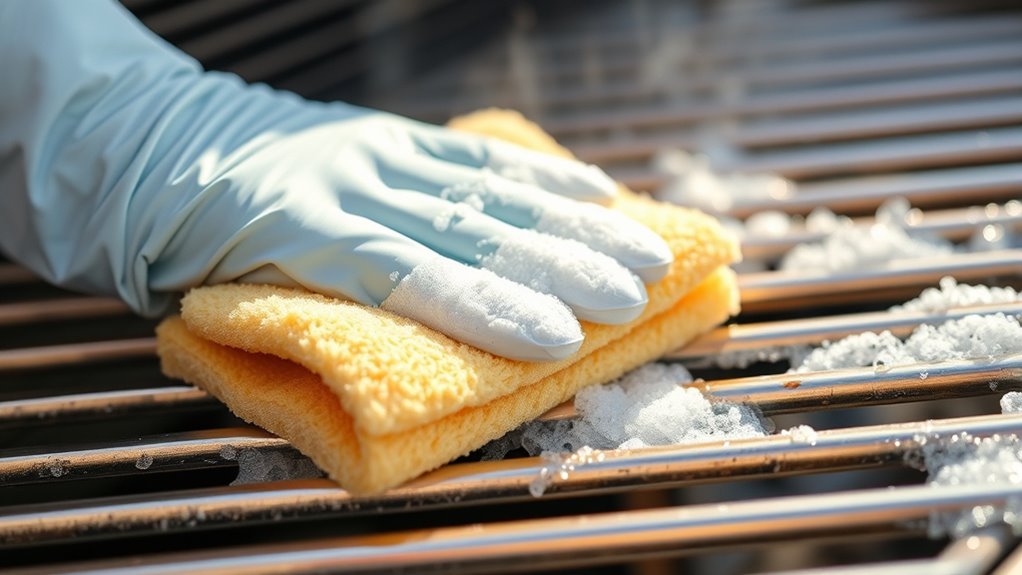
After loosening debris with hot water, it’s time to gently clean the grill grates using a sponge or cloth soaked in dish soap. This method offers safe cleaning without harsh chemicals and can be eco-friendly if you choose biodegradable soaps. To maximize effectiveness, consider these steps:
- Use a soft sponge or cloth to avoid scratching the surface.
- Apply a small amount of dish soap, focusing on greasy spots.
- Rinse thoroughly with warm water to remove soap residue.
This gentle approach helps preserve your grill’s condition while ensuring safety and environmental friendliness. It’s perfect for regular maintenance and avoids the need for abrasive tools, making your cleaning routine more sustainable and safe for your family and the planet.
Employing Natural Citrus-Based Cleaners for Freshness

Switching from gentle soap and water to natural citrus-based cleaners can boost your grill’s freshness and remove stubborn grease effectively. Citrus oils, derived from oranges or lemons, are powerful natural degreasers that cut through grease without harsh chemicals. To use them, spray or apply a mixture of citrus oil and warm water directly onto your grates. Let it sit for a few minutes to loosen grime, then scrub with a non-wire brush or cloth. The natural acids in citrus oils help break down stubborn residues while leaving a fresh scent. Not only do citrus-based cleaners effectively clean, but they also restore your grill’s shine and aroma. This eco-friendly approach guarantees your grill stays clean, fresh, and ready for your next cookout.
Utilizing a High-Pressure Garden Hose or Power Washer

Using a high-pressure garden hose or power washer is one of the most effective ways to remove loose debris and baked-on grime from your grill grates. It can save you time and effort while thoroughly cleaning your grill. Here are three tips to maximize your cleaning:
- Use a power washer with a wide spray nozzle to avoid damaging the grates while blasting away dirt.
- Keep the garden hose or power washer at a safe distance to prevent bending or warping the metal.
- Focus on all sides of the grates, ensuring you reach between the bars for complete debris removal.
Whether you choose a garden hose or a power washer, this method helps restore your grill’s cleanliness without harsh scrubbing. Just remember to handle the equipment carefully for the best results.
Frequently Asked Questions
Can I Use a Regular Scrub Brush Instead of a Wire Brush?
Yes, you can use a regular scrub brush instead of a wire brush. Alternative cleaning tools like a stiff-bristled scrub brush can be effective at removing grease and food residue from grill grates. Just make sure the scrub brush has durable, stiff bristles to get the job done. Keep in mind that a scrub brush’s effectiveness might vary depending on how tough the grime is, but it’s a good, accessible option.
Are There Eco-Friendly Alternatives to Traditional Grill Cleaning Methods?
Think of eco-friendly alternatives as gentle rain washing away yesterday’s grime. You can opt for biodegradable cleaning products and plant-based solutions that scrub your grill without harming the environment. These natural options act like a soft breeze, lifting stubborn residue effortlessly. By choosing biodegradable cleaning and plant-based solutions, you’re not only keeping your grill spotless but also nurturing the planet for future barbecues.
How Often Should I Clean My Grill Grates Without a Wire Brush?
You should clean your grill grates at least once a month for proper grill maintenance. If you cook often, increase the cleaning frequency to every couple of weeks to prevent buildup. Regular cleaning helps maintain even heat and prevents flare-ups. Use alternative methods like a ball of crumpled aluminum foil or a grill scraper to keep your grates pristine without a wire brush. Staying consistent ensures your grill stays in top shape.
Will Using Vinegar Damage My Grill’s Surface or Finish?
Using vinegar on your grill surface won’t damage the finish if you dilute it properly. Vinegar is a gentle, natural cleaner that helps break down grease and grime without harming the surface. Just avoid soaking the grill or using it too frequently, and rinse thoroughly afterward. This way, you preserve the finish and keep your grill looking new while maintaining its peak performance.
What Safety Precautions Should I Take During Grill Grate Cleaning?
Prioritize protection and precautions during grill grate cleaning. Wear protective gear like gloves and goggles to prevent burns and splatters. Guarantee proper ventilation by working outdoors or in a well-ventilated space, avoiding inhaling fumes or cleaning chemicals. Handle tools carefully, and keep a fire extinguisher nearby for safety. Staying cautious and conscious keeps your cleaning process safe, simple, and secure.
Conclusion
Think of your grill grates as the heart of your outdoor kitchen, beating with the promise of delicious meals. When you clean them without a wire brush, you’re nurturing that heart with gentle, natural care—like tending a garden to let it flourish. With patience and the right tools, you’ll keep your grill vibrant and ready for many more gatherings. Care for it well, and it’ll return your love with every perfectly cooked bite.
Fall Picks
fall essentials
As an affiliate, we earn on qualifying purchases.