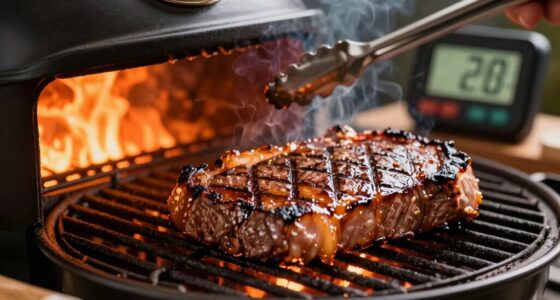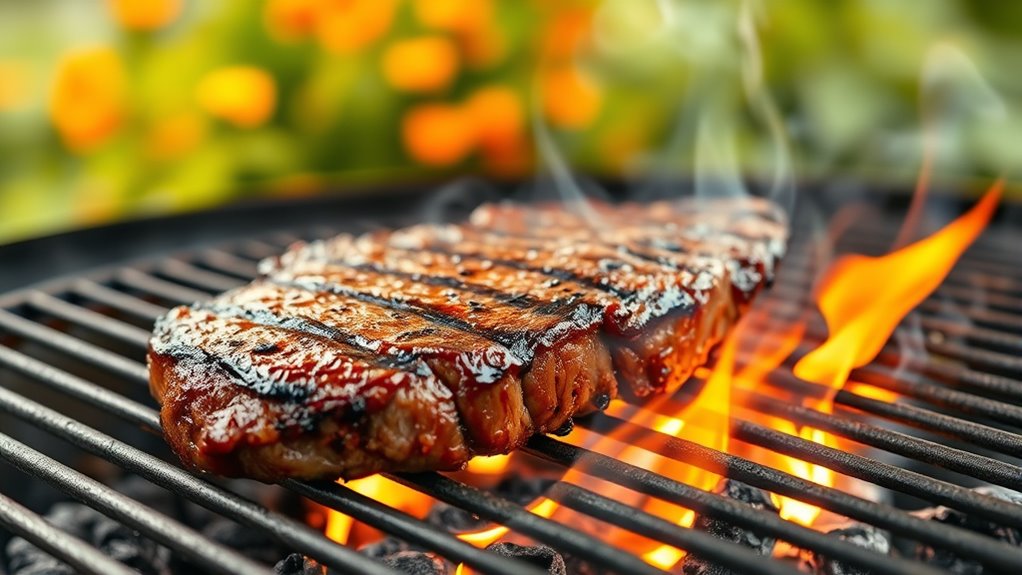
To grill the perfect steak, choose a well-marbled cut like ribeye or New York strip, and let it reach room temperature before cooking. Preheat your grill to 450-500°F and set up two heat zones for better control. Season generously with coarse salt just before grilling, and sear on high heat to develop a crust. Flip only once or twice, use a meat thermometer for perfect doneness, and rest for 5-10 minutes. Finish with butter or finishing salt for extra flavor—you’ll want to see why these tips work so well.
Key Takeaways
- Choose well-marbled, tender cuts like ribeye or New York strip for maximum flavor and juiciness.
- Preheat your grill to 450-500°F and create a two-zone setup for precise searing and finishing.
- Let the steak reach room temperature and season just before grilling with coarse salt for optimal crust and flavor.
- Flip the steak only once or twice, using a meat thermometer to achieve your desired doneness.
- Rest the steak 5-10 minutes after grilling, then finish with butter or finishing salt for enhanced richness.
As an affiliate, we earn on qualifying purchases.
Choose the Right Cut of Steak
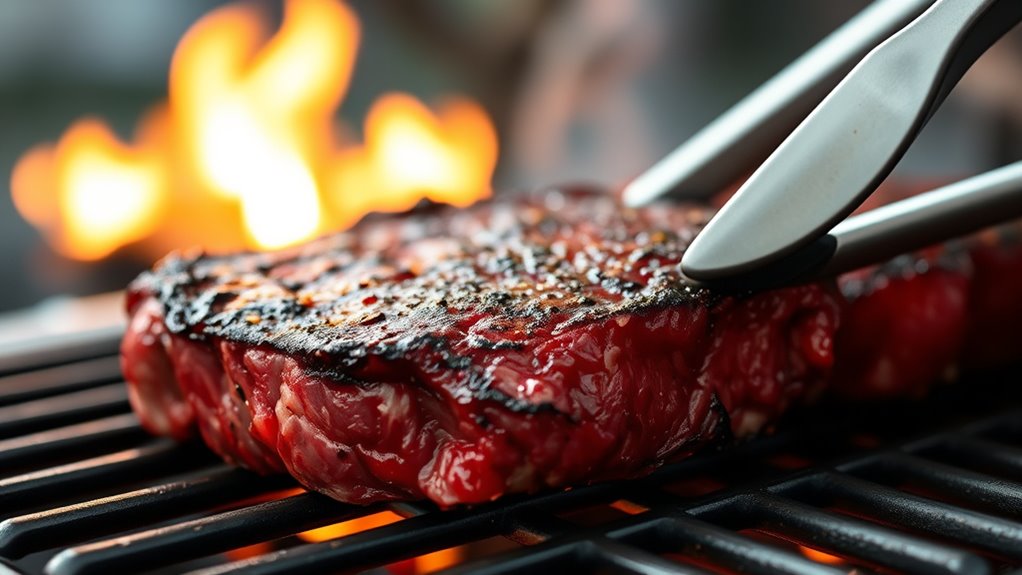
Choosing the right cut of steak is essential for a successful grilling experience. The marbling importance can’t be overstated—fat interspersed within the muscle enhances flavor and juiciness, making your steak more enjoyable. Look for cuts with good marbling, like ribeye or New York strips, which tend to stay moist and tender when cooked properly. Cut tenderness also matters; select cuts known for their softness, especially if you’re aiming for a quick, high-heat sear. Leaner cuts, like sirloin or filet mignon, offer tenderness but less marbling, so they require careful attention to avoid drying out. By choosing a cut with the right balance of marbling and tenderness, you’ll set yourself up for a juicy, flavorful grilled steak every time.
As an affiliate, we earn on qualifying purchases.
Let Your Steak Reach Room Temperature

Letting your steak reach room temperature helps it cook more evenly from edge to center. When the meat isn’t cold, it sears better and reduces the risk of uneven doneness. This simple step promotes even cooking and guarantees a perfect sear every time.
Even Cooking Starts
Before you start grilling, make sure your steak reaches room temperature. This step guarantees even cooking from edge to center. Proper steak storage in the fridge helps you plan ahead, but always let it sit out for about 30 minutes before grilling. During this time, avoid rushing with marinade techniques that could add moisture or flavor but might also cool the meat unevenly if applied too early. Allowing the steak to warm up slightly helps it cook more uniformly, preventing the outside from overcooking before the inside reaches desired doneness. This simple step makes a significant difference in achieving that perfect, evenly cooked steak. Remember, starting with a steak at room temperature sets the foundation for consistent, mouthwatering results.
Promotes Even Searing
Reaching room temperature before grilling is essential for achieving even searing. When your steak is chilled, the outside cooks faster than the inside, making it hard to get those perfect grill marks and a uniform crust. Allow the steak to sit out for about 30-60 minutes. This helps the heat penetrate evenly, resulting in better searing techniques and consistent doneness. For best results, use high heat to create a beautiful crust without overcooking the interior.
| Step | Benefit |
|---|---|
| Let steak rest | Promotes even heat transfer |
| Use high heat | Achieves crisp grill marks and searing |
| Avoid cold steak | Ensures uniform searing and flavor development |

Stargazer 12-Inch Cast Iron Skillet | Made in USA, Seasoned, Premium Frying Pan for Grilling, Searing, Baking & More – Durable Cast Iron with Smooth Cooking Surface
- Smooth Cooking Surface: Minimizes food sticking for easy cooking and cleaning
- Made in USA: Individually crafted with premium craftsmanship and seasoning
- Modern Design: Large size with stay-cool handle for safety and comfort
As an affiliate, we earn on qualifying purchases.
As an affiliate, we earn on qualifying purchases.
Season Generously and Correctly
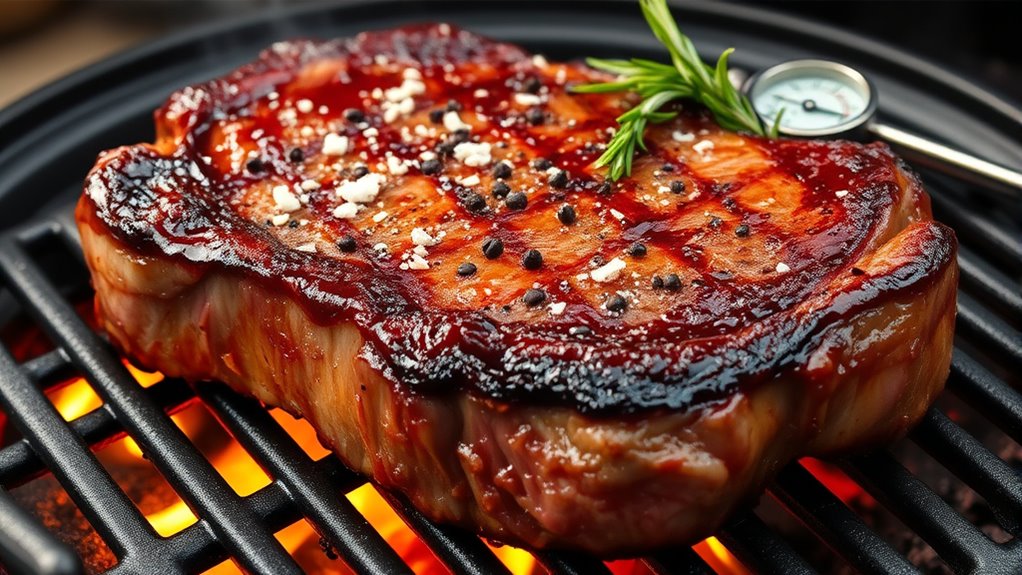
To get the best flavor, you need to season your steak properly. Use the right type of salt, like coarse sea salt, and don’t skimp on the amount. Timing is key—season just before grilling so the salt enhances the meat without drawing out too much moisture.
Use the Right Salt
Using the right salt is vital for revealing your steak’s full flavor. The key is mastering salting techniques—how and when you apply salt to maximize taste without overpowering the meat. Seasoning timing plays an important role; salt added too early can draw out moisture, making your steak less juicy, while salting just before grilling enhances flavor and creates a better crust. Opt for coarse salt, such as sea salt or kosher salt, which dissolves slowly and provides a satisfying crunch. Be generous but controlled with your salting; a proper coating ensures even seasoning. Remember, the goal is to enhance the natural beef flavors, so use salt wisely and adjust based on your cut and personal preference. Proper salting techniques make all the difference in your steak’s final taste.
Time Your Seasoning
Timing your seasoning correctly can elevate your steak from good to great. Proper seasoning timing guarantees your flavors penetrate the meat without overpowering it. Before grilling, use marination techniques that include salt, herbs, and spices, and let the steak rest for at least 30 minutes or up to overnight. This allows the marinade to work its way in and enhances tenderness. Avoid seasoning too early or too late; salting too early can draw out moisture, while seasoning right before grilling locks in flavor. For best results, season generously but evenly, ensuring each side gets its fair share. Paying attention to seasoning timing helps develop a flavorful crust and juicy interior, making your steak truly exceptional.
As an affiliate, we earn on qualifying purchases.
Preheat Your Grill Properly

Preheating your grill is essential for achieving perfectly cooked steak. It ensures even heat distribution, searing the meat properly, and preventing sticking. To get it right:
- Turn on your grill and set it to high heat for at least 15 minutes.
- Use your grill accessories, like a thermometer, to check when the surface reaches 450-500°F.
- Clean your grates using proper cleaning techniques before preheating to remove residue.
- Close the lid during preheating to maintain consistent heat and prepare the grill for cooking.
Proper preheating also helps your grill last longer and improves overall results. Remember, a well-preheated grill makes all the difference in achieving that perfect sear for your steak.
Use Two-Zone Fire for Better Control
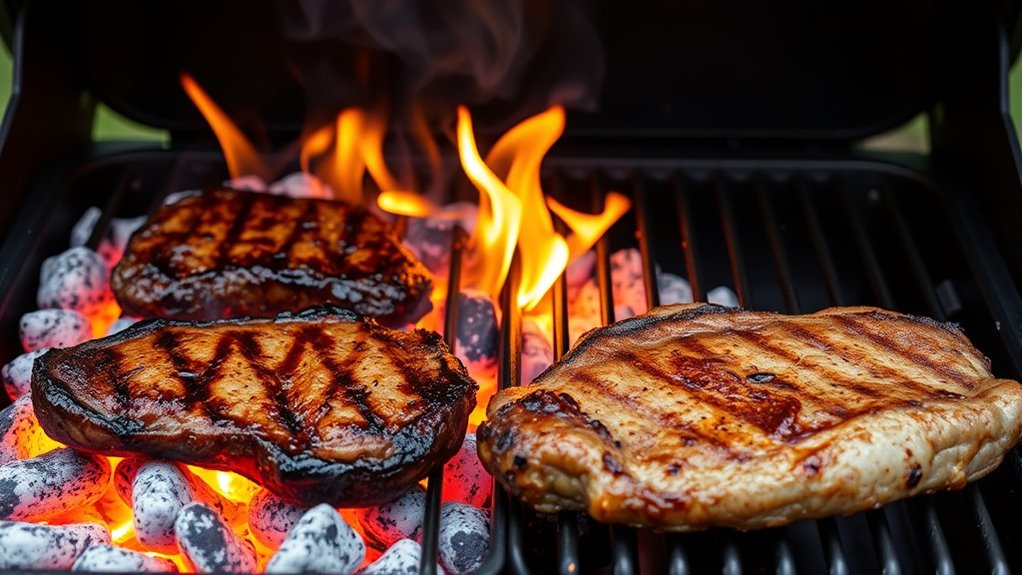
Creating a two-zone fire on your grill gives you better control over the cooking process. By establishing distinct heat zones, you can manage fire management and prevent overcooking. One side has high heat for searing, while the other offers medium or low heat for finishing the steak gently. Use the table below to set up your heat zones effectively:
| Heat Zone | Purpose |
|---|---|
| Direct Heat | Searing and quick cooking |
| Indirect Heat | Resting and finishing |
| High Heat | Searing, 450-500°F |
| Medium Heat | Gentle cooking, 350-400°F |
| Low Heat | Warm-up or resting |
Adjust your fire management accordingly, and you’ll master heat zones for perfect steak control.
Sear With High Heat to Develop a Good Crust
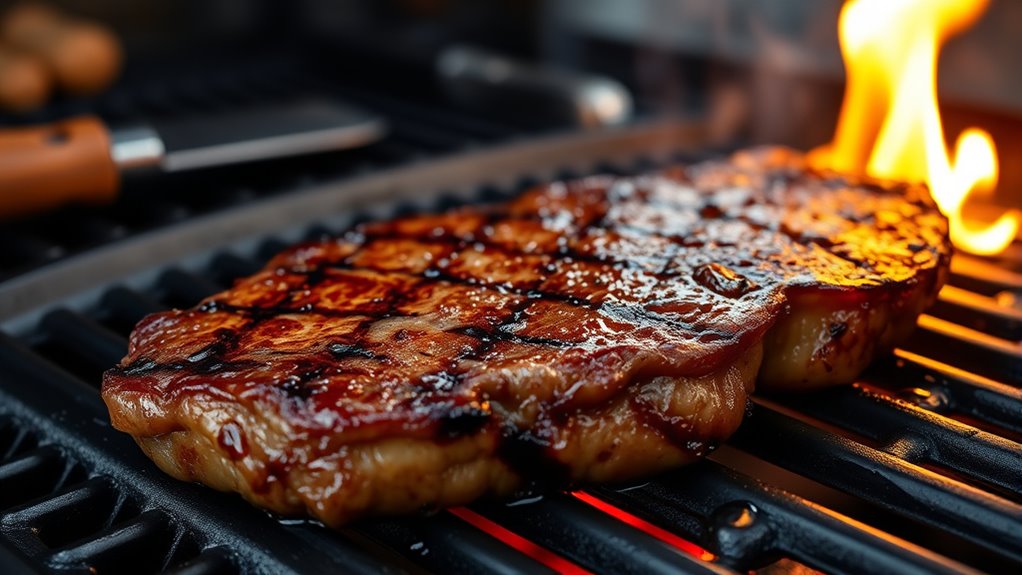
To develop a flavorful crust on your steak, you need to sear it with high heat. This creates a Maillard reaction that locks in juices and enhances flavor. Here are key tips:
- Preheat your grill to at least 450°F, ensuring it’s hot enough for a quick, intense sear.
- Pat your steak dry to promote better browning and crust formation.
- Use marinade techniques that include sugars or acids to boost caramelization, but avoid excess marinading beforehand to prevent sogginess.
- For added smoke flavor, incorporate wood chips directly on the coals or in a smoker box during searing, which complements the crust’s richness.
Flip the Steak Only Once or Twice
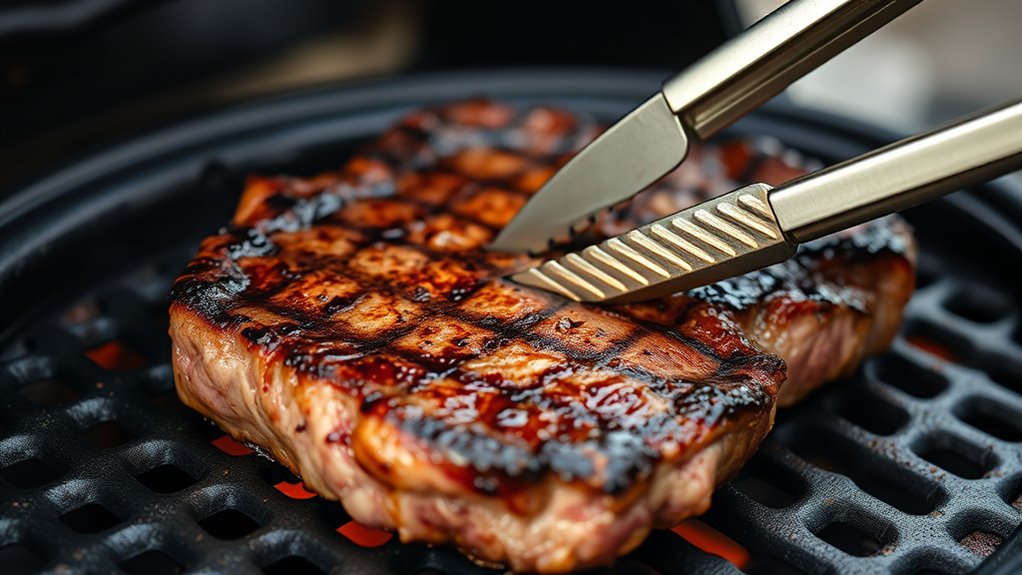
Flipping your steak only once or twice helps lock in its juices and keeps it tender. It also promotes even cooking, so every bite is just right. Be careful not to flip too often, or you might end up with uneven results or lose that perfect crust.
Juiciness Preservation
When it comes to preserving juiciness, flipping your steak only once or twice is key. This minimizes moisture loss and allows for even cooking. To enhance juiciness, focus on your marination techniques beforehand, which can help lock in moisture. Also, proper storage methods—like keeping the steak chilled and airtight—prevent dehydration before grilling. During cooking, follow these tips:
- Flip the steak only once or twice to avoid excessive moisture escape.
- Use high heat initially to sear and lock in juices.
- Rest the steak after grilling to redistribute the juices.
- Avoid piercing the meat, which releases precious moisture.
Even Cooking Results
Maintaining even cooking results hinges on flipping your steak only once or twice during the grilling process. This approach allows heat to distribute more evenly, preventing hot spots that can cause uneven doneness. When you flip your steak just once, the marinade flavors have time to penetrate deeply, enhancing taste without disrupting the cooking process. Use quality grill accessories, like a good pair of tongs or a grill thermometer, to handle the steak gently and monitor doneness accurately. Frequent flipping can interrupt heat transfer, leading to inconsistent results. By limiting your flips, you help ensure your steak cooks uniformly from edge to center, preserving juiciness and flavor. Remember, patience and proper technique are key to achieving that perfect, evenly cooked steak.
Avoid Flipping Pitfalls
To achieve a perfectly cooked steak, it’s best to flip it only once or twice during grilling. Excessive flipping can disrupt the searing process and lead to uneven doneness. Focus on your flipping frequency: wait until the first side develops a good crust before turning. Use tongs instead of a spatula; tongs provide better control and prevent piercing the meat, which can cause juices to escape. Here are some tips:
- Flip only when the steak releases easily from the grill.
- Turn the steak with tongs for a gentle, controlled flip.
- Avoid flipping more than twice to ensure even cooking.
- Reserve a spatula for checking doneness, not flipping.
Sticking to these practices helps you avoid flipping pitfalls and achieve that perfect sear.
Use a Meat Thermometer for Perfect Doneness
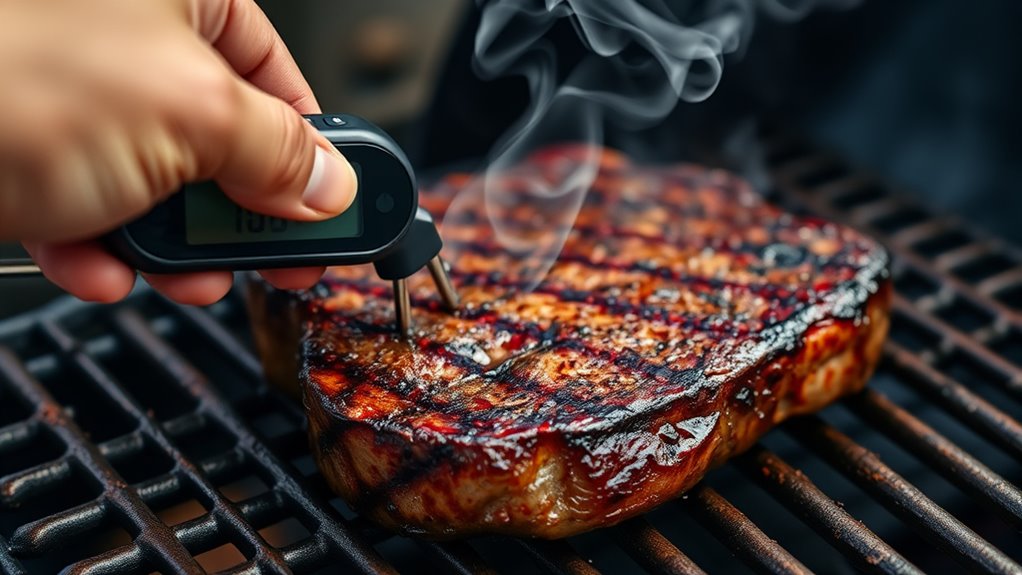
Using a meat thermometer is the most reliable way to guarantee your steak reaches the perfect level of doneness. By checking the meat temperature, you can prevent overcooking or undercooking your steak. Different doneness levels—rare, medium-rare, medium, medium-well, and well-done—each require specific temperature ranges. Insert the thermometer into the thickest part of the steak for an accurate reading. Aim for about 125°F for rare, 135°F for medium-rare, 145°F for medium, 155°F for medium-well, and 160°F for well-done. Using a thermometer takes the guesswork out of grilling and ensures consistent results. It’s a simple tool that helps you achieve perfectly cooked steak every time, no matter your preferred doneness level.
Rest the Steak Before Slicing
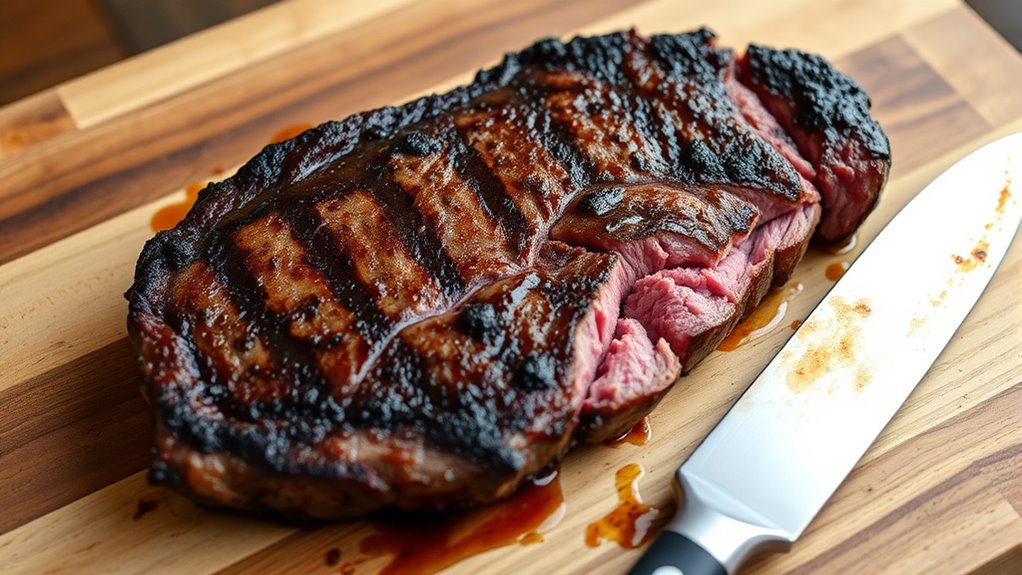
After you remove the steak from the grill, letting it rest is essential for juicy, flavorful meat. Proper resting techniques allow the juices to redistribute, resulting in a more tender bite. To optimize your resting process, consider these steps:
- Cover the steak loosely with foil to retain heat.
- Rest for 5-10 minutes, depending on thickness.
- Use a meat thermometer to ensure the internal temperature stabilizes.
- When slicing, follow your steak’s grain for cleaner, more appealing slices.
Finish With a Touch of Butter or Finishing Salt
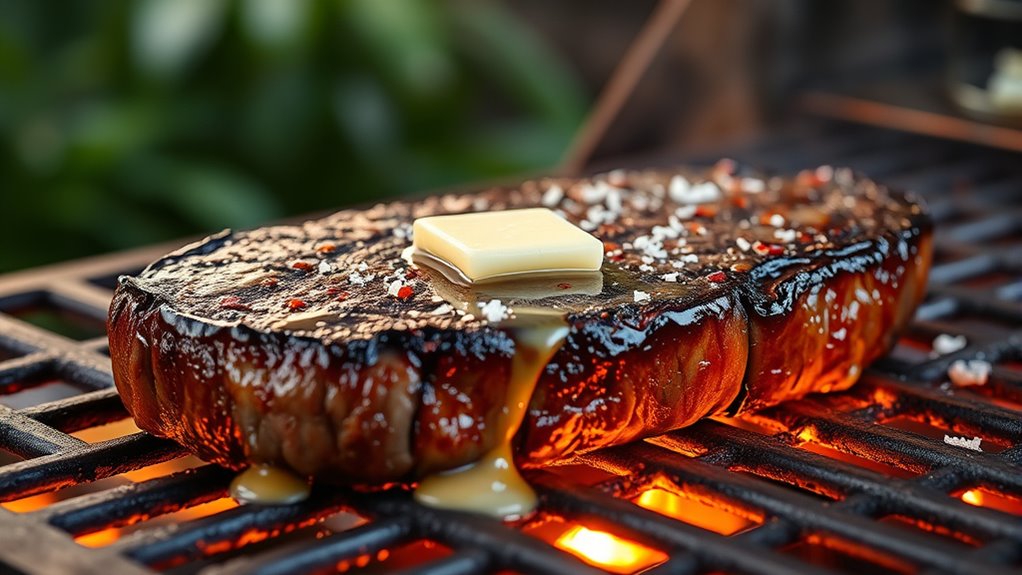
For an extra layer of richness and flavor, finish your steak with a touch of butter or a sprinkle of finishing salt. These finishing touches provide a subtle yet impactful flavor enhancement, elevating your steak to restaurant-quality. A pat of butter melted over the hot steak adds creaminess and depth, while finishing salt accentuates the natural savory notes. Use high-quality butter or flaky sea salt for the best results. Apply these enhancements just before serving, allowing the flavors to meld perfectly. This simple step ensures your steak isn’t just cooked well but also maximized in flavor. Remember, these finishing touches are about balancing richness and seasoning, creating a more memorable, flavorful bite. Keep it light but impactful, and enjoy the perfect finishing flourish.
Frequently Asked Questions
What’s the Best Type of Charcoal or Gas Grill for Steak?
You should choose a charcoal grill with high-quality charcoal types like lump charcoal for better flavor and heat. For gas grills, look for models with powerful burners and adjustable heat zones to control your steak’s searing and cooking. Both options should have sturdy grates and good heat retention. Your choice depends on flavor preference and convenience, but prioritize grills with features that allow precise temperature control for perfect steak grilling.
How Do I Prevent My Steak From Sticking to the Grill?
To keep your steak from sticking, pretend you’re a culinary wizard and master the art of patience. Make certain your grill is squeaky clean — no leftover crusts to sabotage meat tenderness. Preheat it well, then oil the grates generously. When the steak hits the grill, resist the urge to poke or flip prematurely. This ensures a perfect sear, easy release, and a steak that’s tender enough to make you forget your grilling mishaps.
Can I Marinate My Steak Overnight Without Affecting the Searing Process?
Yes, you can marinate your steak overnight without affecting the searing process. Just guarantee your marinade ingredients are balanced—avoid overly acidic components like too much vinegar or lemon juice, as they can break down the meat. Keep the marinating duration within 8 to 24 hours, and pat the steak dry before grilling. This way, you maintain a good sear while infusing flavor through your marinade ingredients.
What Are Common Mistakes to Avoid When Grilling Steak?
You might think over-seasoning or choosing the wrong cut won’t ruin your steak, but they do. Avoid common mistakes like skipping proper seasoning or selecting a tough cut. Instead, choose the right cut for tenderness and flavor, and season it well—don’t forget salt! Also, resist the urge to flip constantly or overcook. These slip-ups can turn your perfect grilling into a charred disappointment.
How Do I Store Leftover Grilled Steak Safely and Tastefully?
To store leftover grilled steak safely and tastefully, refrigerate it promptly using proper refrigeration techniques. Wrap the steak tightly in foil or store it in an airtight container to prevent moisture loss and flavor degradation. Keep it at or below 40°F, and consume within three to four days. This approach guarantees flavor preservation while keeping your leftovers safe to enjoy later. Reheat gently to maintain its juicy texture.
Conclusion
Mastering these tips will elevate your grilling game. Did you know that 80% of people prefer their steak cooked medium or better? By choosing the right cut, controlling the heat, and resting your steak, you guarantee every bite is juicy and flavorful. So, fire up your grill, follow these pro tips, and impress everyone with perfectly cooked steaks every time. Happy grilling!