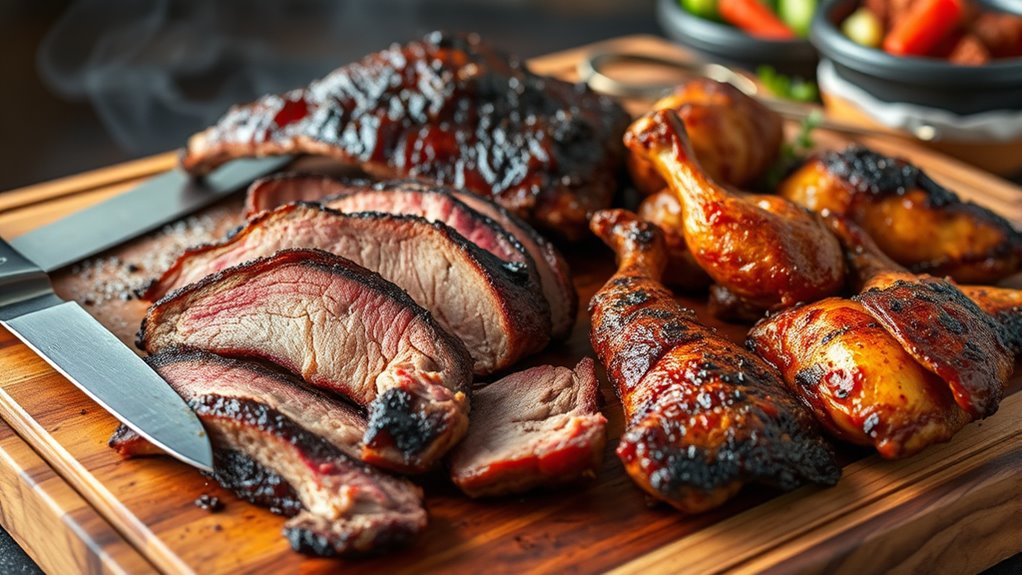
To carve BBQ meats like brisket, ribs, and chicken, start by letting them rest for at least 20 minutes to retain juices. Use a sharp knife and cut against the grain for tenderness, slicing into uniform pieces for a neat presentation. For ribs, cut between the bones, and for chicken, follow natural joints. Proper carving techniques and presentation elevate your meat’s look and flavor. Keep exploring to master every detail of perfect BBQ slicing.
Key Takeaways
- Rest meats for at least 20 minutes to allow juices to redistribute and ensure tenderness.
- Use a sharp knife and cut against the grain for clean, tender slices.
- For brisket, slice into uniform, quarter-inch thick pieces; for ribs, cut between bones; for chicken, slice along natural joints.
- Arrange slices neatly on a platter, fanning or stacking them for an appealing presentation.
- Keep knives sharp and practice consistent carving techniques to improve appearance and texture.
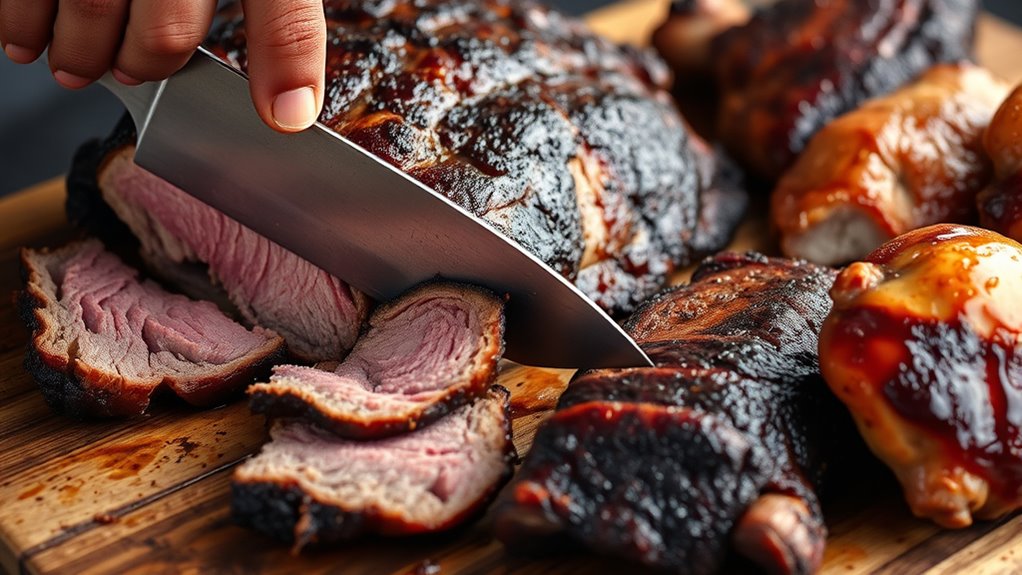
Carving BBQ meats properly guarantees you serve tender, juicy slices that highlight their rich flavor. The way you slice your meat can make all the difference in presentation and taste. When it comes to slicing techniques, precision is key. For brisket, start by resting the meat for at least 20 minutes after cooking. Resting allows the juices to redistribute, ensuring each slice remains moist. Use a sharp carving knife and cut against the grain, which means cutting perpendicular to the muscle fibers. This technique results in more tender, melt-in-your-mouth slices. Hold the meat steady with a fork or tongs and make smooth, even strokes. For meat presentation, aim for uniform slices that are about a quarter-inch thick. Consistent slices not only look appealing but also make serving easier and more elegant. When carving ribs, begin by removing the slab from the heat and letting it rest briefly. Ribs are typically cut between the bones, so hold the rack steady and carefully slice between each rib with a clean, sharp knife. This creates individual, manageable portions that showcase the meat’s smoky texture. For visual appeal, angle your knife slightly to give each piece a clean cut. When carving chicken, ensure it’s rested after cooking to maintain moisture. Use a carving fork to stabilize the bird and start by removing the legs and thighs if you prefer served portions. For the breast or whole bird, slice along the natural joints or bones to maximize presentation and minimize mess. When slicing chicken, cut against the grain to keep the meat tender and slice evenly for uniform presentation. To enhance meat presentation further, arrange slices neatly on a platter, fanning them out or stacking them in an organized way. Properly calibrated cutting techniques and a sharp knife will improve the overall appearance and texture of your meat. Keep your knife sharp throughout, as dull blades tear the meat and ruin the appearance. Remember, your goal is to serve meat that’s not only flavorful but also visually appealing. Whether you’re carving brisket, ribs, or chicken, each type requires a slight adjustment in technique to optimize tenderness and presentation. With practice, your slicing skills will improve, and your BBQ will look as good as it tastes. Ultimately, how you carve and present your meat reflects your attention to detail and respect for the craft, making every meal memorable for everyone at the table.

Cutluxe Brisket Knife, 12" Carving & Slicing Knife for Meat & BBQ
- Premium Performance: Effortless slicing of various meats
- Razor-Sharp Granton Blade: Precise cuts with long-lasting sharpness
- Full Tang Ergonomic Handle: Comfortable, stable grip with luxury pakkawood
As an affiliate, we earn on qualifying purchases.
As an affiliate, we earn on qualifying purchases.
Frequently Asked Questions
What Tools Are Best for Carving BBQ Meats?
You should use a sharp carving knife or slicer for precise meat slicing techniques. A sturdy carving fork helps hold the meat steady while you cut, guaranteeing safety and accuracy. Always follow carving safety tips by keeping your fingers clear of the blade and using a stable cutting surface. The right tools and techniques make carving easier, safer, and ensure you serve clean, attractive slices of BBQ meats.
How Do I Prevent Tearing the Meat When Carving?
To prevent tearing the meat when carving, use a sharp, sturdy knife and carve against the grain. Apply steady, gentle pressure rather than force, and let the knife do the work. Carving technique tips include resting the meat before slicing and taking slow, even strokes. This approach minimizes meat tearing, preserves tenderness, and results in clean, professional-looking slices.
Should I Rest the Meat Before Carving?
Ever wondered if resting your meat is worth it? Resting benefits your BBQ by allowing juices to redistribute, resulting in tender, flavorful slices. You should definitely rest your meat before carving—about 10-20 minutes for larger cuts like brisket or ribs, and 5-10 minutes for chicken. Use resting time tips like tenting with foil to keep it warm. Trust me, this step makes all the difference!
What’s the Ideal Thickness for Sliced BBQ Meats?
You should aim for slices about 1/4 inch thick for BBQ meats. Thinner slices help maintain meat tenderization while allowing full flavor infusion with each bite. Thicker slices risk losing moisture and flavor, making the meat less enjoyable. Keep your knife sharp to achieve clean cuts, and rest the meat before slicing to preserve juices. Proper thickness guarantees a perfect balance of tenderness and flavor, enhancing your barbecue experience.
How Do I Store Leftover Carved BBQ Meats?
Store your leftover carved BBQ meats in airtight meat storage containers to keep them fresh. Label and date the containers so you know how long they’ve been in the fridge. When reheating, use your oven or microwave with a splash of broth or water to retain moisture. Wrap meats in foil or place them in covered containers, ensuring they stay tender and flavorful for your next delicious meal.

Beef Jerky Slicer Kit with 2 Adjustable Food Spacers & 14-In Slicing Knife
- Fast and Convenient Slicer: Includes slicer, knife, and cutting boards
- Adjustable Thickness Guide: Ensures precise, even slices every time
- Professional Chef’s Knife: Long, rust-resistant, and durable for precision cutting
As an affiliate, we earn on qualifying purchases.
As an affiliate, we earn on qualifying purchases.
Conclusion
Now that you’ve mastered carving BBQ meats, go forth and impress your friends—just try not to get too cocky with that shiny new carving knife. Remember, it’s all fun and games until someone loses a finger or accidentally turns a perfect brisket into shredded chaos. Keep your wits about you, enjoy the applause, and maybe, just maybe, resist the urge to turn every cookout into a culinary masterpiece. Happy carving!
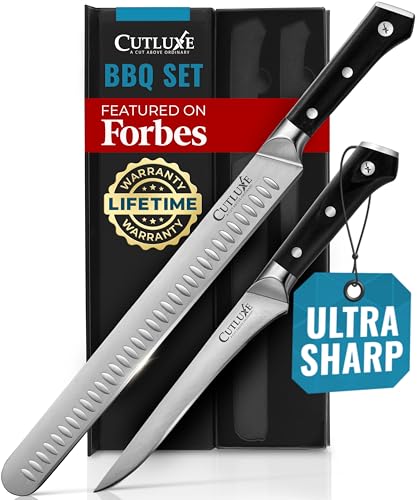
Cutluxe Carving Knife Set, Brisket Slicing & Boning Knife for Meat & BBQ
- Set Includes: 12-inch brisket and 6-inch boning knives
- Precision Cutting: Designed for accurate meat slicing
- Sharp Granton Blades: Reduces friction and sticking
As an affiliate, we earn on qualifying purchases.
As an affiliate, we earn on qualifying purchases.

BBQ Blanket for Resting Meat with Thermometer Probe Port – Insulated Meat Resting Bag for Brisket, Pork Shoulder, Turkey – Heavy Duty Meat Resting Bag, Father's Day Birthday Gift for Men Dad Husband
- Gift Box Packaging: Ready-to-wrap for Father's Day or birthdays
- Built-in Probe Port: Monitor meat temperature without heat loss
- Enhanced Insulation System: 5-layer insulation, 1.5x thicker for heat retention
As an affiliate, we earn on qualifying purchases.
As an affiliate, we earn on qualifying purchases.