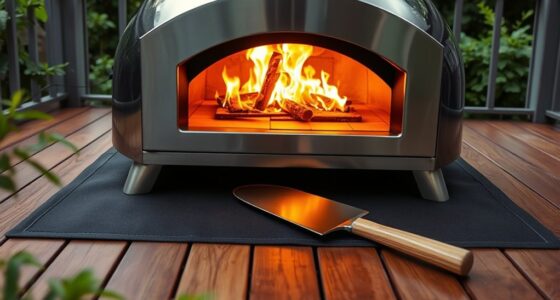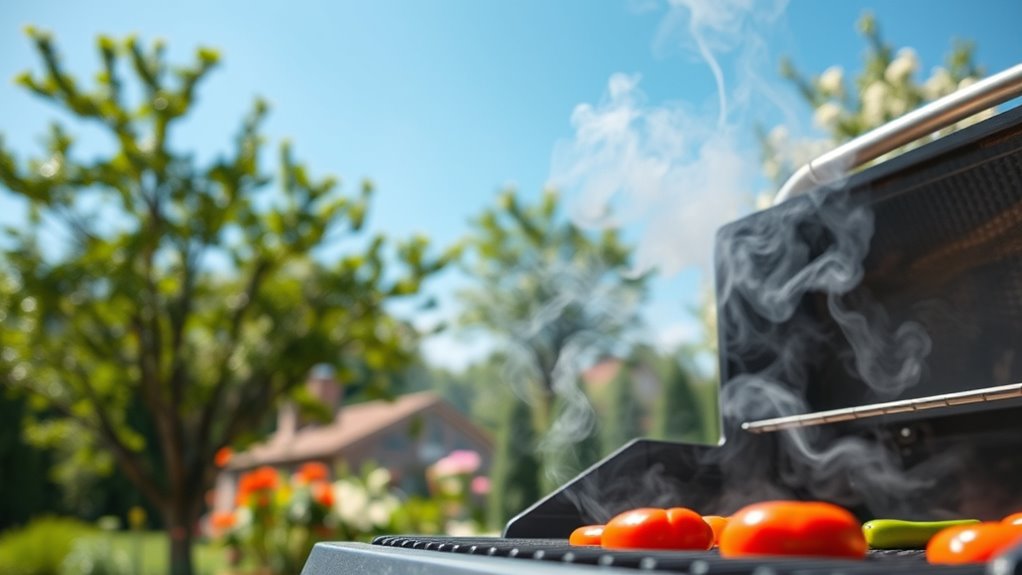

When grilling, it’s vital to guarantee proper ventilation because carbon monoxide (CO) is a colorless, odorless gas produced by burning fuels like charcoal or propane. Using grills outdoors in open, well-ventilated areas helps prevent dangerous CO buildup. Never operate charcoal or gas grills indoors or in enclosed spaces, and consider installing CO detectors near your grilling area for added safety. Want to know more about protecting yourself from CO risks while grilling? Continue exploring for important tips and precautions.
Key Takeaways
- Always grill in well-ventilated areas to prevent dangerous CO buildup indoors or in enclosed spaces.
- Use properly maintained grills and ensure complete combustion to minimize CO production.
- Install and regularly test CO detectors near grilling areas for early warning of dangerous levels.
- Avoid using charcoal or gas grills indoors, in garages, or under overhangs to reduce CO poisoning risk.
- Recognize symptoms of CO poisoning, such as headache and dizziness, and seek immediate fresh air and medical help if they occur.

Grilling outdoors is a popular way to enjoy delicious food, but it’s important to be aware of the risks posed by carbon monoxide (CO). Even when you’re outside, CO can become a danger if you’re not careful. It’s a colorless, odorless gas that’s produced when burning charcoal, propane, or other fuels. If these fuels aren’t burned properly or if you use your grill in enclosed or semi-enclosed spaces, CO can accumulate quickly and pose serious health risks. That’s why practicing good grill safety is essential to prevent CO poisoning. Always make sure your grill is set up in a well-ventilated area, away from walls, decks, or enclosed patios that can trap CO. Never use a charcoal grill indoors or in a garage, even with the door open—CO can build up faster than you realize.
To protect yourself and your loved ones, installing CO detectors near your grilling area is a smart move. These devices are designed to alert you if CO levels start to rise, giving you time to move to fresh air before danger occurs. Make certain your CO detectors are functioning properly, with fresh batteries, especially during grilling season. Keep a close eye on your detectors and replace them according to the manufacturer’s instructions. Remember, CO detectors are an indispensable part of your overall grill safety plan. They provide an extra layer of protection that can save lives if something goes wrong.
While it’s tempting to host outdoor barbecues, you should also familiarize yourself with the signs of CO poisoning, such as headache, dizziness, weakness, nausea, or confusion. If anyone exhibits these symptoms during or after grilling, get everyone to fresh air immediately and seek medical attention. Prevention is always better than treatment. Be cautious about how and where you use your grill, and never ignore the importance of proper ventilation. Additionally, understanding proper grill maintenance and ensuring your equipment is in good working order can significantly reduce the risk of CO buildup.
In addition to CO detectors, regularly inspect your grill for leaks, cracks, or other damage that could cause improper combustion or CO build-up. Clean your grill thoroughly to ensure complete combustion of fuels. Keep the grill away from structures, overhangs, and enclosed spaces, and always supervise your grilling to prevent accidents. Incorporating these simple safety measures helps you enjoy your outdoor cooking without exposing yourself or others to harmful carbon monoxide. Remember, good grill safety isn’t just about food—it’s about protecting your health, too.
carbon monoxide detector for outdoor grilling
As an affiliate, we earn on qualifying purchases.
As an affiliate, we earn on qualifying purchases.
Frequently Asked Questions
Can Carbon Monoxide Poisoning Occur Outdoors While Grilling?
Yes, carbon monoxide poisoning can occur outdoors while grilling if you don’t guarantee proper outdoor ventilation and correct grill positioning. Always keep your grill away from enclosed spaces, garages, or under overhangs where fumes can accumulate. Make sure there’s enough airflow around the grill, and never operate it in a poorly ventilated area. Proper setup minimizes the risk of dangerous CO buildup, keeping you safe during your outdoor cooking.
How Can I Tell if My Grill Is Emitting Dangerous CO Levels?
Imagine your grill as a sneaky villain hiding behind billowing smoke—dangerous CO levels can lurk unnoticed. To tell if it’s emitting dangerous CO, install carbon monoxide detectors nearby, just like a vigilant watchdog. Make sure your grill has proper ventilation; if it’s tucked away in a cramped corner, CO can accumulate faster than your appetite. Regularly check detectors and ensure fresh air flows freely for safe grilling adventures.
Are There Safety Measures for Indoor Grilling to Prevent CO Buildup?
Yes, for safe indoor grilling, guarantee proper ventilation safety by opening windows and using exhaust fans. Always use grills designed for indoor use, and keep a carbon monoxide detector nearby to alert you of any buildup. Never leave the grill unattended, and follow the manufacturer’s safety instructions carefully. These precautions help prevent dangerous CO accumulation, making indoor grilling safer for you and your loved ones.
Do Different Types of Grills Produce Varying Amounts of CO?
Different types of grills, like charcoal, gas, or electric, each produce varying amounts of CO, with charcoal often releasing more. Think of your grill as a storyteller—its material and design influence how much carbon monoxide it emits. To keep safe, make certain proper ventilation requirements are met. Using well-ventilated areas minimizes CO buildup, making your grilling experience both enjoyable and safe, no matter what kind of grill you choose.
What Are the Long-Term Health Effects of Low-Level CO Exposure?
Exposure to low levels of carbon monoxide over time can lead to chronic health issues, including fatigue, headaches, and dizziness. You might also experience neurological impacts like memory problems or difficulty concentrating. While symptoms may seem mild initially, long-term exposure can gradually harm your body’s vital functions. It is crucial to make certain that proper ventilation during grilling is maintained and to avoid prolonged exposure to prevent these health risks and safeguard your well-being.
As an affiliate, we earn on qualifying purchases.
Conclusion
Remember, overlooking carbon monoxide risks while grilling is like inviting a silent killer to your backyard party. Always guarantee proper ventilation, never use grills indoors or in enclosed spaces, and keep a carbon monoxide detector nearby. By taking these simple steps, you protect yourself and your loved ones from danger that’s more sneaky than a ninja in the night. Stay vigilant, stay safe, and enjoy your grilling adventures without turning your backyard into a danger zone.
As an affiliate, we earn on qualifying purchases.
As an affiliate, we earn on qualifying purchases.