
TL;DR

Get kitchen gear delivered free — and shop member deals
- Fast, free delivery on millions of items
- Access to Prime Big Deal Days deals on October 6–7
- Prime Video, Amazon Music and more included
UK guidance cited by Ideal Home says there is no specific law setting a minimum distance between a garden fire pit and a fence. If smoke substantially interferes with a neighbour’s home or may harm health, or the fire presents a safety risk, residents can raise the issue; councils can investigate potential statutory nuisance complaints.
There is no specific UK law setting how far a garden fire pit must be from a fence, but that does not give owners permission to ignore fire safety or smoke affecting neighbouring homes. In guidance reported by Ideal Home, outdoor-heating expert Gaz Eastwood and solicitor Jordan Kluth say residents can first raise a safety concern directly, while smoke that substantially affects a home or may harm health can be reported to the local council as a potential statutory nuisance.
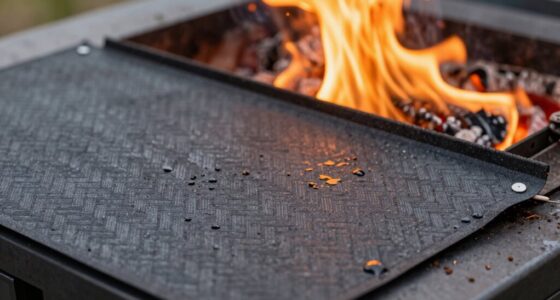
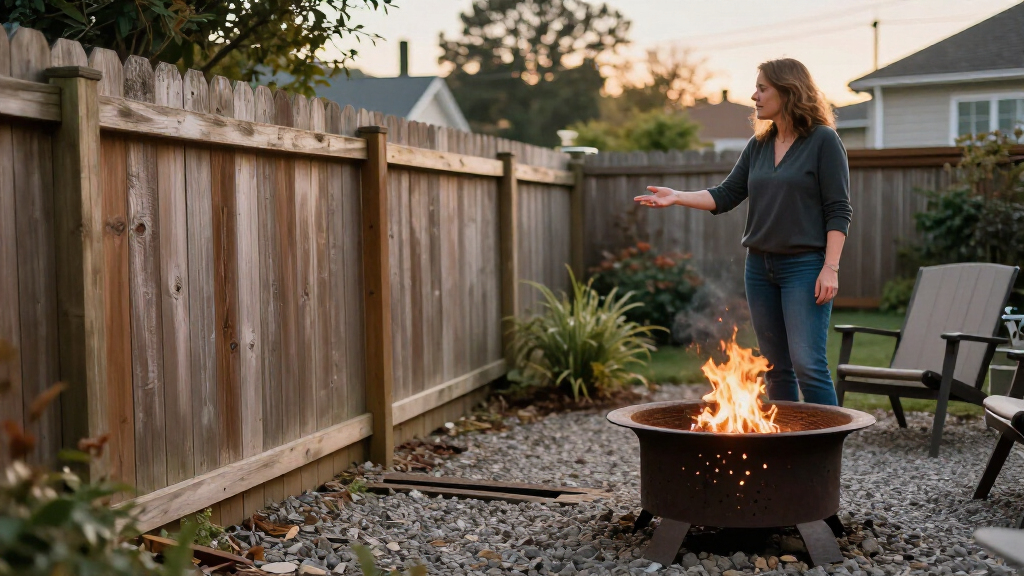
Eastwood, an outdoor cooking and heating expert at Direct Stoves, says neighbours can generally use fire pits in their gardens. He also cautions that placement should account for safety, even though the source identifies no fixed legal distance from a fence. His general advice is to follow the manufacturer’s instructions and put a fire pit on a flat, non-combustible surface, well away from fences, foliage and low branches.
The report recommends speaking to the neighbour before escalating a dispute. A calm request to use a different location may resolve a concern about smoke or nearby combustible materials. It also warns that a lit fire pit should not be moved; any change in position should be made before it is lit, with the manufacturer’s safety directions followed.
If direct discussion does not address persistent smoke, Kluth, a senior associate and conveyancing solicitor at John Fowlers, says residents can contact their local council. Under the test described in the report, smoke may be a statutory nuisance if it unreasonably and substantially interferes with the use or enjoyment of a home or other premises, or injures or is likely to injure health. The council assesses a complaint; the source does not say that every report will result in restrictions.
When Smoke Can Trigger Council Action
The distinction matters because being close to a fence is not, by itself, described as an automatic legal breach. A resident’s case is more likely to turn on the actual risk and effects: whether smoke repeatedly enters a home, substantially interferes with ordinary use of the property, or creates a credible health concern. A fire-safety worry should also be raised promptly, but the report does not set a universal distance or define a specific threshold for a fence-related hazard.
Where a council finds statutory nuisance, Kluth says it can issue an abatement notice restricting or preventing use of the fire pit. If a neighbour ignores or breaches such a notice without a reasonable excuse, a court can impose a fine, according to his explanation. Those are possible steps after assessment, not an automatic outcome whenever a neighbour complains.
The practical sequence can help neighbours avoid an unnecessary escalation: explain the concern, keep a record of recurring smoke or its effects, and seek council advice if the issue persists. Local investigation and the circumstances of each case matter more than a single distance measurement in the guidance provided.
As an affiliate, we earn on qualifying purchases.
No Fixed Fence-Distance Rule
The source report focuses on ordinary domestic fire pits as cooler weather encourages their use. Eastwood’s advice is presented as general fire-safety guidance, not a legal measurement: use the product according to its instructions, place it on a stable non-combustible surface, and keep it away from fencing, plants and low-hanging branches.
Kluth’s comments address the separate question of smoke nuisance under the Environmental Protection Act 1990. The report describes a test based on substantial and unreasonable interference with a home or potential harm to health. It does not provide a national minimum separation distance, a council decision in a particular dispute, or details of local rules that may apply in individual circumstances.
“Fire pits should be placed on a flat, non-combustible surface, well away from fences, foliage or low-hanging branches.”
— Gaz Eastwood, outdoor cooking and heating expert at Direct Stoves, as quoted by Ideal Home
outdoor fire pit on non-combustible surface
As an affiliate, we earn on qualifying purchases.
As an affiliate, we earn on qualifying purchases.
How Councils Will Judge Complaints
The source does not identify a fixed distance from a fence at which a fire pit becomes unlawful, nor does it say that proximity alone establishes a statutory nuisance. Whether smoke meets the legal test depends on its impact and the circumstances; the report does not specify how a particular council would assess evidence or how quickly it would respond.
It is also unclear whether any additional local restrictions apply to a specific property, and the guidance does not describe an individual dispute or council ruling. Residents should check with their own council if they need advice about local procedures. No council finding or enforcement action is reported in the source material.
As an affiliate, we earn on qualifying purchases.
Raise Concerns Before Escalating
Residents concerned about a neighbour’s fire pit can begin by explaining the specific issue and asking whether the fire can be placed farther from the fence before it is lit. If smoke continues to affect the home or appears to create a health concern, they can contact their local council for guidance or an investigation. Details about when smoke occurs and how it affects the property may help explain the complaint.
The next formal step depends on the council’s assessment. If officials find a statutory nuisance, they may serve an abatement notice; any later court action would depend on a breach and the circumstances. Until a council assesses a complaint, the outcome and any restrictions remain uncertain.
garden fire pit with safety features
As an affiliate, we earn on qualifying purchases.
As an affiliate, we earn on qualifying purchases.
Key Questions
Is there a legal minimum distance between a fire pit and a garden fence?
The guidance reported by Ideal Home says there is no specific law setting an exact distance. It advises keeping fire pits well away from fences and other combustible materials as a safety precaution.
Can I complain if smoke from a neighbour’s fire pit enters my home?
You can raise the concern with your neighbour and contact your local council if the problem continues. Under the test described in the report, smoke may qualify as a statutory nuisance if it substantially and unreasonably interferes with the use of a home or may harm health.
What should I do first?
The report recommends speaking to the neighbour first and explaining the safety or smoke concern. Ask about using a different spot before the fire is lit; a lit fire pit should not be moved.
Can the council stop a neighbour using a fire pit?
According to solicitor Jordan Kluth, a council that finds statutory nuisance can serve an abatement notice restricting or preventing use. The source does not suggest this happens automatically; the council must assess the circumstances.
Source: rss
Halloween Picks
halloween
As an affiliate, we earn on qualifying purchases.