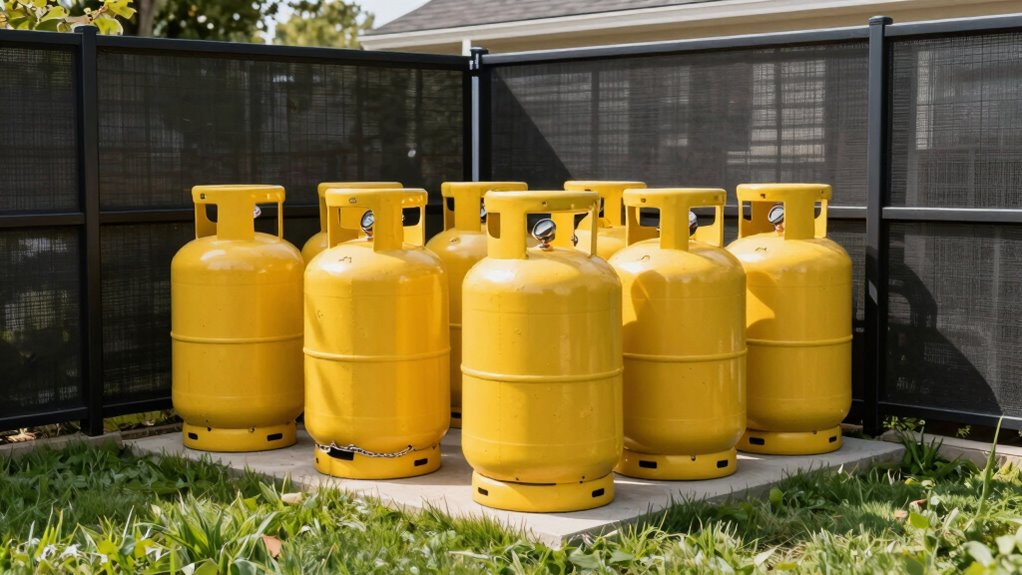

To store propane tanks safely at home, keep them outdoors on a flat, stable surface away from your home’s foundation, vents, drains, and ignition sources. If indoors, guarantee the space is well-ventilated and avoid enclosed areas like closets or garages. Secure tanks upright to prevent tipping, check for leaks regularly, and keep them away from heat or open flames. Proper storage reduces the risk of leaks, fires, or explosions—discover more tips to keep your home safe.
Key Takeaways
- Store tanks outdoors on a flat, stable surface, away from ignition sources and direct sunlight.
- Ensure proper ventilation in indoor storage areas to prevent gas buildup.
- Keep tanks upright and secure to prevent tipping or damage.
- Regularly inspect tanks for leaks, corrosion, or damage before storage.
- Keep tanks away from heat, open flames, and combustible materials, and have fire safety equipment nearby.
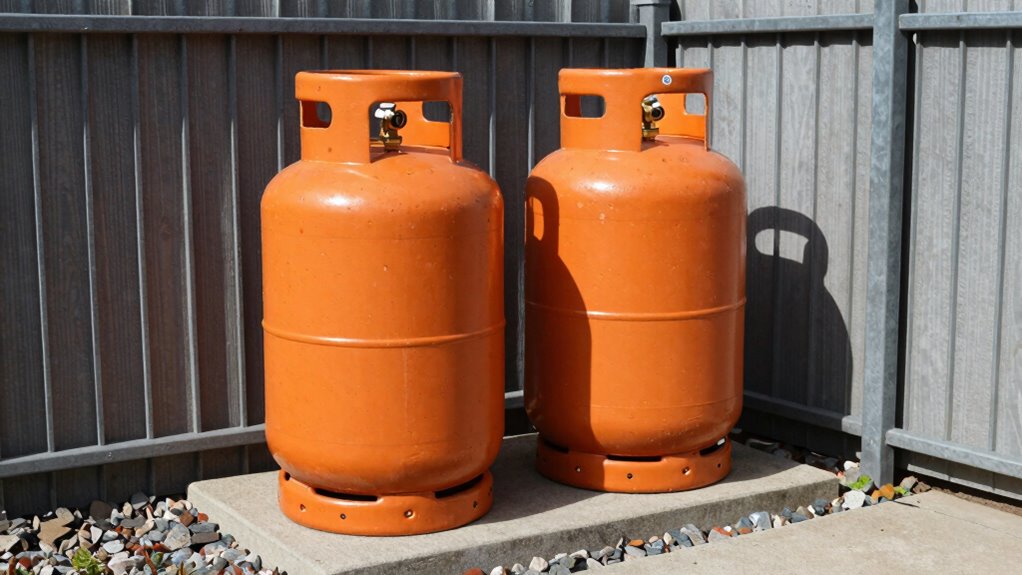
Storing propane tanks safely at home is essential to prevent accidents and guarantee proper operation of your appliances. Proper storage begins with selecting a suitable location that prioritizes safety and accessibility. Keep your propane tanks outdoors whenever possible, on a flat, stable surface away from your home’s foundation, vents, drains, or any sources of ignition. If you must store a tank indoors, ensure that the space is well-ventilated to prevent the buildup of any leaked propane. Indoor ventilation is crucial because propane is heavier than air and can accumulate in low-lying areas, increasing the risk of fire or explosion. You should open windows, use exhaust fans, or install ventilation systems to maintain fresh airflow around stored tanks. Never store propane tanks in enclosed, poorly ventilated spaces like closets, basements, or garages without proper ventilation. Ensuring adequate ventilation is vital to prevent dangerous gas buildup and maintain a safe environment. Fire safety measures are a top priority when storing propane tanks. Always keep tanks away from heat sources, open flames, or electrical appliances that could spark a fire. You should also avoid storing tanks near combustible materials such as paper, cloth, or chemicals. When storing tanks outdoors, place them in a shaded area to avoid direct sunlight, which can cause pressure buildup inside the tank. It’s recommended to secure the tanks upright and upright only, using straps or brackets to prevent tipping over. Always check for leaks before storage by applying a soap solution to the tank’s valve and connections; if bubbles form, you’ll need to repair or replace the tank before use or storage. Label your tanks clearly to avoid confusion and ensure everyone in your household understands the safety protocols. Make sure your tanks are stored away from foot traffic and accessible only to authorized individuals. Keep a fire extinguisher nearby that’s rated for flammable liquids and gases, and familiarize yourself with emergency procedures in case of a leak or fire. Regularly inspect your tanks for signs of corrosion, damage, or leaks, and never store a damaged tank. Remember, maintaining a safe environment involves both proper placement and adherence to fire safety measures, including ensuring good indoor ventilation if storing tanks inside. Proper tank maintenance is essential for ongoing safety and performance. Additionally, staying informed about feedback loops related to propane safety can help you adapt your storage practices over time. Using proper storage practices can significantly reduce the risk of accidents and ensure the longevity of your propane tanks. Being aware of potential hazards associated with propane storage helps in taking proactive steps to prevent issues before they arise. By following these guidelines, you minimize risks and keep your home safe while enjoying the benefits of propane-powered appliances.
As an affiliate, we earn on qualifying purchases.
Frequently Asked Questions
Can I Store Propane Tanks Indoors Safely?
You shouldn’t store propane tanks indoors unless they’re in a well-ventilated area specifically designed for that purpose. Make certain there’s adequate indoor ventilation to prevent gas buildup, and always follow fire safety measures, like keeping tanks away from heat sources and open flames. Regularly check for leaks, and store tanks upright in a cool, dry place. For safety, it’s best to keep propane tanks outdoors, in approved storage containers.
How Often Should I Inspect Stored Propane Tanks?
Checking your stored propane tanks is like tending a garden—you need regular attention. You should inspect them every 3 to 5 years, focusing on tank labeling and signs of corrosion or leaks. Always verify proper ventilation requirements are met to prevent dangerous buildup of fumes. Regular inspections help catch issues early, keeping you safe and your tanks in good condition. Don’t forget, safety’s always worth the extra effort.
What Should I Do if a Propane Tank Starts Leaking?
If a propane tank starts leaking, you should act quickly. First, perform leak detection by smelling for gas or listening for hissing sounds. If you notice a leak, immediately turn off the tank’s valve and evacuate the area. Call emergency services and follow emergency procedures, such as avoiding open flames or electrical switches nearby. Keep a safe distance until professionals confirm it’s safe to return.
Are There Legal Restrictions on Propane Tank Storage?
Did you know that improper propane tank storage can lead to accidents, yet many people overlook legal restrictions? Yes, there are specific storage regulations you must follow to guarantee safety and legal compliance. These rules vary by location but typically include restrictions on tank size, placement distance from buildings, and ventilation. Always check local codes before storing propane tanks at home to avoid fines or dangerous situations.
Can I Store Multiple Tanks Together?
Yes, you can store multiple tanks together, but you need to follow safety guidelines. Make certain each tank is properly labeled with clear tank labeling, so everyone knows it’s propane. Maintain good ventilation requirements around the storage area to prevent gas buildup. Keep tanks upright, away from heat sources, and secure them to prevent tipping. Following these precautions helps keep your storage safe and compliant with safety standards.
outdoor propane tank storage cabinet
As an affiliate, we earn on qualifying purchases.
As an affiliate, we earn on qualifying purchases.
Conclusion
Storing your propane tanks properly is like tending a delicate flame—respect it, and it keeps your home warm and safe. Think of the tank as a trusted partner, standing guard but needing space to breathe. When stored outdoors and away from heat, you’re nurturing a steady ember rather than risking a wild blaze. Handle with care, and your propane will serve you well, a quiet symbol of safety and preparedness glowing steadily in your life.
As an affiliate, we earn on qualifying purchases.
fire extinguisher for flammable gases
As an affiliate, we earn on qualifying purchases.
As an affiliate, we earn on qualifying purchases.