To keep wood pellets dry and usable, store them in airtight, sealed containers like plastic bins or metal barrels that block moisture and air. Place these containers in cool, dry, and well-ventilated areas, elevating them on pallets to avoid ground dampness. Use desiccants inside containers to absorb residual moisture and regularly check for signs of mold or dampness. By following these steps, you’ll prevent deterioration and guarantee your pellets burn efficiently—discover more tips below.

Get kitchen gear delivered free with Prime
- Fast, free delivery on millions of items
- Prime Video, Amazon Music and more included
- Member-only deals all year
Key Takeaways
- Store pellets in airtight, sealed containers to prevent moisture and air infiltration.
- Keep storage areas cool, dry, and well-ventilated, away from humidity and temperature fluctuations.
- Elevate containers on pallets or shelves to avoid ground contact and moisture exposure.
- Use desiccants and moisture barriers inside containers to absorb residual humidity.
- Regularly inspect pellets for signs of mold or dampness and rotate stock accordingly.

Storing wood pellets properly is essential to maintaining their quality and ensuring they burn efficiently when needed. The key to keeping your pellets in top condition is moisture control. Wood pellets are highly hygroscopic, meaning they readily absorb moisture from the air, which can lead to mold, degradation, and poor combustion. To prevent this, you need a dry storage environment and effective storage containers that minimize exposure to humidity.
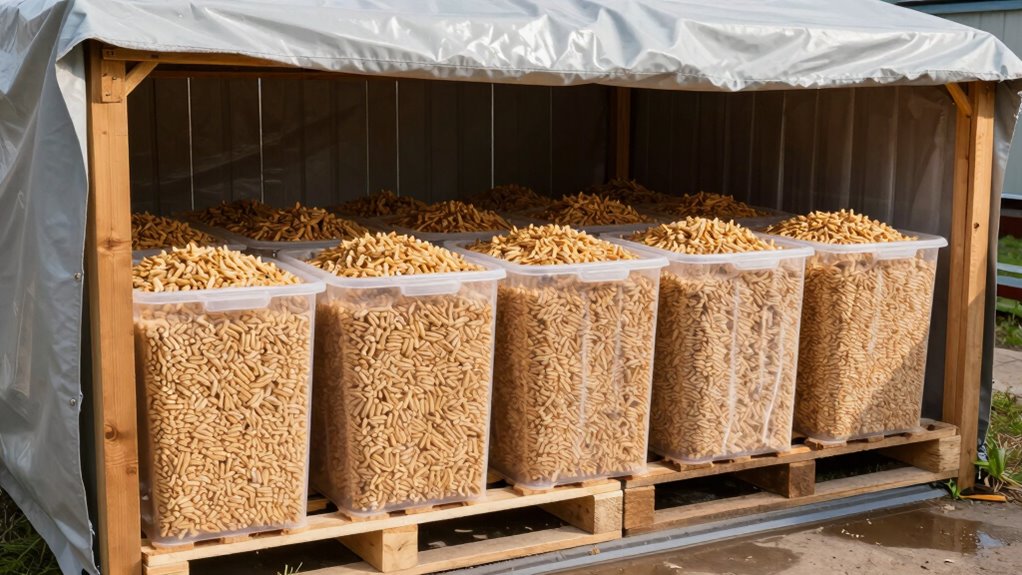
Start by choosing the right storage containers. Opt for airtight, sealed containers designed specifically for pellets or other biomass fuels. These containers create a barrier against moisture and prevent air from infiltrating, which is fundamental in maintaining low humidity levels inside. Plastic bins with tight-fitting lids, metal barrels with secure closures, or specially designed pellet storage bags work well. Avoid open or loosely covered containers, as even a small amount of humidity can compromise your pellets’ quality over time.
Use airtight containers like plastic bins, metal barrels, or specialized bags to keep pellets dry and maintain quality.
Location is equally important. You should store your pellets in a cool, dry, and well-ventilated area. Avoid places prone to temperature fluctuations or high humidity, such as basements, garages, or sheds directly exposed to weather. If you’re limited in space, consider elevating your storage containers off the ground—placing them on pallets or shelves—to prevent contact with any moisture that might seep in from the floor. Keep the storage area free from water leaks, condensation, or dampness, which can quickly ruin your supply. Ensuring proper ventilation can significantly reduce moisture buildup and prolong the shelf life of your pellets. Additionally, using moisture barriers in your storage setup can further help prevent humidity from reaching your pellets. Regular monitoring of humidity levels can help you maintain optimal storage conditions and catch issues early before they impact your pellets.
Implementing moisture control measures is fundamental. Using desiccants inside your storage containers can help absorb residual moisture, especially if you live in a humid climate. Regularly inspect your stored pellets for signs of moisture, such as clumping or mold. If you notice any of these issues, it’s best to discard affected pellets to avoid introducing moisture into your burning appliance. Additionally, maintaining a low humidity level in the storage environment—preferably below 50%—can substantially extend the shelf life of your pellets. Being aware of proper storage practices can also prevent unnecessary waste and deterioration. Properly sealed and maintained storage conditions are crucial to avoiding moisture absorption, which directly impacts pellet quality. Regularly rotating your stock ensures that older pellets are used first, preventing them from deteriorating over time.
airtight plastic storage bins for wood pellets
As an affiliate, we earn on qualifying purchases.
As an affiliate, we earn on qualifying purchases.
Frequently Asked Questions
Can I Store Wood Pellets Outdoors Long-Term?
Yes, you can store wood pellets outdoors long-term if you use weatherproof containers to shield them from moisture. Make certain the container is airtight to keep out pests and prevent humidity from seeping in. Place it on a level, elevated surface to avoid ground moisture. Regularly check for any signs of pests or water intrusion, and reseal as needed. Proper storage guarantees your pellets stay dry, fresh, and ready to use.
How Do I Prevent Mold Growth on Stored Pellets?
To prevent mold growth on your stored pellets, you need to focus on moisture control and mold prevention. Keep the pellets in a dry, well-ventilated area, and consider using a moisture barrier or airtight container. Regularly check for signs of dampness or mold, and guarantee the storage space stays cool and dry. Proper moisture control is key to maintaining your pellets’ quality and preventing mold from developing.
Is It Okay to Mix Different Brands of Pellets?
Mixing different brands of pellets is like blending colors on an artist’s palette—your results can be vibrant or muddled. It’s generally okay if the brands are compatible, but watch for differences in quality and density. Brand compatibility matters because inconsistent pellets can affect your stove’s performance. Pellet blending can save money but may lead to uneven burning or ash buildup, so monitor your stove’s operation closely after mixing brands.
What Is the Ideal Humidity Level for Storage?
You should aim for a humidity level around 10-15% for storing wood pellets. To maintain this ideal moisture control, keep your pellets in airtight storage containers that prevent humidity from seeping in. Regularly check the storage environment, especially in humid climates, and make certain the containers are sealed tightly. Proper humidity levels keep your pellets dry, preserve their quality, and ensure efficient burning when you use them.
How Often Should I Check My Stored Pellets?
You should check your stored pellets at least once a month. Inspect your pellet container for any signs of moisture or mold, especially if stored in a humid environment. Keep an eye on the storage temperature, ensuring it remains consistent and within the recommended range to prevent condensation. Regular checks help you catch issues early, ensuring your pellets stay dry, fresh, and ready for use whenever you need them.
metal barrels for pellet storage
As an affiliate, we earn on qualifying purchases.
As an affiliate, we earn on qualifying purchases.
Conclusion
By keeping your wood pellets in a dry, airtight sanctuary, you’re fundamentally sealing in their fiery potential, turning them into a dependable source of warmth when you need it most. Think of your storage space as a cozy fort, shielding your pellets from rain and moisture like a vigilant guardian. With just a little care, your pellets will stay pure and ready, ready to ignite cozy fires and warm your home through chilly nights, like a trusted friend always there for you.
pellet storage bags with moisture barrier
As an affiliate, we earn on qualifying purchases.
As an affiliate, we earn on qualifying purchases.
desiccant packs for biomass fuel storage
As an affiliate, we earn on qualifying purchases.
As an affiliate, we earn on qualifying purchases.
Halloween Picks
halloween
As an affiliate, we earn on qualifying purchases.