Soot builds up faster in some pizza ovens because of poor fuel quality, insufficient airflow, or clogged ventilation systems. Using damp or soft woods, or low-quality charcoal, increases soot production. Reduced airflow or blocked vents hinder smoke removal, causing more soot to settle. Regular maintenance and choosing better fuel can slow this buildup. To discover how to keep your oven cleaner longer, you’ll find important tips that can make a big difference.

Get kitchen gear delivered free — and shop member deals
- Fast, free delivery on millions of items
- Access to Prime Big Deal Days deals on October 6–7
- Prime Video, Amazon Music and more included
Key Takeaways
- Poor quality or damp wood produces more soot, causing faster buildup in pizza ovens.
- Inadequate airflow or clogged vents hinder smoke removal, increasing soot accumulation.
- Low combustion efficiency from improper fuel management leads to quicker soot deposits.
- Unseasoned or low-quality fuel, like certain charcoal, generates soot more rapidly.
- Insufficient maintenance of ventilation systems allows soot to settle and accumulate faster.
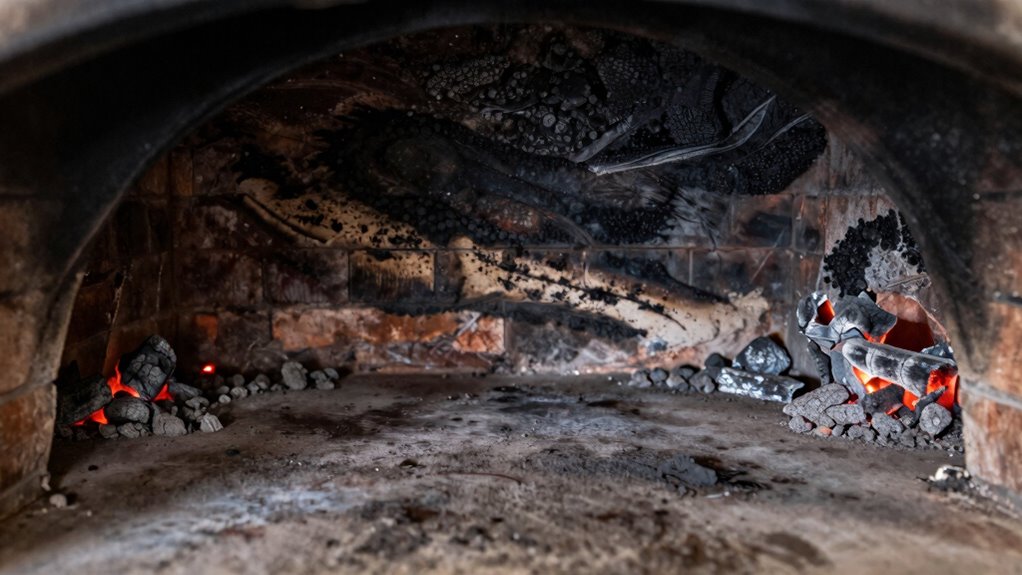
If you’ve noticed soot accumulating more quickly in your pizza oven, it’s likely due to factors you can control. The primary reasons often relate to the type of fuel you use and how well your oven’s ventilation system works. Understanding these elements can help you reduce soot buildup and keep your oven cleaner for longer.
First, consider your fuel types. Different fuels produce varying amounts of soot when burned. Wood, especially softer woods like pine or green wood, tends to create more soot compared to hardwoods like oak or hickory. If you’re using low-quality or damp wood, you’re more likely to see heavy soot deposits. Charcoal, while cleaner-burning than wood, can still produce soot if it’s of poor quality or not fully seasoned. Propane or natural gas usually results in minimal soot, but only if the burners are functioning correctly and the gas is clean. Switching to a better-quality, well-seasoned wood or a cleaner-burning fuel can considerably reduce soot buildup in your oven. Additionally, fuel quality significantly impacts the amount of soot produced during combustion. Ensuring proper combustion efficiency can also help minimize soot formation and improve overall burn quality. Good fuel management practices, such as controlling airflow and temperature, also contribute to cleaner burning.
Next, ventilation efficiency plays a vital role. Your oven needs a proper airflow system to draw out smoke and combustion byproducts effectively. If the ventilation isn’t working well—whether because of clogged vents, inadequate exhaust fans, or poor oven design—soot particles settle more quickly on surfaces. You might notice more soot if the airflow isn’t strong enough to carry away the combustion residues. Ensuring your venting system is clear of obstructions and functioning at its best keeps the smoke moving smoothly out of the oven. Installing or upgrading exhaust fans, cleaning chimney flues regularly, and designing your oven with proper airflow pathways can help maintain high ventilation efficiency. Additionally, proper maintenance of your oven’s components can prevent soot buildup from becoming a persistent issue. As a result, less soot will settle inside the oven, and you’ll experience fewer clean-up issues over time. Regularly inspecting and maintaining your oven’s ventilation system is key to preventing excessive soot accumulation.
As an affiliate, we earn on qualifying purchases.
Frequently Asked Questions
How Does the Type of Fuel Affect Soot Accumulation?
The type of fuel you use directly impacts soot accumulation because different fuels undergo varying degrees of fuel combustion, which affects soot deposition. For example, wood produces more soot than gas, leading to faster buildup. Solid fuels with high carbon content tend to generate more soot, while cleaner-burning fuels like propane reduce soot deposition. Choosing the right fuel guarantees less soot buildup, keeping your oven cleaner and functioning more efficiently.
Can Oven Cleaning Frequency Reduce Soot Buildup?
Think of your pizza oven as a forge that needs regular tending. By maintaining a consistent cleaning schedule, you prevent soot from settling like stubborn shadows, making residue removal easier. Regular cleaning not only preserves your oven’s performance but also minimizes buildup, ensuring your pizzas cook evenly and taste great. Skipping this step invites stubborn soot, turning your culinary masterpiece into a smoky mess. Stay proactive, and your oven will thank you.
What Role Does Oven Ventilation Play in Soot Production?
Oven ventilation plays a vital role in soot production by influencing oven airflow and exhaust efficiency. When airflow is poor, smoke and soot particles linger inside, increasing buildup. Efficient exhaust systems remove these particles quickly, reducing residue. You should make certain your oven’s ventilation is working properly, with unobstructed airflow and high exhaust efficiency, to minimize soot buildup and keep your pizza oven cleaner and functioning at its best.
Are There Specific Pizza Oven Designs That Prevent Soot Buildup?
Yes, certain pizza oven designs help prevent soot buildup. Look for ovens with well-insulated walls and a high-quality pizza stone, which evenly distributes heat and reduces smoke residue. Good oven insulation minimizes temperature fluctuations, lowering soot production. Additionally, some models feature improved airflow systems that vent smoke efficiently, preventing soot accumulation. Choosing these designs guarantees cleaner cooking, better pizza quality, and easier maintenance.
How Does Oven Temperature Influence Soot Formation?
Oven temperature directly influences soot formation; higher temperatures tend to reduce soot buildup because they promote more complete combustion of the wood or fuel. When your oven runs too cool, incomplete combustion occurs, leading to increased soot. To minimize soot buildup, keep your oven at ideal high temperatures, ensuring better combustion and cleaner operation. Proper temperature control helps maintain a cleaner oven and improves pizza quality.
As an affiliate, we earn on qualifying purchases.
Conclusion
So, if you notice soot piling up faster in your pizza oven, it’s a sign to pay attention to your setup. Regular cleaning and proper ventilation can prevent minor issues from snowballing. Think of it as tending to a garden—ignore the weeds, and they’ll take over. Stay proactive, keep your oven in tip-top shape, and you’ll enjoy perfect pies without the soot slowing you down. After all, an ounce of prevention is worth a pound of cure.
exhaust fan for outdoor pizza oven
As an affiliate, we earn on qualifying purchases.
As an affiliate, we earn on qualifying purchases.
seasoned hardwood for pizza oven
As an affiliate, we earn on qualifying purchases.
As an affiliate, we earn on qualifying purchases.
Fall Picks
fall essentials
As an affiliate, we earn on qualifying purchases.