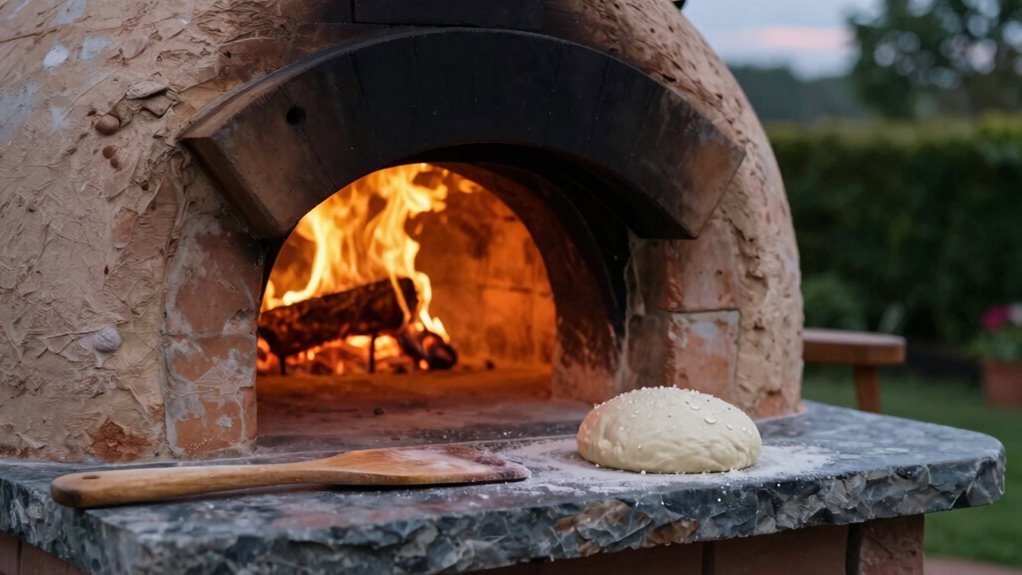
For your backyard pizza oven, aim for a hydration level between 60% and 65%. This range offers the perfect balance of dough strength, extensibility, and heat resistance, helping you create airy, tender crusts that hold up well during high-temperature baking. Too much water can make the dough sticky and hard to handle, while too little can lead to dense results. Keep exploring to discover tips for perfecting your dough and achieving ideal crust quality.
Key Takeaways
- Aim for a hydration level of 60-65% for a good balance of workability and crust texture.
- Higher hydration (>70%) can produce airy crusts but may be difficult to handle in high heat.
- Lower hydration (<55%) results in denser, chewier crusts unsuitable for quick, high-temperature cooking.
- Proper hydration ensures dough withstands high oven temperatures without tearing or collapsing.
- Adjust hydration based on oven heat, dough handling, and desired crust characteristics.
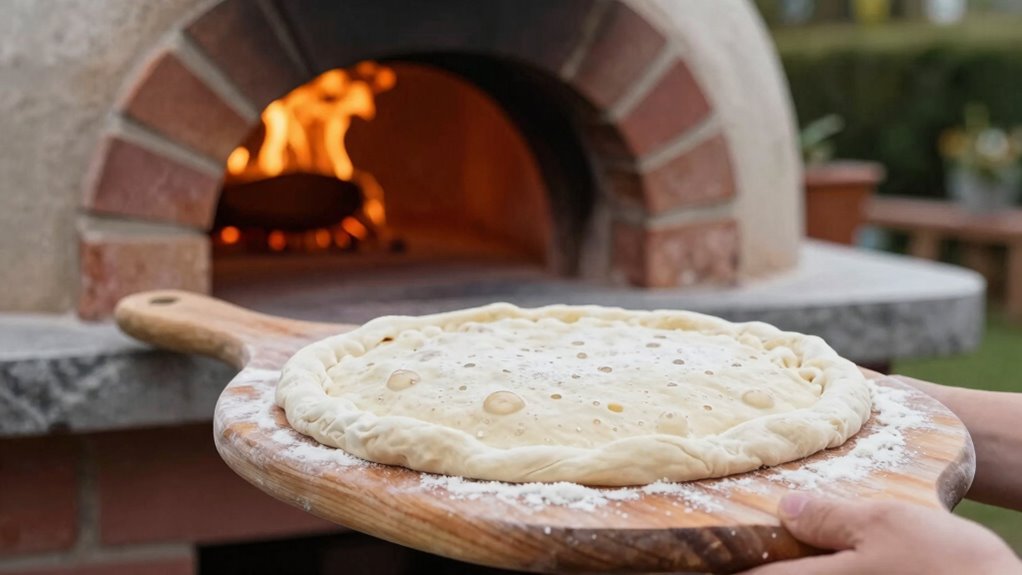
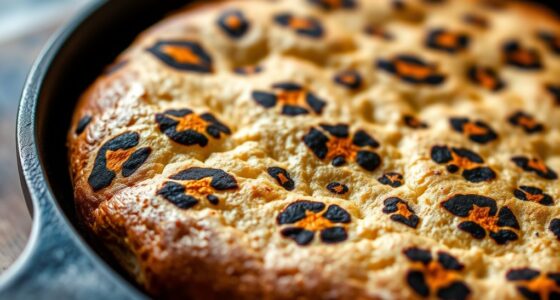
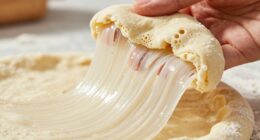
Have you ever wondered how the hydration level of your pizza dough influences the final crust? It’s a vital factor that can dramatically change the texture, flavor, and overall quality of your homemade pizza. Hydration refers to the percentage of water relative to flour in your dough, and finding the right balance is key to achieving that perfect crust. When you increase hydration, the dough becomes softer and more extensible, leading to a lighter, airier crust with a nice chew. Conversely, lower hydration produces a denser, crisper crust that’s easier to handle but might lack the open crumb structure you’re after.
Dough fermentation plays an essential role here. With higher hydration levels, fermentation tends to accelerate because the increased water content makes yeast activity more efficient. This means your dough can ferment faster and develop complex flavors in less time, provided you keep the temperature controlled. For backyard pizza ovens, where oven temperature can vary greatly, managing dough hydration becomes even more important. A hotter oven will cook the pizza quickly, so a dough with a good balance of hydration ensures it can withstand the high heat without becoming overly fragile or undercooked inside.
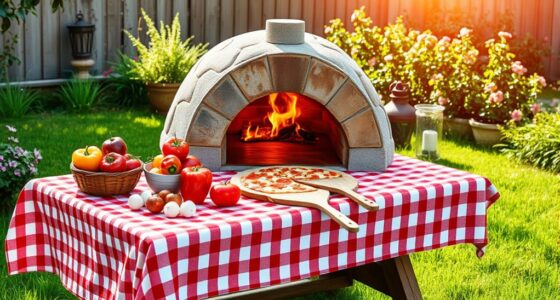
When you’re working with your backyard oven, which often reaches temperatures of 700-900°F, you’ll want a dough that can handle intense heat while maintaining its structure. A hydration level of around 60-65% is usually a sweet spot. It’s high enough to produce an airy, tender crust but manageable enough to handle and shape easily. If you opt for a hydration level above 70%, you might find your dough sticky and difficult to work with, especially if your oven heats unevenly or if you’re still perfecting your technique. On the other hand, if your hydration drops below 55%, your dough might be easier to handle but could turn out dense and chewy, lacking the lightness that makes a pizza special. Additionally, understanding dough hydration can help you better adapt recipes to different oven conditions and personal preferences.
pizza dough hydration meter
As an affiliate, we earn on qualifying purchases.
As an affiliate, we earn on qualifying purchases.
Frequently Asked Questions
How Does Hydration Level Affect Dough Flavor?
A higher hydration level enhances dough flavor by boosting flavor complexity and dough aroma. When your dough contains more water, enzymes work better, developing richer, deeper tastes. This also encourages fermentation, which adds aromatic qualities. You’ll notice a more nuanced flavor profile and a fragrant aroma. Keep in mind, though, that too much hydration can make shaping tricky. Finding the right balance guarantees your pizza delivers both great flavor and ideal texture.
Can Hydration Levels Change With Different Flour Types?
Yes, hydration levels can change with different flour types because of flour moisture and hydration stability. Whole grain flours tend to absorb more water, requiring higher hydration, while bread or all-purpose flours might need less. You should adjust your hydration based on the flour’s moisture content and how stable it remains during mixing. Paying attention to these factors helps you achieve ideal dough consistency for your backyard pizza oven.
What’s the Ideal Hydration for Gluten Development?
The ideal hydration for gluten development is around 60-70%, which helps your dough ferment properly and develop a strong gluten network. This level guarantees good elasticity and extensibility, leading to a chewy, airy crust. Higher hydration can improve crust texture, making it lighter and more open, but it requires careful handling. Adjust hydration based on flour type and desired crust characteristics for the best results in your backyard pizza oven.
How Does Hydration Impact Dough Handling and Shaping?
Imagine you’re a medieval baker, mastering dough. Hydration directly influences how you handle and shape it—higher hydration makes dough more elastic, easing stretching but risking stickiness. Proper hydration enhances dough elasticity, making shaping smoother, while also contributing to crust crispness. Too little hydration results in tough dough, while too much can be sticky and difficult to manage. Finding the right balance guarantees your pizza dough is easy to work with and yields a perfect crust.
Should Hydration Levels Vary for Different Pizza Styles?
Yes, hydration levels should vary for different pizza styles because dough fermentation and baking temperature influence the final crust. Higher hydration creates a lighter, airy texture, ideal for Neapolitan pizzas, while lower hydration yields a firmer crust suitable for thin-crust styles. Adjust hydration based on your dough’s fermentation process and baking temperature, ensuring ideal dough handling, shaping, and oven performance for each style.
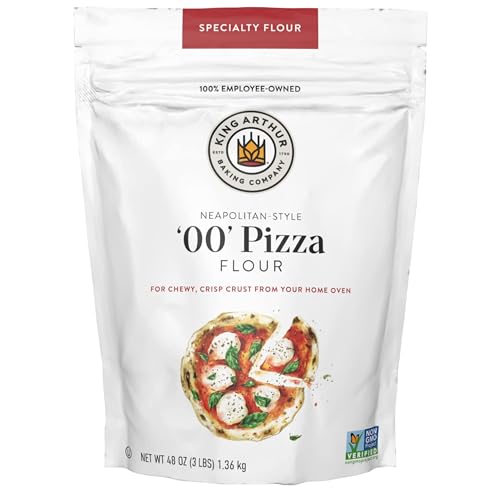
King Arthur 00 Pizza Flour, Non-GMO Project Verified, 100% American Grown Wheat, 3 lb Bag
Authentic Italian Texture: Incredibly fine milling creates the perfect 00 flour for achieving quintessential leopard spots on your…
As an affiliate, we earn on qualifying purchases.
As an affiliate, we earn on qualifying purchases.
Conclusion
Finding the perfect hydration level for your backyard pizza oven is like tuning a fine instrument—too dry, and the dough’s as tough as a leather boot; too wet, and it becomes a sticky mess. Aim for that sweet spot where your dough dances easily in your hands, crisping to perfection in your oven’s fiery embrace. When you master this balance, each pizza will sing with flavor, turning your backyard into a culinary symphony.

Old Stone Round Pizza Stone, 16-Inch
Makes restaurant quality pizzas, bread, pastries and vegetables
As an affiliate, we earn on qualifying purchases.
As an affiliate, we earn on qualifying purchases.

Winco , 8-Quart, Stainless Steel (MXB-800Q)
Stainless steel durable construction for years of work
As an affiliate, we earn on qualifying purchases.
As an affiliate, we earn on qualifying purchases.