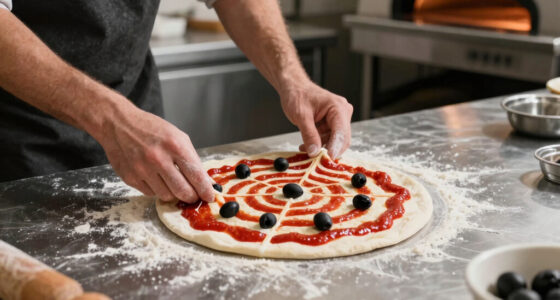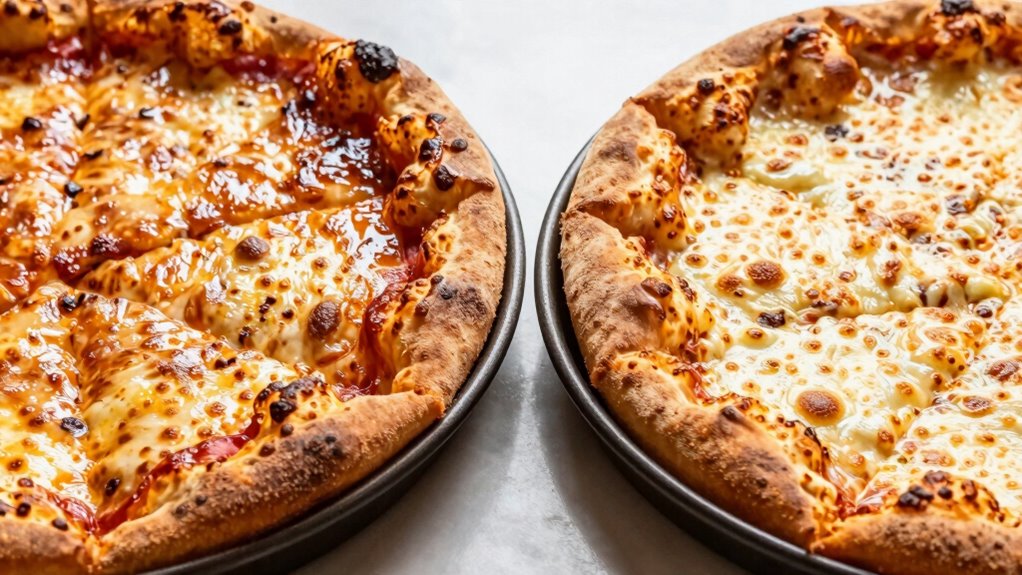

When baking with a Detroit-style pan, expect a crisp, airy, and slightly thicker crust that bakes faster in about 20-25 minutes. In contrast, a deep dish pan produces a dense, buttery crust, requiring 30-35 minutes to fully bake. The pan material also influences the process: metal heats quickly for a crisp crust, while ceramic or heavy pans guarantee even cooking but take longer. Understanding these differences can help you customize your perfect pizza—discover more about what makes each method unique.
Open a free Amazon Business account
Business pricing, bulk buying and tax-exempt orders.
As an affiliate, we earn on qualifying purchases.
Key Takeaways
- Detroit pan produces a crispy, airy crust with a shorter bake time of 20-25 minutes.
- Deep dish pans create a dense, buttery crust requiring 30-35 minutes to fully bake.
- Metal pans heat faster, reducing baking time; ceramic pans promote even cooking but extend bake duration.
- Lighter toppings are preferred for Detroit-style to prevent sogginess, while deep dish allows more ingredient layering.
- Overall, Detroit-style results in a crunchier, lighter crust, whereas deep dish offers a hearty, bread-like texture.

When it comes to Chicago-style pizza, the choice between a Detroit pan and a deep dish pan can considerably influence your experience. One of the most noticeable differences lies in the crust thickness. A Detroit pan typically produces a crust that’s crispy, golden, and slightly thicker than a standard pizza but still manageable. Its crust is often airy and light on the inside, thanks to the way the dough is layered and baked. On the other hand, a deep dish pan is designed to hold a much thicker, almost pie-like crust. This crust is dense, buttery, and substantial, providing a sturdy base that supports generous toppings and cheese. The crust thickness directly impacts how the pizza feels in your mouth, with Detroit-style offering a crunchier bite and deep dish offering a more filling, bread-like experience. Crust characteristics also play a crucial role in determining the overall texture and flavor of the pizza. Baking time is another critical factor that changes depending on which pan you use. Because of the crust thickness and the density of ingredients, a Detroit pan generally requires a shorter baking time. Its lighter crust and less dense structure allow heat to penetrate more quickly, ensuring the pizza cooks evenly without overbaking the toppings. Typically, you’ll find that a Detroit-style pizza bakes in about 20 to 25 minutes at the right temperature. Conversely, a deep dish pan, with its thicker crust and layers of cheese, sauce, and toppings, demands a longer baking period. It usually needs around 30 to 35 minutes to bake through completely. This longer baking time ensures that the crust becomes thoroughly cooked and golden brown while the toppings meld together perfectly. The change in baking time also influences how you prepare your ingredients. For a Detroit pan, you might want to keep toppings lighter or add them later in the baking process to prevent sogginess. With a deep dish, you can layer ingredients more generously since the extended baking time helps prevent the crust from becoming undercooked or doughy. The pan quality and material also play roles; metal pans tend to heat faster, shortening baking times, whereas ceramic or heavy-duty pans can extend baking times but promote even cooking.
As an affiliate, we earn on qualifying purchases.
Frequently Asked Questions
Which Pan Is Better for Gluten-Free Pizza?
You’ll find that a Detroit pan is better for gluten-free crusts because its shallow, straight sides help create a crisp, evenly baked crust. The pan’s compatibility with various gluten-free doughs guarantees you get a sturdy base without sogginess. Plus, its shape prevents sticking and promotes even baking. Overall, choosing a Detroit pan enhances your gluten-free pizza, delivering a satisfying texture and a perfectly cooked crust every time.
How Do Pan Materials Affect Baking Results?
Think of your pan as the heart of your oven’s performance. Metal conductivity determines how quickly heat spreads, while heat retention keeps that warmth steady. A pan with high metal conductivity, like aluminum, heats evenly and crisps the crust beautifully. A material with good heat retention, such as cast iron, maintains warmth longer, ensuring a consistent bake. Your choice of material influences crust texture and overall baking success.
Can I Substitute One Pan Type for the Other?
You can substitute one pan type for the other, but expect differences in pan shape that affect crust texture. A Detroit pan is shallower and wider, creating a crispier, thinner crust, while a deep dish pan results in a thicker, softer crust. If you switch, monitor baking times closely since the shape impacts heat distribution. Adjust your baking time and check frequently to get the best results.
What Is the Ideal Pizza Thickness for Each Pan?
You’d think the ideal thickness was obvious, but it’s not—Detroit pan’s a thinner, crisper crust, usually around 1/4 inch, baked at higher temperatures for a crunch. Deep dish, on the other hand, demands a thicker, more substantial crust—closer to an inch—baked at a lower temp, allowing the filling to cook thoroughly. So, your crust texture and baking temperature determine whether you’re aiming for a delicate or hearty slice.
How Does Pan Size Influence Baking Time?
A larger pan size means your pizza will bake longer, requiring you to adjust the oven temperature slightly lower to prevent burning the crust. Conversely, a smaller pan bakes faster, so you might need a higher temperature. This influences the crust texture—longer baking can make it crispier, while shorter baking keeps it softer. Keep an eye on the oven, and adjust times accordingly for the perfect crust.
As an affiliate, we earn on qualifying purchases.
Conclusion
Choosing between a Detroit pan and a deep dish pan can transform your pizza experience. For instance, imagine trying a Detroit-style slice with its crispy edges and airy crust—deliciously unique. Using the right pan guarantees your crust gets that perfect balance of chewiness and crunch, elevating your homemade pizza game. So, pick your pan wisely, and get ready to enjoy a pizza that’s truly tailored to your taste buds!
As an affiliate, we earn on qualifying purchases.
As an affiliate, we earn on qualifying purchases.
Flea & tick season Picks
flea and tick prevention
As an affiliate, we earn on qualifying purchases.