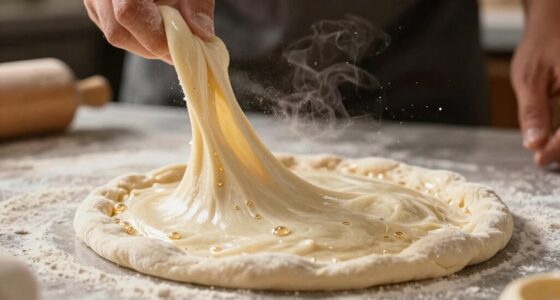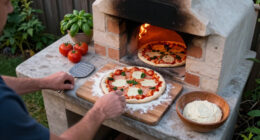
To spin pizzas like a pizzaiolo, start with well-rested, elastic dough that responds smoothly to handling. Lightly flour your surface and hands, then gently flatten and shape the dough using your fingers or palms. Use controlled spinning motions, allowing centrifugal force to help stretch the dough evenly. Keep a steady, confident grip and avoid pressing down hard. Focus on gentle tension and smooth rotation—practicing these techniques will help you master the craft. Keep going to learn more tips!

Get kitchen gear delivered free with Prime
- Fast, free delivery on millions of items
- Prime Video, Amazon Music and more included
- Member-only deals all year
Key Takeaways
- Ensure proper gluten development through kneading and resting for optimal dough elasticity.
- Lightly flour the surface and hands to prevent sticking and facilitate smooth stretching.
- Use centrifugal force and continuous, gentle spinning motions to evenly stretch the dough.
- Maintain even tension with confident, controlled handling, avoiding pressing down hard.
- Test elasticity by gently pulling edges; let dough rest if it resists or tears easily.
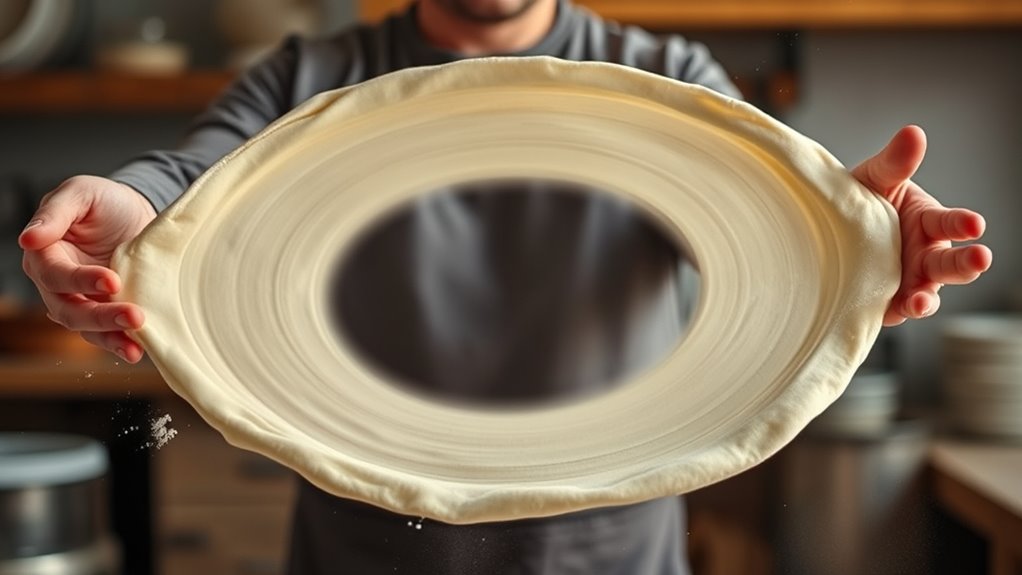
Ever wondered how professional pizza makers create that perfect, evenly stretched crust? The secret lies in understanding dough elasticity and mastering spinning techniques. When you work with dough that has good elasticity, it responds smoothly to your motions, allowing you to stretch it without tearing or losing its shape. This elasticity is achieved through proper kneading and fermentation, which develop the gluten structure, giving the dough the flexibility needed for spinning. As you prepare to spin the dough, keep in mind that the goal is to handle it gently but confidently, allowing the dough’s natural stretchiness to do the work.
To start, lightly flour your work surface and your hands to prevent sticking. Place the dough ball on the surface, and gently flatten it using your fingers or the heel of your hand. As you begin to stretch, use spinning techniques that involve a combination of centrifugal force and controlled movements. The key is to keep the dough spinning in your hands or over the surface, continuously rotating it to distribute the tension evenly. This spinning motion helps you maintain a uniform thickness and shape, making your crust more consistent. The more you practice, the more intuitive these motions become, allowing you to spin faster and with greater control.
A vital aspect of successful spinning is maintaining the dough’s elasticity. If the dough is too stiff, it won’t stretch easily and may tear. If it’s too soft, it can become difficult to control and may sag or lose its shape. To test the dough’s elasticity, gently pull at the edges; it should stretch without tearing immediately. If it resists, give it a few more minutes of resting time to relax. Resting also helps rebuild the dough’s elasticity, making it more pliable for spinning. Proper gluten development is essential for achieving the right elasticity and stretchability. When you spin, focus on a smooth, continuous motion, letting centrifugal force do much of the work. Keep your hands under the dough, guiding it gently but firmly, and avoid pressing down too hard, which can hinder the stretching process.
As an affiliate, we earn on qualifying purchases.
Frequently Asked Questions
What Type of Flour Is Best for Pizza Dough?
You should use bread flour for pizza dough because it has higher protein content, which promotes gluten development. This creates a stronger, elastic dough that’s easier to stretch and gives you a chewy, airy crust. All-purpose flour works in a pinch, but for the best results, opt for bread flour or even tipo 00 flour if you want a traditional Italian pizza with delicate crust and excellent gluten structure.
How Do I Prevent My Dough From Tearing?
Think of your dough as a delicate dance partner; if you don’t let it stretch gently, it’ll tear. To prevent tearing, focus on improving dough elasticity through proper gluten development—knead it until smooth and elastic. Keep it well-hydrated and rested, which allows the gluten strands to relax. When stretching, handle it with care, using light, even pressure, letting the dough’s natural elasticity do the work.
What’s the Ideal Dough Hydration Level?
You should aim for a dough hydration level around 60-65%, which balances dough elasticity and ease of stretching. Proper fermentation timing enhances gluten development, making your dough more resilient and less prone to tearing. Keep an eye on how the dough feels; it should be pliable yet firm. Adjust hydration slightly based on your environment, but sticking within this range helps achieve ideal stretchability and a perfect crust.
How Long Should I Let the Dough Rest?
You should let your dough rest for at least 1 to 2 hours, but ideally 8 to 24 hours for better dough fermentation and gluten development. This resting period allows the dough to relax, making it easier to stretch and spin without tearing. Longer fermentation enhances flavor and texture, so if you have time, extend the rest to develop more complex flavors and stronger gluten structure, resulting in a better pizza.
Can I Use a Rolling Pin Instead of Spinning?
Can you use a rolling pin instead of spinning? While it’s possible, rolling pins come with challenges like uneven thickness and difficulty preventing dough tearing. Do you want a perfectly thin, airy crust? Spinning helps stretch the dough evenly, reducing tearing and creating a light, airy texture. Using a rolling pin might work in a pinch, but for authentic results and dough integrity, spinning is your best bet.
As an affiliate, we earn on qualifying purchases.
Conclusion
Spinning pizzas like a pizzaiolo takes practice, but don’t get discouraged. Remember, even experienced chefs spin dozens of times to perfect their technique. Did you know that a skilled pizzaiolo can stretch and spin a dough in just a few seconds? Keep practicing regularly, stay patient, and trust your instincts. With time, you’ll impress friends and family with beautifully spun pizzas, just like the pros. Happy spinning!
As an affiliate, we earn on qualifying purchases.
As an affiliate, we earn on qualifying purchases.
Halloween Picks
halloween
As an affiliate, we earn on qualifying purchases.