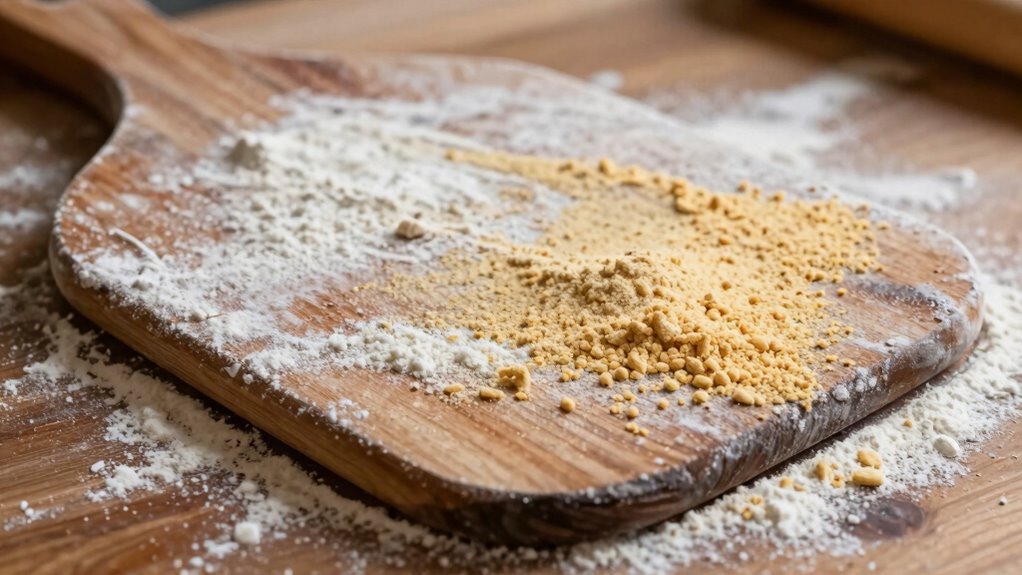
To use semolina on a pizza peel without burning it, apply a thin, even layer, making sure not to overcoat. Lightly dust your dough before placing it on the peel to prevent sticking. Keep an eye on the amount of semolina, especially at high oven temperatures, as excess can scorch. Proper application and mindful use help guarantee smooth transfer and prevent burning. If you want to master the technique, there’s more to think about for perfect results.
Key Takeaways
- Apply a thin, even layer of semolina to prevent burning and ensure smooth pizza transfer.
- Use only moderate amounts of semolina to avoid scorching and flavor issues.
- Preheat the oven thoroughly before baking to reduce the risk of burning semolina.
- Consider using alternative coatings like rice flour or cornmeal for higher heat tolerance.
- Monitor the pizza during baking and adjust oven temperature if signs of burning appear.
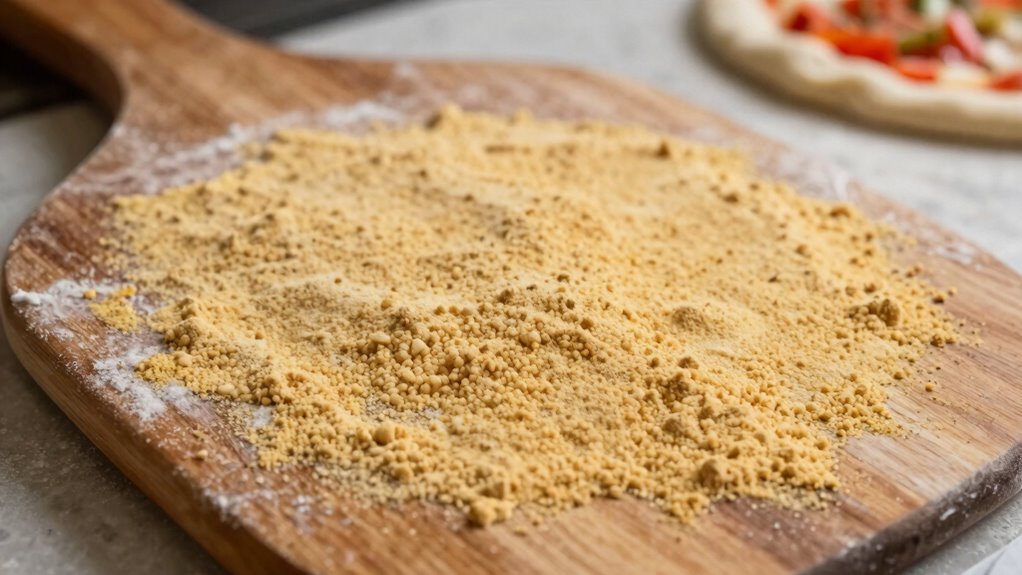
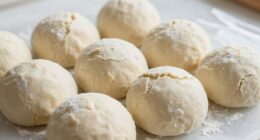
Using semolina on a pizza peel is a simple way to prevent your dough from sticking and make transferring your pizza to the oven effortless. When you’re preparing your dough, ensuring the right dough consistency is key; it should be soft enough to handle but firm enough to hold its shape. If your dough is too sticky, it’s more likely to cling to your work surface and peel, making the transfer a challenge. In such cases, applying a light dusting of semolina helps create a barrier that allows the dough to slide smoothly without sticking, especially when you’re ready to move it into the oven.
Using semolina on your pizza peel helps prevent sticking and ensures a smooth transfer to the oven.
However, it’s important to use semolina in moderation. Too much can cause your pizza to burn or develop a bitter flavor, particularly if it’s exposed directly to high heat. To avoid this, sprinkle only a thin, even layer on your pizza peel before placing the dough on top. This minimizes the risk of burning and ensures a clean transfer. If you find yourself out of semolina or want an alternative, you can use rice flour, cornmeal, or even fine polenta. These coatings share similar properties—they prevent sticking and allow for easy slide-off—but each has its own burning point. For example, cornmeal has a slightly higher burning point than semolina, so it can be a safer choice if you’re concerned about scorching.
When working with these alternative coatings, pay attention to their texture and quantity. A light hand ensures you won’t overcoat, which could affect the taste or cause burning. Also, consider your oven’s temperature—if you bake at very high heat, you might want to use a minimal amount of coating to prevent any burnt flavor. To avoid burning your semolina or other coatings, preheat your oven properly and keep an eye on the pizza during baking. If you notice signs of burning, you can adjust your cooking time or temperature accordingly. Additionally, understanding the properties of different coatings can help you choose the best one for your baking setup, as each has a different burning point and heat tolerance. Knowing how heat tolerance varies among coatings can help prevent unintended burning and improve your pizza results.
Furthermore, being aware of the moisture content of your dough and coatings can influence how well the coating adheres and performs under high heat. It’s also helpful to understand the best practices for coating application to ensure even coverage without overdoing it. In the end, the key is balancing the amount of coating with your dough’s consistency and your oven’s heat level. Properly coated, your dough will slide off the peel effortlessly, and your pizza will come out perfectly cooked. Whether you choose semolina or an alternative coating, the goal is to prevent sticking without compromising flavor or risking burning. With a little practice, you’ll master the art of using coatings that work best for your baking setup, ensuring every pizza transfer is smooth and successful.

ONE IN A MILL Semolina Flour 2 LB (Pack of 1) | High Protein Durum Wheat Flour for Pizza Dough, Pasta, Bread, and Couscous | Vacuumed Packed for Freshness
Premium Quality for Culinary Excellence: Immerse yourself in a world of culinary perfection with our premium-quality semolina flour….
As an affiliate, we earn on qualifying purchases.
As an affiliate, we earn on qualifying purchases.
Frequently Asked Questions
Can I Reuse Semolina That Sticks to the Peel?
Yes, you can reuse semolina that sticks to your peel, but it’s best to do some cleanup first. After using, gently brush off the excess semolina to prevent burning and buildup. Regularly cleaning your peel with a brush or cloth helps with semolina cleanup, maintaining its seasoning. Reusing semolina can improve your peel’s non-stick properties over time, but always keep it clean to avoid burnt bits affecting your pizza’s quality.
Does the Type of Semolina Affect Burning Risk?
Like choosing the right brush for a masterpiece, selecting your semolina matters. The semolina color, from golden to white, indicates its coarseness, which influences burning prevention. Coarser semolina tends to be less prone to burning, while finer types may toast quickly. To avoid burning, opt for a coarser variety and apply a light, even layer. This guarantees your pizza slides smoothly without risking a charred crust, much like a painter avoiding smudges.
How Much Semolina Should I Use on the Peel?
You should use about a tablespoon of semolina on your pizza peel, spreading it evenly to prevent sticking. If you’re exploring semolina alternatives, such as rice flour or cornmeal, use a similar amount. Good pizza preparation techniques include ensuring a light coating to avoid burning and testing the peel before sliding the pizza onto the oven. This way, you’ll prevent sticking without risking burning your crust or toppings.
Can I Use Flour Instead of Semolina?
Yes, you can use flour instead of semolina on your pizza peel, but it may affect your baking techniques and the final result. Flour creates a stickier surface, which might make sliding your pizza more challenging. For alternative toppings, flour works fine, but semolina offers a drier, more non-stick surface that helps prevent burning. Adjust your technique accordingly to guarantee your pizza slides easily onto the baking surface without sticking.
Will Semolina Affect the Pizza’s Crust Texture?
Using semolina on your pizza peel can subtly influence the crust texture, giving it a slight crunch and a rustic feel. If you prefer, you can try semolina alternatives like coarse cornmeal or rice flour, which also prevent sticking. These options have different crust texture effects—cornmeal adds more crunch, while rice flour keeps things light. Experiment to find the perfect balance for your ideal pizza crust.
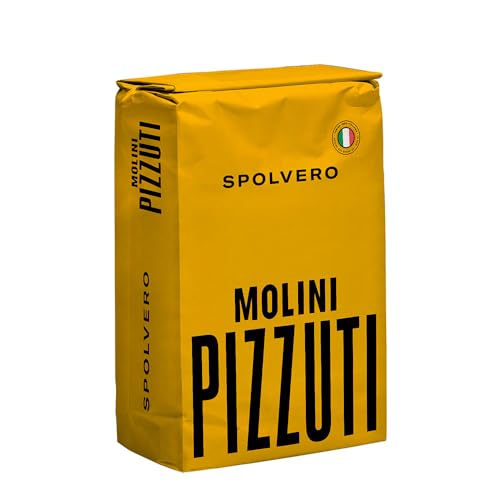
Molini Pizzuti Spolvero Italian Remilled Durum Wheat Semolina – 5kg Bag – Ideal for Pizza Peels, Dough Stretching, Anti-Stick Dusting, and Artisan Bread Baking
Authentic Italian Semolina Flour – Premium remilled durum wheat semolina milled in Italy by Molini Pizzuti.
As an affiliate, we earn on qualifying purchases.
As an affiliate, we earn on qualifying purchases.
Conclusion
Using semolina on your pizza peel is a great way to prevent sticking, but don’t worry if it seems like too much—just use a thin, even layer. If you’re concerned about burning, keep an eye on the oven’s temperature and slide your pizza quickly onto the hot stone or baking surface. With these tips, you’ll enjoy perfectly baked pizzas without any burnt semolina or sticking issues, making your pizza nights hassle-free and delicious!
high heat tolerant cornmeal for pizza
As an affiliate, we earn on qualifying purchases.
As an affiliate, we earn on qualifying purchases.

Leozzo Sliding Pizza Peel, Pizza Slider Paddle with Pizza Cutter Rocker, Non-Stick Pizza Peel Slider with Handle Detachable Transfers Pizza Pie, 12” Wood Sliding Pizza Peel with Replacement Cloth
🌕【Effortlessly Transfer Pizza】The pizza peel is designed for easy sliding, With a subtle pull and push that ensures…
As an affiliate, we earn on qualifying purchases.
As an affiliate, we earn on qualifying purchases.