A wood-fired oven cooks pizza faster because it reaches much higher temperatures—around 700-900°F—compared to standard ovens. These extreme heat levels transfer warmth quickly through radiation, cooking your pizza evenly and in a fraction of the time. The oven’s thick walls retain and radiate heat continuously, creating an ideal environment for rapid cooking that preserves flavors and textures. If you want to understand the science behind it, keep exploring how heat transfer makes all the difference.

Get kitchen gear delivered free with Prime
- Fast, free delivery on millions of items
- Prime Video, Amazon Music and more included
- Member-only deals all year
Key Takeaways
- Wood-fired ovens reach much higher temperatures (700-900°F) than standard ovens, speeding up cooking times.
- Intense radiative heat from the oven walls and dome directly cooks the pizza surface quickly.
- Thick brick or stone walls absorb and retain heat, maintaining consistent high temperatures for faster cooking.
- Elevated temperatures enable rapid, even cooking, resulting in a crispy crust and well-melted toppings in less time.
- The efficient heat transfer and retention environment reduces overall cooking time by approximately 50%.

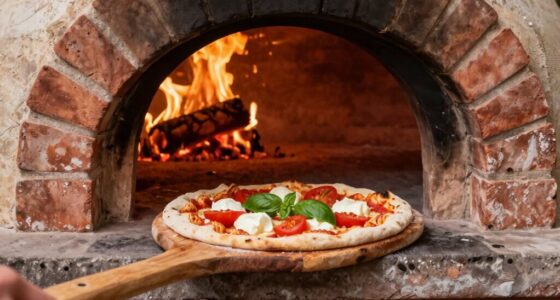
If you’ve ever noticed that pizza cooks faster in a wood-fired oven, it’s because of the way heat is transferred and retained. Unlike conventional ovens, a wood-fired oven reaches much higher oven temperatures, often between 700 to 900 degrees Fahrenheit, which greatly accelerates cooking time. The high oven temperature means heat is concentrated and intensely radiates onto your pizza, cooking it quickly and evenly. When you use a standard kitchen oven, the heat might hover around 450 to 500 degrees, which takes longer to cook and often results in uneven results. The extreme heat in a wood-fired oven creates a different cooking environment, where heat retention plays a vital role. Efficient heat retention in these ovens is achieved through the thick, insulating walls made of brick or stone that absorb and store heat from the burning wood. The heat retention properties of a wood-fired oven are remarkably efficient. The thick, insulating walls made of brick or stone absorb and store heat from the burning wood. Once heated, these walls retain that heat for hours, maintaining a consistent, high oven temperature. This sustained heat ensures that every part of your pizza, from crust to toppings, cooks rapidly and uniformly. The heat radiates from the oven’s walls and dome, enveloping your pizza in a blanket of intense warmth. This radiative heat transfer differs from the convection heating typical of conventional ovens, which rely on hot air circulating to cook food. Because of this radiant heat, the pizza’s crust crisps up quickly while the toppings cook evenly without drying out. Furthermore, the heat retention properties of a wood-fired oven mean you don’t need to constantly add more heat. Once the fire is established and the oven heats up, the temperature remains stable for an extended period, allowing you to cook multiple pizzas in succession without losing heat. This consistent high temperature speeds up the cooking process, often reducing cooking time by half compared to standard ovens. The rapid cooking not only saves time but also enhances the flavor and texture of your pizza. The high heat helps achieve that characteristic crispy crust and perfectly melted cheese, qualities that are harder to replicate in less powerful appliances.
Frequently Asked Questions
How Does the Type of Wood Affect Cooking Speed?
You notice that the type of wood affects how quickly your pizza cooks because of differences in wood density and combustion temperature. Denser woods burn hotter and longer, raising the oven’s temperature quickly, which speeds up cooking. Softer woods burn faster at lower temperatures, leading to slower cooking times. By choosing the right wood, you can control the heat and make sure your pizza cooks evenly and efficiently.
Can Pizza Toppings Influence Cooking Time?
Like a vintage dial-up, pizza toppings do influence cooking time. Thicker toppings or those with high moisture, like fresh tomatoes or cheese, take longer to cook through. Conversely, thin, dry toppings cook faster due to less moisture and heat insulation. So, when you add toppings, consider their moisture content and thickness; they can extend or shorten your pizza’s cooking time, ensuring a perfect crust and evenly cooked toppings.
Is There a Safety Concern With High-Temperature Ovens?
You should be aware that high-temperature ovens can pose safety concerns, like fire hazards if not properly maintained. Ventilation issues may also arise, risking smoke buildup and carbon monoxide accumulation. To stay safe, confirm your oven is well-ventilated, regularly checked for electrical or fuel leaks, and kept away from combustible materials. Always follow manufacturer guidelines and never leave a hot oven unattended to prevent accidents.
How Does Oven Size Impact Heat Retention and Cooking?
You’ll find that a smaller oven chamber volume heats up faster because it retains heat more efficiently, thanks to better insulation. Larger ovens, with more chamber volume, take longer to reach and maintain high temperatures because they lose heat more easily. When choosing an oven, consider insulation quality and chamber size, as these factors directly influence heat retention and cooking speed, ensuring your pizza cooks quickly and evenly.
Do Different Pizza Dough Recipes Cook Faster?
Different pizza dough recipes cook at varying speeds because of dough hydration and fermentation time. A high-hydration dough, with more water, cooks faster, creating a lighter, crispier crust. Shorter fermentation times produce a less developed gluten structure, speeding up cooking, while longer ferments deepen flavor and slow down the process. You’ll notice that adjusting these factors influences how quickly your pizza reaches perfection, making each recipe uniquely responsive to your cooking style.
Conclusion
So, when you cook your pizza in a wood-fired oven, you get faster cooking, richer flavor, and a crisper crust. The heat transfers quickly, the flames create an even environment, and the high temperature transforms ingredients instantly. Embrace the fire, harness the heat, and enjoy the perfect pizza every time. Because when you understand why it cooks faster, you not only cook smarter but also savor pizza that’s truly exceptional, every single time.
Halloween Picks
halloween
As an affiliate, we earn on qualifying purchases.