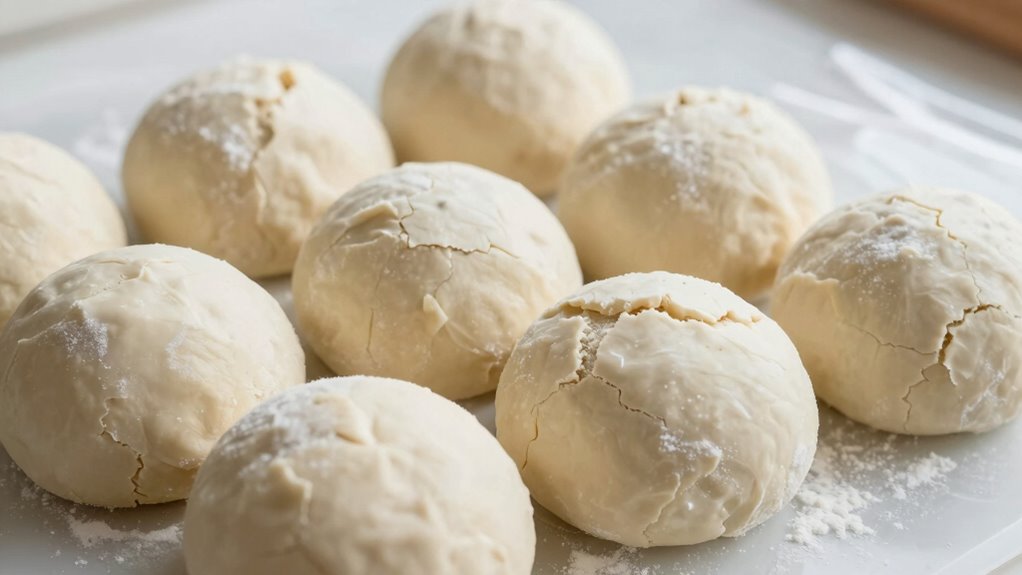
Pizza dough balls dry out when moisture escapes during fermentation, storage, or handling, making the crust tougher and less pliable. To stop this, keep your dough properly hydrated, use high-quality flour, and avoid over-fermentation. Store it in airtight containers or wrap tightly to preserve moisture. Adjust your technique and environment to prevent drying out. Want to discover more tips to keep your dough soft and stretchy? Keep exploring to learn how!
Key Takeaways
- Over-fermentation or improper storage exposes dough to air, causing moisture loss and drying out.
- Using excessive flour on the surface absorbs moisture, leading to dryness.
- Insufficient hydration or high flour-to-water ratio makes dough stiff and prone to drying.
- Storing dough uncovered or in non-airtight containers accelerates moisture evaporation.
- Adding fats or oils helps retain moisture and keeps the dough softer and more pliable.
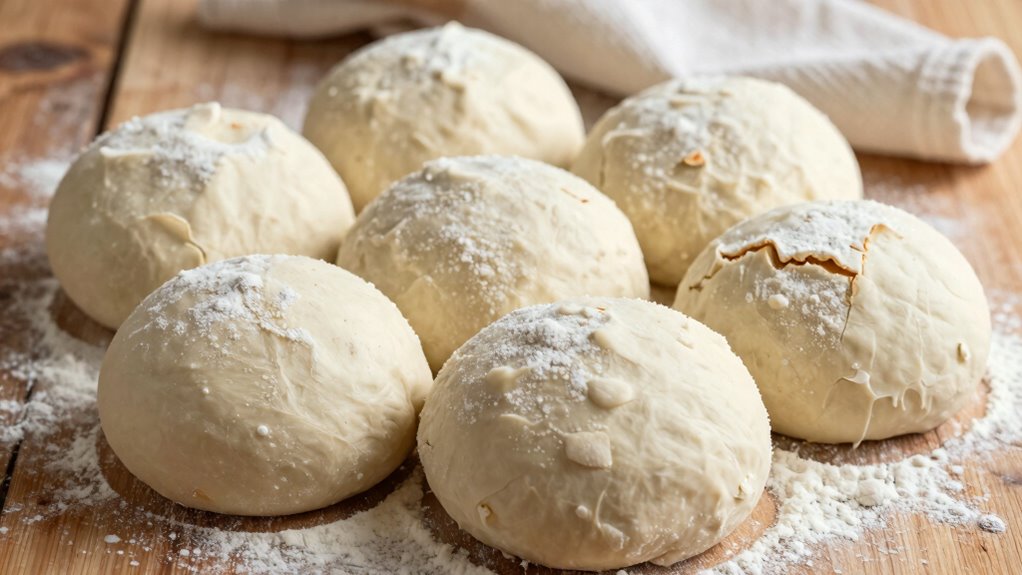
Have you ever noticed your pizza dough balls drying out before you even get a chance to make your pizza? It’s frustrating, especially after all the effort you put into preparing the perfect dough. One common reason is that the dough is exposed to air for too long, causing moisture to evaporate. But understanding the fermentation effects and ingredient variations can help you prevent this problem.
Fermentation plays a big role in how your dough behaves. When you ferment the dough properly, it develops gluten structure and flavor, but if it ferments too long or at the wrong temperature, the dough can become overly dry and sticky. Over-fermentation breaks down gluten, making the dough less elastic and more prone to drying out. Conversely, under-fermentation may not develop enough moisture retention, leading to a less pliable dough that dries quickly. Finding the sweet spot in fermentation time and temperature guarantees your dough stays moist and manageable. Proper fermentation control is essential for achieving the right dough consistency and avoiding dryness.
Proper fermentation balances gluten development and moisture retention for perfect, moist pizza dough.
Ingredient variations also influence how quickly your dough dries out. For instance, using too much flour on the surface can absorb moisture and create a dry crust. Adding oil or fats to your dough can help retain moisture, making the dough softer and less prone to drying. The type of flour you choose matters too. High-protein flours, like bread flour, develop stronger gluten, which can hold onto moisture better than lower-protein options. Hydration levels are essential; a dough with higher water content tends to stay moister longer. If your dough feels stiff or dry, you might need to increase the water ratio slightly. Proper storage techniques, such as airtight sealing, can further help maintain the dough’s moisture. Additionally, understanding moisture retention strategies can significantly improve the longevity of your dough.
Adjusting your technique based on fermentation effects and ingredient variations makes a noticeable difference. Pay close attention to fermentation timing, flour types, hydration levels, and storage methods. With these adjustments, your dough will stay moist, manageable, and ready for a perfect pizza. Remember, small changes can have a big impact on preventing dough from drying out and guaranteeing your homemade pizza turns out just right every time.
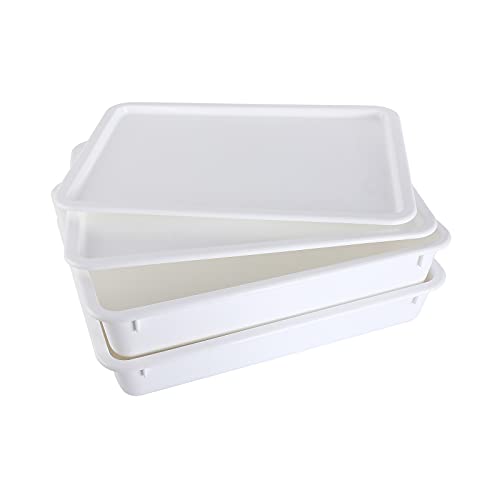
GSM Brands Pizza Dough Proofing Box – Stackable Commercial Quality Trays with Covers (17.25 x 13 Inches) – 2 Trays and 2 Covers
COMMERCIAL QUALITY: Our dough proofing boxes are generously sized at 17.25 x 13 x 3.54" with covers and…
As an affiliate, we earn on qualifying purchases.
As an affiliate, we earn on qualifying purchases.
Frequently Asked Questions
Can Freezing Pizza Dough Prevent It From Drying Out?
Freezing pizza dough can prevent it from drying out if you use proper freezing techniques. Wrap the dough tightly in plastic wrap or place it in an airtight container to guarantee dough preservation. This prevents air exposure and keeps moisture locked in. When you’re ready to use it, thaw the dough slowly in the fridge. Proper freezing techniques help maintain the dough’s texture, making sure it stays fresh and pliable.
How Does Humidity Affect Pizza Dough Storage?
Humidity acts like a gentle guardian over your pizza dough, helping it stay moist and supple. Proper humidity control prevents your dough from drying out or becoming sticky, maintaining ideal moisture retention. If the environment is too dry, your dough can become tough; if too humid, it may become overly sticky. Ensuring balanced humidity levels keeps your dough in perfect condition, making your pizza crust tender and easy to work with.
Is It Better to Cover Dough With Plastic Wrap or a Damp Towel?
You should cover your pizza dough with plastic wrap rather than a damp towel. Plastic wrap helps maintain dough hydration by creating an airtight seal, preventing moisture loss and drying out the dough. A damp towel can absorb moisture, leading to uneven hydration and potential dryness. For best results, make sure the dough is well-covered to keep it moist, shiny, and easy to work with during the proofing process.
Can Adding Oil Help Keep Pizza Dough Moist?
Adding oil, like olive oil, can markedly improve moisture retention in your pizza dough. Studies show that dough with added oil stays moist longer and develops a better texture. Olive oil forms a barrier that traps moisture inside, preventing it from drying out. By incorporating a small amount, you help keep your dough supple, soft, and easy to work with, resulting in a tastier, more satisfying pizza crust.
How Long Can I Store Dough Before It Starts Drying Out?
You can store pizza dough for up to 24-72 hours before it starts drying out, depending on dough fermentation and ingredient freshness. Keep it in an airtight container or wrap it tightly to prevent moisture loss. The longer you store it, the more the dough ferments, which can alter its texture. For best results, use fresh ingredients and refrigerate promptly to maintain moisture and ideal fermentation.
dough hydration spray
As an affiliate, we earn on qualifying purchases.
As an affiliate, we earn on qualifying purchases.
Conclusion
To prevent your pizza dough balls from drying out, keep them well-covered with plastic wrap or a damp cloth, and store them in a sealed container. Think of it like a cozy blanket that locks in moisture. If you suspect your dough is drying due to exposure to air, visualize it as a sponge; the more it’s exposed, the more it loses its water. Proper storage keeps your dough moist and ready for perfect pizza every time.

2 Pack Reusable Bread Bags – Perfect To Store Homemade Sourdough Loaf Breads – Special Double-Lock for Longer Freshness – Extra Large Food-Grade Bags – Freezer-Safe Bags for Bread Lovers
Keep Bread Fresh Longer & Protect the Planet – Our sustainable bags feature a food-grade inner liner to…
As an affiliate, we earn on qualifying purchases.
As an affiliate, we earn on qualifying purchases.

Gino Bambino Sourdough Pizza Starter Kit, Hand Stretched Stone Baked, 3 Crusts with Sauce, 45.72 oz
Hand-stretched, stone-baked sourdough pizza crusts with 72-hour fermentation process for authentic flavor and texture
As an affiliate, we earn on qualifying purchases.
As an affiliate, we earn on qualifying purchases.