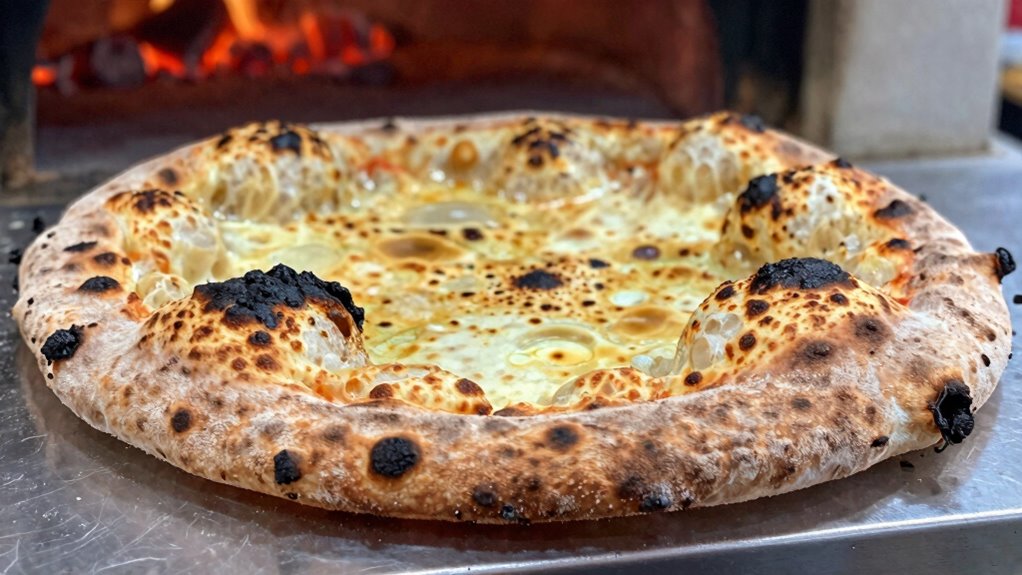
If your wood-fired pizza lacks leopard spots, your dough might not have enough hydration, or your oven isn’t hot enough. To get those characteristic spots, you need a dough with 65-70% hydration and an oven that reaches 800°F to 900°F. Proper heat distribution and surface quality also matter. If these elements aren’t optimized, spots won’t form. Keep exploring to discover the best techniques for perfect leopard spots every time.
Key Takeaways
- Insufficient dough hydration leads to a pale crust with no leopard spots.
- Lower oven temperatures prevent the rapid charring needed for spotting.
- Uneven heat distribution in the oven can hinder proper spot formation.
- Poor preheating or inadequate heat transfer reduces crust charring.
- Improper dough handling or surface preparation affects bubble formation and spotting.
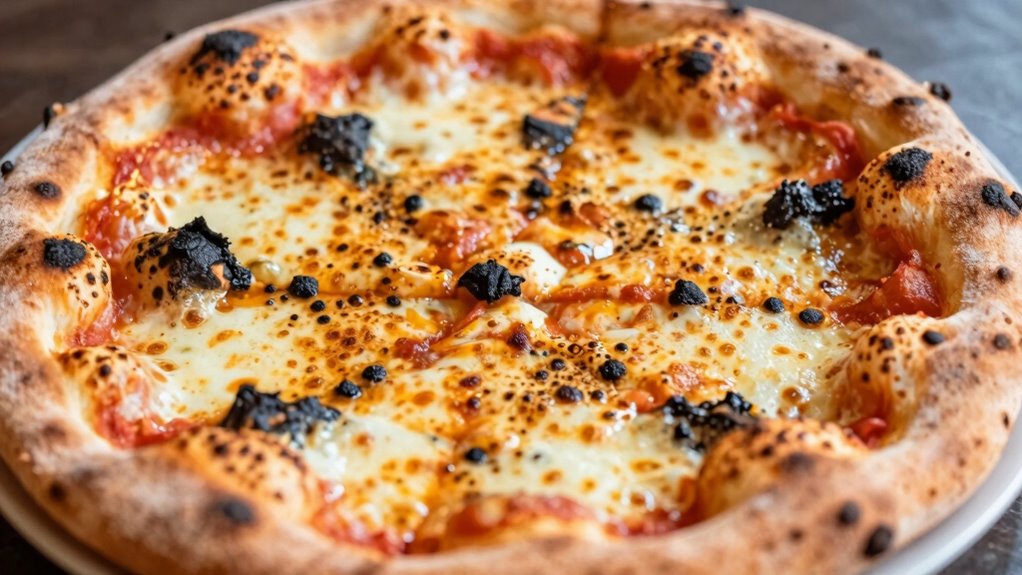
When you bake a wood-fired pizza, you might notice unique, leopard-like spots forming on the crust—an unmistakable sign of proper charring and high heat. If these spots aren’t appearing, it’s often due to factors like dough hydration and oven temperature. Understanding how these elements influence the crust can help you achieve those coveted leopard spots every time.
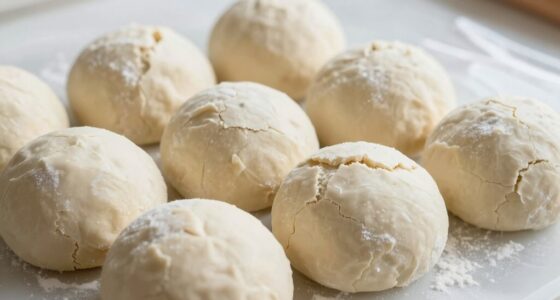
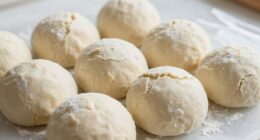
First, dough hydration plays a crucial role. If your dough isn’t hydrated enough, it’ll be denser and less likely to develop those characteristic spots. A well-hydrated dough, with around 65-70% hydration, creates a softer, more extensible crust that responds better to the intense heat of a wood-fired oven. This moisture allows the crust to puff up quickly, developing bubbles and uneven charring—key for the leopard spots. Conversely, a dry dough tends to produce a more uniform, pale crust with little to no spotting, because it doesn’t react as vigorously to the heat. So, making sure your dough has enough water is essential for that signature look. Proper oven temperature is also critical; without sufficient heat, the crust won’t char properly, preventing leopard spots from forming.
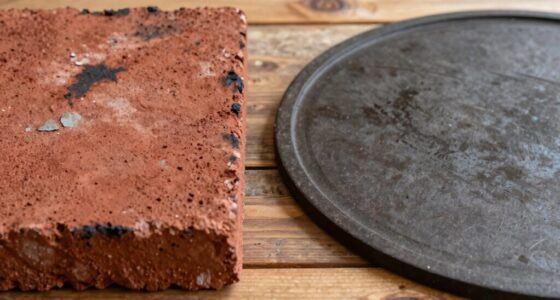
Oven temperature is equally important. Wood-fired ovens reach extremely high temperatures—often between 800°F and 900°F—creating the perfect environment for rapid charring. If your oven isn’t hot enough, the crust won’t char sufficiently to develop those spots. Instead, it’ll cook more slowly and evenly, resulting in a pale, plain crust. To get the leopard spots, you need to crank up the heat and ensure the oven is properly preheated. Not only should the temperature be high, but the heat distribution within your oven can significantly impact how evenly the spots develop, so maintaining consistent heat is essential. Proper dough handling can also influence how well the crust bubbles and chars, further enhancing the leopard pattern. Additionally, the cooking surface inside your oven can affect how the heat is transferred to the pizza, influencing the charring pattern. Ensuring the oven environment is optimized for high heat and even cooking can make all the difference in achieving those distinctive spots.

TempPro TP30 Infrared Thermometer Gun, Laser Thermometer for Cooking, Pizza Oven, Griddle, Engine, HVAC, Temperature Gun with Adjustable Emissivity & Max Measure -58°F ~1022°F (Previously ThermoPro)
【Highly Accurate & Adjusts to Any Surface】Designed with the latest thermopile sensor technology, the infrared laser thermometer gun…
As an affiliate, we earn on qualifying purchases.
As an affiliate, we earn on qualifying purchases.
Frequently Asked Questions
Can the Type of Wood Affect Leopard Spot Formation?
Yes, the type of wood can affect leopard spot formation because different woods burn differently during wood combustion. Hardwoods like oak or maple produce steadier, more intense flames, increasing flame contact with your pizza crust. Softer woods or those with high resin content may burn unevenly, reducing the chances of leopard spots. Choosing the right wood guarantees ideal flame contact, resulting in those characteristic speckled, leopard-like spots on your pizza.
How Does Pizza Dough Thickness Influence Leopard Spots?
Thicker pizza dough tends to produce fewer leopard spots because its lower dough elasticity resists quick, intense heat transfer, which is essential for spotting. A thinner crust heats up faster during the fermentation process, promoting rapid blistering and spotting. To enhance leopard spots, make certain your dough has proper elasticity, allowing it to stretch thin without tearing, and ferment it sufficiently to develop the ideal texture for quick, even heat absorption.
Does the Oven Temperature Impact Leopard Spot Development?
Yes, oven temperature greatly impacts leopard spot development. When your oven is well-insulated, it retains high heat more effectively, helping you reach the ideal temperature for spotting. Additionally, investing in a high-quality baking stone ensures even heat distribution, which promotes those characteristic leopard spots. If your oven isn’t hot enough or lacks proper insulation, the spots won’t develop properly, so aim for consistent, high heat.
Are There Specific Pizza Toppings That Encourage Leopard Spots?
No, specific toppings like cheese varieties or sauce types don’t directly encourage leopard spots. Instead, focus on your oven temperature and dough hydration. A high heat creates the perfect conditions for leopard spots, regardless of toppings. That said, lighter cheeses like mozzarella and simple tomato sauces allow the spots to develop more visibly, so choose them if you want your pizza to showcase those beautiful, characteristic markings.
How Long Should I Fire My Pizza to Get Leopard Spots?
To get leopard spots, fire your pizza for about 90 seconds to 2 minutes at a high temperature, around 800-900°F. Investigate the theory that dough hydration impacts spotting—higher hydration can help heat distribute evenly. Focus on cheese melting too; a well-melted cheese creates contrast with the dark spots. Keep an eye on the crust, and adjust your fire time to develop those characteristic leopard spots perfectly.

Gino Bambino Sourdough Pizza Starter Kit, Hand Stretched Stone Baked, 3 Crusts with Sauce, 45.72 oz
Hand-stretched, stone-baked sourdough pizza crusts with 72-hour fermentation process for authentic flavor and texture
As an affiliate, we earn on qualifying purchases.
As an affiliate, we earn on qualifying purchases.
Conclusion
Think of your pizza as a canvas, and the leopard spots as the artist’s signature. Without the right heat, your pizza remains a blank slate, missing those bold, unpredictable strokes. Just like a painter needs the perfect brushstroke to bring life to their work, you need the intense, even heat of a wood-fired oven to create those distinctive spots. Embrace the fire’s wild artistry, and your pizza will tell a vibrant, flavorful story every time.

CHEFMAN Indoor Pizza Oven – Makes 12 Inch Pizzas in Minutes, Heats up to 800°F – Countertop Electric Pizza Maker with 5 Touchscreen Presets, Pizza Stone and Peel Included – Stainless Steel
RAPID COOKING: Our electric indoor outdoor pizza oven is perfect for countertop use, quickly cooking up restaurant-quality pizza…
As an affiliate, we earn on qualifying purchases.
As an affiliate, we earn on qualifying purchases.

7PCS Pizza Oven Accessories Kit – Premium Pizza Making Tools Set for Home & Outdoor Ovens – Includes Pizza Peel, Oven Brush, Bubble Popper Turner, Rocker Cutter, Dough Roller & Scraper
✅ Complete 7PCS Pizza Tool Set – Includes a stainless steel pizza peel, oven brush, bubble popper turner,…
As an affiliate, we earn on qualifying purchases.
As an affiliate, we earn on qualifying purchases.