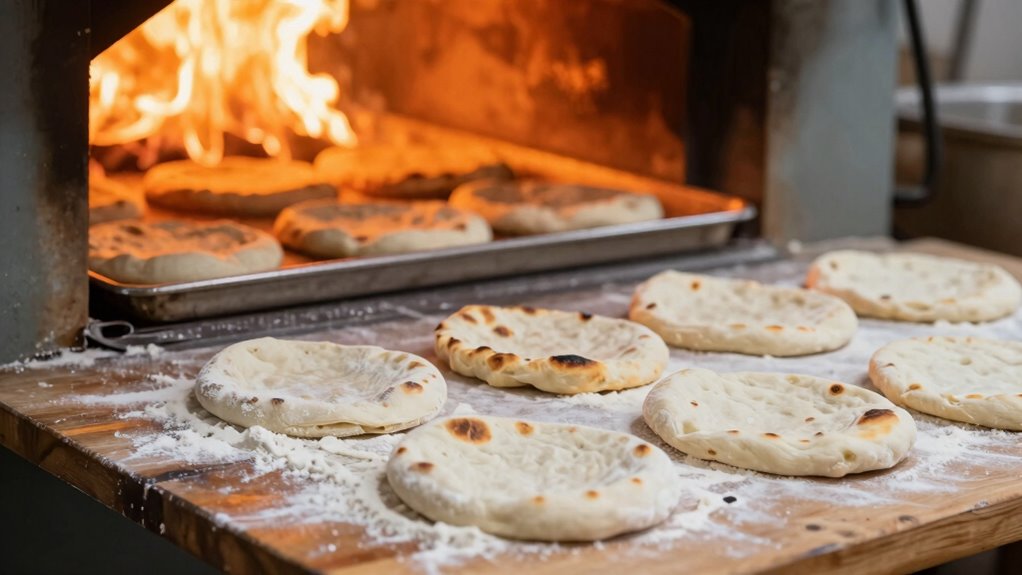
To bake flatbreads quickly in a high-heat oven, preheat it to 500°F to 550°F and use a baking stone or upside-down baking sheet for even heat transfer. Roll your dough thin and bake just a few at a time to prevent overcrowding. Watch for bubbles and browning, and bake for under two minutes to get a crispy exterior while keeping the inside soft. For more tips, you’ll find useful details to perfect your flatbreads.
Key Takeaways
- Preheat the oven to 500°F–550°F and allow it to fully reheat before baking each batch.
- Roll dough thinly to ensure quick, even cooking and crispy edges.
- Use a baking stone or upside-down baking sheet for consistent, high-temperature heat transfer.
- Bake 1-2 flatbreads at a time for rapid cooking under two minutes, monitoring for bubbles and browning.
- Cool baked flatbreads on a wire rack immediately to preserve texture and prevent sogginess.
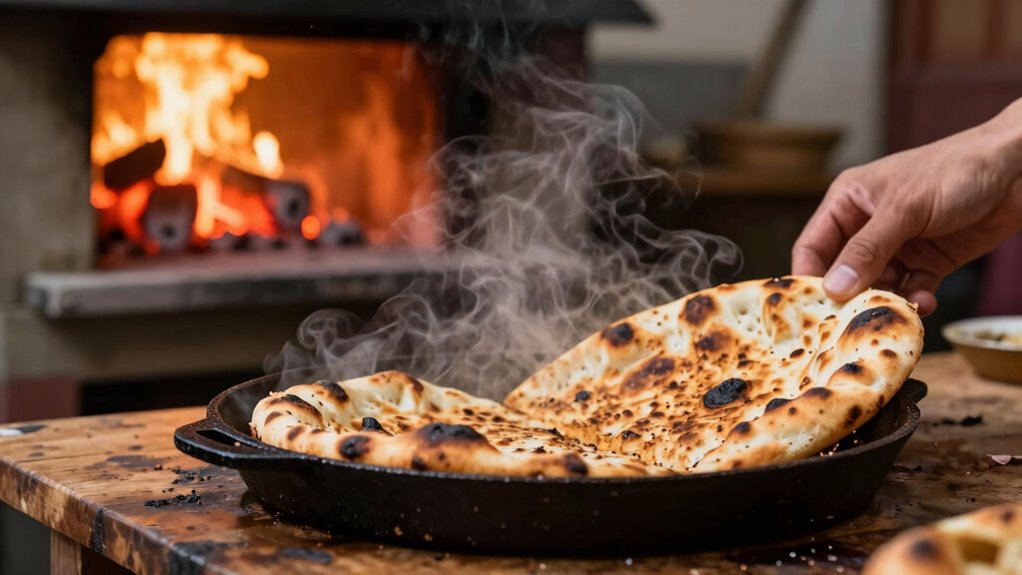
Ever wondered how to whip up fresh flatbreads quickly without sacrificing flavor? The secret lies in mastering a few simple cooking techniques and getting your oven temperature just right. When baking flatbreads fast, your first focus should be on understanding how high heat can dramatically cut down cooking time while still delivering a perfectly tender, slightly blistered crust. High oven temperatures, typically around 500°F to 550°F (260°C to 290°C), are vital because they mimic the intense heat of traditional tandoor or wood-fired ovens. This guarantees that your flatbreads cook evenly and quickly, forming those characteristic bubbly spots and a beautifully browned exterior.
High heat around 500°F to 550°F ensures quick, evenly baked flatbreads with bubbly, crispy crusts.
To start, you’ll want to prepare your dough with just a few ingredients—flour, water, salt, and a touch of oil or yogurt for moisture. When it’s time to bake, roll out your dough as thin as possible without tearing, since thinner flatbreads cook faster and more evenly. Once your oven is preheated to the right temperature, you’ll want to use a baking stone or an upside-down baking sheet to simulate a hot, rustic surface. This creates an even heat distribution, helping your flatbreads cook uniformly and develop that desirable crispy bottom. Achieving consistent high heat can be facilitated by understanding oven heat retention, which is crucial for rapid cooking.
Using the correct oven temperature is vital. If it’s too low, your flatbreads might turn out pale, chewy, or undercooked inside. Too high, and they risk burning before they’re fully cooked through. The sweet spot is a consistent, very high heat that allows rapid cooking—generally under two minutes per flatbread. Keep a close eye on them as they bake, because at these temperatures, things happen quickly. You might notice bubbles forming and the surface rippling, which is exactly what you want. This rapid cooking locks in moisture, creating a soft interior with a lightly crisp exterior. Additionally, understanding how high heat impacts the Maillard reaction can help you achieve a more flavorful crust.
In terms of cooking techniques, avoid overcrowding your baking surface. Bake one or two flatbreads at a time to prevent temperature drops and ensure each piece bakes evenly. If you’re making multiple batches, allow the oven to fully reheat between rounds to maintain that high heat. Once baked, transfer the flatbreads to a wire rack to cool slightly. Serve them warm, perhaps brushed with butter or sprinkled with herbs for added flavor.

Unicook Large Pizza Stone for Oven 20 Inch, Rectangular Baking Stone 20" x 13.5" x 0.6", Heavy Duty Cordierite Bread Pan, Thermal Shock Resistant, Ideal for Baking Large or 2 Personal Pizzas
20 Inch Large Pizza Stone for Oven: 20" x 13.5", golden thickness 0.6"(15mm), weighs around 10.69 lbs, allows…
As an affiliate, we earn on qualifying purchases.
As an affiliate, we earn on qualifying purchases.
Frequently Asked Questions
Can I Use a Regular Oven Instead of a High-Heat One?
Yes, you can use a regular oven instead of a high-heat one. Just increase your oven temperature to around 450-500°F for better results. Place your baking rack in the middle to guarantee even heat distribution. Keep an eye on the flatbreads, as they may take a bit longer to cook. Using a preheated oven helps achieve a crispy, evenly baked flatbread, even without ultra-high heat.
What Type of Flour Yields the Best Flatbreads?
You’ll find that bread flour creates flatbreads with the perfect chewy texture, like biting into a cloud! For best results, stick to grain varieties like wheat or spelt, which have a good gluten structure. If you’re adventurous, try flour alternatives like chickpea or rice flour for unique flavors and textures. These options let you customize your flatbreads, making each batch exciting and delicious.
How Do I Store Leftover Flatbreads Properly?
To store leftover flatbreads properly, wrap them tightly in aluminum foil or place them in an airtight container. Use packaging tips like sealing with plastic wrap or storing in resealable bags to prevent moisture loss. For longer storage, refrigeration is best—place flatbreads in the fridge, ideally in an airtight container. Reheat in a hot oven or skillet when you’re ready to enjoy them again, keeping them fresh and soft.
Can I Make Gluten-Free Flatbreads Quickly?
Making gluten-free flatbreads quickly is like turning on a light switch—you can do it fast! Use gluten-free alternatives like rice flour, tapioca starch, or almond flour for a quick mix. Combine with a little baking powder and water, then roll out and bake in a high-heat oven. This quick baking method results in tasty flatbreads without gluten, perfect for a speedy snack or meal.
What Toppings Are Best for High-Heat Baked Flatbreads?
For high-heat baked flatbreads, you’ll want toppings with bold flavors that withstand the heat. Popular flatbread toppings include hummus, roasted vegetables, fresh herbs, and cheeses like feta or mozzarella. Topping flavor combinations like caramelized onion and goat cheese or sun-dried tomato and basil work beautifully. These toppings stay flavorful and vibrant when baked quickly at high temperatures, making your flatbread both delicious and visually appealing.

GoodCook BestBake Nonstick Textured Carbon Steel Cookie Sheet, 11" x 17", Large Baking Sheet, Even Heating, Scratch-Resistant, Non-Toxic, Durable, Ideal for Baking and Sheet Pan Dinners
QUALITY LARGE BAKING SHEET: Ensures a perfect bake every time for larger batches of your favorite recipes, from…
As an affiliate, we earn on qualifying purchases.
As an affiliate, we earn on qualifying purchases.
Conclusion
Baking flatbreads quickly in a high-heat oven is a game-changer, saving you time and delivering delicious results. Did you know that baking at 500°F can reduce cooking time by nearly 50% compared to lower temperatures? So, next time you crave fresh flatbreads, crank up that oven and enjoy warm, homemade bread in minutes. With a little practice, you’ll master the art of fast, perfect flatbreads that impress every time!

Old Stone Round Pizza Stone, 16-Inch
Makes restaurant quality pizzas, bread, pastries and vegetables
As an affiliate, we earn on qualifying purchases.
As an affiliate, we earn on qualifying purchases.

King Arthur Baking Company Perfectly Tender Flatbread Mix Kit 16.5 oz., Baking Mix – Ready in 1 hour
Ready in 1 hour & everything you need is right in the box!
As an affiliate, we earn on qualifying purchases.
As an affiliate, we earn on qualifying purchases.