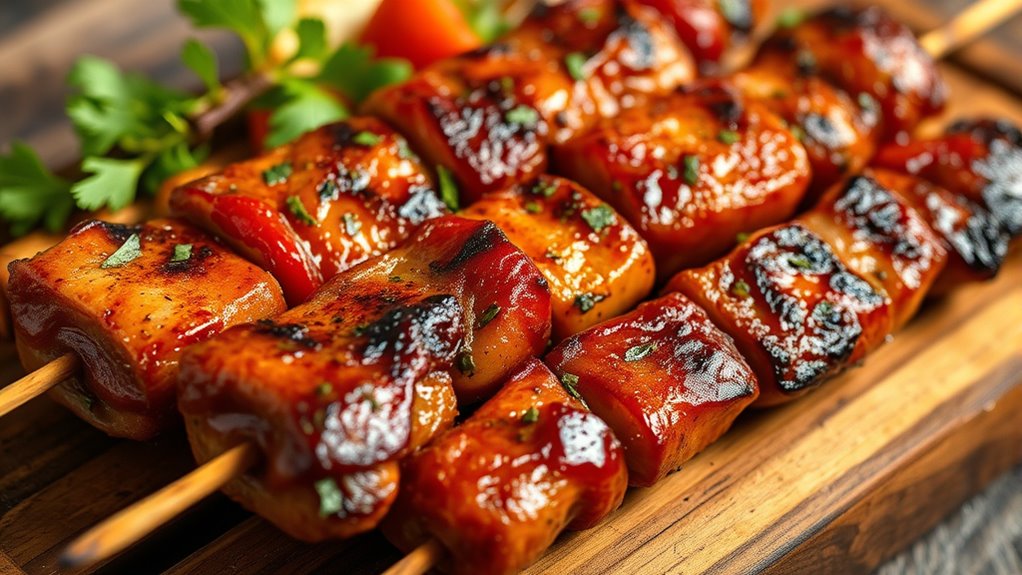

To achieve tender, flavorful grilled meats every time, focus on crafting balanced marinades with the right mix of acidity, sweetness, herbs, and spices. Follow proper marinating techniques—refrigerate, turn frequently, and keep within recommended times to prevent over-marination. Use non-reactive containers and discard or boil leftover marinade after use. Mastering these steps will elevate your grilling skills, and if you continue exploring, you’ll discover even more tips for perfect results.
Key Takeaways
- Use a balanced marinade with the right acidity and sweetness to tenderize and flavor meat effectively.
- Marinate in the refrigerator for 30 minutes to several hours, depending on the cut, to maximize tenderness and absorption.
- Incorporate herbs, spices, and aromatic ingredients for enhanced flavor and aroma.
- Use high heat for quick grilling to lock in juices and prevent overcooking or dryness.
- Discard or boil used marinade before applying as a sauce to ensure food safety and full flavor.
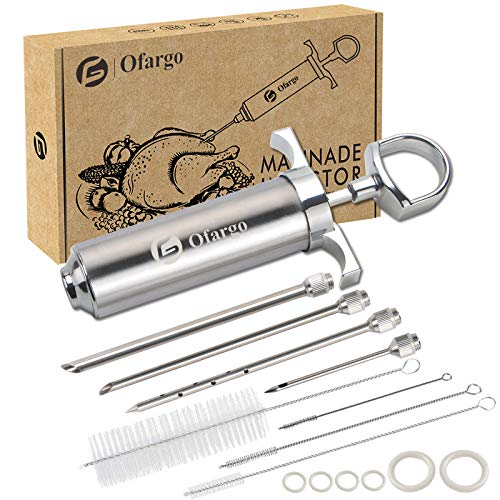
Ofargo Stainless Steel Meat Injector Syringe Kit with 4 Marinade Needles for BBQ Grill Smoker, Father Day Gifts for Dad Husband Men Him, 2-oz Large Capacity, Both Paper User Manual and E-Book Recipe
- Material: Stainless steel and silicone construction
- Safety: Food-safe, leak-proof design
- Durability: Heavy-duty, long-lasting construction
As an affiliate, we earn on qualifying purchases.
As an affiliate, we earn on qualifying purchases.
Understanding the Basics of Marinades

Marinades are simple mixtures that infuse flavor and tenderize meat, poultry, seafood, or vegetables. Understanding marinade variations helps you explore different flavor profiles and textures. For example, some marinades use acidic ingredients like vinegar or citrus to break down muscle fibers, while others rely on enzymatic components like pineapple or kiwi. Cultural influences play a significant role in marinade styles; Asian marinades often include soy sauce, ginger, and sesame oil, while Latin American blends might feature citrus, garlic, and cumin. By recognizing these variations, you can tailor marinades to suit specific cuisines, enhancing your dishes with authentic flavors. Experimenting with different ingredients and cultural traditions allows you to create unique, flavorful marinades for every occasion.
non-reactive marinade containers
As an affiliate, we earn on qualifying purchases.
As an affiliate, we earn on qualifying purchases.
Choosing the Right Ingredients for Flavor and Tenderness
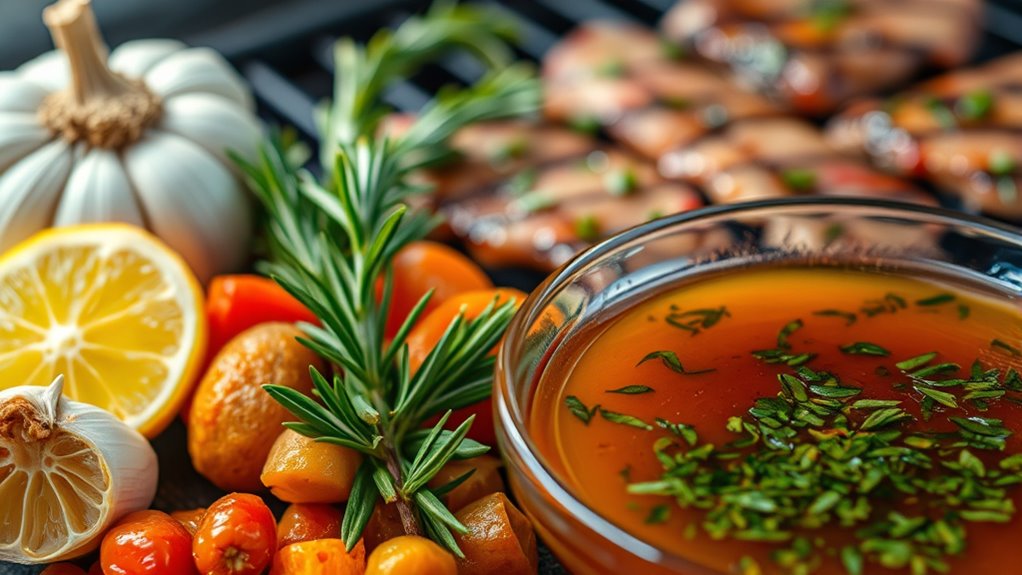
Choosing the right ingredients is key to achieving the perfect balance of flavor and tenderness in your marinade. Your marinade ingredients should complement each other to create compelling flavor combinations that enhance your meat. Fresh herbs, spices, garlic, and citrus zest add brightness and complexity, while soy sauce or Worcestershire provide depth. Consider pairing sweet with savory elements, like honey with soy, to build layers of flavor. Balance is essential; too much salt can toughen meat, while too much sugar can burn easily on the grill. Use ingredients that promote tenderness, such as acidic components, but focus on flavor combinations that suit your palate. Thoughtful selection guarantees your marinade elevates your grilling, making every bite flavorful and tender.

Alpha Grillers Instant Read Meat Thermometer Digital, Cooking, Food, Grill
- Fast Temperature Reading: Responds in 1-2 seconds with high accuracy
- Versatile Cooking Tool: Suitable for grilling, baking, frying, and candy making
- Easy-to-Read Display: Bright blue backlight for clear readings in any lighting
As an affiliate, we earn on qualifying purchases.
As an affiliate, we earn on qualifying purchases.
The Role of Acidity and Sweetness in Marinades

Acidity and sweetness play key roles in creating balanced marinades that complement your ingredients. You can use acidity to tenderize meats while enhancing flavors, and natural sweetness to round out the profile. Understanding how to balance these elements helps you craft marinades that are both flavorful and effective.
Balancing Flavor Profiles
Balancing flavor profiles in marinades hinges on the interplay between acidity and sweetness, which work together to enhance your dish. Acidity adds brightness and depth, helping to cut through richness and highlight other ingredients, while sweetness rounds out the profile, offering a pleasing counterbalance. When you blend these elements thoughtfully, you create fusion flavors that excite the palate. Keep in mind, achieving the right balance also supports marinade safety by preventing overly acidic or sugary mixtures that might harbor bacteria or alter texture unexpectedly. Adjust levels carefully to suit your ingredients and desired flavor outcome. A well-balanced marinade doesn’t just flavor your meat; it ensures you enjoy a harmonious, flavorful bite every time.
Tenderizing Effects of Acidity
Because acidity can break down muscle fibers, it acts as a natural tenderizer in marinades. The acidity impact softens meat, making it juicier and more flavorful. You’ll notice that citrus pairing is especially effective here, as ingredients like lemon or lime add both acidity and brightness. Be careful not to marinate too long; excessive acidity can make meat mushy. Use the right balance to achieve tender results without compromising texture. Here’s a quick comparison:
| Effect | Examples |
|---|---|
| Tenderizing | Citrus, vinegar |
| Flavor enhancement | Sweetness, herbs |
| Over-marinating risk | Excessive acidity |
This balance ensures your grilled meat stays tender and flavorful every time.
Enhancing Sweetness Naturally
Ever wonder how to naturally boost the sweetness of your marinades? One effective way is through fruit infusions, which add a subtle, natural sweetness without processed sugars. Incorporate fruits like pineapple, mango, or berries into your marinade to enhance flavor and provide a hint of natural sugar. Using natural sweeteners such as honey, maple syrup, or agave nectar also elevates sweetness while maintaining a wholesome profile. These ingredients not only balance acidity but also add depth to your marinade’s flavor. When combined with fruit infusions, they create a harmonious blend that tenderizes and sweetens simultaneously. Remember, the key is to experiment with different fruits and natural sweeteners to find the perfect balance that complements your meat or vegetables.
As an affiliate, we earn on qualifying purchases.
Techniques for Effective Marinating
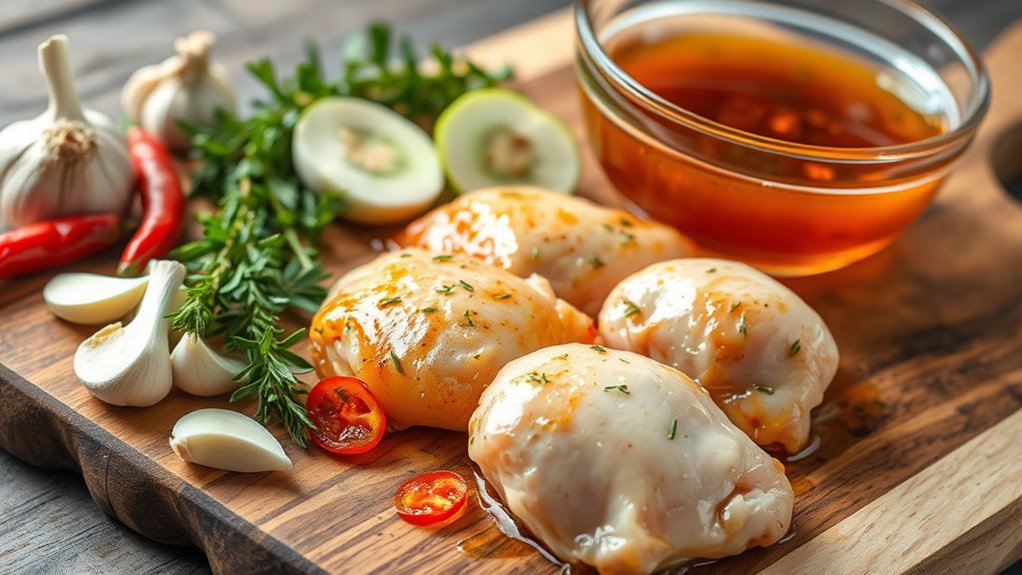
Choosing the right marinade is essential to enhance your dish, so pick ingredients that complement your main protein. Timing and soaking methods matter—you don’t want to over- or under-marinate. Using proper containers, like glass or non-reactive options, helps your flavors develop without unwanted reactions.
Choose the Right Marinade
Selecting the right marinade is essential for enhancing the flavor and tenderness of your ingredients. To do this effectively, consider the marinade’s history and cultural influences, which shape unique flavor profiles. For example, Asian-inspired marinades often feature soy and ginger, while Mediterranean styles highlight herbs and citrus. Understanding these origins helps you choose ingredients that complement your dish. Think about the main flavor you want—savory, tangy, spicy—and select a marinade base accordingly. A good marinade balances acidity, oil, and seasonings to penetrate the meat or vegetables evenly. By aligning your choice with cultural traditions or personal preference, you’ll create a more authentic and flavorful grilling experience. Picking the right marinade is key to achieving tender, tasty results every time.
Timing and Soaking Methods
To guarantee your marinade penetrates deeply and imparts maximum flavor, timing and soaking methods are essential. Start by marinating at the right marinating temperature—ideally in the refrigerator—to prevent bacterial growth. Keep your marinade covered and stored properly, avoiding exposure to air, which can compromise its effectiveness. The duration of marinating depends on the meat; tougher cuts benefit from longer periods, while delicate proteins require less time. Typically, marinate for at least 30 minutes to a few hours, but avoid exceeding 24 hours to prevent texture loss. Consistently turning or flipping the meat ensures even exposure, allowing the marinade to work its magic. Proper timing and soaking methods optimize flavor infusion and keep your grilling tender and flavorful.
Proper Marinating Containers
Using the right marinating container is essential for effective flavor infusion and food safety. The best containers keep your marinade in contact with the meat and prevent leaks or contamination. Choose non-reactive materials like glass, stainless steel, or food-grade plastic to avoid unwanted chemical reactions. Make certain your container is large enough to hold the meat and marinade comfortably, allowing for even coverage. Proper storage solutions include airtight lids or plastic wrap to prevent spills and odors from spreading. Using the right marinating containers helps you control the marinating environment, ensuring consistent results. Remember to always refrigerate your marinades and turn the meat occasionally to maximize flavor absorption. Effective containers streamline your marinating process and keep your kitchen clean and safe.
Timing: How Long to Marinate for Optimal Results
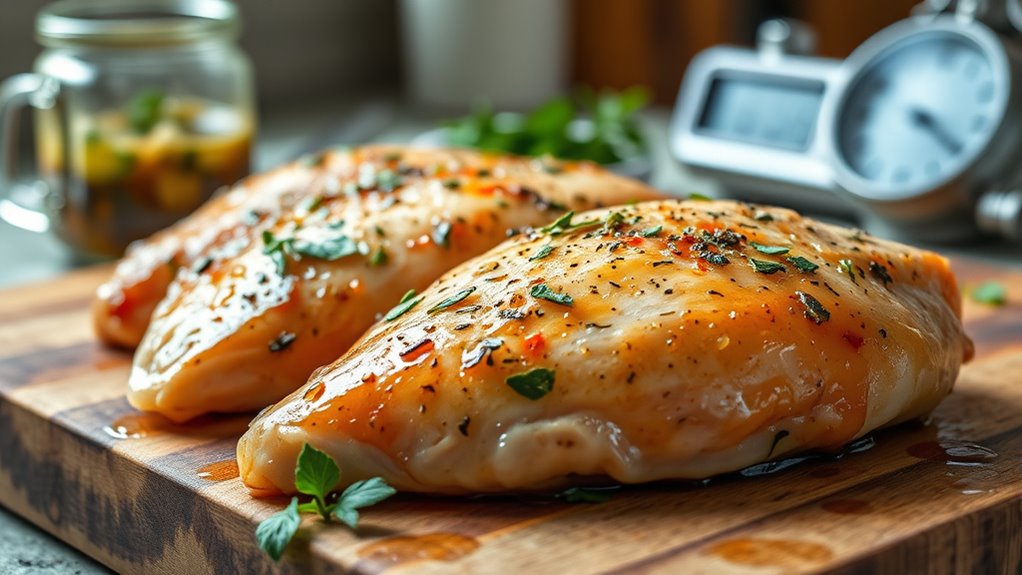
Finding the perfect marinating time is key to revealing maximum flavor without compromising texture. Generally, marinating for 30 minutes to 2 hours works well for most meats, but thicker cuts may need up to 24 hours. Keep in mind that over-marinating can make proteins mushy or too salty, so timing is essential. Always store your marinade properly, and remember that marinade safety is vital—never reuse marinade that’s been in contact with raw meat unless you boil it first. If you’re short on time, even a quick 30-minute soak can boost flavor. For best results, monitor marinating duration carefully, and avoid leaving meat in marinade too long, as this can negatively affect both texture and safety.
Common Mistakes to Avoid When Marinating

One common mistake is marinating meat for too long, which can lead to a mushy texture or overly salty flavor. To avoid this, stick to recommended marinating times and never reuse marinade without proper marinade storage. Failing to do so risks cross-contamination and foodborne illness, compromising marinade safety. Also, don’t forget to marinate in the refrigerator to keep bacteria at bay.
- Marinating at room temperature increases the risk of bacterial growth
- Using a non-airtight container can cause contamination
- Reusing marinade that touched raw meat without boiling it first
- Forgetting to discard leftover marinade after use, risking food safety hazards
Enhancing Your Marinade With Herbs and Spices

Herbs and spices are essential for transforming a simple marinade into a flavorful masterpiece. They add depth, aroma, and complexity that elevate your grilled meats. Herb blends, like Italian herbs or herbes de Provence, offer a balanced mix of flavors that complement different proteins. Spice combinations, such as cumin, paprika, and chili powder, bring warmth and smoky notes. When enhancing your marinade, consider pairing herbs and spices to create a harmonious profile—think rosemary with garlic or coriander with lime zest. Don’t be afraid to experiment with different blends to find what suits your taste. Properly incorporating these herbs and spices guarantees your marinade infuses thoroughly, resulting in tender, flavorful meat every time you grill.
Tips for Cooking and Serving Marinated Meats
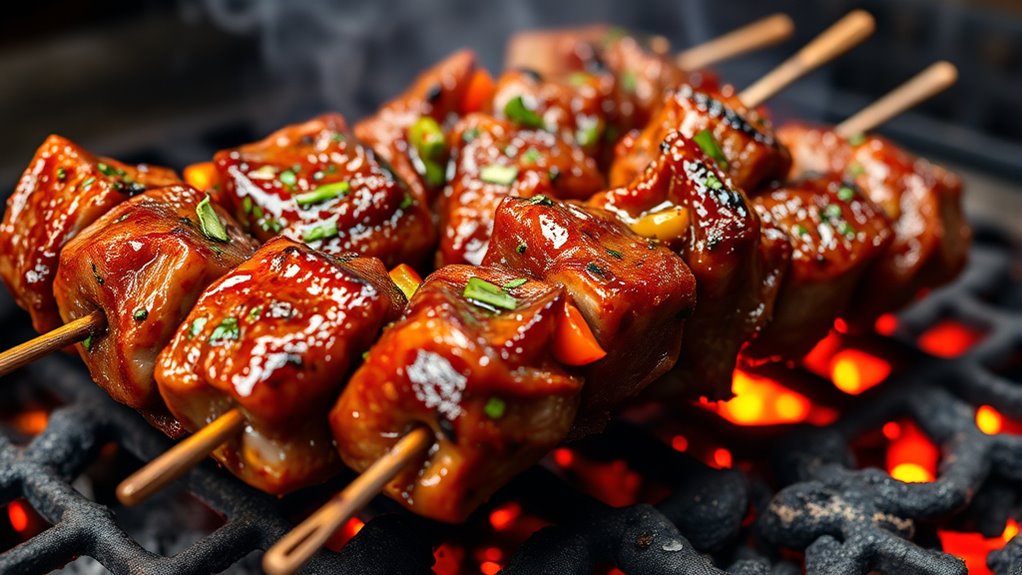
Once you’ve prepared your marinade with the right herbs and spices, it’s time to focus on how to cook and serve the marinated meats for the best results. Proper technique ensures tender, flavorful dishes while maintaining marinating safety. Avoid overcooking, which can dry out the meat, and use high heat for quick grilling to lock in flavors. If you’re looking for marinade alternatives, consider dry rubs or quick brines to vary your options. Always discard used marinade that has contacted raw meat, or boil it thoroughly if you plan to use it as a sauce. Rest the meat briefly after cooking to allow juices to settle. Remember, marinating safety is key—never reuse marinade that was in contact with raw meat without proper cooking.
- Use high heat for quick, even cooking
- Rest meat before slicing to retain juices
- Keep marinating times within recommended limits
- Always discard or boil leftover marinade
Frequently Asked Questions
Can Marinades Be Reused Safely?
No, you shouldn’t reuse marinades safely. Food safety is essential because bacteria from raw meat can contaminate the marinade. If you want to reuse it, boil it thoroughly first to kill any bacteria, but keep in mind that this might alter the flavor enhancement. To avoid risks, it’s best to set aside a portion for basting or sauce, rather than reusing the marinade that touched raw meat.
How Do I Store Leftover Marinade?
Think of leftover marinade as a delicate potion that needs proper storage to keep its magic alive. You should store it in an airtight container in the fridge, using it within 24 hours for marinade safety. Always keep it separate from cooked foods, and avoid reusing unless boiled thoroughly. Follow these storage tips to prevent bacteria growth and make certain your marinade remains fresh and safe for your next grilling adventure.
Are There Vegetarian Marinade Options?
Yes, you can find plenty of vegetarian alternatives for marinades. Think about using soy sauce, balsamic vinegar, or citrus juice as bases, and add flavor combinations like garlic, herbs, and spices. These options work well with vegetables, tofu, or tempeh, giving them rich, tender flavor. Experiment with different ingredients to find your favorite flavor combinations, making every vegetarian dish just as delicious as a grilled meat marinade.
Can You Marinate Seafood for Too Long?
Yes, you can marinate seafood for too long, which can negatively affect its texture. Generally, limit marinating duration to 30 minutes to 2 hours, depending on the seafood type. Over-marinating can make seafood mushy or overly soft due to the acids breaking down its delicate fibers. To keep the ideal seafood texture, stick to recommended marinating times and avoid excessive exposure to acidic marinades.
What’s the Best Way to Remove Marinade Before Grilling?
Think of your grill as a stage where pork and beef marinades perform their best. To remove excess marinade, gently shake off the meat or pat it dry with paper towels—like brushing away a lingering fog. This guarantees your meat isn’t overwhelmed by too much flavor or flare-up. Rinse briefly if needed, but avoid soaking, so the marinade’s magic stays just enough to enhance your grilling masterpiece.
Conclusion
Mastering marinades transforms grilling from routine to remarkable. While quick marinades offer convenience, longer immersions deepen flavor and tenderness—each approach serving a different purpose. Embrace the art of balancing acidity and sweetness, yet recognize that over-marinating can weaken textures. Whether you seek swift perfection or slow infusion, understanding these nuances elevates your grilling game. After all, it’s not just about tender meat but about creating memorable moments, where patience and precision meet.