In a home-cooking showdown between New York and Neapolitan pizza, you’ll notice major differences: Neapolitan features a thin, delicate crust with fresh, minimal toppings baked in a high-temperature wood-fired oven, emphasizing simplicity. In contrast, New York pizza has a thicker, chewier crust with hearty toppings baked in a deck oven, perfect for folding. To master each style and enjoy authentic flavors, continue exploring the unique techniques and tips for recreating them at home.
Key Takeaways
- Neapolitan pizza emphasizes simple, high-quality ingredients with a thin, delicate crust baked in high-temperature wood-fired ovens.
- New York pizza features thicker, chewy crusts with diverse toppings, baked in deck ovens for a hearty, foldable slice ideal for quick eating.
- Neapolitan dough uses long fermentation for flavor and elasticity, while New York dough employs denser flour for strength and resilience.
- Neapolitan toppings are minimal—basil, fresh mozzarella, and tomatoes—highlighting freshness; New York offers a wide variety of hearty toppings.
- Neapolitan is traditionally eaten with utensils and enjoyed leisurely; New York slices are folded and eaten on-the-go, reflecting urban culture.

Hans Grill Rectangular Pizza Stone, 15 x 12 Inch Cordierite Stone with Peel
- Material: Toughened porous cordierite stone
- Heat Resistance: Up to 1112°F (600°C)
- Versatile Use: For pizza, pies, bread, and more
As an affiliate, we earn on qualifying purchases.
As an affiliate, we earn on qualifying purchases.
The Origins and Cultural Roots of Each Style

While both New York and Neapolitan pizza share a common Italian heritage, their origins reflect distinct cultural influences. The pizza history of Naples highlights a simple, street-food tradition that dates back centuries, emphasizing fresh, local ingredients. This style’s cultural significance lies in its role as a symbol of regional pride and culinary craft. Conversely, when Italian immigrants brought their pizza to New York, it adapted to American tastes and available ingredients, evolving into a fast-food staple. The cultural significance of New York pizza centers on convenience and innovation, blending Italian roots with a busy urban lifestyle. Understanding these origins helps you appreciate each style’s unique story—Neapolitan’s rooted in traditional craftsmanship, and New York’s driven by cultural adaptation and the city’s fast-paced energy.

Ooni Karu 12 Multi-fuel Outdoor Portable Pizza Oven – Reaches 950°F and Cooks 12 Inch Pizzas in 60 Seconds. Versatile Wood or Propane Gas Fired Grill with Pizza Stone
- Custom Fuel Tray for Optimal Airflow: Maximizes airflow for high temperatures
- Cooks 12-Inch Pizza in 60 Seconds: Reaches 950°F for quick cooking
- Versatile Fuel Options: Use wood, charcoal, or gas with attachment
As an affiliate, we earn on qualifying purchases.
As an affiliate, we earn on qualifying purchases.
Key Ingredients and Dough Composition

The unique flavors and textures of New York and Neapolitan pizza are deeply influenced by their ingredients and dough recipes. Your choice of ingredient sourcing and dough fermentation methods shapes each style’s character. For Neapolitan pizza, you’ll want high-quality Italian flour, San Marzano tomatoes, fresh mozzarella, and a simple salt-water dough that ferments slowly for flavor. In contrast, New York pizza uses a slightly denser dough, often with bread flour, allowing for longer fermentation to develop strength and stretch. Key distinctions include:
- Ingredient sourcing for authentic flavor
- Dough fermentation time and process
- Type of flour used
- Water quality and mineral content
- Salt and yeast ratios in the dough
These elements define the distinct textures and taste profiles of each pizza style.

LRui Kitchen Professional Pizza Dough Scraper dough spatula,plastic flexible strip handle dough scraper.
- Bendable and Flexible: Easier dough handling with superior bendability
- Food-Grade Material: Made from durable, safe, food-grade plastic
- Professional Quality: Suitable for commercial and personal use
As an affiliate, we earn on qualifying purchases.
As an affiliate, we earn on qualifying purchases.
Preparation and Handling Techniques
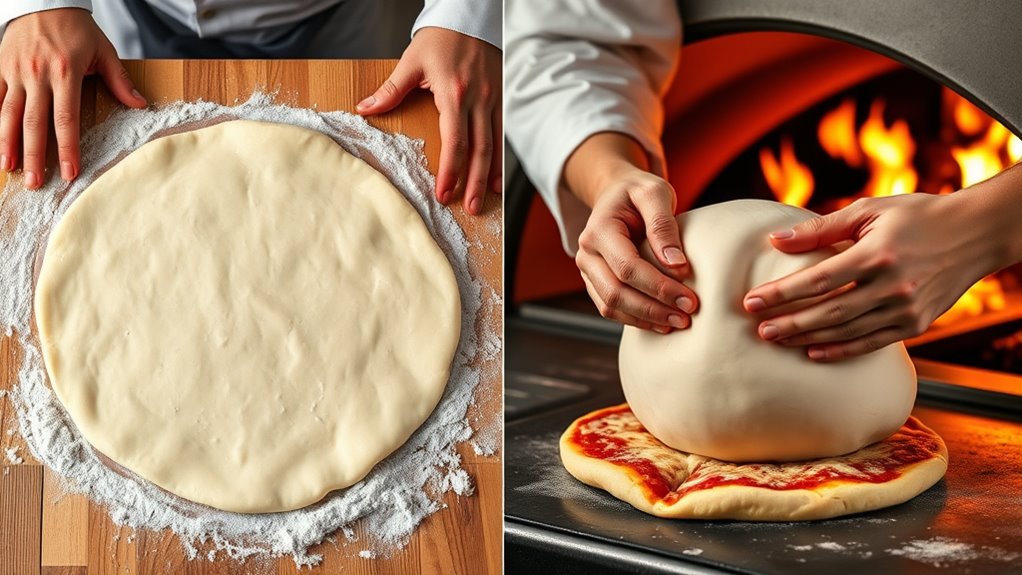
Preparation and handling techniques play a crucial role in shaping the final texture and flavor of both New York and Neapolitan pizzas. You’ll want to pay close attention to dough fermentation, allowing it to develop complex flavors and the right elasticity. Proper fermentation ensures the dough rises adequately, creating that perfect balance between chewiness and crispness. Ingredient sourcing also matters; using fresh, high-quality ingredients enhances the overall taste and authenticity. Handle your dough gently to preserve its structure, avoiding overworking which can toughen it. When shaping your pizza, be mindful of maintaining a consistent thickness to ensure even baking. These techniques influence the final result considerably, helping you achieve that ideal crust and flavor profile characteristic of each style.

JIAFUEO Pizza Peel 12 inch, Bamboo Pizza Paddle Spatula – Wooden Serving Board, Oven Accessory for Baking Homemade, Wood Cutting Board for Cheese Bread Fruit Vegetables
- Material: Premium bamboo construction
- Size: 12-inch wide pizza peel
- Handle Length: 4.5-inch comfortable grip handle
As an affiliate, we earn on qualifying purchases.
As an affiliate, we earn on qualifying purchases.
Typical Toppings and Flavor Combinations

You probably notice that authentic toppings and regional flavor pairings define each pizza style. In New York, you’ll see classic options like pepperoni and mushrooms, while Neapolitan pizzas often feature fresh tomatoes, basil, and mozzarella. Exploring these variations reveals how local ingredients influence each region’s favorite combinations.
Authentic Toppings & Variations
Authentic Neapolitan and New York pizzas each showcase distinct toppings that define their unique flavors. Neapolitan typically features simple, fresh ingredients that highlight quality, like San Marzano tomatoes, mozzarella di bufala, basil, and a drizzle of olive oil. In contrast, New York pizza often embraces a variety of toppings and gourmet options, allowing for creative combinations. You might find:
- Pepperoni and sausage
- Mushrooms and olives
- Fresh basil and cherry tomatoes
- Artichoke hearts and prosciutto
- Vegetarian options like roasted vegetables or arugula
While Neapolitan keeps toppings minimal to preserve authenticity, both styles can include gourmet toppings to elevate the flavor. Vegetarian options are popular in both styles, offering a range of fresh, vibrant flavors that suit different tastes.
Regional Flavor Pairings
Regional flavor pairings influence the typical toppings and flavor combinations found on both Neapolitan and New York pizzas. These pairings reflect local tastes and artisanal ingredient sourcing, shaping distinct styles. Neapolitan pizza often features simple, fresh ingredients like basil, mozzarella, and tomatoes, emphasizing quality over quantity. In contrast, New York pizza is known for its hearty toppings such as pepperoni, sausage, and vegetables, paired with robust tomato sauce. Here’s a visual guide:
| Flavor Profile | Typical Toppings | Regional Influence |
|---|---|---|
| Fresh & Light | Basil, mozzarella, tomatoes | Southern Italy |
| Savory & Rich | Pepperoni, sausage, peppers | Urban Northeast |
| Classic & Simple | Marinara, olive oil, garlic | Coastal regions |
| Spicy & Bold | Red pepper flakes, salami | Immigrant neighborhoods |
| Gourmet & Artisanal | Truffle oil, prosciutto | Artisanal sourcing |
This illustrates how regional flavor pairings shape pizza styles through local tastes and sourcing.
Baking Methods and Equipment Used
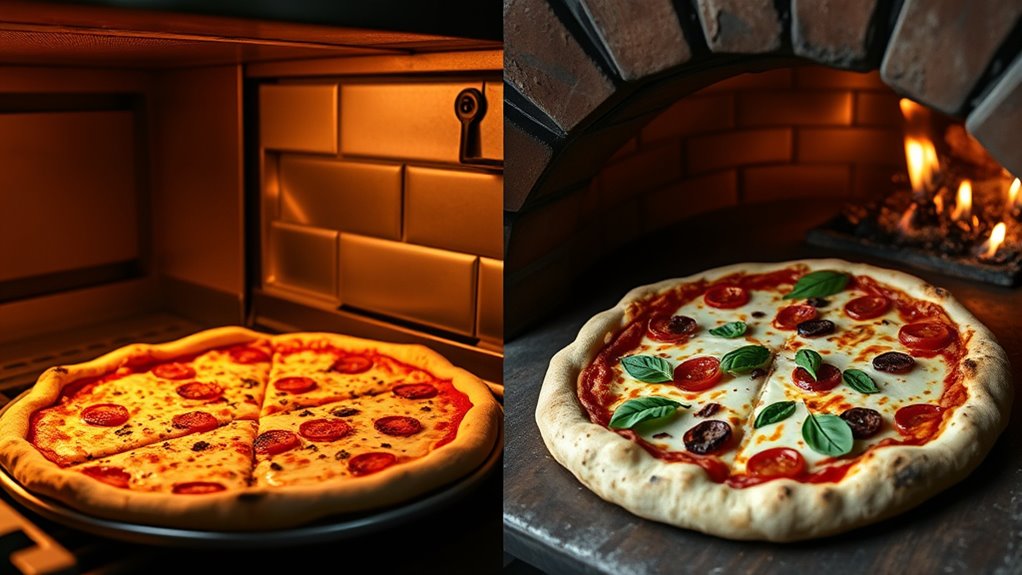
When it comes to baking methods and equipment, the key difference lies in the type of oven used. For Neapolitan pizza, you’ll need a high-temperature, wood-fired oven that reaches around 900°F, creating a quick, blistered crust. In contrast, New York-style pizza relies on a deck oven with a lower oven temperature, typically around 500-600°F, to produce a crisp yet foldable slice. Your choice of baking equipment influences the pizza’s texture and flavor. Consider these factors:
- Wood-fired ovens for authentic Neapolitan flavor
- Deck ovens for consistent, high-volume baking
- Pizza stones or steels to mimic traditional heat transfer
- Oven temperature control for precise baking
- Proper ventilation for high-temperature setups
Selecting the right oven and maintaining essential oven temperature are vital for achieving each style’s signature crust.
Visual Differences and Presentation Styles
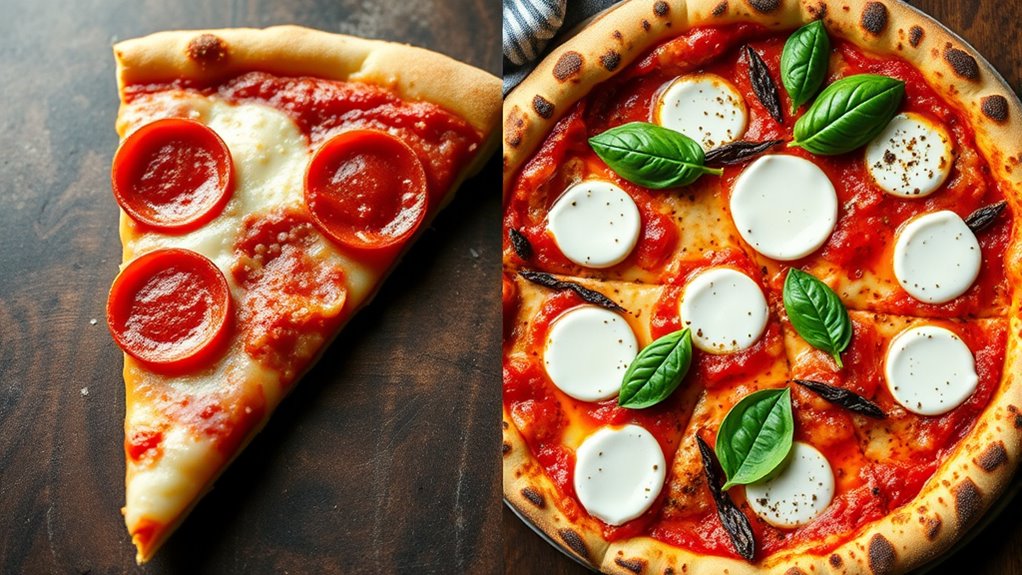
The baking method and equipment directly influence the visual appeal and presentation style of each pizza. With New York-style, you’ll notice a broader, thinner crust that often has a slight crispness along the edges, complemented by a generous cheese melt that creates an inviting, gooey surface. The sauce spread tends to be moderate, allowing the toppings to stand out without overwhelming the slice. Neapolitan pizza, on the other hand, features a softer, more delicate crust with a slightly charred edge, giving it a rustic appearance. The cheese melt on Neapolitan is usually lighter and more bubbly, while the sauce spread is thin, highlighting the fresh, high-quality ingredients. These differences in visual presentation reflect each style’s unique approach to ingredients and baking techniques.
Texture and Crust Characteristics
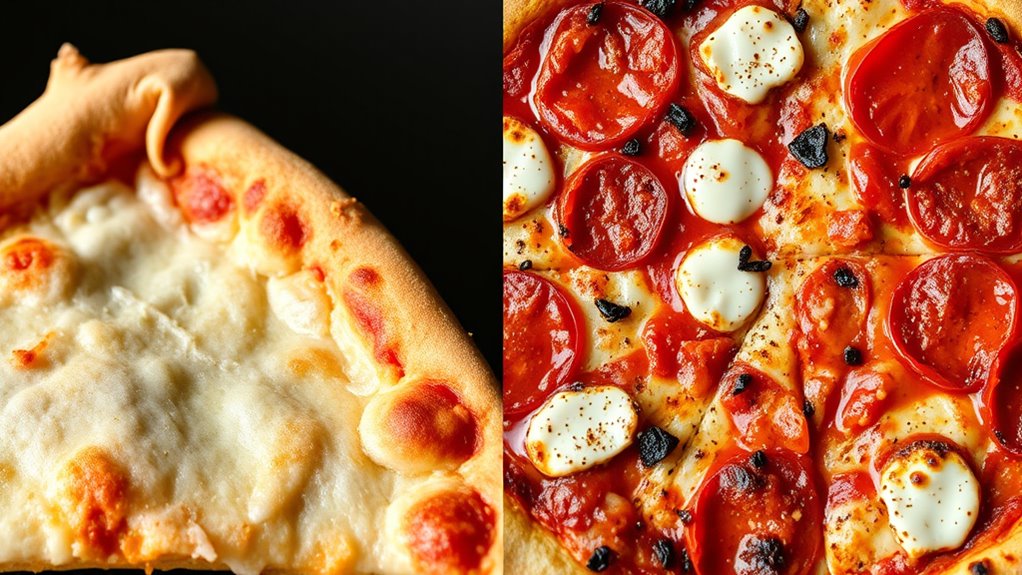
You’ll notice that the crust thickness varies considerably between the styles, affecting how you experience each bite. The chewiness and bite differ as well, with some crusts offering a resilient stretch while others are more tender. Crispiness levels also play a role, giving each pizza its unique texture and mouthfeel.
Crust Thickness Variations
Crust thickness plays a crucial role in defining the texture and overall experience of pizza, with New York and Neapolitan styles showcasing distinct variations. A thicker crust offers more dough elasticity, providing a sturdy base that supports generous toppings and maintains structural integrity. Conversely, a thinner Neapolitan crust emphasizes a delicate, crisp bite that enhances flavor. Variations in thickness also influence topping adhesion; thicker crusts allow for more toppings without sogginess, while thinner ones require careful cheese placement.
- Thicker crusts provide durability and support.
- Thin Neapolitan crusts deliver a crisp, delicate texture.
- Dough elasticity affects how the crust expands during baking.
- Thicker bases can handle more toppings without sogginess.
- Thin crusts emphasize a light, airy bite that highlights flavor.
Chewiness and Bite
In comparing New York and Neapolitan pizza, the chewiness and bite of the crust considerably influence the eating experience. The chewiness comparison reveals that New York crust tends to be more substantial and resilient, offering a satisfying bite texture that holds up well with toppings and folding. Its thicker, bread-like consistency provides a firm yet pliable bite, making it ideal for handheld eating. Conversely, Neapolitan crust is lighter and more delicate, with a softer, more tender bite texture that quickly dissolves in your mouth. This contrast in chewiness and bite impacts how you perceive each style; New York offers a more substantial, chewy experience, while Neapolitan delivers a softer, more delicate bite that highlights its airy, airy interior.
Crispiness Levels
Crispiness plays a crucial role in defining the texture and overall appeal of both New York and Neapolitan pizzas. It results from factors like dough fermentation and baking techniques, influencing how the crust reacts when you bite into it. A well-fermented dough creates a sturdy yet airy base that crisps perfectly, while the cheese melting adds to the texture contrast.
Consider these aspects:
- Longer dough fermentation develops a stronger, crispier crust.
- Neapolitan pizza often has a thin, delicate crunch due to quick baking.
- New York pizza features a thicker, chewier crust with a satisfying crisp edge.
- Proper oven heat ensures the crust crisps without burning.
- The balance between crispiness and chewiness enhances the eating experience.
Your goal is achieving that desirable crunch while maintaining the right balance with softness inside.
Flavor Profiles and Overall Taste Experience

While both New York and Neapolitan pizzas deliver delicious flavors, their taste profiles differ markedly. You’ll notice that Neapolitan pizza offers a fresh, vibrant taste with a light cheese melt and a bright, tangy tomato flavor. In contrast, New York pizza provides a richer, more savory experience with a thicker crust, a fuller cheese melt, and a balanced spice profile. The spice balance in New York pizza complements its hearty toppings, while Neapolitan keeps things simple and clean. To illustrate:
| Aspect | Neapolitan | New York |
|---|---|---|
| Cheese Melt | Light, fresh, quickly melts | Thick, gooey, long-lasting |
| Tomato & Spice | Bright, tangy, minimal spice | Rich, savory, well-spiced |
| Overall Taste | Light, fresh, slightly acidic | Bold, hearty, well-rounded |
Serving Traditions and Eating Habits

Serving traditions and eating habits for New York and Neapolitan pizza reflect their cultural roots and regional preferences. When enjoying these styles, you’ll notice distinct pizza etiquette and dining customs. For New York pizza, you often fold slices to eat quickly on the go, emphasizing convenience. With Neapolitan pizza, you typically use utensils, savoring each bite in a relaxed setting. Keep in mind:
Enjoy New York pizza by folding slices; savor Neapolitan with utensils and relaxed bites. Respect local customs.
- Folding slices is common in New York
- Using a knife and fork is typical for Neapolitan
- Sharing pizza with friends is a universal custom
- Pizzas are often eaten by hand or utensil depending on style
- Respect local pizza etiquette to enhance your experience
Understanding these traditions helps you appreciate each style’s cultural significance and enhances your enjoyment of the authentic experience.
Tips for Recreating Each Style at Home

Recreating authentic New York and Neapolitan pizza at home is entirely possible with the right techniques and ingredients. Focus on your dough’s hydration, fermentation time, and oven temperature. For Neapolitan pizza, use a high-temperature oven and a pizza stone to mimic those blistered, airy crusts. For New York-style, aim for a thinner, chewier crust with a slightly lower oven temp. To improve your experience, consider pizza delivery tips: choose sturdy pizza boxes with proper ventilation and avoid stacking slices to prevent sogginess. Also, design your pizza box with branding and easy open features to enhance presentation.
| Tip | Technique | Reason |
|---|---|---|
| Use a pizza stone or steel | Preheat thoroughly | Achieves authentic crust crispness |
| Proper dough fermentation | Longer fermentation enhances flavor | Improves texture and taste |
| Optimize pizza box design | Ventilation and sturdy material | Keeps pizza fresh and presentable |
Frequently Asked Questions
Which Style Is More Authentic for Its Region’s Cuisine?
Neapolitan pizza is more authentic for its region’s cuisine, thanks to its traditional dough fermentation process that creates a light, airy crust. The cheese selection, typically fresh mozzarella, also reflects regional standards. You’ll notice that Neapolitan emphasizes simple, quality ingredients and a quick bake at high heat. In contrast, New York style adapts the dough fermentation and cheese choices, making it more suited for a different regional palate and practicality.
How Do Oven Types Affect the Pizza’s Texture and Flavor?
Your oven type notably impacts your pizza’s texture and flavor. High-heat ovens, like wood-fired or brick ovens, deliver intense oven heat and short baking durations, resulting in a crispy crust with smoky flavors. In contrast, conventional electric or gas ovens produce gentler oven heat and longer baking times, leading to a softer, chewier crust. Choosing the right oven guarantees you achieve the desired balance of texture and flavor in your homemade pizza.
Can I Make Neapolitan or New York Pizza Without Special Equipment?
Yes, you can make Neapolitan or New York-style pizza without special equipment. Use a pizza stone to mimic a traditional oven’s heat for Neapolitan pizzas, helping achieve a crispy crust. For New York-style, a sturdy baking sheet works well; preheat it to mimic a deck oven’s effect. Both options require high oven temperatures and proper techniques, but you don’t need professional equipment to enjoy delicious homemade pizza.
What Are Common Mistakes When Attempting Homemade Versions?
When making pizza at home, you often struggle with dough consistency and topping distribution. To avoid mistakes, guarantee your dough isn’t too wet or dry; it should be elastic and smooth. Spread toppings evenly, avoiding overloads that cause uneven cooking. Also, don’t skip preheating your oven or using a pizza stone if possible. These steps help achieve a well-cooked, flavorful pizza with perfect crust and balanced toppings.
How Do Regional Toppings Influence the Overall Taste Experience?
Like a knight wielding a quill in a modern age, regional toppings shape your pizza’s flavor journey. You’ll notice how regional cheese and sauce variations add unique character—sharper, milder, or spicier—transforming each bite. By choosing local ingredients, you embrace tradition and elevate your homemade pizza experience, making every slice a mini tour of regional tastes. These toppings influence the overall taste, creating a more authentic and memorable culinary adventure.
Conclusion
Whether you choose the bold, foldable charm of New York or the delicate, artful Neapolitan, mastering these styles transforms your home into a world-class pizzeria. Each bite becomes a mini journey through history and culture, turning ordinary ingredients into extraordinary experiences. So go ahead—dive in with passion, experiment fearlessly, and embrace the delicious chaos. Because in the end, your kitchen isn’t just making pizza; it’s creating a masterpiece that can stand toe-to-toe with the legends.