Your meat thermometer can give inaccurate results if it’s not properly calibrated, placed in the right spot, or kept clean. Over time, exposure to extreme temperatures or rough handling can throw off its accuracy. If you don’t insert it into the thickest part of the meat, especially avoiding fat or bones, the info may be wrong. Keeping your thermometer in good condition and checking its calibration regularly helps. Keep reading to find out how to guarantee your thermometer stays accurate.
Key Takeaways
- Improper calibration or lack of routine checks can cause inaccurate temperature readings.
- Measuring near fat, bones, or the surface leads to misleading results.
- Dirty, damaged, or corroded probes impair the thermometer’s accuracy.
- Extreme temperatures outside the device’s range can affect measurement precision.
- Not inserting the thermometer into the meat’s thickest part results in false readings.
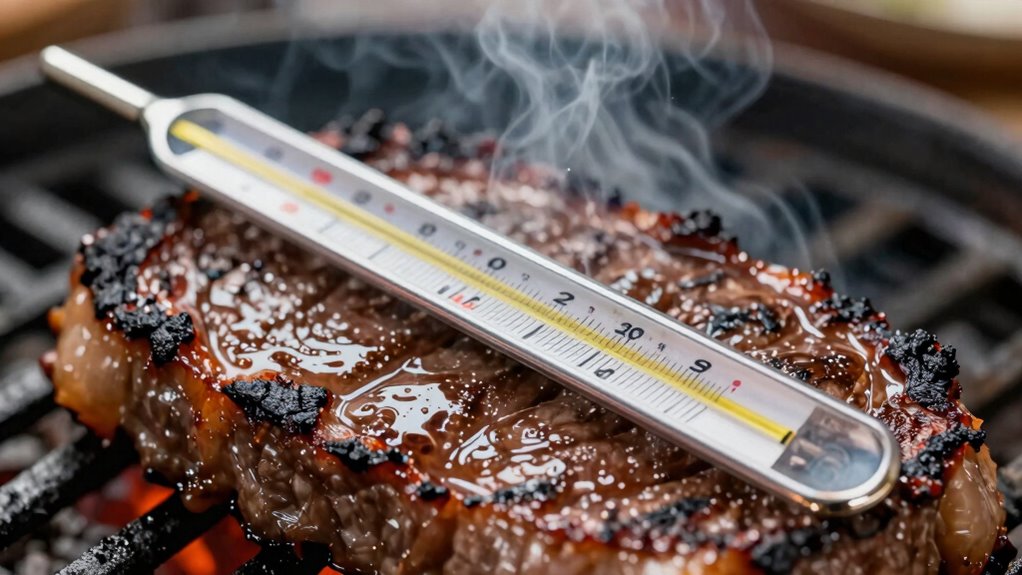
Accurately reading a meat thermometer is crucial to guarantee your meat is cooked safely and to your desired level of doneness. If your thermometer gives inconsistent or inaccurate readings, it can jeopardize cooking safety and lead to undercooked or overcooked meat. One common reason for wrong readings is improper thermometer calibration. Over time, thermometers can drift from their original accuracy, especially if they’re exposed to extreme temperatures or rough handling. Regularly calibrating your thermometer ensures it provides precise measurements, which is essential for both safety and quality. Additionally, temperature calibration is a key factor that impacts the reliability of your readings, making it important to periodically verify and adjust your device. Another factor that causes inaccurate readings is not properly positioning the thermometer in the meat. If you don’t insert it into the thickest part of the cut, you might get a misleading temperature. For example, measuring near the surface or close to a bone can give false readings, making the meat seem more cooked or less cooked than it truly is. To avoid this, always insert the thermometer into the center of the thickest portion, avoiding fat pockets or bones, which conduct heat differently. Proper placement guarantees you’re getting an accurate core temperature, critical for determining doneness and ensuring food safety. The condition of your thermometer also plays a role. If the probe or sensor is dirty, corroded, or damaged, it won’t function correctly. Regularly cleaning your thermometer with soap and water after each use prevents buildup that could interfere with accurate readings. If your device has a damaged or worn sensor, it’s time to replace it. Also, avoid exposing the thermometer to extreme heat or cold outside of its intended range, as this can impact its accuracy. Store it properly in a safe, stable environment to maintain its calibration over time. Additionally, be mindful of the type of thermometer you’re using. Digital thermometers usually provide faster and more precise readings, but they need fresh batteries and proper calibration. Analog or dial thermometers are more durable but can also become inaccurate if they’re old or misaligned. No matter what type you have, routine checks and calibration help maintain accuracy. When in doubt, compare your thermometer’s reading with a known accurate device or test it in ice water (32°F or 0°C) and boiling water (212°F or 100°C at sea level) to verify its calibration. Proper storage practices can also help prolong the lifespan and accuracy of your thermometer, especially when kept away from extreme temperatures that could affect its performance.
digital meat thermometer with calibration feature
As an affiliate, we earn on qualifying purchases.
As an affiliate, we earn on qualifying purchases.
Frequently Asked Questions
How Often Should I Calibrate My Meat Thermometer?
You should calibrate your meat thermometer at least once a year to guarantee accuracy, but more often if you notice inconsistent readings or after dropping it. Calibration frequency depends on how frequently you use it and the importance of precise temperatures. Regular calibration maintains thermometer accuracy, helping you cook meat safely and perfectly. Always test it before use, especially when preparing new or delicate recipes that require exact temperatures.
Can I Leave My Thermometer in the Meat While Cooking?
Yes, you can leave your thermometer in the meat while cooking, but only if it’s designed for that purpose. This helps guarantee cooking safety and maintains temperature accuracy, especially during long cooks like roasts or whole chickens. Make sure your thermometer is oven-safe and follow manufacturer guidelines. This way, you get precise readings without opening the oven, reducing temperature fluctuations and guaranteeing your meat reaches a safe, fully cooked temperature.
What Types of Meat Thermometers Are Most Accurate?
You want the most accurate meat thermometers for perfect food safety and cooking precision. Digital instant-read thermometers top the list, providing quick, precise readings in seconds. Dial analog thermometers also work well, especially if calibrated regularly. Infrared thermometers can be tempting but aren’t ideal for internal temperature checks. Selecting the right thermometer guarantees you hit safe temperatures every time, preventing undercooked or overdone meat—crucial secrets for a perfect meal.
How Does Ambient Temperature Affect Thermometer Readings?
Ambient influence and temperature fluctuations can greatly affect your meat thermometer readings. When the surrounding temperature varies, the thermometer may struggle to give accurate results, especially if it’s left in a hot or cold environment for too long. To guarantee precise measurements, keep your thermometer away from drafts, direct sunlight, or cold surfaces. Allow it to acclimate to the ambient temperature before checking your meat for the most reliable reading.
Are Digital Thermometers More Reliable Than Analog Ones?
Digital thermometers are generally more reliable than analog ones because of their superior digital accuracy, providing precise readings quickly. However, analog thermometers often boast better durability, making them more resistant to drops and rough handling. You should choose based on your needs: if accuracy matters most, go digital; if durability and simplicity are key, an analog thermometer might serve you better.
instant-read meat thermometer for accurate cooking
As an affiliate, we earn on qualifying purchases.
As an affiliate, we earn on qualifying purchases.
Conclusion
Just like Icarus flying too close to the sun, you might be risking your perfect meal by ignoring these thermometer tips. Remember, a reliable reading keeps your culinary ambitions grounded in safety and flavor. So, don’t let faulty measurements be your Achilles’ heel—trust your thermometer, calibrate regularly, and cook with confidence. After all, even Daedalus knew the importance of a well-crafted wing—your kitchen deserves the same precision.
As an affiliate, we earn on qualifying purchases.
best meat thermometer for oven use
As an affiliate, we earn on qualifying purchases.
As an affiliate, we earn on qualifying purchases.