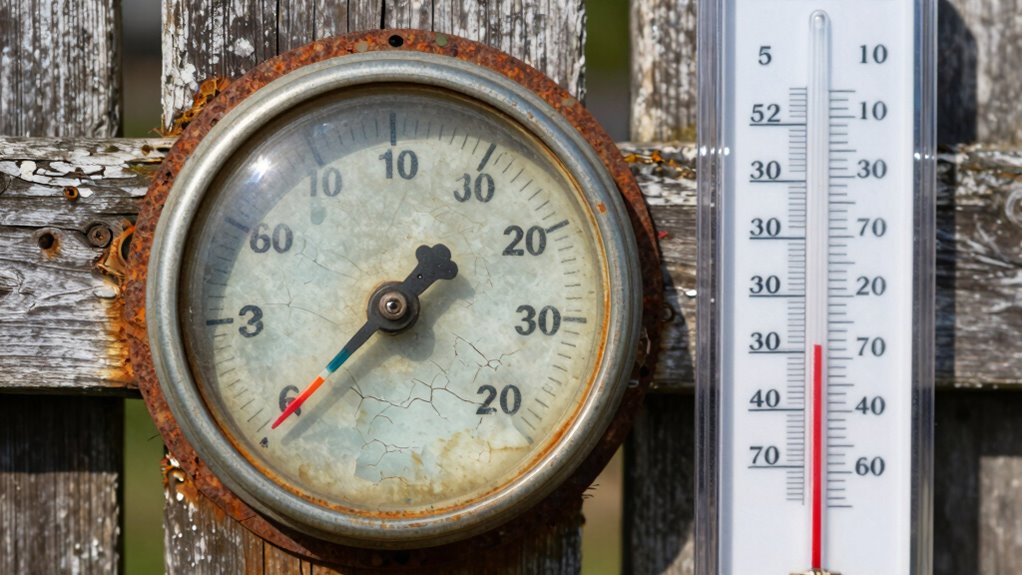

Outdoor thermometers fail faster than indoor ones because they face harsh environmental conditions that cause quicker wear and damage. Sunlight, moisture, and temperature swings degrade materials like plastics and metals, leading to cracks, corrosion, and sensor drift. Poor durability and inadequate weather resistance also contribute to their shorter lifespan. Regular maintenance helps, but understanding these stressors can help you choose better models. Keep exploring to discover more tips to extend your outdoor thermometer’s life.
Open a free Amazon Business account
Business pricing, bulk buying and tax-exempt orders.
As an affiliate, we earn on qualifying purchases.
Key Takeaways
- Outdoor thermometers are exposed to harsh environmental conditions like UV rays, moisture, and temperature fluctuations that accelerate material degradation.
- Constant environmental stress causes sensor calibration drift, reducing measurement accuracy over time.
- Use of low-quality materials in outdoor models leads to faster wear, corrosion, and breakdown.
- Inadequate weather-resistant design makes outdoor thermometers more susceptible to damage from weather elements.
- Lack of regular maintenance and calibration accelerates failure due to environmental wear and sensor inaccuracies.
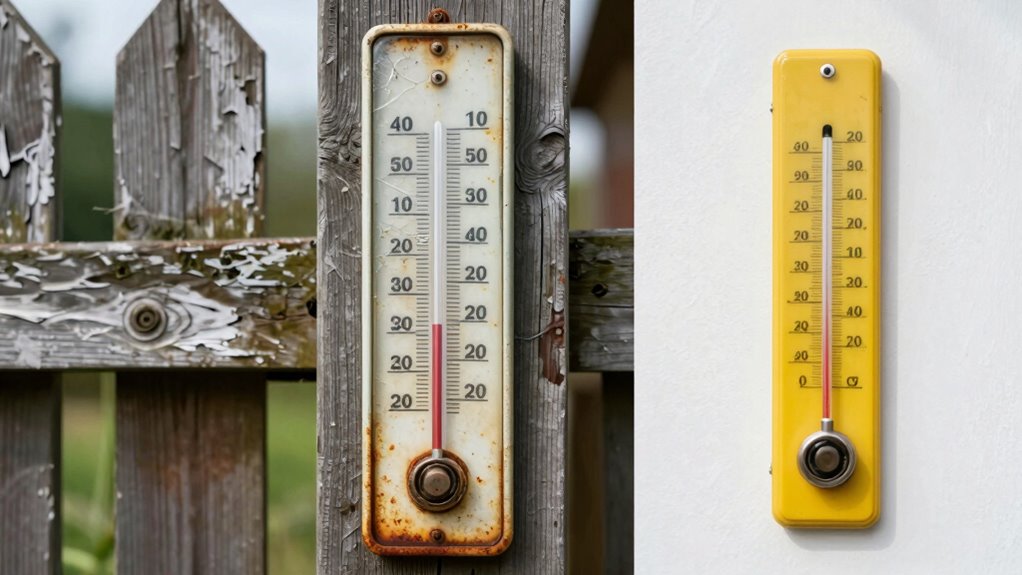
Outdoor thermometers tend to fail faster than indoor ones because they are constantly exposed to harsh environmental conditions that indoor models rarely face. This exposure accelerates wear and tear, making it imperative to understand the factors behind their shorter lifespan. One of the main reasons is the challenge of maintaining accurate readings over time, which depends heavily on proper sensor calibration. Outdoor sensors are subjected to temperature fluctuations, humidity, and dirt, all of which can cause calibration drift. If you neglect regular calibration checks, your thermometer might give inaccurate readings, leading to potential misjudgments about the weather. Unlike indoor models, which stay in relatively stable environments, outdoor sensors need frequent calibration to guarantee they continue functioning correctly amid changing conditions. Additionally, material durability significantly influences how long outdoor thermometers last, as exposure to sunlight, moisture, and temperature variations can degrade materials over time. Many outdoor devices are constructed with materials designed to withstand weather elements, but not all materials are equal in durability. Cheap plastics or fragile metals crumble under prolonged exposure to sunlight, rain, or snow. Over time, UV rays degrade plastic components, causing cracks and brittleness, while moisture can corrode metal parts or seep into sensitive sensors. If the materials used in your outdoor thermometer aren’t robust enough, you’ll notice malfunctions or complete failure sooner than expected. Recognizing the importance of weather resistance in device design can help you select models better suited for outdoor use, especially when considering the material composition of the device. Proper maintenance practices, such as cleaning and calibration, can extend the device’s operational life significantly. Additionally, understanding the environmental stressors that impact outdoor devices can help in choosing the right model and ensuring its longevity.
outdoor thermometer with weather resistance
As an affiliate, we earn on qualifying purchases.
As an affiliate, we earn on qualifying purchases.
Frequently Asked Questions
Can Outdoor Thermometers Be Repaired or Calibrated Easily?
Outdoor thermometers can often be repaired or calibrated, but it depends on the type. For simple models, you might perform calibration procedures yourself using a reference thermometer and adjusting accordingly. More complex or damaged units may require professional repair options or replacement. Always check the manufacturer’s instructions for calibration procedures, and consider whether repair is cost-effective compared to buying a new outdoor thermometer.
Do Different Materials Affect Outdoor Thermometer Longevity?
Materials definitely impact your outdoor thermometer’s lifespan—it’s like a battleground where corrosion and UV damage wage war. Metal parts, especially if uncoated, can rust quickly, while plastic components might become brittle or crack under relentless sun exposure. Glass can shatter from temperature swings. Choosing durable, weather-resistant materials extends your thermometer’s life, but if you ignore these factors, it’ll succumb faster than you’d believe, like a hero falling in an epic battle.
How Often Should Outdoor Thermometers Be Replaced?
You should replace your outdoor thermometer every 2 to 3 years to guarantee accurate readings. Regular maintenance routines, like cleaning and inspecting for damage, help prolong its life. Additionally, calibrate it annually to maintain calibration accuracy. Exposure to harsh weather accelerates wear, so if it shows signs of malfunction or inconsistent readings, substitute it sooner. Proper care ensures your outdoor thermometer remains dependable for monitoring temperature changes effectively.
Are Digital Outdoor Thermometers More Durable Than Analog?
Like a knight’s shining armor, digital outdoor thermometers often boast better durability than analog ones, especially against harsh weather. You’ll find that digital durability tends to surpass analog reliability because digital models generally resist moisture, temperature swings, and UV damage better. While analog thermometers are simpler and sometimes more reliable in stable conditions, digital options give you a longer-lasting, more resilient choice for outdoor use.
What Environmental Factors Accelerate Outdoor Thermometer Failure?
Environmental factors like UV damage and moisture intrusion accelerate outdoor thermometer failure. When exposed to direct sunlight, UV rays degrade materials, causing cracks or fading. Moisture intrusion, from rain or snow, can corrode internal parts or cause short circuits, especially in digital models. These elements weaken the device’s integrity over time, making outdoor thermometers more susceptible to failure than indoor ones, which are protected from these harsh conditions.
durable outdoor thermometer for harsh weather
As an affiliate, we earn on qualifying purchases.
As an affiliate, we earn on qualifying purchases.
Conclusion
In the end, you see, outdoor thermometers face harsher elements that cause quicker wear and tear compared to indoor ones. The relentless sun, rain, and wind act like a relentless Shakespearean tempest, testing their durability day after day. To keep your outdoor device accurate and reliable, you must give it proper care and consider upgrading to models with better weatherproofing. After all, even the most loyal of instruments needs some TLC in our modern age.
calibratable outdoor thermometer
As an affiliate, we earn on qualifying purchases.
As an affiliate, we earn on qualifying purchases.
outdoor temperature sensor with corrosion resistance
As an affiliate, we earn on qualifying purchases.
As an affiliate, we earn on qualifying purchases.
Flea & tick season Picks
flea and tick prevention
As an affiliate, we earn on qualifying purchases.