
🔍 Read the full analysis: Pizza Margherita At Home: Getting Close To Naples In A Home Oven on Mad Tasting

Get kitchen gear delivered free with Prime
- Fast, free delivery on millions of items
- Prime Video, Amazon Music and more included
- Member-only deals all year
TL;DR
Mad Tasting’s home-pizza guide explains how to approximate a Naples-style Pizza Margherita in a standard oven using long-fermented dough, restrained toppings and a preheated steel or stone. It says home ovens cannot match the temperatures of traditional Neapolitan ovens, so the result is an approximation rather than an exact replica.
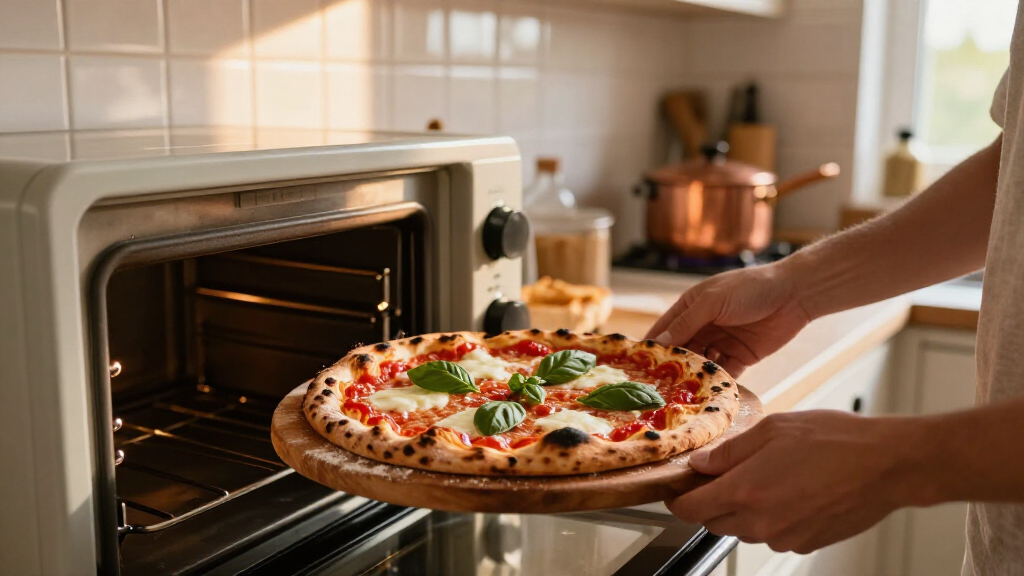
Mad Tasting has published a guide to making Pizza Margherita in a standard home oven, recommending long-fermented dough, quality ingredients and a thoroughly preheated pizza steel or stone to approximate the blistered crust associated with Naples. The guide says home cooks can improve their results, but a household oven’s lower maximum temperature means it cannot fully reproduce a traditional Neapolitan bake.
The guide recommends Italian 00 flour for the dough and canned San Marzano tomatoes, or another high-quality Italian tomato, for the sauce. It lists fresh mozzarella, basil, extra-virgin olive oil and salt among the other core ingredients. The source favors mozzarella di bufala for a creamier, tangier flavor, while fior di latte offers a milder option. It also cautions that ingredient quality and moisture can affect the finished pizza, including whether the crust becomes soggy.
For dough, the guide describes fermentation lasting 24 to 72 hours and hydration around 62% to 65%. It says a longer rise can develop flavor and a more extensible dough, while higher hydration can support a more open crumb but make shaping harder. These figures are guidance from the source, not a guarantee of a particular result; temperature, flour and handling can all affect dough behavior.
For baking, Mad Tasting says many home ovens reach about 500°F (260°C), compared with the 800°F to 900°F (430°C to 480°C) it gives for traditional Neapolitan ovens. Its advice is to heat a steel or stone in the oven at its highest setting for at least 45 minutes. A steel transfers heat quickly to the dough, while a stone also stores heat; both require careful handling because they become extremely hot. The guide recommends keeping toppings sparse so the base can cook without being weighed down.
HOME OVEN FIELD GUIDE · MAD TASTING
Pizza Margherita at Home: Getting Close to Naples in a Home Oven
Long-fermented dough, restrained toppings and a fiercely preheated baking surface can bring a home bake closer to the Neapolitan style. Your oven sets the limit: think inspired approximation, not exact replica.
Source: Mad Tasting · Practical cooking guidance
01 / BUILD THE BASE
Small ingredient list. Big impact.
With just a few toppings, dough texture, tomato quality and cheese moisture become easy to notice. Choose ingredients for flavor, then keep the total load restrained.
02 / PLAN THE DOUGH
Time helps. Handling still matters.
Mad Tasting offers a fermentation window and hydration range as guidance. Actual dough behavior changes with temperature, flour and technique.
Give it 24–72 hours
A longer rise can develop flavor and a more extensible dough. Plan ahead, and account for the conditions in your kitchen.
Around 62–65%
More water can support a more open crumb, while making the dough harder to handle and shape.
Ranges are not guarantees
These figures are source recommendations, not a promise of a particular crust or texture.
03 / CLOSE THE HEAT GAP
Use the heat you have.
A preheated steel or stone transfers available oven heat into the pizza. It improves the setup; it does not raise the oven’s maximum temperature.
Steel: transfers heat quickly to the dough.
Stone: stores and radiates heat.
Heat either surface at your oven’s highest setting for at least 45 minutes. Both become extremely hot, so use suitable heat protection.
Illustrative scale: the home range tops out well below the traditional range. Actual household ovens vary, and the guide provides no comparative bake test.
“The biggest challenge in home pizza making is mimicking the intense heat of Naples’ wood-fired ovens.”
— Mad Tasting04 / A PRACTICAL SEQUENCE
From planning to first slice.
A few manageable adjustments help you make the most of a standard oven and a short ingredient list.
Choose ingredients
Start with quality flour, tomato, mozzarella, basil, oil and salt.
Allow the rise
Use the guide’s 24–72 hour fermentation window as a starting point.
Preheat thoroughly
Heat your steel or stone for at least 45 minutes at maximum oven setting.
Top with restraint
Keep toppings sparse, then handle the hot surface carefully.
“The tradeoff involves balancing ease of handling with achieving that light, airy texture.”
— Mad TastingWHAT THE GUIDE CAN AND CANNOT TELL YOU
A useful method, with clear limits.
The recommendations explain a practical home approach. The source does not establish that the method reproduces a Naples pizzeria’s result.
Actionable kitchen guidance
Ingredient suggestions, a fermentation window, hydration guidance and advice to preheat a steel or stone.
No recipe quantities or test data
No complete step-by-step recipe, finished-pizza comparison, publication date, or measurements validating performance claims.
- Oven calibration and surface thickness or material are not evaluated.
- The effect of a broiler on results is not specified.
- Ingredient and fermentation claims are not accompanied by research citations or certification standards.
- “Authentic” is not defined by a formal test in the supplied material.
QUICK ANSWERS
Before you turn on the oven.
Can a home oven make Neapolitan-style Margherita?
It can make a version inspired by the style. The guide says a standard oven cannot match traditional Neapolitan oven temperatures, so an exact match is not promised.
How long should dough ferment?
The guide gives 24–72 hours. Results depend on conditions including temperature and flour.
Should I use a steel or a stone?
Either is recommended. Steel transfers heat quickly; stone stores and radiates it. Preheat both and handle them carefully.
How hot, and how long?
Set the oven to its maximum and preheat the baking surface for at least 45 minutes. Actual oven limits vary.
Which toppings are suggested?
San Marzano or another quality canned Italian tomato, fresh mozzarella, basil and a little extra-virgin olive oil. Keep toppings minimal.
Will the result be a replica?
No such result is established. Treat the method as practical cooking guidance and expect variation by kitchen and technique.
Closing the Home Oven Heat Gap
The practical issue for home cooks is not just choosing a recipe: it is the difference between household oven temperatures and the much higher heat cited for traditional Neapolitan baking. A steel or stone can improve heat transfer from a domestic oven, but it does not raise the oven’s maximum temperature. That distinction matters for anyone expecting an exact pizzeria-style result.
The guide’s approach offers a set of manageable adjustments rather than specialized commercial equipment: plan ahead for a long dough rise, source ingredients with suitable flavor and moisture, and preheat the baking surface. The likely result is a closer approximation, not a verified replica. The source provides no comparative test results or measurements of finished pizzas, so its recommendations should be understood as cooking guidance rather than independently demonstrated performance claims.
As an affiliate, we earn on qualifying purchases.
Why Neapolitan Pizza Bakes Differently
Pizza Margherita relies on a short list of ingredients, making the dough, tomato, cheese and basil prominent in the final flavor. The source frames minimal toppings as part of the technique: adding too much can affect the balance of moisture and the crust’s texture. It also links longer fermentation with flavor and dough extensibility, while noting that a wetter dough is more difficult to handle.
The temperature comparison explains why home cooks may not get the same blistering and bake time as a pizzeria. Mad Tasting gives a home-oven range topping out around 500°F and a traditional oven range of 800°F to 900°F. A preheated steel or stone helps use the available heat more effectively, but the guide does not claim that either accessory makes a standard oven operate like a wood-fired oven.
““This isn’t about perfect imitation; it’s about understanding the essentials and making them work in your kitchen.””
— Mad Tasting
As an affiliate, we earn on qualifying purchases.
Limits of the Home Oven Method
The source does not provide the article’s publication date, recipe quantities, a complete step-by-step recipe, or test data comparing home-baked pizzas with those from Naples. It also does not specify how oven calibration, steel thickness, stone material or the use of a broiler might change results. Its temperature and fermentation figures are presented as general guidance, and outcomes can vary with equipment and conditions.
“Authentic” is not defined by a formal test in the material. The guide’s claims about ingredient characteristics and dough fermentation are not accompanied by citations to research or certification standards. Readers should treat the method as a practical cooking approach and not as evidence that a home oven can reproduce every feature of a Naples pizzeria’s pizza.
As an affiliate, we earn on qualifying purchases.
Next Steps for Home Cooks
The guide’s next steps are to choose ingredients, allow time for dough fermentation, and preheat a steel or stone for at least 45 minutes before baking. Home cooks should follow the instructions for their oven and baking surface, use suitable heat protection when handling hot equipment, and keep toppings restrained. The source does not announce a follow-up test or further publication, so whether the method produces a closer result will depend on each kitchen’s equipment and technique.
As an affiliate, we earn on qualifying purchases.
Key Questions
Can a standard home oven make Pizza Margherita in the Neapolitan style?
It can produce a home version inspired by the style, according to Mad Tasting. The guide says a standard oven cannot match the higher temperatures of traditional Neapolitan ovens, so an exact match is not promised.
How long should the dough ferment?
The guide gives a range of 24 to 72 hours. It says longer fermentation can build flavor and make dough easier to stretch, though results depend on conditions such as temperature and the flour used.
Should I use a pizza steel or a stone?
Mad Tasting recommends either. It says a steel transfers heat quickly to the dough, while a stone stores and radiates heat. Both must be preheated and handled carefully because they become very hot.
How hot should the oven be, and how long should it preheat?
The guide advises setting the oven to its maximum temperature and preheating the steel or stone for at least 45 minutes. It gives about 500°F (260°C) as a common home-oven maximum, but actual ovens vary.
Which toppings and cheese does the guide recommend?
It recommends San Marzano tomatoes or another high-quality canned Italian tomato, fresh mozzarella, basil and a little extra-virgin olive oil. It suggests mozzarella di bufala or fior di latte and advises keeping toppings minimal.
Source: Mad Tasting
Halloween Picks
halloween
As an affiliate, we earn on qualifying purchases.