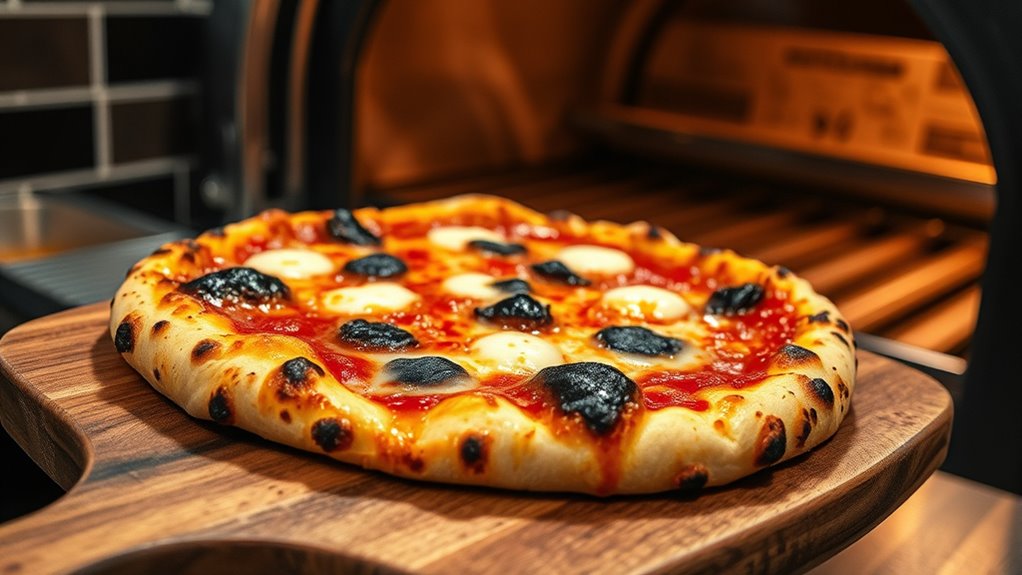

To achieve authentic Neapolitan pizza at home, choose a high-temperature oven like a wood-fired or a specially designed gas oven, capable of reaching at least 800°F (427°C). These ovens mimic traditional heat, delivering the crust’s perfect texture and flavor. Electric ovens usually fall short but can work with high-quality, pizza-specific settings. If you’re serious about authentic results, explore the best options for your space and budget—more tips ahead to help you perfect your pizza.
Key Takeaways
- A wood-fired or high-temperature gas oven (≥800°F) best replicates authentic Neapolitan pizza.
- Brick or stone ovens retain heat well, essential for achieving the desired crust texture and flavor.
- Electric ovens can work if they reach and sustain high temperatures, preferably with a pizza stone or steel.
- Consider oven size, space, and installation costs to ensure proper fit and long-term investment.
- Proper preheating and baking techniques are crucial, regardless of oven type, for authentic flavor and texture.

BIG HORN 14-Inch Indoor Pizza Oven, 850°F High-Heat Electric Countertop Pizza Oven for Restaurant-Style Artisan Pizza with Pizza Stone and Pizza Peel, PID Precision Temperature Control
- High-Temperature Cooking: Reaches 850°F for fast pizza prep
- Fast Preheat Time: Preheats in 15 minutes
- Precise Temperature Control: PID system maintains accurate heat
As an affiliate, we earn on qualifying purchases.
As an affiliate, we earn on qualifying purchases.
Understanding the Characteristics of Traditional Neapolitan Pizza

Traditional Neapolitan pizza is renowned for its simple yet flavorful characteristics, which set it apart from other styles. The key starts with the pizza dough, which you should craft with just flour, water, salt, and a hint of yeast. It’s kneaded to develop a soft, elastic texture, then left to ferment, creating a light, airy crust with a slightly chewy bite. Toppings selection is minimal but deliberate—fresh mozzarella, San Marzano tomatoes, basil, and a drizzle of olive oil are typical. These ingredients highlight quality over quantity, allowing the natural flavors to shine through. The focus remains on balance, simplicity, and freshness, creating a pizza that’s both satisfying and authentic. Mastering these elements is essential to capturing the true spirit of Neapolitan pizza at home.

Hans Grill Rectangular Pizza Stone, 15 x 12 Inch Cordierite Stone with Peel
- Material: Toughened porous cordierite stone
- Heat Resistance: Up to 1112°F (600°C)
- Versatile Use: For pizza, pies, bread, and more
As an affiliate, we earn on qualifying purchases.
As an affiliate, we earn on qualifying purchases.
Comparing Wood-Fired, Gas, and Electric Ovens for Home Use

Choosing the right oven is essential for achieving authentic Neapolitan pizza at home, and each type offers distinct advantages and challenges. Wood-fired ovens deliver high heat and smoky flavors, perfect for a crispy crust and perfect pizza dough. Gas ovens are easier to control, providing consistent heat suitable for a variety of toppings selection. Electric ovens are convenient, often compact, and maintain stable temperatures, but may lack the intense heat of traditional methods.
Choosing the right oven ensures authentic Neapolitan pizza with perfect crust and flavor.
Consider these points:
- Wood-fired ovens excel at authentic flavor and high heat.
- Gas ovens offer easier temperature control.
- Electric ovens are more accessible and space-friendly.
- Your choice impacts pizza dough texture and toppings options.
Choosing the right oven depends on your space, budget, and how close you want to replicate traditional Neapolitan pizza.

Costway Electric Oven, Stainless Steel Baker with Auto Shut-Off, Handle, Removable Tray, Countertop Pizza Maker for Kitchen & Commercial Use
- Pizza Size Capacity: Supports up to 12-inch pizzas
- Fast Baking Time: Bakes pizza in under 15 minutes
- Even Heating System: Up-and-down and 360° rotary heating
As an affiliate, we earn on qualifying purchases.
As an affiliate, we earn on qualifying purchases.
Temperature Capabilities and Heat Retention in Different Ovens

Your oven’s ability to reach and maintain high temperatures directly impacts your pizza’s quality. Efficient heat retention guarantees consistent results and a proper crust. Understanding these capabilities helps you choose the right oven for authentic Neapolitan pizza at home.
Achieving High Temperatures
Reaching the high temperatures needed for authentic Neapolitan pizza requires an oven that can generate and retain intense heat. To achieve the perfect crust, you need an oven capable of reaching at least 800°F (427°C). Here are key factors to consider:
- Oven Type: Wood-fired ovens naturally reach higher temperatures than electric or gas models.
- Dough Hydration: Higher hydration doughs absorb heat better, leading to a better oven spring.
- Heat Source: Make sure your oven’s heat source can sustain intense heat without fluctuations.
- Topping Placement: Proper topping placement helps prevent excess moisture, which can cool the surface and hinder achieving high temps.
Mastering these elements helps you produce that signature blistered crust and well-cooked toppings.
Heat Retention Efficiency
Understanding heat retention is essential because it determines how well your oven maintains the high temperatures needed for authentic Neapolitan pizza. Good thermal insulation reduces heat loss, ensuring consistent heat distribution and stable cooking conditions. Ovens with superior heat retention keep temperature fluctuations minimal, making it easier to produce perfectly blistered crusts. Here’s a comparison:
| Oven Type | Heat Retention & Thermal Insulation |
|---|---|
| Wood-Fired Oven | Excellent thermal insulation, retains heat for hours, even heat distribution |
| Gas Oven | Good heat retention, moderate insulation, uneven heat spots |
| Electric Oven | Lower thermal insulation, quick heat loss, uneven heat distribution |
| Brick Oven | Superior heat retention, even heat distribution, maintains high temps |
| Countertop Pizza Oven | Limited thermal insulation, fast heat loss, inconsistent heat distribution |

Ooni Karu 12 Multi-fuel Outdoor Portable Pizza Oven – Reaches 950°F and Cooks 12 Inch Pizzas in 60 Seconds. Versatile Wood or Propane Gas Fired Grill with Pizza Stone
- Custom Fuel Tray for Optimal Airflow: Maximizes airflow for high temperatures
- Cooks 12-Inch Pizza in 60 Seconds: Reaches 950°F for quick cooking
- Versatile Fuel Options: Use wood, charcoal, or gas with attachment
As an affiliate, we earn on qualifying purchases.
As an affiliate, we earn on qualifying purchases.
Size, Space, and Installation Considerations

Before choosing a pizza oven, you need to ensure its size and how much space it will require in your setup. Make sure your installation area can accommodate the oven’s dimensions comfortably and meets any specific installation requirements. Planning your space carefully ensures your setup is safe, functional, and easy to use.
Oven Dimensions and Space
Choosing the right oven size is essential for successfully making Neapolitan pizza at home, as it determines how much space you have to work with and how the heat distributes. Your oven dimensions should fit comfortably in your kitchen space without overcrowding. Consider these points:
- Measure your available kitchen space to ensure the oven fits comfortably.
- Opt for a size that allows you to work easily around it without feeling cramped.
- Larger ovens may provide better heat retention but require more room and proper ventilation.
- Balance oven dimensions with your cooking habits and storage needs to avoid overcrowding.
Installation Requirements and Setup
Selecting the right installation setup is crucial to guarantee your oven fits well and functions safely in your kitchen. You need to take into account the installation space carefully, ensuring there’s enough room for ventilation and easy access for operation and maintenance. Measure your available space precisely, including height, width, and depth, to prevent surprises during installation. Additionally, check the electrical requirements of your chosen oven. Some models demand specific voltage, amperage, or dedicated circuits, so verify your home’s electrical capacity before purchasing. Proper setup not only ensures safety but also optimizes performance. Make sure your power supply matches the oven’s electrical specs and that your space can accommodate any necessary ventilation or clearance requirements. Taking these steps guarantees a smooth installation and long-lasting functionality.
Cost, Maintenance, and Long-Term Investment
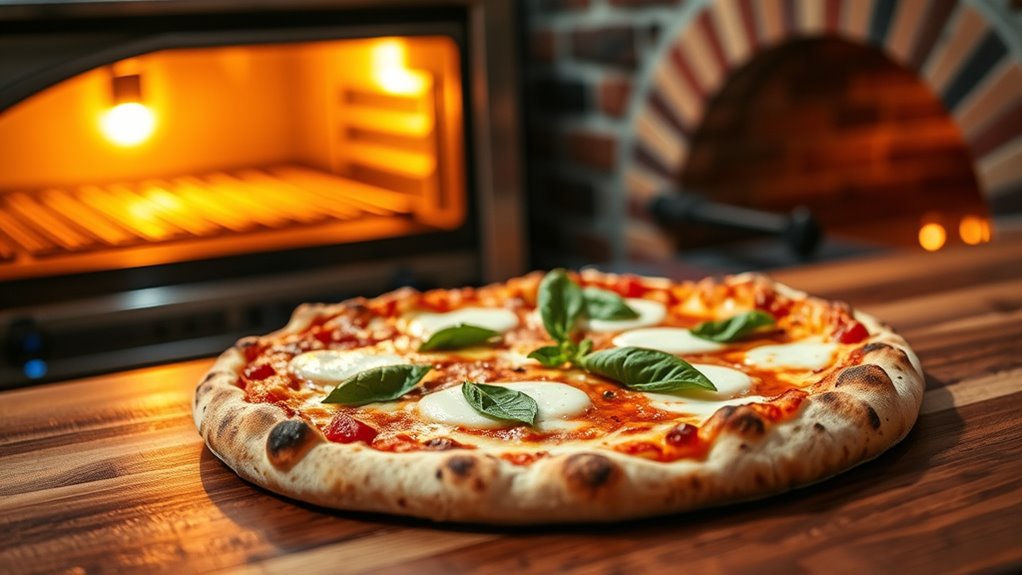
Investing in a home Neapolitan pizza setup involves initial costs, ongoing expenses, and considerations for long-term value. Conducting a thorough cost analysis helps you understand what fits your budget. Be aware that maintenance costs can add up, so following maintenance tips ensures your oven stays in top shape and lasts for years. Here are key points to consider:
Investing in a home pizza setup requires balancing initial costs and maintenance for long-term enjoyment.
- Initial investment varies significantly based on oven type and size.
- Regular cleaning and inspection reduce repair costs.
- Some ovens require professional servicing or replacement parts.
- Long-term durability impacts overall value and future expenses.
Balancing upfront costs with maintenance needs ensures your setup remains a worthwhile long-term investment, letting you enjoy authentic Neapolitan pizza without surprises.
Achieving the Authentic Flavor and Texture at Home

Achieving the authentic flavor and texture of Neapolitan pizza at home requires careful attention to several key elements. First, focus on making a high-quality pizza dough with minimal ingredients—just flour, water, salt, and a bit of yeast—to replicate traditional methods. Proper fermentation is vital for developing flavor and the desired chewy crust. When it comes to topping selection, keep it simple: fresh mozzarella, basil, and a drizzle of olive oil highlight the classic taste. Avoid overwhelming the pizza with too many toppings, which can compromise texture and authenticity. Use fresh, high-quality ingredients for the toppings, and apply them sparingly. Balancing the dough’s elasticity with thoughtful topping choices ensures you capture the authentic flavor and texture of Neapolitan pizza at home.
Tips for Using Your Chosen Oven to Perfect Your Pizza
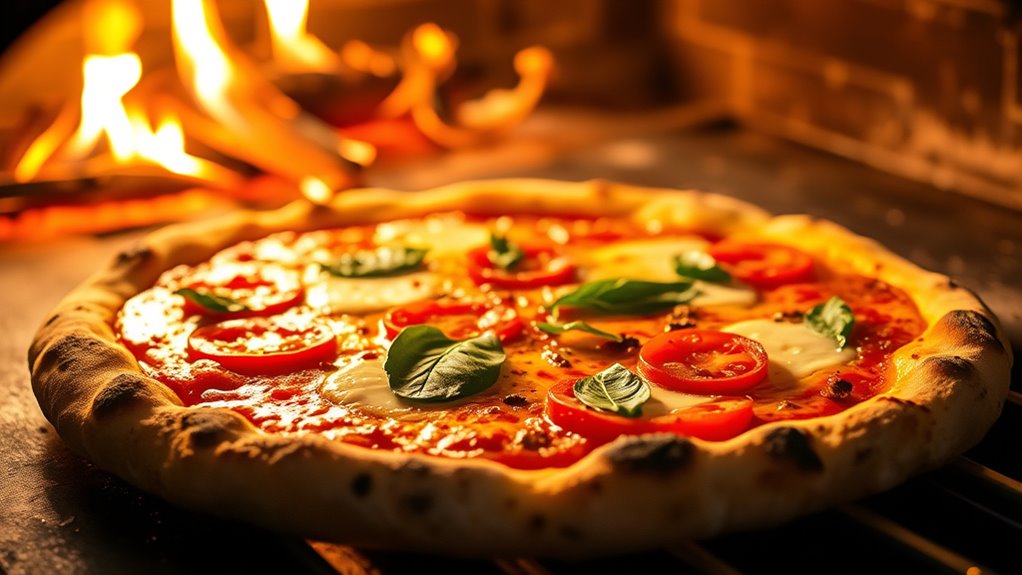
Choosing the right oven and mastering its settings can make a significant difference in replicating authentic Neapolitan pizza at home. To get the best results, focus on these tips:
- Use a hot oven—ideally around 900°F (480°C)—to mimic traditional wood-fired heat.
- Preheat your oven thoroughly, allowing the pizza dough to cook quickly and develop that perfect crust.
- Pay attention to topping selection; keep ingredients light and minimal to avoid sogginess.
- Rotate the pizza during baking for even cooking, ensuring the crust and toppings are perfectly done.
Frequently Asked Questions
Can I Make Authentic Neapolitan Pizza Without a Traditional Oven?
You can make authentic Neapolitan pizza without a traditional oven by using a pizza stone or a baking steel. Preheat either in your regular oven at the highest temperature for at least an hour, mimicking a wood-fired oven’s heat. This setup helps accomplish a crispy crust and proper oven spring. Just guarantee your pizza is cooked quickly at high heat, and you’ll get close to that authentic Neapolitan flavor.
How Long Does It Take to Preheat Different Types of Home Ovens?
Preheating your oven feels like waiting for a volcano to erupt! It can take 15-30 minutes depending on your oven’s insulation and temperature accuracy. Convection ovens preheat faster, often in about 15 minutes, while traditional models might take up to 30. Ensuring your oven is well-insulated and maintains a steady temperature helps you reach those perfect, high heat levels for authentic Neapolitan pizza quickly and efficiently.
Are There Portable Oven Options Suitable for Small Spaces?
Yes, there are portable ovens perfect for small spaces. Compact pizza ovens are an excellent choice because they’re lightweight and easy to store. These portable ovens heat quickly and reach high temperatures, ideal for making authentic Neapolitan-style pizza at home. You can easily set them on your countertop or even take them outdoors for a fun cooking experience. They’re practical, efficient, and designed to fit in tight spaces.
What Safety Features Should I Consider When Choosing a Pizza Oven?
Imagine your pizza oven as a trusted guardian in your kitchen. You should prioritize oven safety features like automatic shut-off, heat-resistant handles, and sturdy construction to prevent accidents. Fire prevention is key—look for models with thermal insulation and safety valves. These features act like a shield, keeping you protected while you craft perfect pies. Staying vigilant with safety guarantees your pizza-making becomes a delightful, worry-free experience.
How Energy-Efficient Are Various Oven Types for Frequent Use?
You’ll find that energy consumption varies across oven types, with electric and infrared ovens generally more efficient for frequent use. They convert more energy into heat, saving you money and reducing your environmental impact. Look for eco-friendly options like models with energy-saving modes or high insulation, which minimize energy waste. Choosing an energy-efficient oven not only cuts costs but also supports sustainable living, especially if you bake pizza often.
Conclusion
No matter which oven you choose, you’re beginning a flavorful journey to recreate Italy’s heart in your own kitchen. Think of your oven as a fiery forge or a gentle breeze—each one shaping your pizza’s crust and character. With patience and practice, you’ll turn your home into a bustling pizzeria, where dough dances and toppings sing. So, fire up your oven and let your culinary masterpiece rise to delicious heights.