Seasoning a pizza stone isn’t just a myth; it’s a helpful step to improve your baking. Applying a thin layer of oil and baking it at high heat creates a natural, non-stick surface that enhances heat distribution and prevents sticking. While not strictly necessary, regular seasoning and proper maintenance extend your stone’s lifespan and make cleaning easier. Want to know the best tips for seasoning and caring for your stone? Keep exploring for more expert advice.

Get kitchen gear delivered free with Prime
- Fast, free delivery on millions of items
- Prime Video, Amazon Music and more included
- Member-only deals all year
Key Takeaways
- Seasoning creates a non-stick surface, improving baking results and ease of food release.
- It is not strictly mandatory but highly recommended for long-term stone maintenance.
- Proper seasoning involves oil application and baking at high heat, bonding the oil to the stone.
- Regular cleaning and re-seasoning help maintain non-stick qualities and prevent odors.
- Many bakers consider seasoning a pizza stone a beneficial practice rather than a myth.

Seasoning a pizza stone is an essential step to guarantee your baked goods turn out crispy and flavorful. When you think about pizza stone cleaning and baking stone maintenance, it’s easy to wonder if seasoning is truly necessary or just a myth. The truth is, proper seasoning can considerably improve your baking results, but it’s not strictly mandatory for every stone. Instead, it’s a proactive approach that helps create a natural non-stick surface, which prevents dough from sticking and enhances heat distribution.
If you’re new to using a pizza stone, you might assume that simply cleaning it after each use is enough. While regular pizza stone cleaning is important, neglecting to season it can lead to sticking and uneven baking. Seasoning your baking stone involves applying a thin layer of oil and baking it at high temperatures to allow the oil to polymerize, forming a durable, non-stick coating. This process not only improves food release but also helps protect the stone from absorbing excess moisture or odors that could compromise flavor. Over time, a seasoned pizza stone develops a seasoned surface that makes future baking easier, saving you effort in cleaning and maintenance.
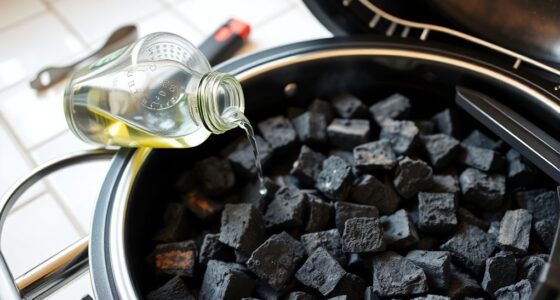
When you start the seasoning process, you’ll want to focus on baking stone maintenance that extends beyond just seasoning. After each use, it’s crucial to remove any residual food debris and clean the surface gently—avoid harsh soaps or scrubbing brushes that could damage the stone’s porous structure. Instead, opt for a scraper or a brush, and if necessary, wipe down with a damp cloth. Once cleaned, you can proceed with the seasoning process by applying a thin layer of high-smoke-point oil, like flaxseed or vegetable oil, evenly across the surface. Then, bake the stone in a preheated oven at around 450-500°F for an hour. This high-heat baking allows the oil to bond with the stone, creating that non-stick surface and improving overall baking performance.
As an affiliate, we earn on qualifying purchases.
Frequently Asked Questions
How Often Should I Reseason My Pizza Stone?
You should reseason your pizza stone every 6 to 12 months, depending on usage. Regular seasoning helps maintain the stone’s durability and prevents cracking. If you notice food sticking or the surface looks dull, it’s time to reseason. Keep in mind, proper seasoning frequency guarantees your pizza stone stays in great condition, providing even heat and a non-stick surface for perfect pies each time you bake.
Can Seasoning Prevent Pizza Stone From Cracking?
Did you know that proper pizza stone maintenance can extend its lifespan by up to 50%? Seasoning your stone creates a protective layer that helps prevent cracking, especially during rapid temperature changes. While seasoning isn’t a guaranteed crack preventer, it works better than just cleaning alone. Regularly seasoning your stone builds up a seasoned surface that absorbs moisture and heat, reducing stress and the risk of cracks over time.
Is Seasoning Necessary for All Types of Pizza Stones?
Seasoning isn’t necessary for all pizza stones, but it can help with maintenance by creating a non-stick surface and preventing cracks. If your stone is unglazed and porous, seasoning makes sense, unlike glazed stones where cleaning is enough. You should focus on proper seasoning vs. cleaning, which involves removing residues without damaging the stone. Know your stone type and follow recommended care to extend its lifespan and improve your pizza experience.
What Are the Best Oils to Use for Seasoning?
You should use oils like olive oil or vegetable oil for seasoning your pizza stone. These oils withstand high temperatures and create a durable, non-stick surface. To season, apply a thin layer of your chosen oil with a cloth or brush, then heat the stone in your oven. Avoid using thick or sticky oils, as they can create a residue. Regular seasoning helps maintain a well-performing, long-lasting pizza stone.
Does Seasoning Affect the Flavor of the Pizza?
You might think seasoning a pizza stone is just about preventing sticking, but surprisingly, it can also subtly affect flavor enhancement. During the seasoning process, the oils can impart a gentle, roasted undertone to your crust, elevating your pizza’s taste. Ironically, this means your effort to create a neutral surface might introduce a delicate flavor twist, making each slice just a little more delicious and memorable.
As an affiliate, we earn on qualifying purchases.
Conclusion
So, is seasoning your pizza stone worth the effort? While some swear by it, others find it’s just a myth. Ultimately, it’s about what works best for you. If you want a well-loved, non-stick surface, giving it a light seasoning might be a good idea. But don’t fret if you skip it—you can still enjoy perfect pies. Remember, sometimes you’ve got to take the bull by the horns and try things out for yourself.
As an affiliate, we earn on qualifying purchases.
As an affiliate, we earn on qualifying purchases.
Halloween Picks
halloween
As an affiliate, we earn on qualifying purchases.