To nail a perfect medium-rare reverse sear steak, start by choosing a well-marbled cut at least 1.5 inches thick, then bring it to room temperature and pat it dry. Slow-cook it at a low temperature using an oven or sous vide, monitoring with a reliable thermometer until it reaches about 125°F. Finish with a hot, preheated cast iron pan sear for 1-2 minutes per side to develop a flavorful crust. Continue exploring the details to master this technique.
Key Takeaways
- Select a well-marbled, at least 1.5-inch thick steak for even cooking and flavor.
- Slow cook at low temperature (oven or sous vide) to reach medium-rare (125°F) evenly inside.
- Preheat a high-heat pan or grill thoroughly before searing for a perfect crust.
- Use a reliable thermometer to monitor internal temperature, ensuring precise medium-rare doneness.
- Rest the steak briefly after searing to allow juices to settle and crust to set.

Stargazer 12-Inch Cast Iron Skillet | Made in USA, Seasoned, Premium Frying Pan for Grilling, Searing, Baking & More – Durable Cast Iron with Smooth Cooking Surface
- Smooth Cooking Surface: Minimizes food sticking for easy cooking and cleaning
- Made in USA: Individually crafted with premium craftsmanship and seasoning
- Modern Design: Large size with stay-cool handle for safety and comfort
As an affiliate, we earn on qualifying purchases.
As an affiliate, we earn on qualifying purchases.
Choosing the Right Cut of Steak

Choosing the right cut of steak is essential for achieving a perfectly cooked reverse sear. You want a cut with good marbling characteristics, which means it has fine streaks of fat throughout the meat. This fat melts during cooking, keeping the steak tender and flavorful. Regional steak varieties, such as Kansas City strip or Australian ribeye, often showcase exceptional marbling, making them ideal choices. Opt for cuts that are at least 1.5 inches thick to ensure even cooking. Leaner cuts like sirloin can work but may lack the juiciness and tenderness that marbled steaks provide. By selecting a cut with the right marbling and regional characteristics, you’ll set yourself up for a beautifully cooked reverse sear with rich flavor and perfect texture.

Alpha Grillers Instant Read Meat Thermometer Digital, Cooking, Food, Grill
- Fast Temperature Reading: Responds in 1-2 seconds with high accuracy
- Versatile Cooking Tool: Suitable for grilling, baking, frying, and candy making
- Easy-to-Read Display: Bright blue backlight for clear readings in any lighting
As an affiliate, we earn on qualifying purchases.
As an affiliate, we earn on qualifying purchases.
Preparing Your Steak for the Reverse Sear
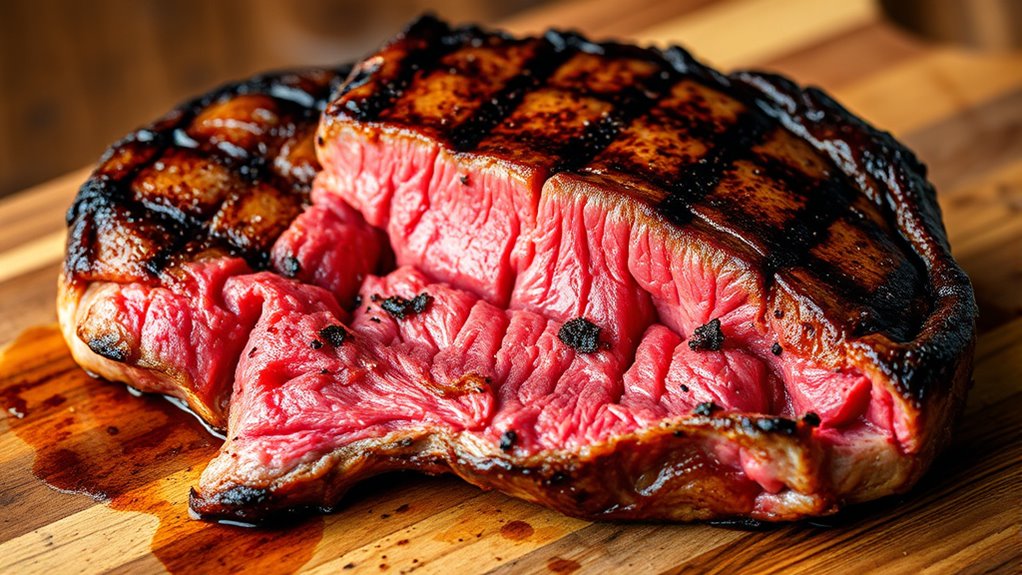
Before you start the reverse sear process, it’s important to prepare your steak properly. Begin by selecting the right marinade options to enhance flavor without overpowering the meat. A simple salt and pepper rub works well, but you can also use herbs, garlic, or soy-based marinades. Let your steak sit at room temperature for about 30 minutes to ensure even cooking. Pay attention to steak thickness; thicker cuts, like a 1.5 to 2-inch steak, benefit most from reverse searing. Thinner steaks may cook too quickly and won’t develop the same crust. Pat the steak dry before cooking to promote a good sear, and avoid marinating for too long if using acidic ingredients, which can affect the texture. Proper prep guarantees a perfectly cooked, flavorful steak.

NKBIRD WIFI Sous Vide Cooker ISV-100W, 1000 Watts Fast-Heating W/Free APP
- WiFi & App Control: Remote cooking and monitoring
- Powerful & Quiet: 1000W heating with <40dB noise
- Precise Touchscreen: Temperature range 77-210F with 0.1C accuracy
As an affiliate, we earn on qualifying purchases.
As an affiliate, we earn on qualifying purchases.
Slow Cooking the Steak to Perfect Doneness
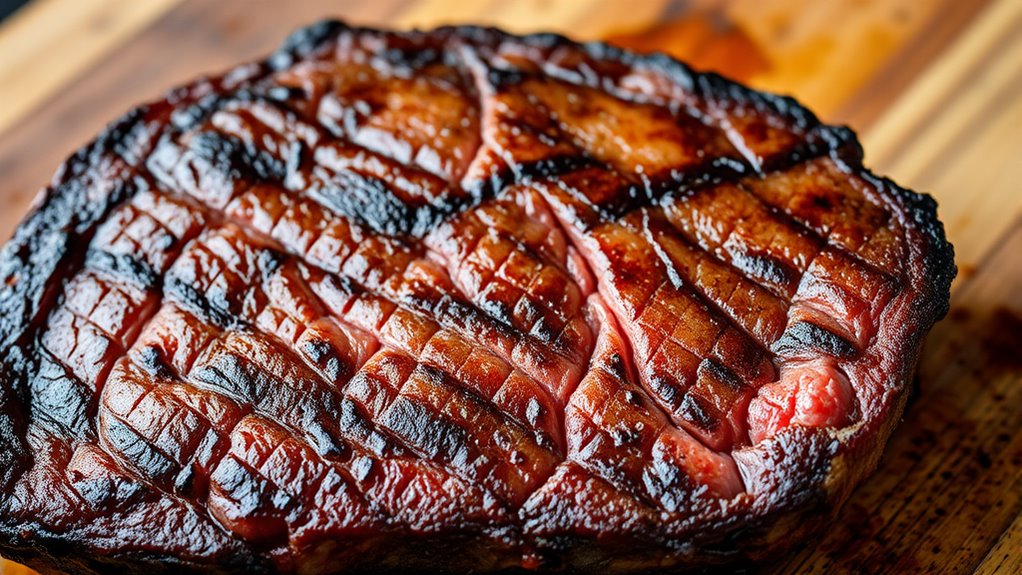
To achieve the perfect level of doneness, you’ll want to cook the steak slowly at a low temperature, allowing heat to penetrate evenly through the meat. This method helps guarantee a consistent medium-rare interior. Incorporate marinating techniques beforehand to enhance flavor infusion and tenderize the meat. A simple marinade with herbs, garlic, and acids like vinegar or citrus works well. As the steak warms gradually, the marinade’s flavors seep in, resulting in a juicier, more flavorful result. Use an oven or sous vide setup for precise temperature control, which prevents overcooking and promotes even cooking throughout. Patience is key—slow cooking takes time but rewards you with a perfectly cooked steak that’s ready for the final sear.

Bellemain Steak Knife Set of 8, Serrated Stainless Steel, Dishwasher Safe
- Signature Modern Steak Knife: Full-tang design with sleek style
- Durable Full-Tang Construction: Ensures strength and longevity
- High-Quality Steel Blades: 8 surgical rust-free steel blades
As an affiliate, we earn on qualifying purchases.
As an affiliate, we earn on qualifying purchases.
Achieving the Ideal Crust With a Final Sear
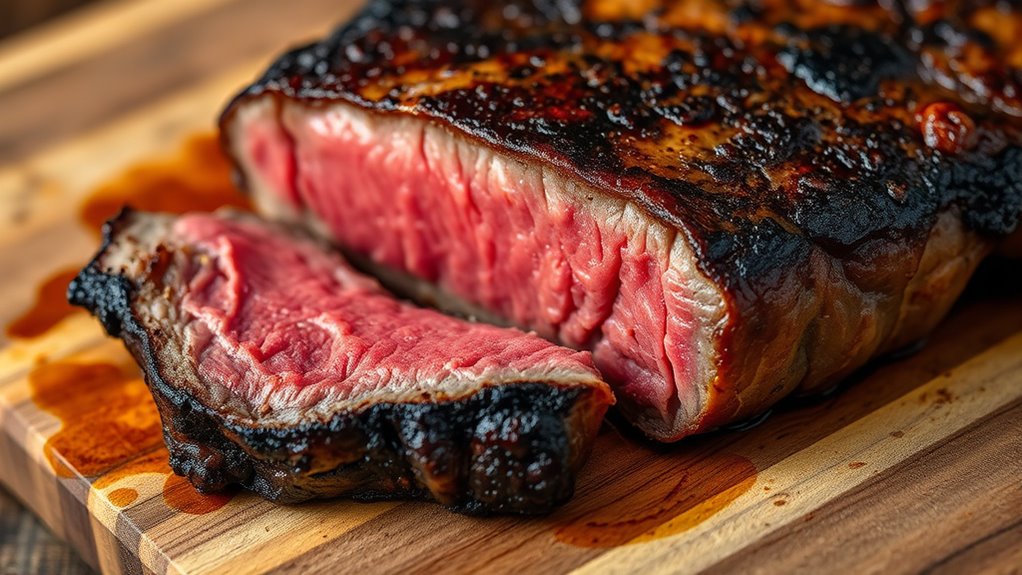
To get that perfect crust, start by properly preheating your pan to guarantee even heat distribution. Use a high-heat pan and time your sear carefully to avoid burning or undercooking the exterior. When done right, this final step creates a flavorful, crispy crust that complements the tender interior.
Proper Preheating Technique
Achieving the perfect crust during a reverse sear starts with proper preheating of your pan or grill. To do this effectively, guarantee your equipment reaches the right temperature before searing. Proper oven preheating is key to a consistent cook, so set it well in advance. When ready to sear, your pan should be hot enough to sizzle the steak immediately, creating a beautiful crust. Visualize the process:
- The oil shimmers and just begins to smoke
- The surface of the steak contacts the pan with a satisfying sizzle
- The smell of caramelizing meat fills the air
- The crust begins to form quickly, locking in juices
Using the right seasoning techniques beforehand helps enhance flavor while the preheating process ensures even heat distribution for that perfect final sear.
Use of High-Heat Pan
A high-heat pan is vital for creating that irresistible, crispy crust on your reverse-seared steak. A cast iron skillet is ideal because it retains heat evenly and withstands high temperatures needed for searing. Before you start, make sure your pan is thoroughly preheated to a high temperature—this is key for high-temperature searing. Once hot, add a small amount of oil with a high smoke point, like avocado or grapeseed oil. Carefully place your steak in the pan and avoid moving it around. The intense heat will immediately form a flavorful crust. This final sear locks in juices and elevates the texture, giving you that perfect contrast between a tender interior and a caramelized exterior. Proper use of a high-heat pan is essential for achieving that perfect crust.
Timing for Perfect Crust
Once your pan is hot and your steak has developed a beautiful crust during the initial sear, timing becomes everything for the perfect final crust. Keep a close eye on the steak’s surface, aiming for a deep, caramelized color without burning. Use precise seasoning techniques to enhance flavor and ensure even coverage, which contributes to a stunning serving presentation.
To achieve this, consider:
- Monitoring the crust’s color frequently to avoid overcooking
- Searing for just 1-2 minutes per side, depending on thickness
- Adjusting heat if the crust darkens too quickly
- Resting the steak briefly after searing to let juices settle
This careful timing ensures your crust is crispy, flavorful, and visually appealing, elevating your overall steak presentation.
Monitoring Internal Temperature for Accuracy

To guarantee your reverse seared steak reaches the perfect level of doneness, monitoring its internal temperature accurately is essential. Use a reliable thermometer to track the cooking temperature, ensuring you don’t over- or under-cook the meat. Before measuring, verify your thermometer’s calibration by testing it in ice water or boiling water to confirm accuracy. An improperly calibrated thermometer can give false readings, leading to an overcooked or undercooked steak. Insert the probe into the thickest part of the steak, avoiding bone or fat for the most precise reading. Check frequently as you approach your target temperature, typically around 125°F for medium-rare. Accurate monitoring allows you to pull the steak at the right moment, ensuring perfect doneness every time.
Resting and Serving Your Perfect Medium-Rare
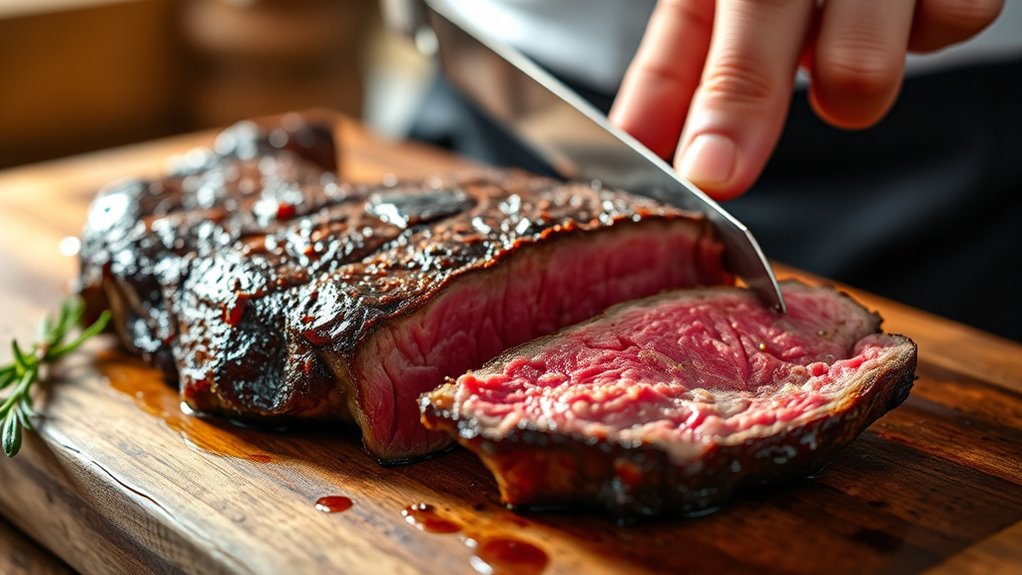
Allow the steak to rest for at least 5 minutes after removing it from the heat. This pause lets juices redistribute, ensuring every bite is tender and flavorful. When resting, consider your plate presentation; place the steak centrally, allowing the eye to appreciate its perfect sear and medium-rare hue. During this time, you can prepare complementary sides or garnishes. Imagine:
- A drizzle of herb butter melting over the warm surface
- Vibrant greens or roasted vegetables providing contrast
- A scattering of flaky sea salt enhancing flavor
- A splash of balsamic or wine reduction for visual appeal
Once rested, slice against the grain for tenderness. Pair your steak with flavors like red wine, bold reds, or a crisp Chardonnay to elevate your dining experience. Serve promptly for maximum enjoyment.
Frequently Asked Questions
Can I Reverse Sear a Frozen Steak?
You can reverse sear a frozen steak, but you should thaw it first using safe thawing techniques like refrigeration or cold water. Thawing helps you cook evenly and preserves flavor. Avoid microwaving, as it can lead to uneven cooking and flavor loss. Once thawed, follow the reverse sear process to achieve that perfect medium-rare, ensuring your steak stays juicy and flavorful from start to finish.
What Are Alternative Methods if I Don’t Have an Oven?
If you don’t have an oven, you can still cook your steak using grilling techniques or sous vide methods. For grilling, set your grill to medium heat, cook the steak gently, then sear it quickly for a perfect medium-rare. Alternatively, sous vide allows precise temperature control—vacuum-seal the steak and cook in hot water, then sear briefly. Both methods deliver tender, evenly cooked results without an oven.
How Does Thickness Impact Cooking Time?
Imagine your steak as a towering skyscraper—thicker means longer to cook! Thickness considerations drastically impact cooking duration; a 1-inch steak might only need 10 minutes, while a 2.5-inch cut could take twice as long. So, you need to adjust your timing accordingly, giving thicker steaks more time to reach that perfect medium-rare. Always use a thermometer for precision, and don’t rush—your patience pays off!
Is Reverse Searing Suitable for Other Types of Meat?
Yes, reverse searing works well for other meats like pork, chicken, and fish. You can use sous vide techniques to gently cook these meats first, then finish with a hot sear for added flavor. If you prefer grilling alternatives, you can reverse sear on a grill by slowly cooking at low heat, then searing at high heat. This method guarantees even doneness and a delicious crust every time.
How Do I Store Leftover Reverse Seared Steak Safely?
To store leftover reverse seared steak safely, first let it cool to room temperature within two hours. Then, wrap it tightly in aluminum foil or place it in an airtight container. Use proper storage techniques by refrigerating it at or below 40°F. For best food safety, consume within 3-4 days. If keeping longer, freeze it to maintain quality and prevent spoilage.
Conclusion
Now that you know the secret to mastering the reverse sear, your steak will be so perfect, it’ll make even seasoned chefs jealous. With patience and attention to detail, you’re about to create a culinary masterpiece that’s juicy, tender, and bursting with flavor. Trust me, once you’ve nailed this technique, your steak will taste like it’s been kissed by the gods themselves. Get ready to impress everyone at your next dinner—your skills just reached legendary status.