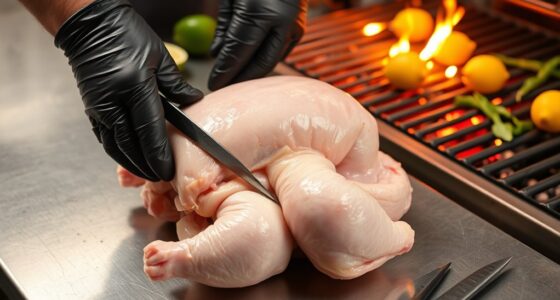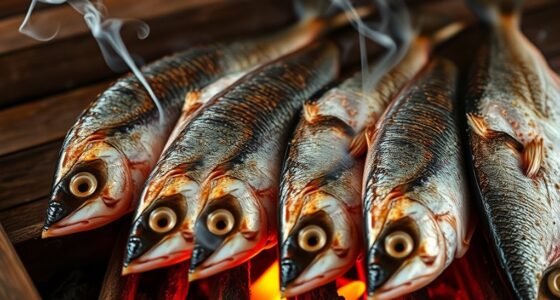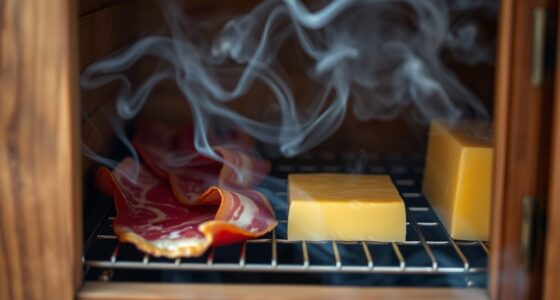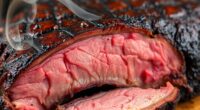
In a taste test, you can usually tell the difference between gas and charcoal grilling because charcoal imparts a smoky, earthy flavor and aroma that’s hard to replicate with gas, which offers a cleaner, more neutral taste. The smell from charcoal enhances the perception of richness, while gas emphasizes seasoning. With practice, your palate can distinguish their unique characteristics, and if you keep exploring, you’ll discover even more subtle nuances that make each method special.
Key Takeaways
- Charcoal imparts a smoky, earthy flavor that enhances the natural taste of grilled foods, while gas offers a cleaner, less overpowering aroma.
- The distinct smoky scent from charcoal can make food seem more flavorful, whereas gas’s neutral aroma emphasizes seasoning.
- During taste tests, charcoal often leaves a lingering smoky aftertaste, whereas gas results in a cleaner, more refined flavor.
- The sense of smell significantly influences flavor perception; charcoal’s aroma enhances richness, while gas allows focus on seasoning.
- Personal preferences and the type of food being grilled determine whether the smoky or clean flavor is more desirable.

When it comes to grilling, the debate over gas versus charcoal often boils down to taste. Each method produces a distinct grilling flavor that can influence your overall grilling experience. As you stand by the grill, you may notice that the choice of fuel impacts more than just convenience; it shapes the cooking aroma that wafts through the air and the flavor profile of your food. Charcoal grills tend to give your food a smoky, robust flavor, thanks to the natural combustion process. The smoke from burning charcoal infuses your meat with a deep, earthy aroma that’s hard to replicate with gas. When you open the lid, you’re greeted with that unmistakable scent of burning wood or briquettes, which signals that your food will have a rich, authentic smoky taste.
Charcoal grilling offers a rich, smoky flavor that enhances your food’s natural taste.
On the other hand, gas grills offer a different experience. They heat quickly, light easily, and allow you to control the temperature with precision. While they don’t produce the same smoky aroma as charcoal, they still deliver a satisfying grilling flavor. Many chefs and home grillers find that gas imparts a cleaner, less overpowering taste, letting the natural flavors of your ingredients shine through. The cooking aroma from a gas grill might lack the smoky punch, but it’s often more neutral, allowing you to focus on seasoning and marination without interference. This can be especially advantageous if you’re preparing delicate foods or want a more subtle flavor profile.
If you’re trying to determine whether you can tell the difference in a taste test, it’s not just about the initial aroma but also about the aftertaste. Charcoal-grilled foods tend to have a lingering smoky essence, which can be quite memorable. Gas-grilled items, however, leave a cleaner, more straightforward flavor that emphasizes freshness and seasoning. As you sample foods from both grills, you might notice the initial aroma from the cooking process influences your perception of flavor. The smoky aroma from charcoal might make the meat seem richer or more intense, while the gas-cooked food could feel lighter and more refined. Additionally, the flavor infusion process in charcoal grilling contributes significantly to the overall taste experience.
Ultimately, the difference in grilling flavor is subtle but noticeable once you focus on it. Your sense of smell plays a big role in perceiving the taste, and the cooking aroma is a key component. Whether you prefer the bold, smoky taste of charcoal or the clean, controlled flavor of gas, each method offers a unique experience. The best way to decide is to try both and see which aligns with your taste preferences and cooking style, knowing that the aroma and flavor are closely intertwined in the art of grilling.

Royal Gourmet CC1830S BBQ Charcoal Grill and Offset Smoker | 823 Square Inch cooking surface, Outdoor for Camping | Black
823 Square Inches: Includes 475 sq. in. porcelain-enameled steel wire cooking grates, 151 sq. in. chrome-plated warming rack…
As an affiliate, we earn on qualifying purchases.
As an affiliate, we earn on qualifying purchases.
Frequently Asked Questions
Does the Type of Meat Affect Flavor Perception?
Yes, the type of meat affects flavor perception because factors like meat marbling and spice rubs influence taste. You’ll notice that well-marbled cuts offer richer, juicier flavors, making them more forgiving of different cooking methods. Spice rubs enhance distinct flavors, highlighting the meat’s natural qualities. So, when you taste, your perception varies depending on the meat’s cut and preparation, shaping your overall flavor experience.
How Does Weather Impact Grilling With Gas or Charcoal?
Weather impacts your grilling experience profoundly. When it’s windy, it can lower your grill’s temperature, especially with charcoal, making it harder to maintain consistent heat. Rain or humidity can also affect temperature effects, causing flare-ups or uneven cooking. Studies show that outdoor conditions can reduce grilling efficiency by up to 20%. So, you’ll want to check weather impact forecasts and adjust your cooking time and technique accordingly to get perfect results.
Can Grilling Techniques Influence Taste More Than Fuel Type?
Yes, your grilling techniques can influence taste more than fuel type. By adjusting marinade effects, you enhance flavor layers, while controlling grill temperature guarantees proper searing and moisture retention. A high temperature creates caramelization, boosting flavor, whereas marinades add depth and tenderness. Focus on these techniques, and you’ll notice a significant difference in taste, often overshadowing the impact of whether you’re using gas or charcoal.
Are There Health Differences Between Gas and Charcoal Grilling?
You might wonder if health concerns differ between gas and charcoal grilling. Both methods pose risks, but they do so differently. Charcoal grilling can lead to carcinogen formation from smoke and charred bits, raising cancer risks. Gas grilling produces fewer carcinogens but still releases chemicals from fumes and flare-ups. To stay healthier, you should avoid charring food, use marinades, and maintain proper grill temperature regardless of your fuel choice.
Is There a Cost Difference Over Time Between Gas and Charcoal?
You’ll likely find that gas grills cost less over time because of better fuel efficiency and lower maintenance costs. Gas grills heat up quickly, use fuel more efficiently, and don’t require the same cleaning and replacement parts as charcoal grills. Charcoal can be cheaper initially, but the ongoing costs of charcoal and more frequent cleaning can add up. So, if you’re budget-conscious, gas might be the smarter choice long-term.

Weber Spirit E-310 Liquid Propane Gas Grill for Outdoor Cooking and BBQ, 3 Burners, Black – Porcelain-Enameled Cast-Iron Grates & Snap-Jet Ignition
The Black Weber Spirit E-310 Grill has a 10-year limited warranty; Weber Works side rails fit snap-on accessories…
As an affiliate, we earn on qualifying purchases.
As an affiliate, we earn on qualifying purchases.
Conclusion
As you finish the taste test, it’s intriguing how subtle differences often feel like coincidences—your memories, the weather, even the moment’s mood blending into the flavors. Sometimes, you realize that whether it’s gas or charcoal, the true magic lies in the experience, not just the taste. What started as a simple test became a reminder that life’s pleasures often come from unexpected, coincidental moments—making each bite uniquely yours, no matter the source.

8 LB. All Natural Hardwood Lump Charcoal by Mr. Bar-B-Q – Premium Natural Charcoal for Grilling, BBQ, Smoking, Kamado & Kettle Grills – Burns Hotter & Longer – Smoky Flavor, Low Ash & Easy to Light
8 LB. BAG ALL-NATURAL HARDWOOD LUMP CHARCOAL FOR GRILLING, SMOKING & OUTDOOR BBQ COOKING – Upgrade your grilling…
As an affiliate, we earn on qualifying purchases.
As an affiliate, we earn on qualifying purchases.

Kamado Joe Big Block XL Premium 100% All-Natural Hardwood Lump Charcoal Reusable Up to Three Times and 18-Hour Burn Times, 1-Pack, 20LBS Model KJ-CHAR
20 pounds of 100 percent natural lump charcoal
As an affiliate, we earn on qualifying purchases.
As an affiliate, we earn on qualifying purchases.