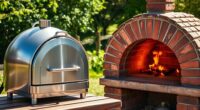
To control temperature on a charcoal grill like a pitmaster, start by choosing the right charcoal—lump for hot, quick burns or briquettes for steady heat. Set up heat zones by stacking coals for direct and indirect cooking. Adjust airflow with vents—opening increases heat, closing reduces it. Use the minion method for low and slow cooks, and add charcoal as needed. Keep a reliable thermometer handy and monitor consistently to fine-tune your adjustments. Keep going to reveal more expert tips.

Get kitchen gear delivered free with Prime
- Fast, free delivery on millions of items
- Prime Video, Amazon Music and more included
- Member-only deals all year
Key Takeaways
- Use different charcoal types (lump or briquettes) based on desired heat and burn time.
- Create heat zones by arranging coals strategically for direct or indirect cooking.
- Adjust vents gradually to regulate airflow, controlling oxygen and temperature precisely.
- Employ low-and-slow techniques like the minion method for steady, low temperatures.
- Regularly monitor temperature with a reliable thermometer and make adjustments to vents and charcoal as needed.
charcoal grill temperature thermometer
As an affiliate, we earn on qualifying purchases.
As an affiliate, we earn on qualifying purchases.
Understanding Charcoal and Its Burning Characteristics

Understanding charcoal and its burning characteristics is essential for controlling temperature effectively on a charcoal grill. Different charcoal types, such as lump charcoal and briquettes, burn differently and influence heat output. Lump charcoal, made from natural wood, burns hotter and faster, providing high, intense heat perfect for searing. Briquettes, on the other hand, are uniform and burn longer at a steadier temperature, making them ideal for sustained cooking. Recognizing burning characteristics helps you anticipate how much heat each type produces and how quickly it burns out. For example, lump charcoal ignites quickly and reaches high temperatures rapidly, while briquettes take longer to ignite but offer consistent heat over time. Knowing these differences allows you to better manage your grill’s temperature from the start.
As an affiliate, we earn on qualifying purchases.
Setting Up Your Grill for Different Temperature Zones
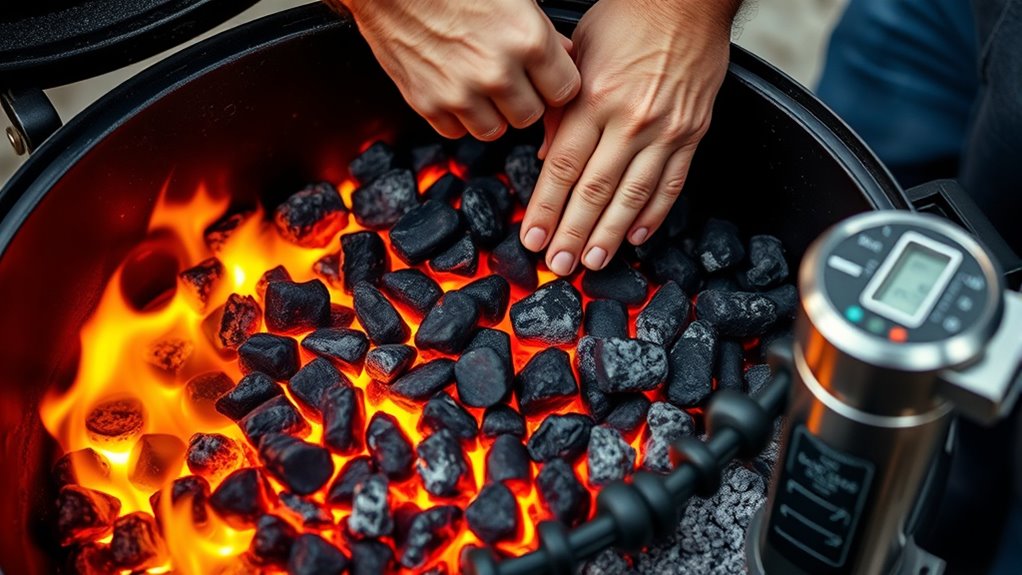
To create different temperature zones on your grill, start by arranging the charcoal into distinct areas for high and low heat. Managing airflow is key, so adjust the vents to control how much oxygen reaches the coals. This setup allows you to cook multiple items at ideal temperatures simultaneously.
Arranging Charcoal for Zones
Creating distinct temperature zones on your charcoal grill starts with how you arrange the coals. To achieve this, you can create a hot zone by piling the charcoal on one side of the grill, leaving the other side empty for indirect cooking. Use different charcoal types, like lump charcoal for quick heat or briquettes for steady, longer-lasting heat, to fine-tune your zones. Grilling accessories, such as a chimney starter or charcoal baskets, can help organize your setup efficiently. For a more precise temperature control, consider adding a water pan or heat deflector in the cooler zone. This arrangement allows you to cook multiple items at different temperatures without constantly adjusting the vents or adding more fuel.
Managing Airflow Effectively
Managing airflow is essential for setting up your grill’s temperature zones effectively. Proper airflow controls the amount of oxygen reaching the charcoal, which directly influences the heat level. By adjusting the vents, you can create a hotter zone for searing or a cooler zone for slow cooking. Good airflow also enhances smoke flavor, as it promotes even burning and smoke production. Additionally, efficient airflow helps maximize fuel efficiency, making your charcoal last longer. Keep the vents partially closed for low and steady temperatures, and fully open for high heat. Regularly monitor and adjust the vents to maintain consistent heat across different zones. Mastering airflow ensures better temperature control, richer smoke flavor, and more economical use of fuel.
As an affiliate, we earn on qualifying purchases.
Managing Airflow With Vents for Precise Control
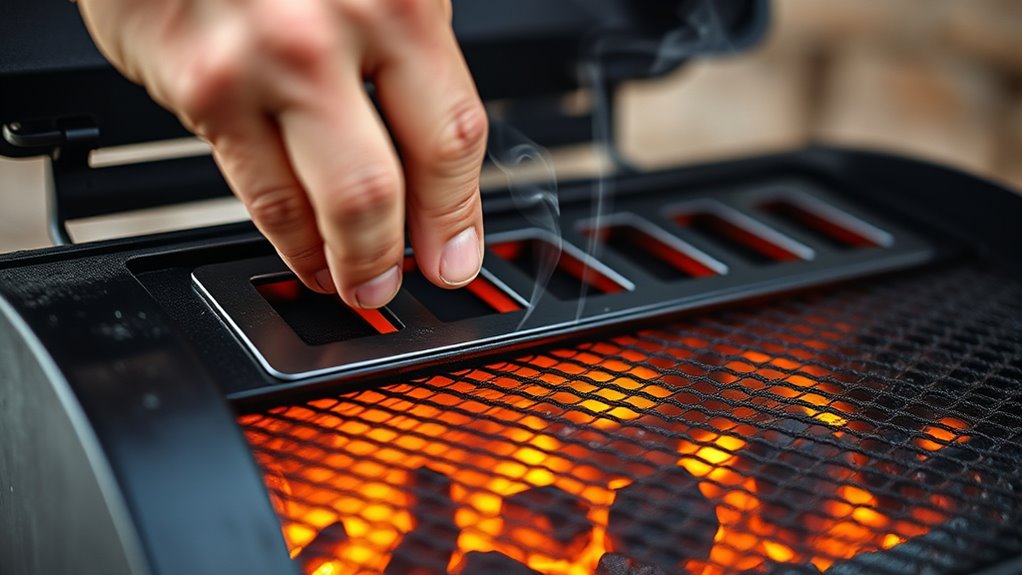
Adjusting the vents on your charcoal grill is the key to controlling airflow and maintaining a steady temperature. Proper vent management allows you to regulate smoke control and ensure efficient ash removal. Opening the vents increases airflow, which raises temperature and promotes more smoke, while closing them reduces heat and smoke output. Keep the top vent slightly more open than the bottom to balance oxygen flow and prevent ash buildup from clogging vents. Regularly check and clear ash to prevent airflow restrictions that could cause temperature fluctuations. Fine-tuning your vent positions helps you achieve precise temperature control, especially during long cooks. Remember, small adjustments make a big difference, so experiment to find the perfect airflow for your grill and cooking style.
As an affiliate, we earn on qualifying purchases.
Using the Minion Method for Low and Slow Cooking
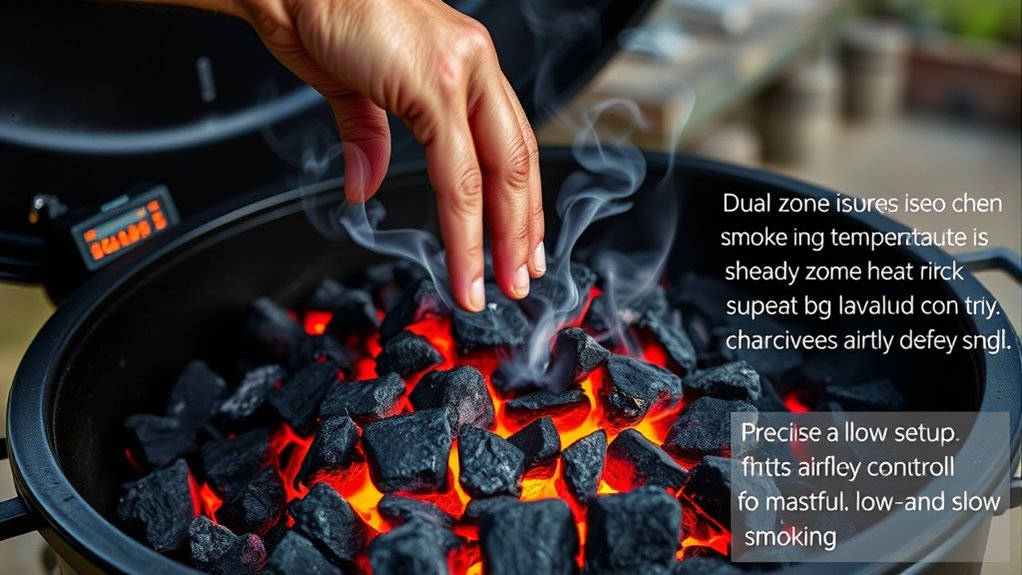
The Minion Method is a popular technique for achieving consistent low and slow cooking temperatures on a charcoal grill. It involves placing a small amount of fuel, like charcoal briquettes or lump charcoal, in a specific pattern to control airflow and heat. To use this method effectively:
- Arrange unlit fuel in a pile or ring, leaving space for lit coals.
- Light a small portion of the fuel and place it on top or inside the pile.
- Maintain grill cleaning by removing ash buildup to ensure proper airflow and temperature stability.
Adjusting the Charcoal Bed During Cooking
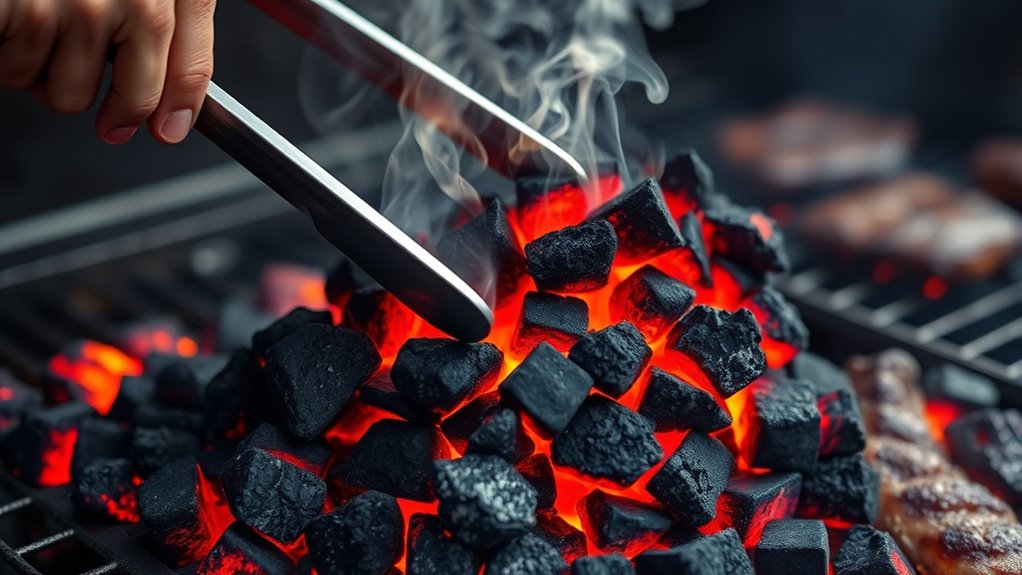
As your cooking progresses, you might need to modify the charcoal bed to maintain the right temperature. You can add more charcoal midway, shift coals around for even heat, or tweak airflow to control the heat level. These simple adjustments keep your grill steady and ensure perfectly cooked results.
Adding Charcoal Midway
When your food is halfway through cooking and the charcoal bed has burned down, adding more charcoal can help maintain the desired temperature. To do this effectively, consider these steps:
- Use proper firestarter techniques to ignite fresh coals quickly and safely.
- Incorporate charcoal recycling by placing new coals above or beside the existing bed for even heat distribution.
- Avoid letting ash and old coals smother the new ones, ensuring steady airflow and consistent temperature.
Adding charcoal midway is vital for long cooks, keeping the heat stable without overloading the grill. This approach allows you to extend cooking time without sacrificing temperature control, making your grilling more efficient and professional.
Redistributing Coals for Heat
Adjusting the position of your coals during cooking allows you to better control heat distribution across the grill. To manage this, you can redistribute the charcoal bed, creating distinct heat zones for indirect or direct cooking. For example, move some coals to one side for a hot zone and leave the other side cooler. Proper charcoal layering ensures consistent heat and helps prevent hot spots. Use a tool to shift the coals smoothly without disturbing the entire bed. Here’s a visual:
| Hot Zone | Medium Zone | Cool Zone |
|---|---|---|
| Coals piled high | Even layer | Few coals spread out |
| Direct heat | Moderate heat | Indirect heat |
| High temperature | Controlled heat | Low temperature |
| Center of fire | Perimeter of fire | Off to the side |
This technique helps you maintain precise control over your grill’s heat zones.
Managing Airflow for Temperature
Managing airflow is essential for maintaining the desired temperature on your charcoal grill. Proper airflow patterns influence heat and smoke control, helping you keep consistent temperatures. To adjust airflow during cooking:
- Open or close the vent dampers to regulate oxygen intake, which affects heat levels.
- Shift the charcoal bed to increase or decrease airflow, influencing temperature and smoke movement.
- Use different vent positions to create a controlled draft, optimizing both heat retention and smoke circulation.
These adjustments impact how oxygen feeds the fire, directly controlling temperature and smoke output. By managing airflow precisely, you can maintain stable heat and develop the ideal smoke for flavor. Remember, small changes in vent positions or charcoal placement can make a significant difference in your grilling results.
Monitoring Temperature With a Reliable Thermometer
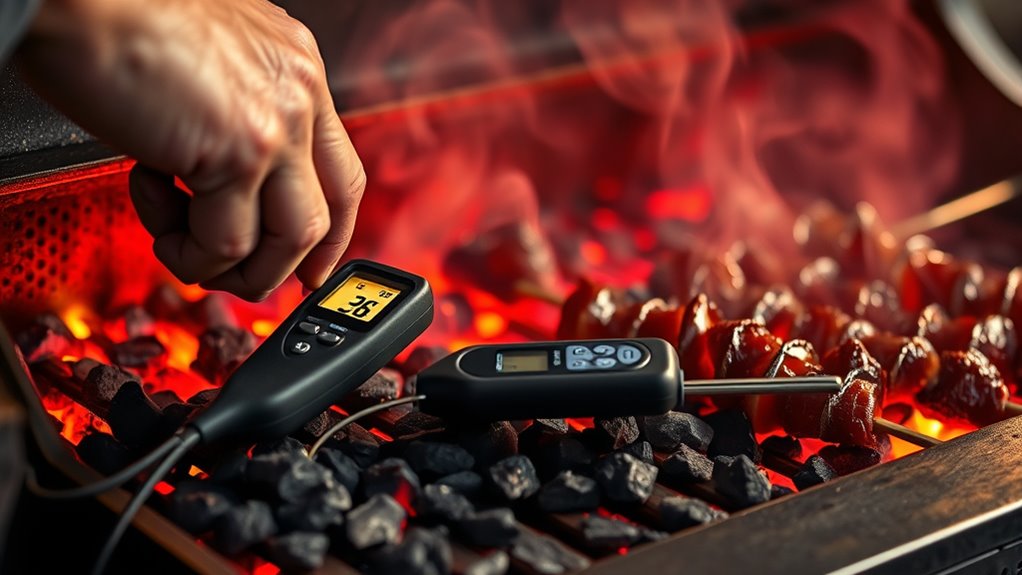
A reliable thermometer is essential for maintaining the right temperature on your charcoal grill, ensuring your food cooks evenly and turns out perfect every time. Digital thermometers provide quick, accurate readings and often feature instant-read capabilities, making it easy to monitor temperature changes. Analog gauges, on the other hand, are built into some grills and offer a visual cue of the internal heat level. Both types help you avoid guesswork, giving you confidence in your cooking process. Place the thermometer in the lid or near the food for the most accurate readings. Regularly check the temperature during cooking and adjust your airflow or charcoal load accordingly. Using a dependable thermometer keeps your grill at the ideal temperature, leading to better results with less frustration.
Tips and Tricks for Consistent Temperature Management
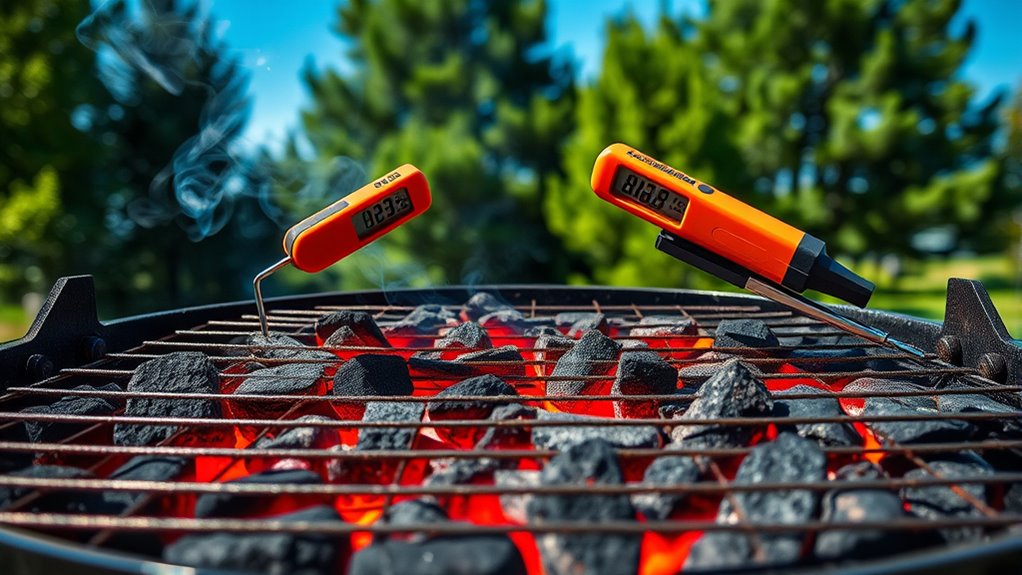
To maintain a consistent temperature on your charcoal grill, you need to develop a routine for controlling airflow and charcoal placement. This helps regulate heat and prevents fluctuations. First, choose the right fuel types; lump charcoal burns hotter and longer, offering better control, while briquettes provide steady, predictable heat. Second, manage airflow by adjusting vents; open vents increase temperature, while closing them lowers it. Third, regularly clean and maintain your grill; removing ash and grease buildup ensures proper airflow and efficient burning. Consistent cleaning extends the lifespan of your grill and sustains ideal performance. By mastering these techniques, you’ll achieve steady temperatures and perfect results every time, mimicking the skills of a pitmaster.
Frequently Asked Questions
How Often Should I Add Charcoal During a Long Cook?
You should add charcoal every 1 to 2 hours during a long cook, depending on your grill’s fuel consumption and ash buildup. Keep an eye on the heat; as ash accumulates, it can block airflow, reducing temperature. To maintain consistent heat, replenish the fuel before it runs out and regularly manage ash. This approach guarantees steady temperature control, giving you perfectly cooked results every time.
What’s the Best Way to Recover From Temperature Drops?
When your grill’s temperature plummets like a rollercoaster, don’t panic! Quickly open the vents to boost airflow, igniting a fiery surge that stabilizes heat faster than you can blink. Adjust the airflow gradually to prevent overshooting the target. Keep a close eye, and within moments, your grill will roar back to perfect temperature, letting you resume your cooking masterpiece without missing a beat.
Can I Use Wood Chunks With Charcoal for Flavor Control?
Yes, you can definitely use wood chunks with charcoal for flavor enhancement. Adding wood chunks to your charcoal creates aromatic smoke that infuses your food with rich, smoky flavors. To do this, soak the wood chunks for about 30 minutes, then place them directly on the hot coals. This method not only boosts flavor but also helps maintain steady heat, giving you better control over your grilling experience.
How Does Outside Weather Affect My Grill’s Temperature?
Did you know that outdoor weather can change your grill’s temperature by up to 25%? Ambient influence, like wind impact, is a major factor. Wind can cause heat loss, making it harder to maintain steady heat, while cold temperatures lower overall heat levels. To counter this, shield your grill from wind and adjust your vents accordingly. Monitoring weather conditions helps you keep your cooking consistent and perfect every time.
Is It Better to Use Lump Charcoal or Briquettes for Temperature Control?
Using lump charcoal is better for precise temperature control because it ignites quickly and burns hotter with less ash, giving you more control over your grill’s heat. Briquettes, on the other hand, burn longer and more steadily, making them ideal for maintaining consistent temperatures during slow cooking. Your fuel selection depends on your cooking style—choose lump for quick, high heat or briquettes for steady, prolonged grilling.
Conclusion
Mastering your charcoal grill is like tuning a fine instrument—you get better with practice. I once kept a steady 225°F for hours, just like a pitmaster, by adjusting vents and adding coals carefully. Remember, small tweaks make a big difference. With patience and attention, you’ll control your grill’s temperature as smoothly as a pro, turning every cookout into a delicious success. Keep experimenting, and soon you’ll be the master of your fire.
Halloween Picks
halloween
As an affiliate, we earn on qualifying purchases.