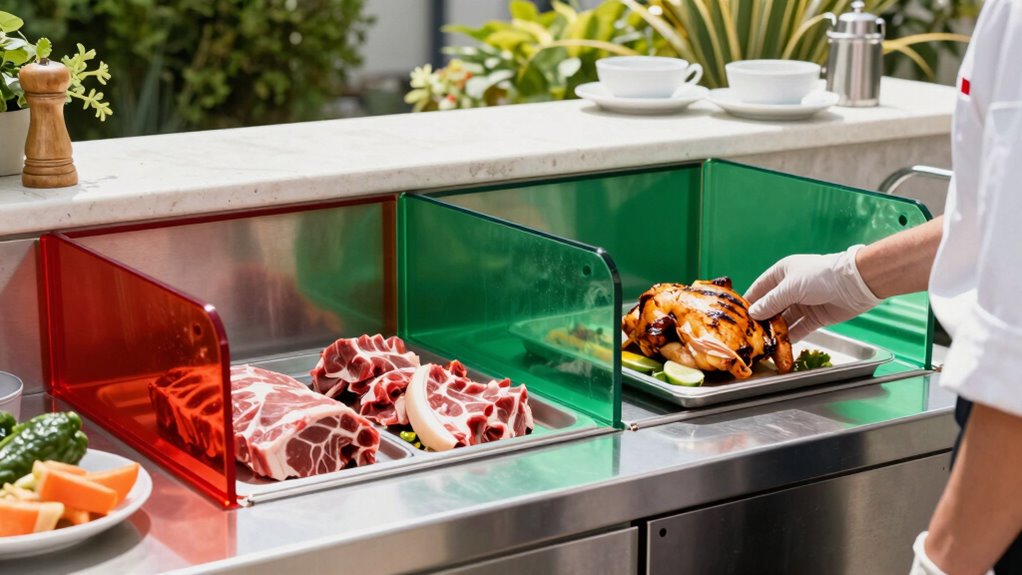
To keep raw and cooked foods separate in your outdoor kitchen, set up designated zones with clear markings or color-coded tools for each. Use separate cutting boards, utensils, and tongs for raw and cooked items, and store raw meats on the lowest shelves in sealed containers. Always wash your hands thoroughly after handling raw foods. Paying attention to these practices helps prevent cross-contamination; explore more ways to keep your outdoor kitchen safe as you continue.
Key Takeaways
- Designate separate countertops or prep stations for raw and cooked foods to prevent cross-contact.
- Use different color-coded utensils and cutting boards for raw versus cooked items.
- Store raw meats on the lowest shelf of coolers, away from ready-to-eat foods.
- Wash hands thoroughly after handling raw foods before touching cooked items.
- Keep raw and cooked foods in separate containers and serve on separate plates.
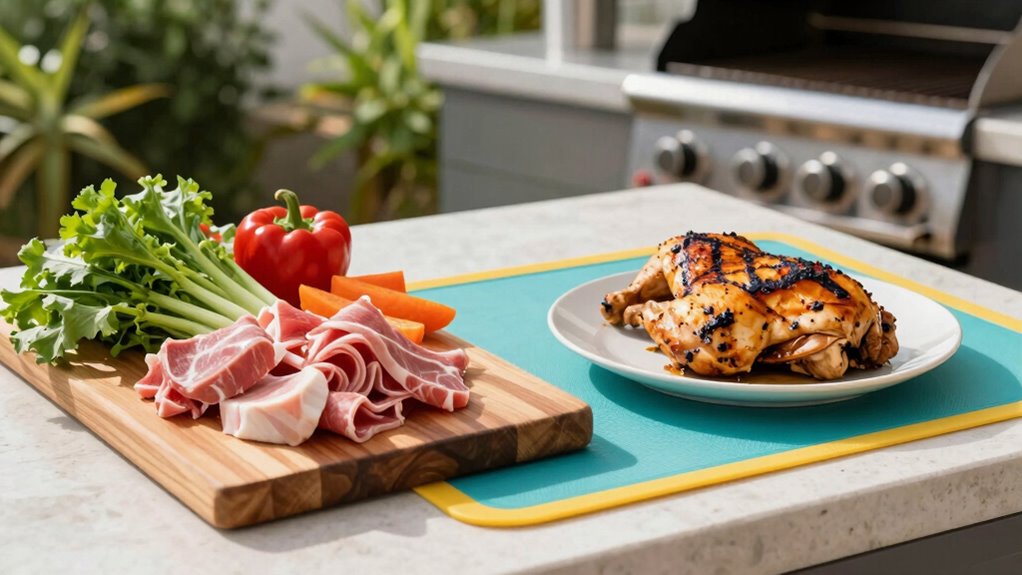
When setting up an outdoor kitchen, keeping raw and cooked foods separate is essential to prevent cross-contamination and guarantee food safety. Cross contamination happens when harmful bacteria transfer from raw foods, like meat or seafood, to cooked dishes or ready-to-eat items. To avoid risking your health or ruining your meal, you need a clear plan for keeping these foods apart. Start by designating specific areas for raw and cooked foods. Use separate countertops or prep stations, and make sure they’re well marked so there’s no confusion during cooking or serving. This simple step helps prevent accidental contact and reduces the chance of bacteria transferring.
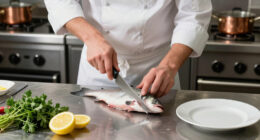
Invest in dedicated cutting boards, knives, and utensils for raw foods. Using separate tools means you won’t accidentally use a knife that’s been in contact with raw chicken on your salad or cooked vegetables. When you’re finished prepping raw foods, wash your hands thoroughly before handling cooked foods or other ready-to-eat items. Hand hygiene is a key aspect of food safety and helps eliminate bacteria that could cause illness. Keep raw meats stored in sealed containers on the lowest shelf of your cooler, away from cooked and ready-to-eat foods. This prevents juices from dripping onto other items, which is a common source of cross contamination.
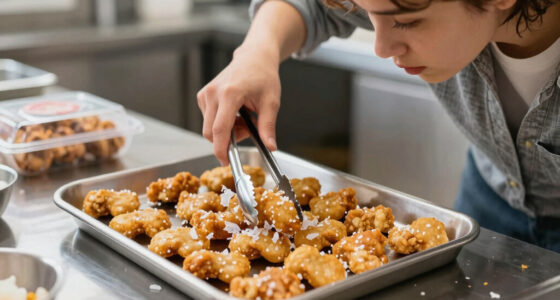
When grilling or barbecuing, use separate tongs or spatulas for raw and cooked foods. Never reuse utensils that have touched raw meat without washing them first. During service, set up distinct plates for raw and cooked foods. Never place raw items on the same platter you’ll serve cooked food on, and vice versa. This prevents bacteria from transferring from raw to cooked foods during handling or serving. Be cautious about using marinades; if you marinate raw meat, don’t reuse that marinade on cooked foods unless you boil it thoroughly to kill bacteria. Proper food storage techniques, such as temperature control, also play a vital role in preventing bacterial growth and cross contamination. Additionally, implementing zoning strategies can help define and maintain separate areas for raw and cooked foods, making it easier to follow safe practices consistently. Maintaining proper food safety practices also involves monitoring temperatures regularly and ensuring refrigeration is adequate. Incorporating food safety education into your outdoor kitchen setup can further enhance your understanding of safe handling practices and reduce risks.
Keeping raw and cooked foods separate isn’t complicated, but it requires consistent attention. When you follow these practices, you’re not only protecting your guests and family but also ensuring that everyone enjoys a safe, delicious outdoor meal. By prioritizing food safety and preventing cross contamination, you make your outdoor kitchen a safe and enjoyable space for everyone.

iBayam Kitchen Scissors Shears All Purpose Heavy Duty, Protective Sheath
ALL PURPOSE KITCHEN SCISSORS: Heavy duty 8.66" super sharp kitchen shears, Valued 2-Pack, comfort-Grip handles. Great All-purpose scissors…
As an affiliate, we earn on qualifying purchases.
As an affiliate, we earn on qualifying purchases.
Frequently Asked Questions
Can I Use the Same Utensils for Raw and Cooked Foods?
You shouldn’t use the same utensils for raw and cooked foods to prevent cross contamination. After handling raw foods, you must thoroughly clean utensils with hot, soapy water to guarantee food safety. Using separate utensils or properly sanitized ones helps you prevent cross contamination, which is essential in outdoor kitchens where cleaning stations may be limited. Always prioritize utensil cleaning to keep your food safe and avoid any health risks.
How Often Should I Sanitize Outdoor Kitchen Surfaces?
Think of your outdoor kitchen as a garden that needs regular tending. You should sanitize your surfaces after every few uses or at least daily during outdoor cleaning sessions. This keeps bacteria at bay and maintains surface maintenance. Regularly wiping down counters, prep areas, and cooking zones guarantees your space stays safe and inviting. Remember, clean surfaces are the foundation of safe outdoor cooking, so don’t let your outdoor kitchen become a neglected wilderness.
What Are the Best Storage Options for Raw Meats?
For raw meats, use a dedicated, airtight container for meat marinade storage to prevent cross-contamination. Keep raw meats on the bottom shelf of your outdoor freezer organization to avoid drips onto other foods. Use separate containers or bags for different types of meats and label them clearly. Regularly clean and sanitize storage areas to maintain safety. This way, you guarantee your raw meats stay fresh and separate from cooked foods.
Is It Safe to Prepare Raw Foods Outdoors in the Rain?
Think of rain as nature’s splash guard, but it’s not always safe for outdoor grilling with raw foods. Rain safety is essential; it can contaminate surfaces and utensils, risking foodborne illness. If you prepare raw foods outdoors in the rain, you might expose them to bacteria. To stay safe, use covered areas or postpone outdoor grilling until the weather clears. Protect your food and health by ensuring a dry, clean environment.
How Do I Prevent Cross-Contamination During Outdoor Food Prep?
To prevent cross-contamination during outdoor food prep, always use proper glove use when handling raw foods and switch gloves before touching cooked items. Keep raw and cooked foods separate on different surfaces, and use color-coded cutting boards. Follow food thermometer guidelines to guarantee foods reach safe temperatures. Regularly wash hands, utensils, and surfaces to maintain cleanliness, and store raw meats below ready-to-eat foods to avoid drips.

Goodluck 5 Pieces Flexible Cutting Boards, BPA Free Plastic Cutting Boards for Kitchen, Non Slip Cutting Mat for Meat and Vegetables
Large Enough Size – The flexible cutting mats for cooking dimensions are 14.65*11.02 inches, which makes enough space…
As an affiliate, we earn on qualifying purchases.
As an affiliate, we earn on qualifying purchases.
Conclusion
By following these simple tips, you can keep raw and cooked foods separate in your outdoor kitchen and guarantee everyone stays safe and healthy. Remember, a little extra care goes a long way in preventing cross-contamination. Don’t put all your eggs in one basket—use separate tools, surfaces, and storage, and you’ll be able to enjoy delicious meals without any worries. Keep these practices in mind, and you’ll be cooking up a storm safely in no time!
Weber's New Real Grilling: The Ultimate Cookbook for Every Backyard Griller – Advanced Techniques for Smoking, Rotisserie, and Entertaining
As an affiliate, we earn on qualifying purchases.
As an affiliate, we earn on qualifying purchases.
food storage containers for raw meats
As an affiliate, we earn on qualifying purchases.
As an affiliate, we earn on qualifying purchases.