To season your new pizza steel before first use, clean it thoroughly with warm water and mild soap, then dry completely. Preheat your oven to 450°F to 500°F, apply a thin, even coat of high-smoke point oil like flaxseed or grapeseed across the entire surface, and bake for about an hour. Let it cool inside the oven. Repeating this process several times builds a durable, non-stick layer. Keep going to discover tips for long-term care and maintenance.

Get kitchen gear delivered free — and shop member deals
- Fast, free delivery on millions of items
- Access to Prime Big Deal Days deals on October 6–7
- Prime Video, Amazon Music and more included
Key Takeaways
- Thoroughly clean the steel with warm water and mild soap, then dry completely before seasoning.
- Preheat your oven to 450°F–500°F to prepare for proper oil bonding.
- Apply a thin, even layer of high-smoke point oil across the entire surface, including edges.
- Bake the steel in the oven for about 1 hour, then turn off and let it cool completely inside.
- Repeat the oiling and baking process multiple times to build a durable, non-stick seasoning layer.
Seasoning a pizza steel is a simple process that can substantially improve its non-stick properties and enhance your baking results. To get started, you’ll want to preheat your oven to a high baking temperature, typically around 450°F to 500°F. This temperature range is essential because it allows the seasoning oils to bond effectively with the steel, creating a durable, non-stick surface. Before placing the steel in the oven, clean it thoroughly with warm water and mild soap to remove any manufacturing residues or dust. Dry it completely with a towel or let it air dry—moisture can hinder the seasoning process.
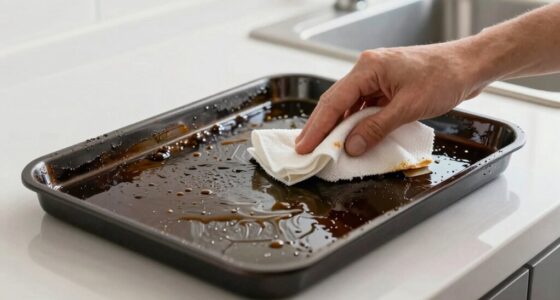
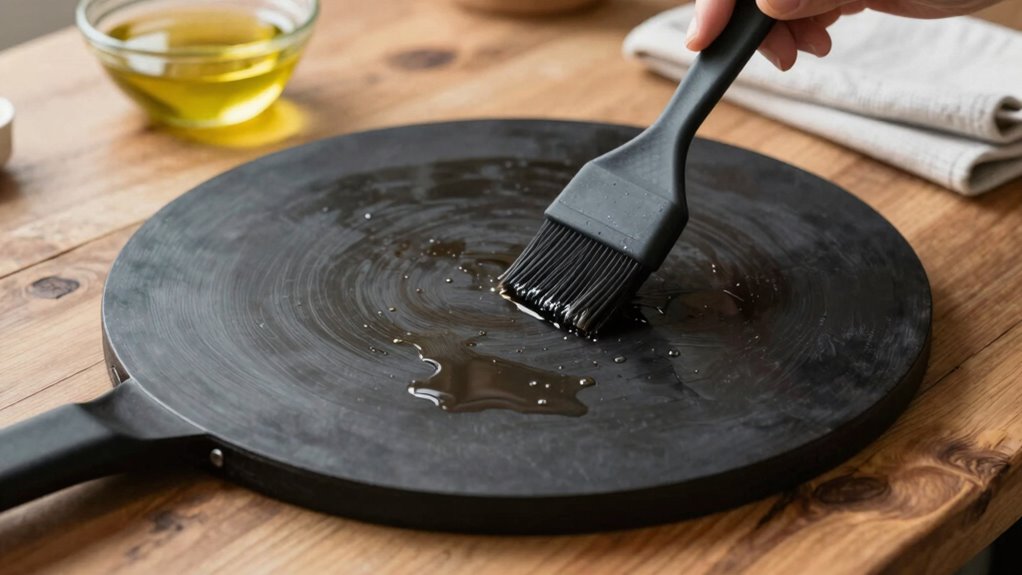
Once your pizza steel is dry, apply a thin, even coat of high-smoke point oil, like flaxseed, grapeseed, or vegetable oil. Use a paper towel or cloth to spread the oil evenly across the entire surface, including the edges. You don’t need to use a lot; a light coating is sufficient. Excess oil can create a sticky or uneven seasoning layer, so be cautious not to over-apply. After oiling, place the steel on the middle rack of your preheated oven. To avoid smoke or unpleasant odors, ensure good ventilation during this process.
Now, the key part is the seasoning duration. Leave the steel in the oven for about an hour at the set baking temperature. This time allows the oil to polymerize and bond to the steel, forming a seasoned layer that will improve over time. Once the hour is up, turn off the oven and let the steel cool completely inside. This slow cooling helps the seasoning bond more effectively and reduces the risk of warping or cracking. Additionally, proper surface preparation is vital for a successful seasoning process, ensuring an even and durable coating. Repeating this process a couple of times can help develop a more robust, non-stick surface, and this layering process is similar to techniques used in natural pool design to achieve a seamless finish.
To further enhance the durability of your seasoning, it’s beneficial to understand seasoning oils and how they interact with the steel during the process. You might need to repeat this process a couple of times to build up a strong, non-stick surface. Each round of seasoning at the right baking temperature and duration will deepen the layer, making your pizza steel more resistant to sticking and rust. Remember, the initial seasoning is just the start—regular maintenance with light oiling after each use will keep your steel in great shape and further enhance its non-stick qualities over time. Proper seasoning can also help prevent rust formation, ensuring your tool remains in top condition. With proper seasoning, your pizza steel will become an indispensable tool for achieving crispy, restaurant-quality pizzas at home.
As an affiliate, we earn on qualifying purchases.
Frequently Asked Questions
How Often Should I Reseason My Pizza Steel?
You should reseason your pizza steel whenever you notice it’s losing its non-stick surface or signs of rust appear. Typically, this means seasoning frequency depends on how often you cook at high temperatures, like during pizza baking. When you reseason, heat your oven to a high cooking temperature, apply a thin layer of oil, and bake the steel. Regular reseasoning helps maintain a smooth, non-stick surface and extends its lifespan.
Can I Use Soap to Clean My Seasoned Pizza Steel?
Using dish soap on your seasoned pizza steel isn’t recommended, even if it’s tempting after a tough cookout. Soap can strip away the seasoning, undoing your hard work. Instead, stick to a simple seasoning routine with hot water and a brush or scraper for cleaning. If you need to remove stubborn residue, use minimal soap occasionally, but always reapply a light layer of oil afterward to maintain that perfect non-stick surface.
What Temperature Is Best for Seasoning a Pizza Steel?
You should set your oven temperature to around 450-500°F to properly season your pizza steel. This high heat helps develop a strong seasoning layer, creating a natural non-stick surface. Preheat the oven, then place the steel inside to guarantee even heating. Maintaining this temperature during seasoning allows the oil to polymerize effectively, forming a durable, smooth seasoning layer that enhances your pizza-making experience.
How Do I Remove Rust From My Seasoned Pizza Steel?
To remove rust from your seasoned pizza steel, start by scrubbing it with a steel wool pad or a gentle abrasive scrubber to loosen the rust. Rinse thoroughly and dry completely. For steel maintenance, apply a thin layer of oil, like vegetable or flaxseed oil, and heat it in the oven to reseason. Regular cleaning and oiling prevent future rust and keep your pizza steel in top shape.
Is It Okay to Cook on a Newly Seasoned Pizza Steel Immediately?
Yes, it’s okay to cook on a newly seasoned pizza steel immediately, but guarantee food safety by washing it gently beforehand. Cooking right away helps set the seasoning and boosts its longevity. Just make sure the steel is clean and dry, and avoid using harsh detergents that could strip the seasoning. This way, you’ll enjoy a non-stick surface and delicious results while maintaining the steel’s durability over time.
high smoke point oil for cast iron
As an affiliate, we earn on qualifying purchases.
As an affiliate, we earn on qualifying purchases.
Conclusion
Think of seasoning your pizza steel as planting the roots of a delicious journey. With patience and care, you’ll nurture a surface that transforms every pizza into a masterpiece. Just like a well-tended garden, your steel will develop a natural non-stick patina, making each bake better than the last. Embrace this process as part of the pizza-making adventure, and soon, your steel will be the sturdy foundation for countless flavorful memories.
As an affiliate, we earn on qualifying purchases.
As an affiliate, we earn on qualifying purchases.
Fall Picks
fall essentials
As an affiliate, we earn on qualifying purchases.