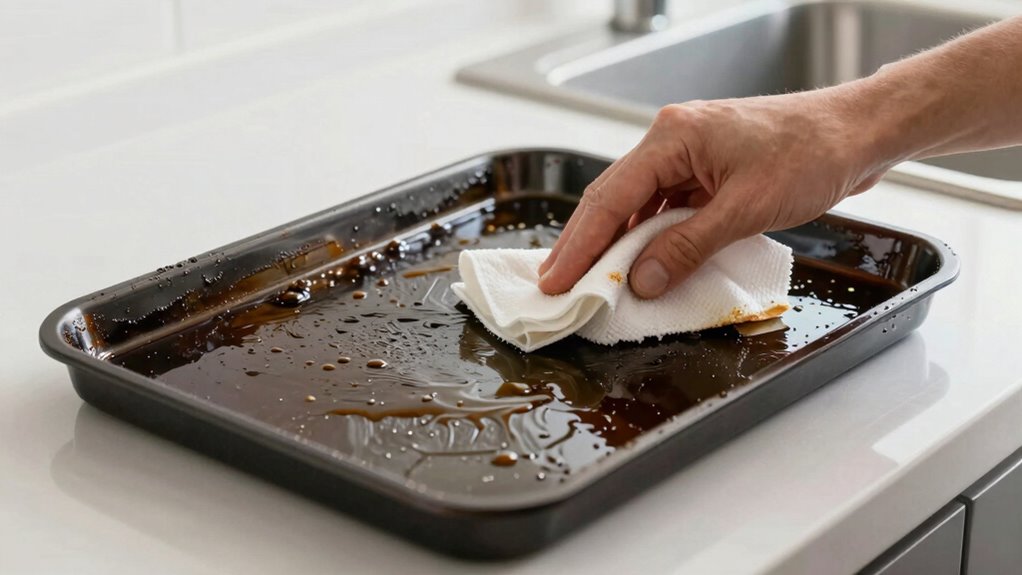
To clean your grease tray without a mess, start by lining underneath with newspapers or paper towels to catch drips. Carefully remove the tray using gloves, and dispose of excess grease in a container—never pour it down the drain. Soak the tray in warm water with baking soda or dish soap, then scrub with a stiff brush for tough stains. Rinse thoroughly and dry completely before reinstalling. Keep your space tidy and safe—discover more tips to master the process smoothly.
Key Takeaways
- Line the area beneath the tray with newspapers or paper towels to catch drips and splatters during cleaning.
- Use gloves and goggles to prevent splashes from grease and cleaning agents.
- Soak the tray in warm water with baking soda or dish soap to loosen grease before scrubbing.
- Scrub the tray over a sink or outside to contain grease and prevent mess inside the kitchen.
- Rinse and dry the tray thoroughly outside or over a sink before reinstalling.
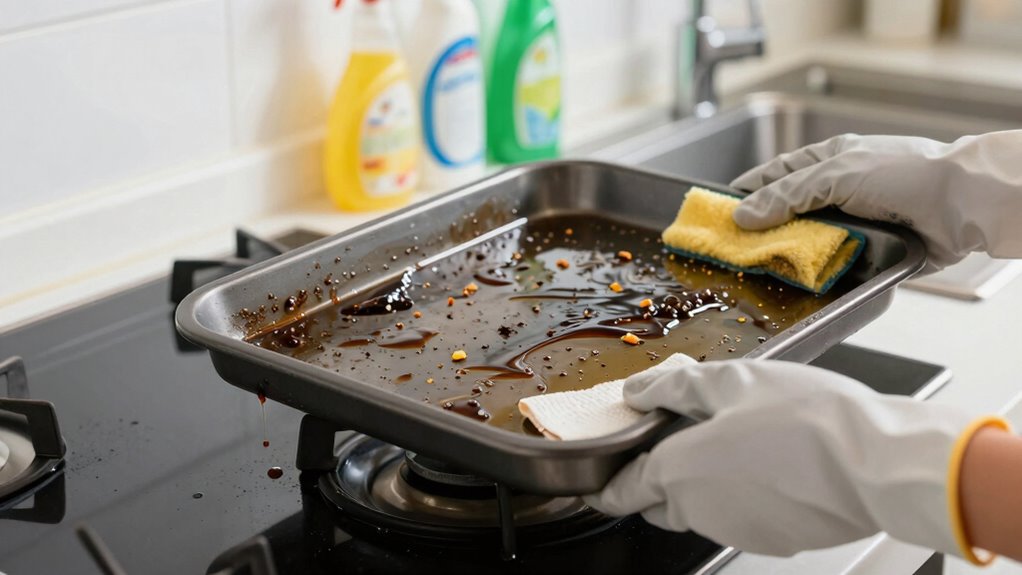
Grease trays can quickly become greasy and buildup with residue, which not only affects their performance but can also pose safety hazards. If you neglect to clean them regularly, the accumulated grease can become difficult to remove and may cause fires or slips. To keep your kitchen safe and environmentally friendly, you should adopt eco-friendly cleaning methods. These involve using natural cleaning agents like baking soda, vinegar, or lemon juice, which are effective at breaking down grease without harming the environment or your skin. When cleaning, always prioritize safety precautions: wear gloves to protect your hands from hot grease and sharp edges, and guarantee proper ventilation to avoid inhaling fumes from cleaning products or heated grease.
Start by removing the grease tray from its compartment carefully, avoiding splashes that could spread grease or create a mess. Once out, dispose of excess grease into a disposable container or an old cloth—never pour it down the drain, as that can clog pipes and harm the environment. To clean the tray, soak it in warm water mixed with a generous amount of baking soda or a natural dish soap. This helps loosen stubborn grease and residues. After soaking for 10-15 minutes, scrub the tray with a stiff brush or scrub pad, focusing on greasy spots. For extra eco-friendly cleaning, you can make a paste of baking soda and water to tackle tough stains, applying it directly to problem areas. Incorporating proper cleaning techniques can further enhance the effectiveness of your routine, ensuring thorough removal of grease without excessive effort.
In addition, understanding the importance of proper cleaning techniques can significantly improve the effectiveness of your maintenance routine. Using appropriate cleaning tools such as scrubbing brushes or pads designed for greasy surfaces can make the process easier and more efficient. Incorporating natural cleaning agents like vinegar or lemon juice can also reduce chemical exposure and environmental impact. To avoid making a huge mess during the cleaning process, line the area beneath the grease tray with old newspapers or paper towels before you start. This catches any drips or splatters, making cleanup easier. Using protective gear such as gloves and goggles during cleaning can further ensure your safety. When rinsing the tray, do so over a sink or outside if possible, to prevent grease from spreading inside your kitchen. Once clean, dry the tray thoroughly before reinstalling it, as leftover moisture can cause rust or mold over time. Remember, safety precautions extend beyond just handling hot grease; always keep a fire extinguisher nearby when working with grease or open flames, and guarantee using harsh chemical cleaners that can produce harmful fumes or reactions.
As an affiliate, we earn on qualifying purchases.
Frequently Asked Questions
Can I Use Dishwasher Detergent to Clean Grease Trays?
Yes, you can use dishwasher detergent to clean grease trays. It effectively cuts through grease and grime, making the job easier. For eco-friendly options, look for biodegradable or plant-based dishwasher detergents that are gentle on the environment. Just make sure to rinse the tray thoroughly afterward to remove any residue. Using dishwasher detergent is a quick, efficient way to clean grease trays without harsh chemicals or creating a mess.
How Often Should I Clean My Grease Trays?
Think of your grease tray like a garden; if you ignore the weeds, they take over. You should clean your grease trays at least once a month to prevent grease buildup, which can cause fires or reduce efficiency. If you cook often or notice excessive grease, cleaning every two weeks is wise. Regular cleaning keeps your stove safe and functioning smoothly, avoiding messy grease buildup that’s harder to clean later.
Are There Eco-Friendly Cleaning Options for Grease Trays?
Yes, you can opt for eco-friendly cleaning options for your grease trays. Use biodegradable wipes for quick, disposable cleanup or natural degreasers like vinegar and baking soda to break down grease effectively. These methods are safe for the environment, non-toxic, and avoid harsh chemicals. Regularly applying natural degreasers keeps your trays clean without harming the planet, making your kitchen greener and safer.
What Tools Are Best for Scraping Stuck-On Grease?
Scraper tools stand supreme when scraping stubborn, stuck-on grease. You’ll want a sturdy, flat-edged scraper or a plastic spatula to gently pry and peel away grease without damaging the tray. Pair these tools with safety gloves to protect your hands from hot grease and sharp edges. Using the right scraper tools and safety gloves keeps your cleaning efficient, effective, and entirely safe, ensuring you conquer grease with confidence and care.
Is It Safe to Use Oven Cleaner on Grease Trays?
Using oven cleaner on grease trays isn’t always safe, as it can contain harsh chemicals that might damage the tray or harm you. Always check the chemical safety instructions first. Instead, consider alternative methods like baking soda and vinegar, which are safer and eco-friendly. These natural solutions effectively break down grease without the risks associated with chemical cleaners, keeping your cleaning routine safer for you and your appliances.
As an affiliate, we earn on qualifying purchases.
Conclusion
Now that you’ve tamed your greasy trays, think of them like a freshly painted canvas, gleaming with new life. With a little effort, you’ve turned chaos into clarity, transforming a messy job into a shining example of your cleaning prowess. Remember, a clean grease tray isn’t just about appearance—it’s about creating a space that’s ready for your next culinary masterpiece. So, go ahead, bask in the glow of your spotless, gleaming kitchen!
As an affiliate, we earn on qualifying purchases.
eco-friendly kitchen cleaning supplies
As an affiliate, we earn on qualifying purchases.
As an affiliate, we earn on qualifying purchases.