
TL;DR

Get kitchen gear delivered free with Prime
- Fast, free delivery on millions of items
- Prime Video, Amazon Music and more included
- Member-only deals all year
A report by Ideal Home examines whether adding insulation can make homes warmer and reduce heating costs, drawing on advice from two UK energy specialists. They say the right approach depends on the building: unsuitable insulation or inadequate ventilation can contribute to damp, while disruption and likely savings vary by insulation type and property.
Retrofitting insulation can help keep a home warmer and reduce heat loss, but it is not a guaranteed route to lower heating bills, according to an Ideal Home report featuring advice from two UK housing and energy specialists. They warn that the right materials and installation depend on how a property was built, and that poorly planned work in older homes can contribute to damp and moisture problems.
Becky Lane, chief executive of Furbnow, said homeowners should establish the construction of an older building before choosing insulation. Traditional homes, particularly those built before the 1930s, may be designed to let moisture pass through their walls. Making a home more airtight without adequate ventilation can trap moisture indoors, she said.
Martyn Fowler, founder of Elite Renewables, said older homes can have substantial potential for improvement because many started with little insulation. But he cautioned that a Victorian solid-wall house and a 1930s cavity-wall property behave differently, and that a system suitable for one may not suit the other. The report gives no projected bill savings or payback period, so it does not establish how much a particular household might save.
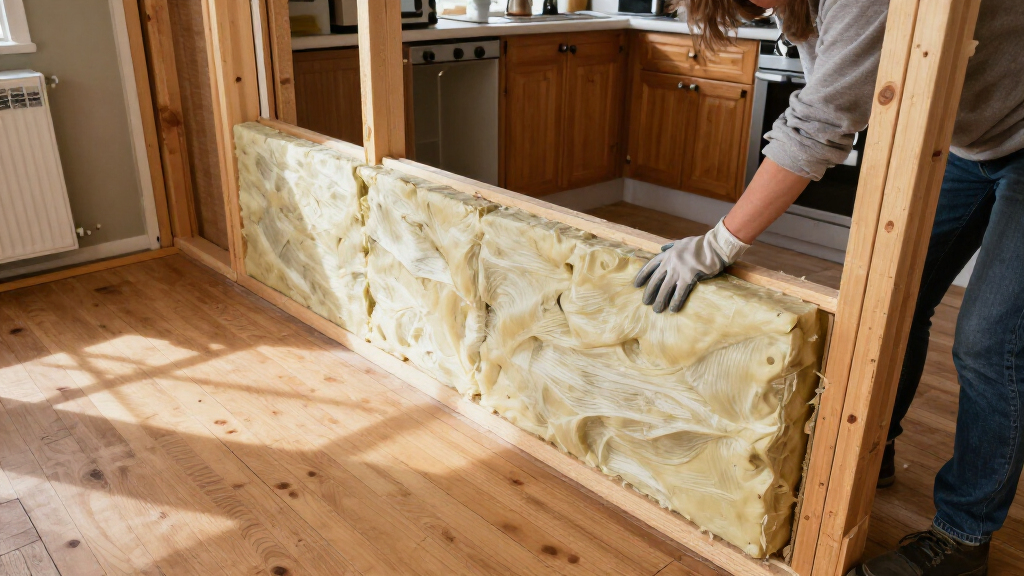
The amount of disruption also varies. The experts describe loft insulation as relatively straightforward and say suitable cavity-wall work can often be completed in a few hours. Internal solid-wall insulation can require moving fixtures and furniture, finishing and redecorating rooms. External insulation may involve scaffolding and adjustments to fittings such as downpipes and window reveals.
Why Insulation Choices Affect Bills
For households trying to stay warm while limiting energy use, insulation can reduce the amount of heat escaping through parts of a home. That may mean less heating is needed to maintain comfort, but the report does not quantify the effect on bills or claim that every retrofit will pay for itself.
The advice points to a practical trade-off: insulation work can improve a home’s thermal performance, but upfront cost, installation disruption and building-specific risks matter. Choosing a system without understanding the walls and moisture movement could create problems that outweigh expected benefits. Homeowners therefore need to compare the potential energy savings with the suitability and scope of the work, rather than assume that more insulation is always better.
Products Worth Considering

Philips 3300 Series Fully Automatic Espresso Machine with Milk Frother, Grinder, Hot and Iced Coffee Presets, SilentBrew, 15-Bar Pressure (E

Instant Pot RIO Wide 7.5-Quart 7-in-1 Electric Pressure Cooker

Cuisinart Precision Master 5.5-Quart 12-Speed Stand Mixer
As an affiliate, we earn on qualifying purchases.
Different Homes, Different Insulation
The report frames insulation as one way to retain heat rather than relying solely on running central heating. Its focus is retrofit work, where insulation is added to an existing home; the options and complexity differ according to the building’s structure and access.
Loft and cavity-wall insulation are presented as less disruptive options when a property is suitable. Cavity-wall installers typically drill small holes in the exterior, inject insulation and repair the openings. Solid-wall insulation is more involved: it can be fitted inside rooms or on the outside of the building. Floor insulation depends in part on whether there is access beneath suspended timber floors. The source material does not provide detailed guidance on that option.
“You have to determine what the construction of the wall is before you do anything.”
— Becky Lane, chief executive of Furbnow
Savings and Suitability Vary
The report does not provide cost estimates, measured energy savings, expected payback periods or a comparison of insulation products. It therefore cannot show whether a retrofit will lower bills for any specific home, or by how much. Results will depend on the existing insulation, the property’s design, the work carried out and other factors not quantified in the source.
Suitability also needs to be determined property by property. The report’s general advice does not amount to an assessment of any individual building, and it does not specify how to diagnose damp, which ventilation changes may be required or what permissions might apply. Homeowners should obtain property-specific advice before work begins, particularly where older solid walls or signs of moisture are involved.
Assess the Home Before Work
The next step for a homeowner considering insulation is to identify the property’s wall and floor construction and assess its condition, moisture management and ventilation. Fowler also advises checking whether a cavity is clear and assessing wall condition and exposure to driving rain before cavity-wall insulation is installed.
Homeowners can then compare suitable options, likely disruption and costs with expected energy savings. The report suggests work can be phased room by room where budgets are limited, but it offers no timeline or guarantee of financial returns. A qualified, property-specific assessment is needed to determine which measures are appropriate.
Key Questions
Can retrofitting insulation lower heating bills?
It may reduce heat loss and the amount of heating needed, but the report provides no savings figures or payback estimates. Results depend on the home and the work carried out.
Is insulation suitable for every older home?
No single approach suits every property. The experts say wall construction and moisture management should be assessed first, especially in older solid-wall homes.
Which insulation work is least disruptive?
The report describes loft insulation as relatively straightforward and suitable cavity-wall work as a short process that can often be completed in a few hours. Suitability and installation details vary by property.
How disruptive is internal wall insulation?
It can involve clearing rooms and moving radiators, sockets, skirting boards and sometimes kitchen fittings. The walls may need finishing and redecorating after installation.
What should homeowners check before insulating cavity walls?
Fowler advises checking the wall condition, exposure to driving rain and whether the cavity is clear before it is filled. The report also stresses choosing work that fits the home’s construction.
Source: idealhome.co.uk