
To keep pellet dust from causing problems, use effective air filtration and dust collection systems that trap dust at the source. Guarantee your workspace is well-ventilated with proper airflow to disperse airborne particles. Regularly clean surfaces with damp cloths or HEPA vacuums to prevent buildup. Always follow safety practices by wearing protective gear and maintaining equipment properly. Managing dust through these steps creates a safer, cleaner environment. You’ll find additional tips if you explore further.

Get kitchen gear delivered free with Prime
- Fast, free delivery on millions of items
- Prime Video, Amazon Music and more included
- Member-only deals all year
Key Takeaways
- Install high-quality air filtration and dust collection systems to capture dust at the source.
- Ensure proper workspace ventilation to disperse airborne dust effectively.
- Regularly clean and maintain equipment, using HEPA vacuums and damp wiping methods.
- Use personal protective gear, like masks and goggles, during handling and cleaning.
- Follow safety guidelines and manufacturer instructions to optimize dust control practices.
Pellet dust can quickly become a nuisance if you’re not careful, leading to messes, clogging equipment, and even health concerns. Managing this fine powder requires more than just sweeping up after each session. To keep your space clean and safe, you need effective solutions for air filtration and dust collection. Proper air filtration systems capture airborne particles, preventing dust from settling on surfaces or being inhaled. Installing high-quality air filters in your workshop or storage area helps maintain cleaner air, reducing the risk of respiratory issues and keeping your workspace healthier.
Effective air filtration keeps workspace cleaner and healthier by capturing pellet dust and preventing respiratory issues.
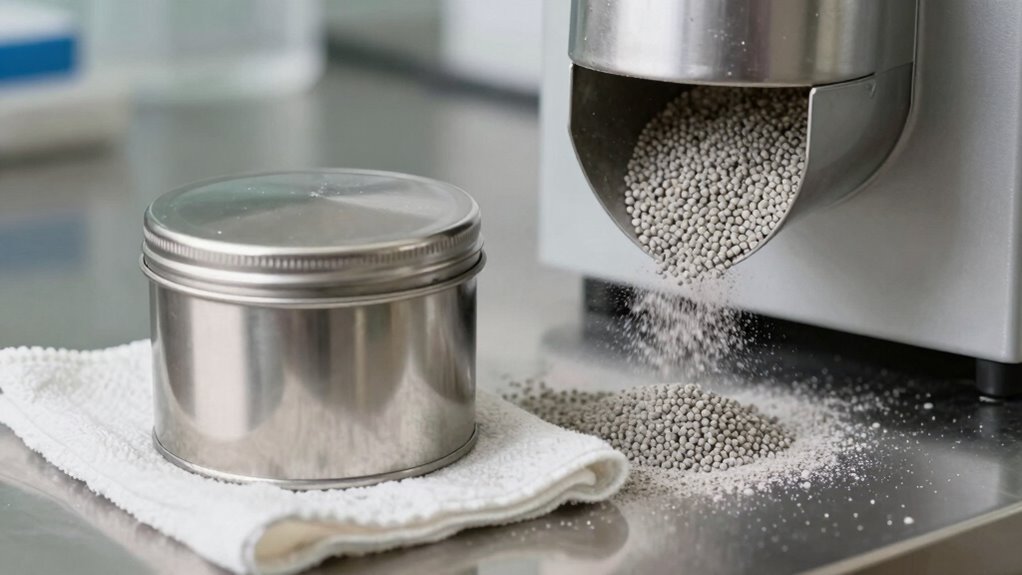
Dust collection is equally essential. A dedicated dust collection system pulls pellet dust away from the source, ensuring it doesn’t spread throughout your space. You should look for a system with sufficient power to handle the volume of dust generated and connect it directly to your pellet mill or processing equipment. When set up properly, a dust collector traps particles before they escape into the environment, minimizing cleanup and preventing buildup on machinery. Regularly emptying and maintaining your dust collection system keeps it functioning at peak efficiency, preventing clogs that could cause operational issues. Additionally, dust management practices can significantly enhance the effectiveness of your filtration and collection efforts. Implementing proper maintenance routines ensures your equipment remains in optimal condition, reducing the likelihood of dust-related problems.
Along with installing these systems, you should also pay attention to your workspace’s layout. Keeping the area well-ventilated allows dust and airborne particles to disperse more quickly, making your air filtration more effective. Use exhaust fans or open windows to promote airflow, especially during and after pellet processing. This reduces dust concentration in the air, making it safer to work and easier to keep the environment clean. Incorporating proper ventilation techniques can significantly improve dust control. Properly managing airflow not only improves air quality but can also help prevent the buildup of dust on surfaces and machinery. Additionally, ensuring that your workspace has adequate air exchange rates can further reduce dust accumulation and improve overall safety.
Cleaning routines are also essential. Frequent sweeping and wiping down surfaces prevent dust accumulation, which can otherwise become a breeding ground for mold or bacteria. Use damp cloths rather than dry ones to trap dust particles more effectively. Consider investing in a HEPA vacuum designed for fine dust, which can remove residual particles from floors and equipment without stirring up more dust into the air. Additionally, regular maintenance of your cleaning tools helps ensure they remain effective at capturing dust.
Finally, educating yourself on best practices for dust management will pay off. Always wear protective gear like masks and goggles when working with pellet dust, and follow manufacturer guidelines for your equipment’s maintenance. Dust control is a critical aspect of maintaining a safe workspace. By combining proper air filtration, an efficient dust collection system, good workspace organization, and regular cleaning, you can substantially reduce pellet dust problems. This approach not only extends the life of your machinery but also helps create a safer, healthier environment for you and anyone else sharing the space.
As an affiliate, we earn on qualifying purchases.
Frequently Asked Questions
Can Pellet Dust Cause Allergies or Respiratory Issues?
Yes, pellet dust can cause allergies or respiratory issues. When dust particles become airborne, they can negatively impact indoor air quality, leading to irritation or asthma symptoms. To prevent this, you should focus on effective dust mitigation strategies, such as regular cleaning and ensuring proper ventilation. Keeping dust levels low helps protect your respiratory health and maintains a healthier indoor environment.
What Types of Vacuums Are Best for Pellet Dust?
You should choose vacuums with strong suction and excellent dust filtration to handle pellet dust effectively. Look for models with HEPA filters, which trap fine particles and prevent dust from recirculating. Regular vacuum maintenance is essential; clean filters and check for clogs to guarantee peak performance. A vacuum designed for fine dust will keep your space cleaner, healthier, and reduce allergy or respiratory issues caused by pellet dust.
Does Pellet Dust Affect Pellet Stove Efficiency?
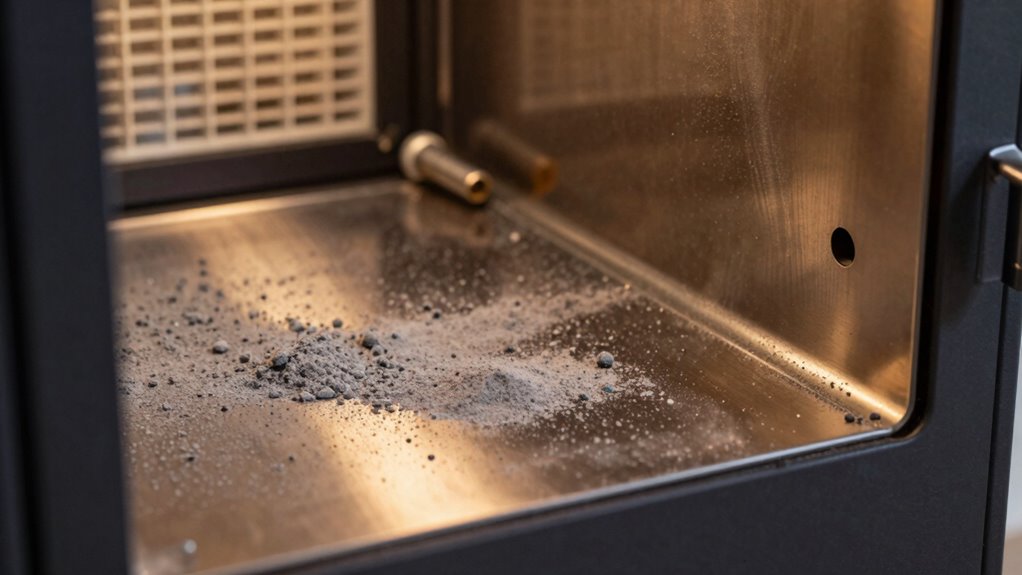
Imagine a thin layer of pellet dust buildup inside your stove’s components, quietly sabotaging its efficiency. Yes, pellet dust can reduce stove performance by clogging vents and filters. To prevent this, implement dust containment strategies like regular cleaning and proper ventilation. Keeping dust at bay guarantees your stove runs smoothly, maximizing heat output and fuel efficiency. Neglecting these steps means dust sneaks in, hampering your stove’s ability to perform at its best.
How Often Should I Clean My Pellet Storage Area?
You should clean your pellet storage area at least once a month to maintain ideal performance. Keep it well-organized to prevent dust buildup and make cleaning easier. Regular dust mitigation helps prevent pellet dust from clogging vents or causing blockages, which can reduce stove efficiency. By maintaining a tidy storage space and cleaning frequently, you’ll guarantee safe operation and extend the lifespan of your pellet stove.
Are There Health Risks From Long-Term Pellet Dust Exposure?
Long-term exposure to pellet dust can pose serious health hazards you shouldn’t ignore. Over time, inhaling tiny particles may lead to respiratory issues, allergies, or even chronic lung conditions. The danger lies in the dust’s persistent presence in your environment, subtly affecting your health. Stay vigilant by minimizing dust buildup, using proper ventilation, and wearing protective gear during cleanup. Ignoring these risks could have consequences that last a lifetime.
dust collection system for pellet mill
As an affiliate, we earn on qualifying purchases.
As an affiliate, we earn on qualifying purchases.
Conclusion
By staying vigilant and maintaining a clean environment, you can tame the wild beast of pellet dust before it causes chaos. Regular cleaning, proper ventilation, and using quality equipment act as your trusted shield, preventing dust from sneaking into your life like an unwelcome ghost. Think of it as steering a steady ship through turbulent waters—your efforts keep the journey smooth and dust-free, ensuring your pellet experience remains safe, efficient, and trouble-free.
As an affiliate, we earn on qualifying purchases.
As an affiliate, we earn on qualifying purchases.
Halloween Picks
halloween
As an affiliate, we earn on qualifying purchases.