
Before trusting a smart device with dinner, you should consider its security and privacy risks. Make certain your device has the latest software updates and proper security measures to prevent hacking or data misuse. Check privacy settings to limit personal information sharing, especially regarding habits and preferences. It’s also important to guarantee the device’s reliability and safety in the kitchen. If you want to learn how to protect your kitchen and data, keep exploring these key considerations.

Get kitchen gear delivered free with Prime
- Fast, free delivery on millions of items
- Prime Video, Amazon Music and more included
- Member-only deals all year
Key Takeaways
- Ensure the device has robust privacy settings to control personal data sharing and prevent misuse.
- Regularly update device software to patch security vulnerabilities and maintain reliable performance.
- Confirm the device’s materials are safe and non-irritating for food-related environments.
- Understand the device’s security protocols to protect against cyber threats and hacking.
- Verify the device’s reliability and safety features to avoid malfunctions during cooking or meal prep.

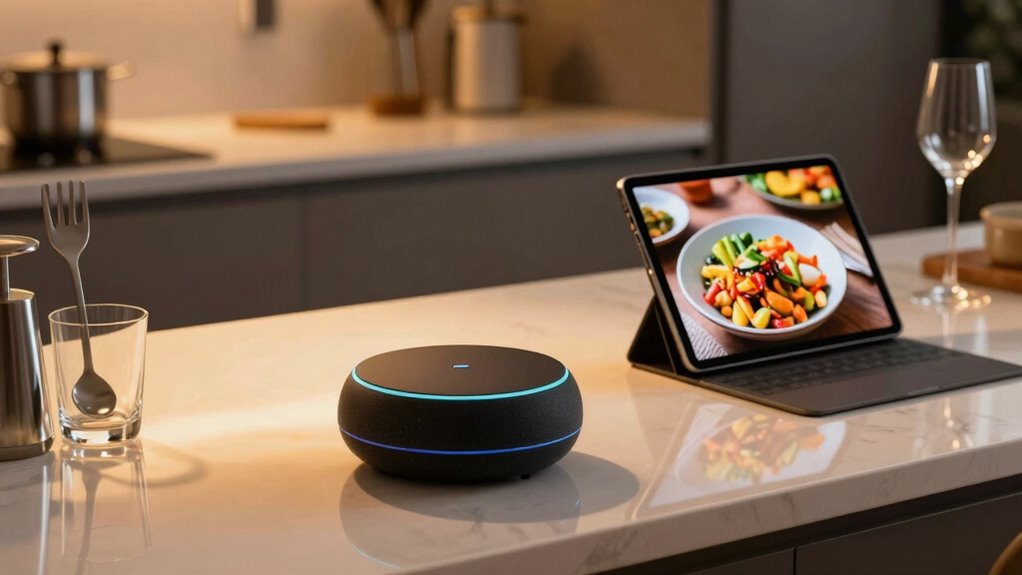
As smart devices become increasingly integrated into our daily routines, it’s tempting to rely on them for even the most personal tasks—like preparing dinner. But before you let a device take over your kitchen, it’s important to understand how data privacy and device reliability play a role in your safety and peace of mind. When you use a smart appliance or assistant to help cook, you’re sharing more than just recipes—you’re also transmitting personal data, from your cooking preferences to your routine habits. If that data isn’t properly protected, it could be accessed by unauthorized parties, risking your privacy. Some devices collect and store information about your usage, which can be vulnerable to hacking or misuse if security measures aren’t robust. It’s essential to review privacy policies and adjust settings to limit data sharing. You want to make sure that your personal information stays private, especially when it involves something as sensitive as your home and daily habits. Additionally, understanding the contrast ratio of your smart device can impact how well it displays information or images in various lighting conditions, affecting your overall experience in the kitchen. Being aware of the comogenic ratings of kitchen appliances and tools can also help prevent skin irritation or breakouts caused by certain materials or substances. Moreover, staying informed about security protocols can help protect your connected devices from potential cyber threats. Proper security measures, such as software updates, are crucial to maintaining the integrity of your smart kitchen environment.
Products Worth Considering

Ninja Mega Kitchen System BL770, 1500W, 72-oz Pitcher and 8-Cup Food Processor, Black

Cuisinart Pro Custom 11-Cup Food Processor, Brushed Chrome (DLC-8SBCYP1)

Ninja BN801 Professional Plus Kitchen System with Auto-iQ, 1400-Watt, Grey
As an affiliate, we earn on qualifying purchases.
Frequently Asked Questions
Can Smart Devices Detect Allergies or Dietary Restrictions?
Smart devices can assist with dietary customization, but they can’t directly detect allergies. Using voice recognition, you might tell your device about specific allergies or restrictions, and it can help suggest safe recipes or ingredients. However, always double-check labels and consult a healthcare professional, because technology isn’t foolproof. Relying solely on smart devices for allergy detection isn’t recommended, but they can be useful tools in managing your diet safely.
How Secure Is My Personal Food Data on Smart Devices?
Your personal food data on smart devices isn’t entirely secure; it faces hacking risks and potential privacy breaches. While many devices use encryption to protect your information, vulnerabilities still exist. You should regularly update your device’s software, use strong passwords, and review privacy settings. Be cautious about sharing sensitive details, and stay informed about security updates. Protecting your data privacy helps prevent unauthorized access and keeps your dietary information safe.
Do Smart Devices Actually Improve Dinner Preparation?
Smart devices can improve dinner prep by offering voice commands that make cooking more convenient and hands-free. They provide recipe suggestions tailored to your preferences, helping you discover new dishes and stay organized. Plus, they can control your smart kitchen appliances, streamlining the process. Overall, using these devices saves you time, reduces stress, and makes cooking more enjoyable, especially when you need quick, reliable assistance in the kitchen.
Are There Health Risks From Using Smart Kitchen Gadgets?
Did you know nearly 70% of smart device users worry about privacy concerns? Using smart kitchen gadgets can pose health risks if devices aren’t properly maintained or if they malfunction, potentially leading to food contamination. Additionally, device compatibility issues might cause unsafe operation or improper cooking. To stay safe, make certain your gadgets are well-maintained, update software regularly, and verify they’re compatible with your other kitchen devices.
How Do Smart Devices Handle Food Safety and Expiration Alerts?
Smart devices handle food safety and expiration alerts by monitoring data from sensors and connected apps. They notify you when food nears its expiration, helping prevent waste and guarantee safety. While managing these alerts, you can customize recipes based on available ingredients and stay within your budget. This technology simplifies meal planning, reduces spoilage, and keeps you informed, making your kitchen smarter and safer without extra effort.
Conclusion
While smart devices promise convenience, trusting them with dinner can feel like handing over your favorite recipe to a stranger. The ease of automation sometimes masks hidden risks—privacy breaches, malfunctions, or simple errors. Just as a perfectly cooked meal requires attention and care, so does safeguarding your kitchen. Embrace technology wisely, but remember that in the end, human touch and vigilance still make the best recipe for a safe, satisfying dinner.