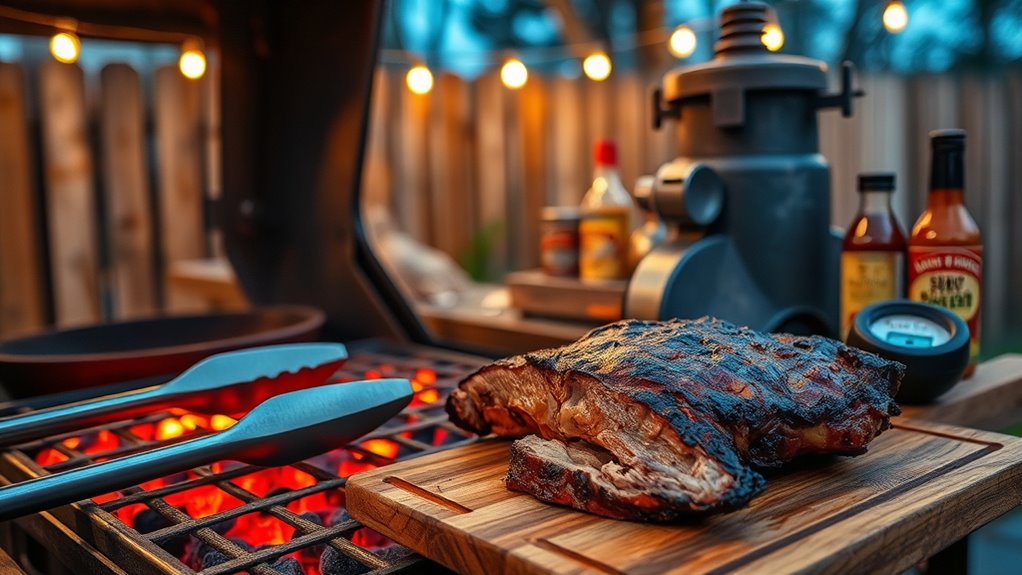
To get started with BBQ, it’s helpful to learn key terms like offset smoker, where smoke surrounds food, and direct grilling, which cooks food quickly over heat. You’ll also hear about indirect grilling, smoking, and temperature control—all essential for different cuts and flavors. Understanding these basics will boost your confidence and help you choose the right equipment and techniques. Keep exploring, and you’ll quickly become a BBQ pro ready to impress.
Key Takeaways
- Understand common terms like “smoke ring,” “reverse sear,” and “dry rub” to grasp BBQ techniques and processes.
- Learn about smoker types, such as offset or pellet, to choose the right equipment for desired flavors.
- Familiarize with grilling methods like direct and indirect grilling to improve cooking precision.
- Know key flavor components, including “bark,” “mop,” and “marinade,” to enhance your BBQ results.
- Master terminology related to temperature, timing, and wood types to develop confidence and consistency.
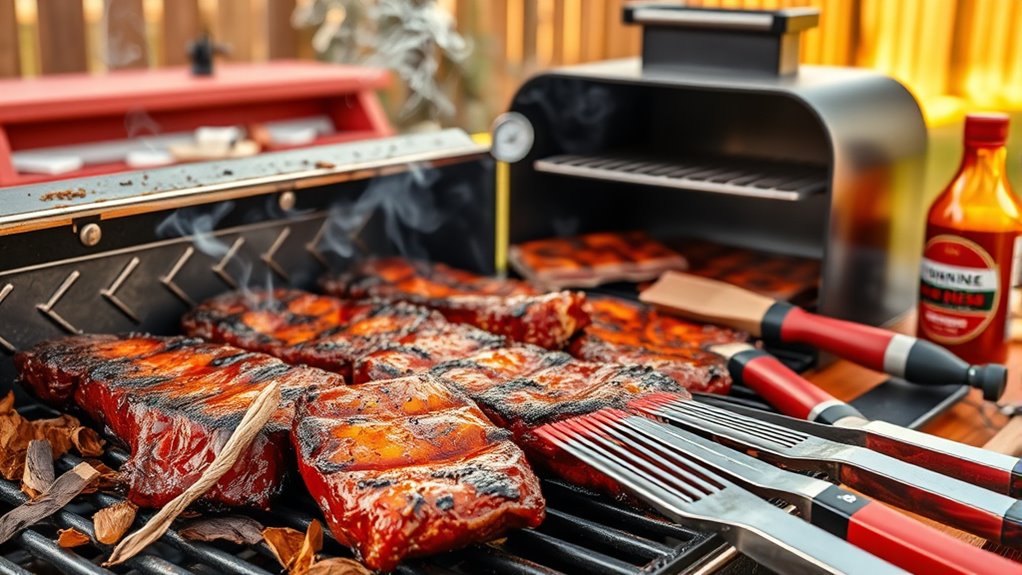
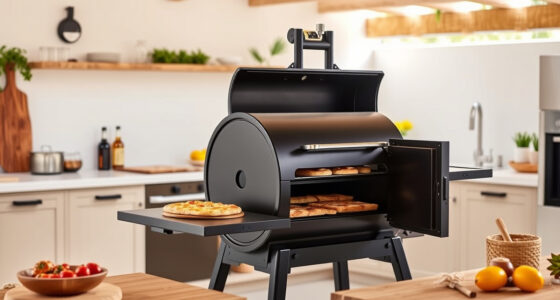
Ever wondered what all those BBQ terms really mean? If you’re just starting out, it can feel like everyone’s speaking a secret language. One of the first things you’ll hear about is smoker types, which refer to the different devices used to cook and flavor your meat slowly over low heat. There are a few popular options: offset smokers, which have a separate firebox where you burn wood or charcoal and then channel the smoke into the main chamber; electric smokers, which use electricity to generate heat and smoke, making them easy to control; and pellet smokers, which are powered by wood pellets and combine convenience with rich smoky flavor. Each type offers unique advantages, so your choice depends on your skill level and the flavor profile you’re aiming for. By understanding smoker types, you get a clearer picture of how your equipment influences your BBQ results.
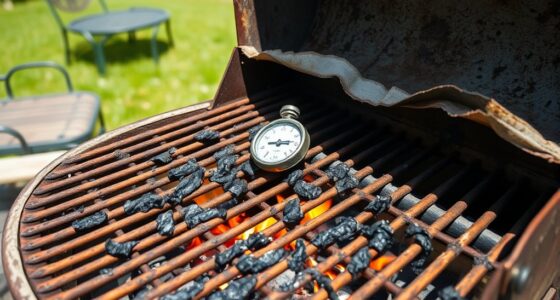
Next, you’ll want to get familiar with grilling techniques, which are the methods you use to cook your meat to perfection. Techniques like direct grilling involve placing your meat directly over the heat source, perfect for steaks and burgers that cook quickly. Indirect grilling, on the other hand, positions the meat away from the heat, ideal for larger cuts like roasts or whole chickens that need longer cooking times without burning. There’s also smoking, which is a slow process that infuses your meat with smoky flavor and tenderizes it over hours. Temperature control is essential here—knowing when to keep the heat low and steady versus cranking it up for searing can make or break your dish. Proper temperature management can enhance the flavor and texture of your meat, making your BBQ more successful. Mastering these techniques means you can adapt your approach based on what you’re cooking, ensuring consistently delicious results.
When you’re learning BBQ jargon, understanding smoker types and grilling techniques is foundational. They set the stage for everything else—how your meat turns out, the flavors you develop, and the overall experience. As you experiment, you’ll discover that each smoker type has its nuances, and each technique can be tweaked to suit your taste. Remember, BBQ isn’t just about following recipes; it’s about understanding the tools and methods that turn raw ingredients into mouthwatering dishes. The more you learn about these basics, the more confident you’ll become in your grilling skills. So, don’t rush—take the time to explore different smoker types and practice various techniques. Soon enough, you’ll be speaking the language fluently and impressing everyone with your newfound BBQ mastery.

Royal Gourmet CC1830S BBQ Charcoal Grill and Offset Smoker | 823 Square Inch cooking surface, Outdoor for Camping | Black
823 Square Inches: Includes 475 sq. in. porcelain-enameled steel wire cooking grates, 151 sq. in. chrome-plated warming rack…
As an affiliate, we earn on qualifying purchases.
As an affiliate, we earn on qualifying purchases.
Frequently Asked Questions
What’s the Difference Between Direct and Indirect Grilling?
You can distinguish direct from indirect grilling by focusing on heat placement. Direct grilling involves placing food directly over the heat source, perfect for searing and creating smoke rings, while indirect grilling cooks food away from the heat, ideal for slow, even cooking. For juicy results, use marinade tips to enhance flavor. Understanding this helps you control the temperature, ensuring your barbecue turns out tender and flavorful every time.
How Do I Choose the Right Type of Charcoal?
Choosing charcoal can seem confusing, but focusing on flavor enhancement simplifies it. For a smoky, robust taste, go for lump charcoal, which burns hotter and cleaner. If you prefer a steady, consistent heat, briquettes are your best bet. Both types influence flavor differently, so consider your cooking style. By selecting the right charcoal type, you’ll boost flavor, improve heat, and make your grilling game truly great.
What Does “Bend Test” Mean in BBQ?
The “bend test” checks if your meat’s ready by gently bending it to see if it cracks or tears. When the meat is perfect, it develops a nice bark formation and a smoky ring inside, indicating proper smoke absorption. If it bends without breaking, it’s tender and ready to serve. Use this test along with visual cues to guarantee your BBQ is cooked to perfection.
How Do I Maintain Consistent Temperature?
Think of your smoker as a steady drumbeat, setting a rhythm you must follow. You maintain consistent temperature by controlling vents, using a reliable thermometer, and avoiding opening the lid too often. This steady rhythm helps develop a perfect smoke ring and enhances flavor infusion. Keep your heat stable, and you’ll produce tender, flavorful meat every time, like a well-orchestrated symphony that never misses a beat.
What Are Common BBQ Safety Tips?
You should always prioritize fire safety by keeping a fire extinguisher nearby and never leaving the grill unattended. Regular grill maintenance, like cleaning grease buildup and checking for leaks, helps prevent flare-ups. Make sure your grill is on a stable surface away from flammable objects, and always use long-handled tools to avoid burns. These safety tips keep your barbecue fun and safe for everyone.
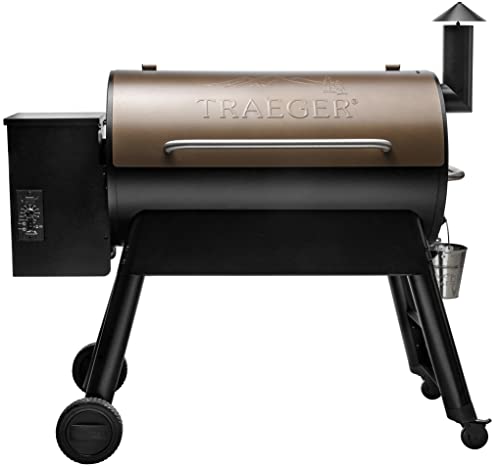
Traeger Grills Pro 34 Electric Wood Pellet Grill and Smoker, Bronze, 884 Square Inches Cook Area, 450 Degree Max Temperature, Meat Probe, 6 in 1 BBQ Grill
Never use gas or charcoal again: cooking with wood just tastes better. Traeger created the original wood-pellet grill…
As an affiliate, we earn on qualifying purchases.
As an affiliate, we earn on qualifying purchases.
Conclusion
Now that you’ve got these 20 BBQ terms under your belt, you’re ready to impress at any cookout. Think of this knowledge as your secret recipe—making you the grill master everyone admires. Just like a good marinade, understanding BBQ jargon adds flavor to your grilling skills. So go ahead, fire up your grill, and let these terms guide you to delicious, smoky perfection every time. Happy grilling!

Weber KC BBQ Dry Rub, 14.5 oz
The flavor of Kansas City Barbeque can be a difficult balance to achieve. Weber has captured it with…
As an affiliate, we earn on qualifying purchases.
As an affiliate, we earn on qualifying purchases.
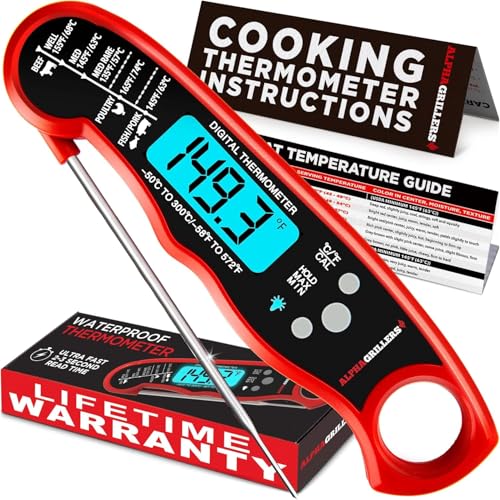
Alpha Grillers Meat Thermometer Digital – Instant Read Food Thermometer for Cooking & Grilling – Professional Kitchen Birthday Gifts for Men, Him, Dad, Husband, Boyfriend
Instant Read Food Thermometer | Our instant read thermometer features a temperature probe and advanced, highly accurate technology…
As an affiliate, we earn on qualifying purchases.
As an affiliate, we earn on qualifying purchases.