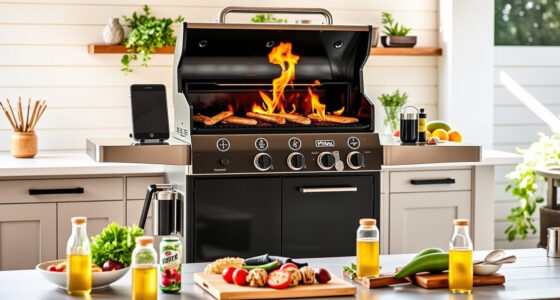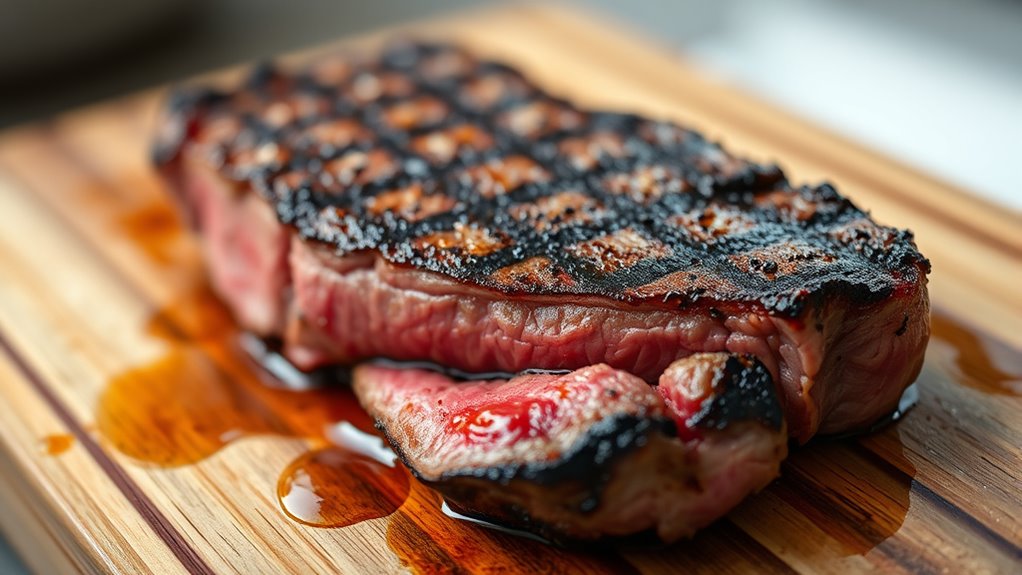

Resting meat is vital because it helps juices redistribute throughout, keeping your BBQ moist and tender. When you cut into hot meat right away, those juices escape, leaving it dry and less flavorful. As the temperature stabilizes during resting, moisture reabsorbs, and carryover cooking finishes gently, preventing overcooking. Proper resting guarantees your meat reaches its ideal texture and taste, and understanding this science will help you make perfect, juicy BBQ every time.

Get kitchen gear delivered free with Prime
- Fast, free delivery on millions of items
- Prime Video, Amazon Music and more included
- Member-only deals all year
Key Takeaways
- Resting allows juices to redistribute evenly, preventing them from escaping when the meat is cut.
- It stabilizes internal temperature, preventing overcooking caused by carryover heat.
- Resting enhances moisture retention, resulting in juicier, tender, and flavorful meat.
- It promotes even cooking and prevents hot spots, improving overall meat quality.
- Proper resting times ensure maximum tenderness and flavor, making BBQ more delicious.

There’s nothing quite like biting into a perfectly cooked piece of meat, but to get that juicy, flavorful result, resting your meat is essential. When you remove meat from the heat, it doesn’t instantly stop cooking. Instead, its internal temperature continues to rise slightly—a process known as carryover cooking. This increase in meat temperature can be a few degrees, depending on the size and thickness of the cut. If you cut into your meat immediately after cooking, all those flavorful juices will escape, leaving your meat dry and less tasty. Resting allows these juices to redistribute evenly throughout the meat, ensuring each bite is moist and tender. Properly managing meat temperature is also crucial to achieving the perfect balance between safety and texture. Understanding meat temperature is vital in this process. Cooking meat to the right temperature is important for safety and texture, but the resting period guarantees you don’t overcook it. For example, if you’re grilling a steak and aim for a medium-rare finish, you might cook it to an internal temperature of 130°F to 135°F. Once you take it off the grill, the meat’s internal temperature will continue to climb a few degrees due to carryover cooking. If you cut into it immediately, you risk losing those precious juices that make the steak juicy and flavorful. Instead, letting it rest for about five to ten minutes allows the temperature to stabilize, preventing overcooking and ensuring the meat reaches its ideal doneness.
Resting meat redistributes juices, keeping it moist and flavorful after cooking.
The science behind resting meat hinges on the redistribution of moisture and heat. During cooking, juices tend to move towards the center of the meat, especially in thicker cuts. Resting gives these juices a chance to move back into the fibers, making the meat more succulent. Plus, as the temperature equilibrates, the meat becomes more evenly cooked, avoiding hot spots or uneven textures. This is particularly important for larger roasts or briskets, where carryover cooking can raise the internal temperature substantially after removing from heat, sometimes by as much as 10°F.
Timing is key. If you rush to cut into your meat too soon, you’ll lose those flavorful juices and end up with a less satisfying bite. Conversely, waiting too long might make the meat cool down unnecessarily. A good rule of thumb is to rest your meat roughly as long as it took to cook. During this time, carryover cooking completes, and the meat reaches its perfect temperature and texture. By respecting this process, you guarantee every piece of BBQ you serve is juicy, tender, and full of flavor.
As an affiliate, we earn on qualifying purchases.
Frequently Asked Questions
How Long Should I Rest Different Types of Meat?
You should rest different types of meat for ideal juiciness. For steaks cooked to medium, rest about 5-10 minutes; larger cuts like roasts need 15-20 minutes. Poultry benefits from a 10-minute rest, while smaller meats like sausages require just a few minutes. Always consider the cooking temperature, as higher temps cause more juices to escape. Meat resting allows juices to redistribute, ensuring your meat stays moist and flavorful.
Does Resting Meat Affect Its Flavor?
Yes, resting meat improves its flavor by allowing juices to redistribute, which enhances moisture retention and creates a more flavorful bite. When you let your meat rest, it absorbs any residual flavors from the seasoning or marinade better, intensifying taste. Skipping this step can result in a drier, less flavorful piece, so take the time to rest your meat for a juicier, more flavorful experience.
Can Resting Meat Make It More Tender?
Ever wondered if resting meat makes it more tender? Absolutely! Resting allows carryover cooking to finish gently, helping the meat become tenderer. It also improves moisture retention, preventing juices from escaping and keeping the meat juicy. When you let your meat rest, you’re giving those muscle fibers time to relax, which results in a more tender, flavorful bite. So, don’t skip this essential step for perfect, tender barbecue!
Is It Necessary to Cover Meat While Resting?
No, it’s not necessary to cover meat while resting, but doing so can help retain heat and moisture. Covering meat with foil during resting is a resting technique that keeps the meat warm, ensuring it stays juicy. If you prefer a slightly crisper crust, leave it uncovered. Ultimately, covering meat depends on your preference and the specific cut, but it can enhance your overall resting process.
What Happens if I Don’t Rest My Meat?
If you skip resting your meat, you risk losing precious juices that escape as steam and heat dissipate. Without proper resting techniques, the meat’s internal temperature drops unevenly, causing moisture to seep out and leaving your meat dry and less flavorful. Resting allows the meat temperature to stabilize, redistributing juices for maximum tenderness. So, skipping this step can turn juicy perfection into a dry, disappointing bite.
As an affiliate, we earn on qualifying purchases.
Conclusion
Remember, resting your meat is key to juicy BBQ—it’s where those flavorful juices redistribute, ensuring every bite is tender and moist. Did you know that resting meat for just 10 minutes can increase its juiciness by up to 50%? So, next time you fire up the grill, give your meat a well-deserved break before slicing. That simple step makes all the difference in achieving that perfect, mouthwatering result.
As an affiliate, we earn on qualifying purchases.
As an affiliate, we earn on qualifying purchases.
Fall Picks
fall essentials
As an affiliate, we earn on qualifying purchases.