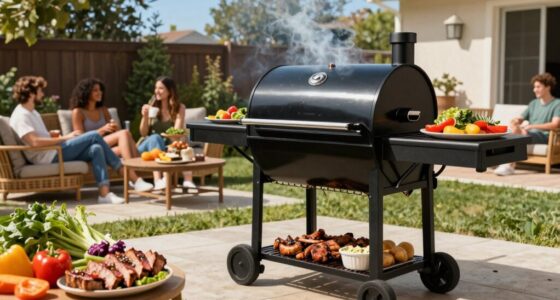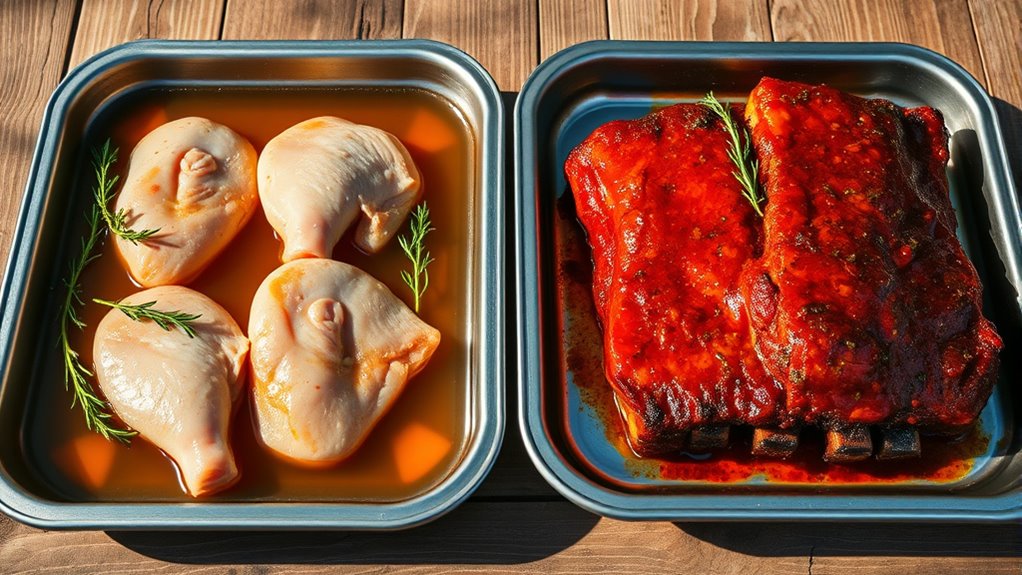

If you want juicier, more tender BBQ, brining is your best choice because it helps meat retain moisture and enhances internal flavor. Marinating, on the other hand, infuses bold, complex surface flavors and can soften the meat slightly, but it generally doesn’t improve overall tenderness as much. Both techniques have their perks, so understanding when to use each can elevate your barbecue game. Keep going to discover which method suits your taste and the cut you’re grilling.
Key Takeaways
- Brining enhances moisture retention and tenderness, resulting in juicier, more resilient BBQ meats.
- Marinating imparts bold, complex flavors, ideal for adding surface tenderness and deep flavor profiles.
- For lean cuts prone to drying out, brining generally yields better moisture and texture.
- Marinating is best for flavor infusion and surface softening but offers limited internal moisture benefits.
- Combining both techniques strategically can optimize both flavor and juiciness in BBQ meats.
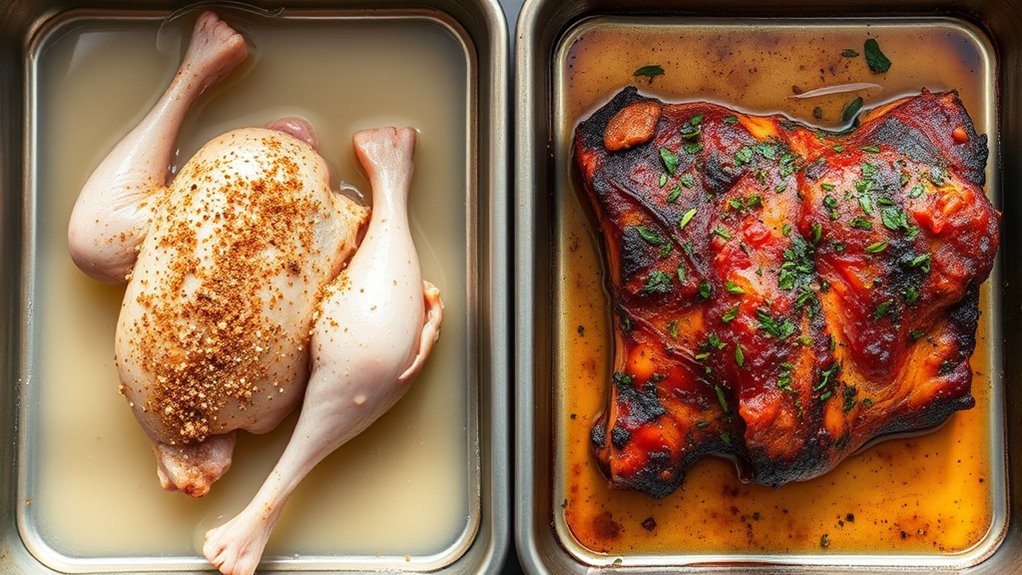
Ever wondered what sets brining apart from marinating? Both techniques are popular ways to boost your BBQ, but they serve different purposes and produce distinct results. When it comes to flavor penetration and texture enhancement, understanding these differences can help you decide which method is best for your next cookout.
Brining involves soaking your meat in a solution of salt, water, and sometimes sugar or spices. The primary goal is to improve moisture retention, especially in lean cuts that tend to dry out during cooking. As the brine penetrates the meat, it helps the fibers absorb water, resulting in a juicier final product. This process also enhances the texture by making the meat more tender and resilient to overcooking. The salt in the brine not only helps with moisture but also promotes better flavor penetration, subtly seasoning the meat throughout. Because brining focuses on moisture and tenderness, the flavors tend to stay more delicate and natural, but the overall experience is one of increased succulence and a more satisfying bite.
On the other hand, marinating involves immersing meat in a mixture that often contains acids, oils, herbs, spices, and other flavorings. This technique is more about imparting a bold, complex flavor profile to your meat. The acids—like vinegar or citrus juice—break down some muscle fibers, which can lead to a slight tenderizing effect. However, because acids can also weaken the meat’s structure if left too long, marinating is usually done for shorter periods. The key benefit here is flavor penetration; the marinade seeps into the surface layers and imparts a distinctive taste that’s often more pronounced than what you get from brining. While marinating can enhance the meat’s flavor profile considerably, its effect on texture is more about surface tenderness rather than deep structural change. Additionally, equal attention to marinating time and ingredients ensures you achieve the desired balance of flavor and tenderness without over-tenderizing.

Turkey Brine Bag Kit, Brining Bags for Turkey 25lb-35lb, 2 Pack 26"x22" Thickened Double Zipper No Leak Turkey Bags with Strings for Brining Meat, Chicken, Fish
Leak-Proof Brine Bags: Our turkey brine bags feature double-track zippers for a tight seal, preventing leaks and breaks….
As an affiliate, we earn on qualifying purchases.
As an affiliate, we earn on qualifying purchases.
Frequently Asked Questions
Can Brining or Marinating Affect Grilling Time?
Yes, brining or marinating can affect grilling time. Brining enhances moisture retention, keeping your meat juicy, which may slightly extend cooking time to guarantee it’s fully cooked. Marinating adds flavor infusion but can also influence grilling duration, especially if the marinade contains sugar or acidic ingredients that cause quicker browning or flare-ups. Keep an eye on your grill to avoid overcooking or burning, and always use a meat thermometer for best results.
Which Method Is Healthier for the Meat?
You’ll find that brining is generally healthier for the meat because it adds moisture and tenderness without heavily altering the salt content, especially if you control the salt levels. Marinating often involves acids and sugars, which can sometimes add extra calories or preservatives. By choosing a simple, low-salt brine, you preserve the meat’s natural flavor while enjoying the health benefits of moisture and tenderness, making it a better choice for health-conscious grilling.
Do Different Meats Respond Better to Brining or Marinating?
Different meats respond better to either brining or marinating depending on their texture and flavor needs. For example, poultry benefits from brining because salt absorption helps retain moisture, making it juicier. Conversely, tougher cuts like beef or pork respond well to marinating, which enhances flavor infusion and tenderizes the meat. Choose the method based on the meat’s characteristics for ideal results in your BBQ.
How Does Each Method Impact Meat Tenderness?
You’ll notice that brining often makes meat more tender by increasing moisture retention, giving it a juicy, soft texture. Marinating, on the other hand, mainly adds flavor but can also tenderize slightly depending on ingredients like acids. While brining directly impacts meat texture by breaking down muscle fibers, marinating’s effect on tenderness is subtler. So, if tenderness is your goal, brining generally offers a more noticeable improvement in moisture retention and softness.
Can You Combine Brining and Marinating for Better Flavor?
Yes, you can combine brining and marinating to boost flavor enhancement and texture improvement. Start with a brine to tenderize and hydrate the meat, then follow with a marinade for added flavor. Just be careful not to overdo it, as too much time in either can overpower the meat or make it mushy. This combo offers a richer, more balanced BBQ experience.

Smokehouse by Thoughtfully, Gourmet BBQ Sauce Sampler Set, Vegan and Vegetarian, Flavors Include Honey Chipotle, Smoky Bourbon, Sweet and Spicy, and Bacon BBQ Sauce, Pack of 4
VARIETY SAMPLER – Includes a set of four uniquely flavored barbecue grilling sauces in glass bottles
As an affiliate, we earn on qualifying purchases.
As an affiliate, we earn on qualifying purchases.
Conclusion
So, whether you choose brining or marinating, remember that both techniques aim to enhance flavor, tenderize texture, and improve juiciness. Both methods require patience, both methods demand attention, and both methods deliver delicious results. Ultimately, it’s about your preference, your patience, and your passion for perfect BBQ. Whichever you choose, enjoy the process, savor the flavors, and celebrate the art of grilling—because great barbecue starts with a great technique.

HOTEC 600℉ Heat Resistasnt Basting Brushes, BPA Free Silicone Pastry Brush, Spread Oil Butter Sauce Marinades for BBQ Grill Barbecue Baking Kitchen Cooking Dishwasher Safe (Black 2)
[ FOOD GRADE MATERIALS ]: This Silicone Basting Brush Set BPA Free,Non-toxic, lead free Odourless. With Stainless Steel…
As an affiliate, we earn on qualifying purchases.
As an affiliate, we earn on qualifying purchases.

ThermoPro 650 ft Wireless Meat Thermometer Digital for Grilling and Smoking, 2 Probes Bluetooth Meat Thermometer for Cooking Turkey Fish Beef, Rechargeable Smoker Accessories for BBQ Oven
【Longer Range 650 ft】The built-in best-in-class Bluetooth chip empowers this Bluetooth thermometer a longer range of up to…
As an affiliate, we earn on qualifying purchases.
As an affiliate, we earn on qualifying purchases.