To get that perfect BBQ crust on brisket or pork, focus on maintaining a consistent smoker temp of around 225–250°F and use quality wood like hickory or oak sparingly to create a steady, thin smoke. Apply a flavorful, balanced rub that includes salt and sugar, pressing it firmly into the meat. Keep the lid closed as much as possible to prevent fluctuations and give the bark time to develop. Continue exploring these tips for even better results.
Key Takeaways
- Maintain a steady smoker temperature between 225°F and 250°F for even bark development.
- Use quality hardwoods like hickory or oak to add flavor without causing bitterness.
- Apply a balanced, generous spice rub and let it sit to adhere and enhance crust formation.
- Minimize lid openings and control airflow to keep smoke steady and prevent temperature fluctuations.
- Be patient; avoid rushing the process to allow the bark to naturally caramelize and set properly.

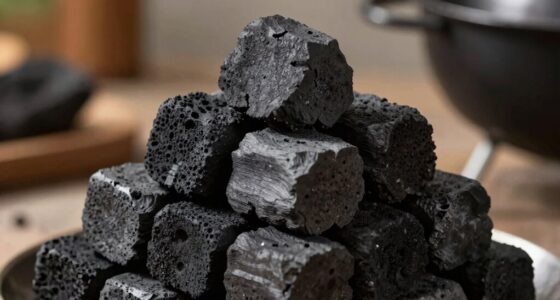
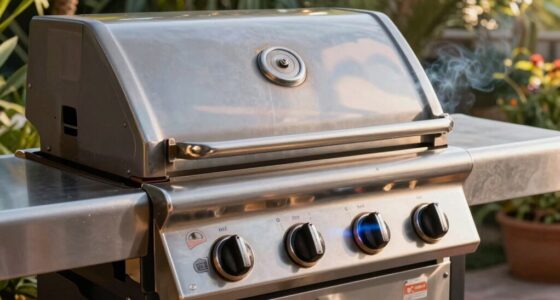
Achieving the perfect BBQ bark can elevate your smoked meats to a new level of flavor and texture. The key lies in mastering your smoking techniques and applying the right spice rubs. When you’re aiming for that irresistible crust, you want to focus on how you manage heat, smoke, and seasoning. Your smoking techniques set the stage for creating a flavorful bark. Maintaining a consistent temperature, usually around 225°F to 250°F, ensures your meat cooks evenly and allows the bark to develop properly. Using quality smoking wood, like hickory or oak, adds depth without overpowering the meat’s natural flavors. Keep the smoke steady and thin; too much smoke or high heat can turn your bark bitter, so controlling your airflow and smoke output is essential.
Master consistent heat and quality wood for a flavorful, perfect BBQ bark.
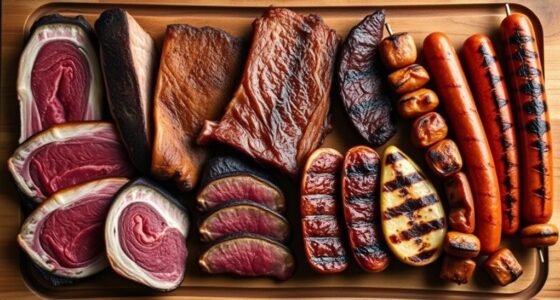
Your choice of spice rubs plays a vital role in forming that beautiful crust. A good rub should contain a balance of salt, sugar, spices, and herbs. Salt helps to draw out moisture and creates a flavorful crust, while sugar caramelizes during smoking, adding sweetness and crunch. When applying your spice rub, do so generously and evenly. Don’t just sprinkle it on the surface—press it into the meat to ensure it adheres well and penetrates slightly. Letting the rub sit for a bit before smoking allows the flavors to meld and enhances the crust formation. You might consider layering your spice rubs or using a binder like mustard or oil to help the seasoning stick better and promote a more uniform bark.
As you smoke, avoid the temptation to constantly open the lid, which can cause fluctuations in temperature and disrupt bark development. Instead, focus on maintaining a steady environment, adding wood chips or chunks as needed, and monitoring your temperature closely. During the early stages, the bark begins to form as the seasoning interacts with the meat’s surface and the smoke. As the process continues, the sugar caramelizes, and the spices set into a crust that’s both flavorful and textured. Understanding the smoke-to-meat interaction can help you better control the flavor development in your bark.
Finally, patience is essential. Rushing the process or trying to accelerate it with direct heat can ruin your efforts. Instead, trust your smoking techniques and seasoning choices, and let the magic happen naturally. With careful attention to your smoking process and well-crafted spice rubs, you’ll produce a BBQ bark that’s crispy, flavorful, and truly unforgettable.

Kodreat 4 Pack Silicone Trivets for Hot Dishes
- Heat-Resistant Silicone: Withstands -104℉ to 446℉
- Non-Slip Surface: Prevents slips, spills, and burns
- Food-Grade & BPA-Free: Safe, flexible, and durable material
As an affiliate, we earn on qualifying purchases.
Frequently Asked Questions
How Does Humidity Affect BBQ Bark Formation?
Humidity effects can markedly influence BBQ bark formation. When humidity is high, it causes moisture retention on the meat’s surface, making it harder for the bark to develop a crispy crust. To counter this, you might need to increase airflow or adjust your cooking environment. Lower humidity helps the surface dry out faster, promoting better bark formation. Keep an eye on humidity effects to control moisture retention and achieve that perfect crust.
Can Different Wood Types Influence Bark Texture?
Yes, different wood types influence bark texture by affecting smoke flavor and moisture retention. Hardwoods like oak and hickory produce a dense, flavorful smoke that can create a firmer, crusty bark. Softer woods or fruitwoods like apple or cherry give a lighter smoke, resulting in a softer bark. Your choice of wood directly impacts the bark’s appearance and texture, so select based on the crust you aim to achieve.
Is It Better to Wrap or Unwrapped for Crust Development?
They say, “Sometimes you have to crack a few eggs to make an omelet,” and the same applies to BBQ bark. For better bark consistency, unwrapped cooking is ideal, allowing the crust to form fully. Wrapping techniques can soften the bark, making it less crispy. If you want a crispy crust, keep your brisket or pork unwrapped during the final stages, but wrap if you prefer tenderness over crust.
How Does Meat Temperature Impact Bark Formation?
Meat temperature greatly impacts bark formation because as it rises, fat rendering and moisture loss create ideal conditions. When your meat reaches around 165°F, fat begins to melt, helping develop a rich crust, while moisture loss concentrates flavors. If the temperature stays too low, bark won’t form properly, but if it gets too high too quickly, the bark can burn. Maintain steady heat to balance moisture and fat rendering for perfect crust.
What Role Does Seasoning Thickness Play in Bark Quality?
Did you know that a thicker seasoning layer can improve crust adherence by up to 30%? When applying seasoning, aim for a balanced thickness—too thin and it won’t form a proper bark, too thick and it can hinder crust development. Proper seasoning application enhances crust adherence, creating a flavorful, crispy exterior. Focus on even coverage to ensure the seasoning interacts well with the meat’s surface, resulting in a better bark.

SMARTAKE 6 Set Silicone Trivet Mats for Hot Dishes Pots and Pans (Black)
- Food-Grade, BPA-Free Silicone: Safe, odor-resistant, heat-resistant from -22℉ to 480℉
- Multi-Functional Use: Protects surfaces, prevents slips, and handles hot items
- Flexible & Space-Saving: Lightweight, easy to store and hang for convenience
As an affiliate, we earn on qualifying purchases.
Conclusion
Think of your BBQ bark as the crown on a king’s head—once it’s perfectly formed, it elevates the entire masterpiece. By paying attention to your rubs, smoke, and patience, you’re crafting a regal crust that commands respect. Remember, every great ruler begins with a solid foundation; so, treat your brisket and pork with care. When you master the bark, you’re not just cooking—you’re creating a culinary crown worthy of admiration.

Walfos Silicone Trivet Mats - 4 Heat Resistant Pot Holders, Multipurpose Non-Slip Hot Pads for Kitchen Potholders, Hot Dishers, Jar Opener, Spoon Holder, Food Grade Silicone & BPA Free (Black)
- Heat Resistant Range: -104℉ to 446℉
- Non-Slip Design: Prevents slipping and sliding
- Food Grade Silicone: BPA free and durable
As an affiliate, we earn on qualifying purchases.

BIG HORN 14-Inch Indoor Pizza Oven, 850°F High-Heat Electric Countertop Pizza Oven for Restaurant-Style Artisan Pizza with Pizza Stone and Pizza Peel, PID Precision Temperature Control
- High-Temperature Cooking: Reaches 850°F for fast pizza prep
- Fast Preheat Time: Preheats in 15 minutes
- Precise Temperature Control: PID system maintains accurate heat
As an affiliate, we earn on qualifying purchases.