
Charcoal grilling is often seen as a healthier choice compared to gas because it provides a natural smoky flavor without relying on artificial additives or preservatives. It also produces fewer chemical interventions, especially if you manage flare-ups and prevent heavy charring. While smoke from charcoal contains compounds linked to health risks, using proper techniques like trimming fat and controlling smoke can reduce exposure. If you stay mindful of safety and technique, you’ll discover more ways to enjoy healthier grilling.

Get kitchen gear delivered free with Prime
- Fast, free delivery on millions of items
- Prime Video, Amazon Music and more included
- Member-only deals all year
Key Takeaways
- Charcoal grilling produces natural smoky flavors without artificial additives, offering a healthier taste profile than some gas methods.
- Using charcoal can create harmful PAHs and HCAs if meat is heavily charred, but proper techniques can minimize these risks.
- Charcoal grilling enables better control over smoke and temperature, reducing reliance on chemical flavorings common in gas grilling.
- Proper ventilation, cleaning, and moderation are essential to mitigate health risks associated with charcoal smoke and flare-ups.
- Overall, charcoal grilling can be healthier than gas when used correctly, but safety and proper technique are crucial for health benefits.
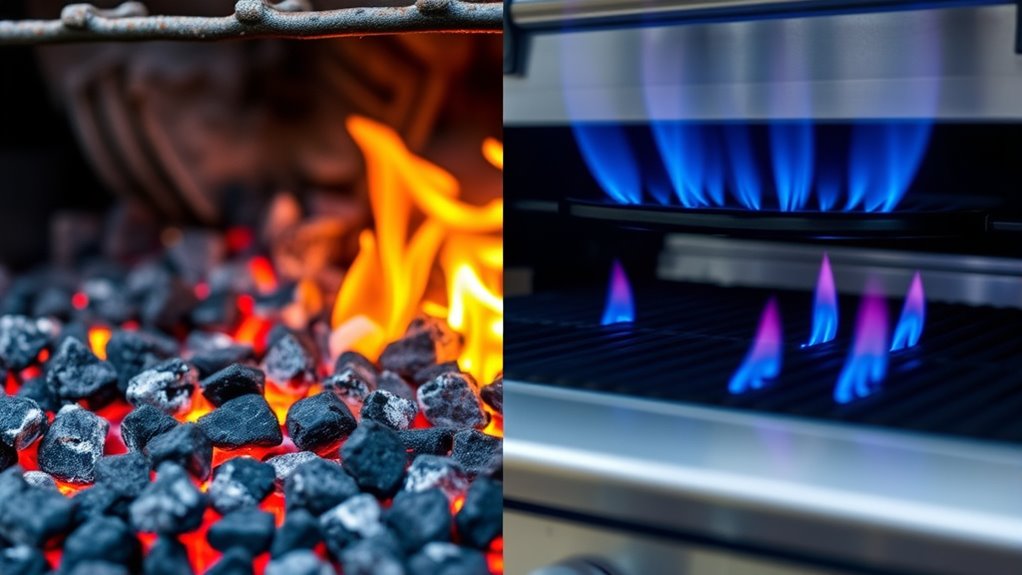
Many grilling enthusiasts believe that charcoal grilling offers a healthier alternative to gas, and recent studies support this view. They argue that the unique flavor of meat smoke produced during charcoal grilling enhances the taste without relying on artificial additives or preservatives often found in processed foods. The smoke from charcoal imparts a rich, smoky aroma that many consider more natural and appealing. However, it’s vital to consider grill safety when using charcoal. Proper ventilation is imperative to prevent the buildup of harmful fumes, and you should always use the grill outdoors in a well-ventilated area. Making sure your grill is stable and on a flat surface reduces the risk of accidents. Additionally, avoid using lighter fluid excessively, as this can cause flare-ups and release potentially harmful chemicals into the meat and environment.
When it comes to meat smoke, it’s a double-edged sword. While smoke can elevate flavors and create appealing textures, it also contains polycyclic aromatic hydrocarbons (PAHs) and heterocyclic amines (HCAs), which are linked to health risks when consumed in excess. The key is moderation and proper technique. By controlling the amount of smoke exposure and avoiding charring meat too heavily, you can enjoy the benefits of meat smoke without drastically increasing health risks. Using a water pan inside your grill can help regulate temperature and reduce direct flame contact, minimizing the formation of harmful compounds. It’s also wise to trim excess fat from meat, as dripping fat can cause flare-ups that produce more smoke and carcinogenic compounds. Additionally, modern grill safety measures can help mitigate some of these risks and promote healthier grilling practices.
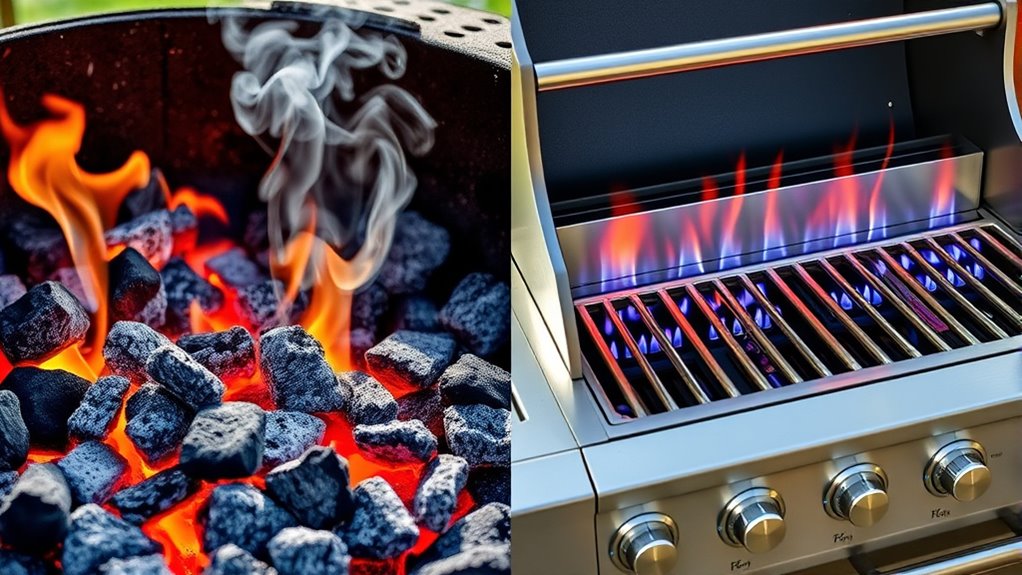
Many believe that charcoal grilling’s meat smoke adds depth to the flavor profile, and the process often involves less chemical intervention than gas grilling, which relies on pressurized fuel. Yet, this doesn’t mean you should neglect grill safety. Always keep a fire extinguisher nearby, and ensure your grill is properly maintained. Regular cleaning of ash and grease buildup prevents dangerous flare-ups and keeps the grill functioning safely. While charcoal grilling can introduce some health considerations, following safety guidelines and managing meat smoke exposure can make it a healthier choice overall. Balancing flavor with safety ensures you enjoy your grilling sessions without unnecessary health risks, making charcoal grilling a flavorful yet cautious method to prepare your favorite foods.
charcoal grill with temperature control
As an affiliate, we earn on qualifying purchases.
As an affiliate, we earn on qualifying purchases.
Frequently Asked Questions
Does Charcoal Grilling Produce More Carcinogens Than Gas?
Yes, charcoal grilling can produce more carcinogens than gas because it generates higher carcinogen levels and grilling toxins. When you grill over charcoal, you’re exposed to more smoke and charred residues that contain harmful compounds like polycyclic aromatic hydrocarbons (PAHs). Gas grills tend to produce fewer carcinogens due to cleaner burning. To reduce risks, you can trim fat, avoid charring, and use marinades to minimize grilling toxins.
How Does Flavor Impact Health Differences Between Charcoal and Gas?
Flavor nuances markedly influence your health considerations when choosing between charcoal and gas grilling. The taste influence from charcoal adds smoky, charred flavors, which can lead to increased carcinogen formation if not managed properly. Gas offers cleaner, more controlled flavors with fewer health risks. Your choice affects health, as the richer smoky taste from charcoal may encourage overconsumption or exposure to harmful compounds, whereas gas provides a safer, more consistent flavor profile.
Are There Specific Types of Charcoal Healthier Than Others?
You can choose healthier charcoal types, like natural lump charcoal, which contains fewer chemicals and additives than briquettes. Natural lump charcoal burns cleaner and produces fewer harmful emissions, offering better health benefits. Avoid charcoals with added binders or accelerants, as they release more toxins. By selecting the right charcoal types, you reduce exposure to harmful substances, making your grilling experience safer and more health-conscious.
Can Grilling Methods Reduce Harmful Compound Formation?
You can tame harmful compounds by controlling your grill temperature and reducing smoke inhalation. Keep the heat moderate to prevent charring, which sparks carcinogen formation. Use lean cuts and marinate to act as shields against toxins. Position your grill away from wind, and avoid flare-ups. Think of your grill as a delicate dance—balance heat and smoke, and you’ll serve up healthier, safer grilled delights every time.
What Are the Environmental Impacts of Charcoal Versus Gas Grilling?
Charcoal grilling has a higher environmental impact than gas grilling due to its larger carbon footprint. You contribute to deforestation if you don’t choose sustainably sourced charcoal, which can harm ecosystems. Gas grilling, on the other hand, produces fewer greenhouse gases and is cleaner. By selecting sustainably sourced charcoal and using it responsibly, you can reduce environmental harm and enjoy grilling with a more eco-friendly approach.
natural hardwood charcoal for grilling
As an affiliate, we earn on qualifying purchases.
As an affiliate, we earn on qualifying purchases.
Conclusion
In the end, whether charcoal or gas is healthier depends on how you use them. Think of your grill as a canvas—your choices determine the masterpiece. While charcoal might add smoky flavors, it also brings more potential toxins. So, if you want to keep your health on track, focus on controlling flare-ups, choosing lean meats, and avoiding charring. Remember, you hold the brush—your grilling habits paint the true picture of health.
As an affiliate, we earn on qualifying purchases.
charcoal grill safety accessories
As an affiliate, we earn on qualifying purchases.
As an affiliate, we earn on qualifying purchases.
Halloween Picks
halloween
As an affiliate, we earn on qualifying purchases.