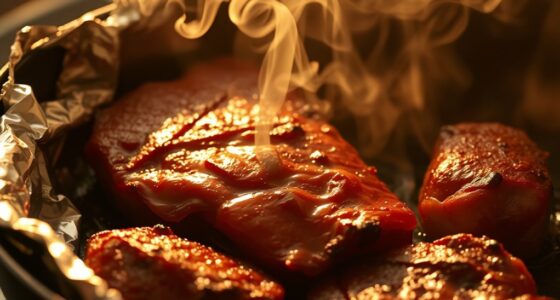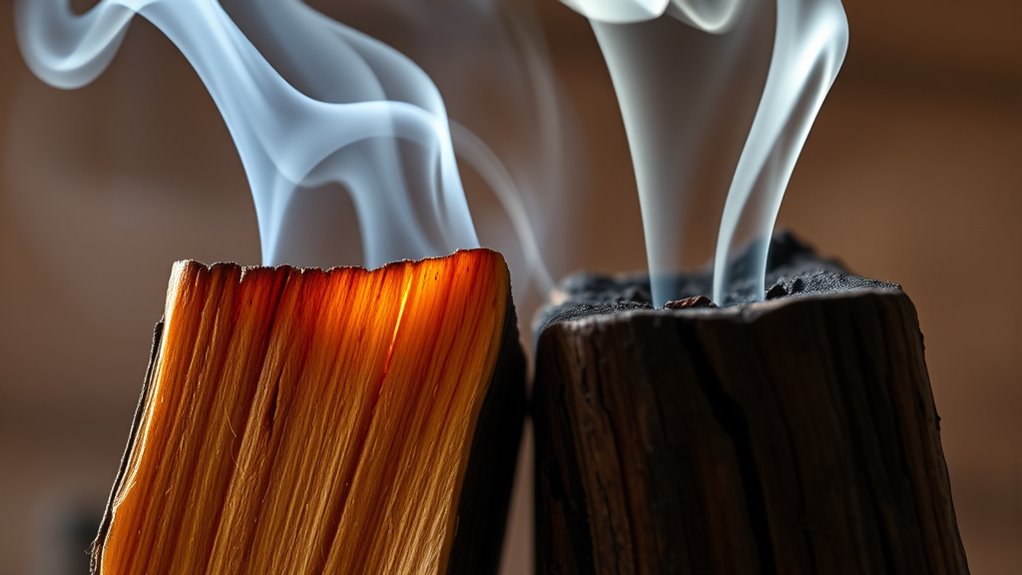
Using fruitwood versus hardwood for smoking gives your meat very different flavors. Fruitwoods like apple, cherry, or peach produce a mild, sweet smoke that enhances lighter meats like poultry and fish. Hardwood such as hickory or oak creates a stronger, more robust flavor great for beef or hearty cuts. If you want to craft the perfect taste, understanding these differences can help you choose the right wood—keep going to discover more about how each impacts your smoking results.

Get kitchen gear delivered free with Prime
- Fast, free delivery on millions of items
- Prime Video, Amazon Music and more included
- Member-only deals all year
Key Takeaways
- Fruitwoods provide a milder, sweeter smoke that enhances lighter meats like poultry and fish.
- Hardwood offers a stronger, more robust smoke suited for hearty cuts like beef and ribs.
- Fruitwoods burn quickly with less ash, offering gentle, steady smoke, while hardwoods burn longer and produce more intense smoke.
- The flavor from fruitwoods tends to be subtle and aromatic, complementing natural meat flavors without overpowering.
- Hardwood smoke adds depth and complexity, creating a bold smoky profile ideal for richer, heavier meats.
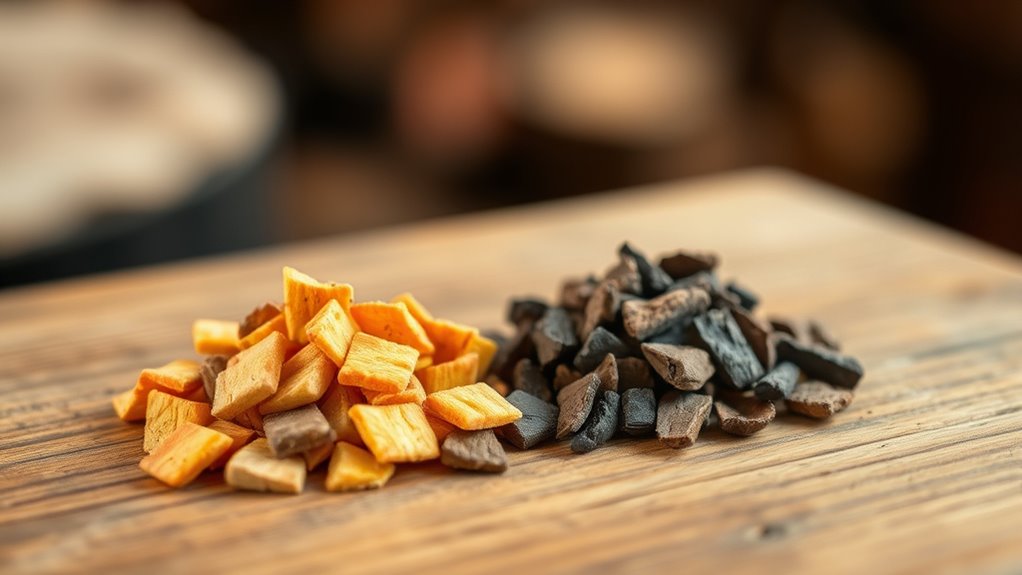
Have you ever wondered which type of wood is best for smoking your favorite meats? The choice between fruitwood and hardwood can profoundly influence the final flavor of your smoked dishes. When you select wood for smoking, you’re not just choosing a fuel source; you’re selecting a flavor profile that will permeate your meat. Fruitwoods like apple, cherry, and peach tend to produce a milder, sweeter smoke, which can enhance the natural taste of lighter meats such as poultry, pork, or fish. Hardwood, on the other hand, includes options like oak, hickory, and maple. These woods generally have stronger burning properties and create more robust, intense wood flavor, making them suitable for beef and game meats that can stand up to a more potent smoke.
Choosing between fruitwood and hardwood influences your meat’s flavor profile and smoking experience.
The burning properties of these woods also come into play when you’re managing your smoker. Fruitwoods tend to ignite quickly and burn more steadily, providing a gentle and consistent smoke that’s ideal for delicate meats. Their moderate burning properties mean they produce less ash and tend to burn longer, giving you more control over your smoke sessions. Hardwoods usually have a higher density, which translates into slower ignition and longer burn times, but they also produce a more vigorous smoke. This intense smoke is perfect for adding depth to hearty cuts, but it requires careful monitoring to avoid overpowering your meat with too much wood flavor.
When considering wood flavor, think about the profile you want. Fruitwoods impart a sweet, subtle aroma that complements the natural juices of your meat, enhancing rather than masking their flavor. Hardwood smoke, however, delivers a bolder, more assertive taste that can add complexity but should be used thoughtfully. For example, apple or cherry woods work well with poultry, giving a gentle sweetness that won’t overpower the meat’s natural flavor. Conversely, hickory or oak can add a smoky, savory character suited for beef briskets or ribs.
Additionally, the seasoning process of the wood impacts its burning behavior and the cleanliness of the smoke, which is crucial for achieving the desired flavor and avoiding unwanted residues. In terms of burning properties, it’s key to understand how each wood type behaves during the smoking process. Fruitwoods tend to produce less creosote and soot, leading to a cleaner smoking experience. Hardwoods, especially when not seasoned properly, can sometimes produce more smoke and residue, which might affect the flavor if not managed correctly. Ultimately, the best choice depends on your desired flavor profile and how much control you want over your smoke. With a good understanding of wood flavor and burning properties, you can craft perfectly smoked meats every time.
As an affiliate, we earn on qualifying purchases.
Frequently Asked Questions
How Does Wood Type Affect Smoking Duration?
The wood type directly impacts smoking duration through its burn rate and smoke longevity. Hardwoods typically burn slower and produce longer-lasting smoke, extending your smoking session. Fruitwoods tend to burn faster, which means you’ll need to replenish your wood more often. Choosing the right wood depends on your desired smoking time; harder woods are better for longer cooks, while softer woods suit shorter sessions.
Are There Health Concerns With Certain Woods?
Did you know some woods release harmful toxins when burned? You should be cautious about wood selection because certain types, like pressure-treated or painted wood, pose health risks due to chemical emissions. Always choose natural, untreated woods to minimize health concerns. Using safe woods guarantees you enjoy smoky flavors without risking your health. Stick to fruitwoods and hardwoods like oak or hickory, avoiding woods with potential toxins for safer smoking.
Can Mixing Fruitwood and Hardwood Improve Flavor?
Yes, mixing fruitwood and hardwood can improve flavor through fruitwood pairing, offering a unique taste profile. You can enhance your smoking experience by blending the sweet, fruity notes with the more robust, smoky flavors of hardwood. This flavor enhancement creates a complex, well-balanced taste that elevates your dishes. Experimenting with different combinations allows you to find the perfect harmony that suits your palate and cooking style.
Which Wood Produces the Strongest Smoke Flavor?
You’ll find that hardwoods like hickory and mesquite produce the strongest smoke flavor, giving your food a bold, intense aroma. These woods have a higher resin content, which boosts flavor intensity and creates a more pronounced smoky aroma. If you want a robust smoke flavor, choose hardwoods, but remember, they can sometimes overpower delicate meats. Balance is key to achieving the perfect smoky profile.
How Do Ambient Conditions Influence Wood Burning?
Ambient conditions greatly influence how well your wood burns. When moisture content is high, your wood smokes more and produces less heat, making it harder to control the burn. Proper airflow management is essential; it ensures enough oxygen reaches the fire, promoting steady burning and clean smoke. Keep your environment dry and well-ventilated to optimize wood combustion, resulting in better flavor and more consistent smoking.
hardwood smoking chunks for meat
As an affiliate, we earn on qualifying purchases.
As an affiliate, we earn on qualifying purchases.
Conclusion
Choosing between fruitwood and hardwood is like picking the right brushstroke for a masterpiece—you shape your flavor profile with each choice. Fruitwood offers a sweet, subtle whisper of flavor, perfect for delicate meats, while hardwood provides a bold, smoky roar, ideal for robust dishes. Trust your taste buds as your guide, and soon, you’ll craft smoky symphonies that dance on your palate. Remember, your smoking journey is a canvas—paint it with the woods that speak to you.
As an affiliate, we earn on qualifying purchases.
As an affiliate, we earn on qualifying purchases.
Halloween Picks
halloween
As an affiliate, we earn on qualifying purchases.