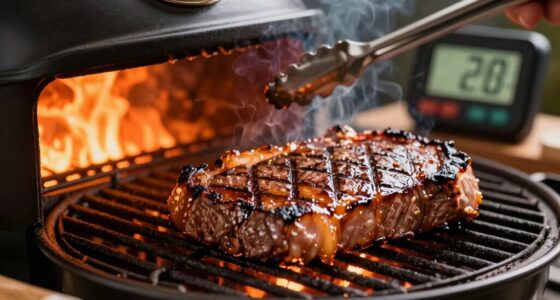
Grill flare-ups happen when flames ignite from excess grease, fat, or debris on your grill, often caused by fatty meats or too much oxygen fueling the fire. To prevent them, trim fats, keep your grill clean, and cook with indirect heat. Adjust vents and flames carefully to control flare-ups, and use a spray bottle for quick response. If you want to master safer grilling techniques, there’s more to discover.

Get kitchen gear delivered free with Prime
- Fast, free delivery on millions of items
- Prime Video, Amazon Music and more included
- Member-only deals all year
Key Takeaways
- Flare-ups are caused by grease ignition, excess fat, high flame height, and opening the lid during cooking.
- Prevent flare-ups by trimming meat fat, keeping the grill clean, and using indirect heat for fatty foods.
- Control smoke and flames by adjusting vents, managing oxygen flow, and keeping the lid closed during cooking.
- Use a spray bottle of water for quick, safe suppression of small flare-ups and avoid panicking.
- Maintain proper grill upkeep and monitor flames and smoke levels continuously for safe, effective control.

Have you ever experienced a sudden burst of flames while grilling? It’s startling and can be intimidating, especially if you’re not sure what caused it. Flare-ups happen when grease or drippings from your food ignite, creating a burst of flames that can quickly get out of control. To handle these moments effectively, understanding smoke management and flame height is essential. When flare-ups occur, managing smoke becomes critical because excess smoke can carry unwanted flavors or even cause respiratory issues. Keeping the lid closed during cooking helps control smoke production and limits oxygen supply to the flames. Additionally, adjusting your grill’s vents can help regulate airflow, reducing flame height and preventing flames from soaring unexpectedly. When flames get too high, it’s often due to excess grease, so trimming fat from meats beforehand can make a big difference. Using a two-zone setup — where one side of the grill is hotter than the other — allows you to move food away from flare-ups quickly, giving you better control over the cooking process. If a flare-up starts, don’t panic; instead, step back and assess the situation calmly. Opening the lid fully can introduce more oxygen, causing flames to grow larger, so it’s better to keep it partially closed to limit oxygen flow. If flames are still too high, you can try to reduce the flame height by closing the grill’s vents or adjusting the burner controls if available. Having a spray bottle filled with water nearby is also a handy tool to douse small flare-ups quickly — just a light mist to settle the flames without creating more smoke or steam. Always keep your grill clean by removing grease buildup and burnt food debris after each use, which markedly reduces the chance of flare-ups. Properly maintaining your grill not only keeps flare-ups at bay but also ensures even heat distribution, making your grilling safer and more enjoyable. When cooking fatty meats, consider using indirect heat instead of direct flames to minimize flare-ups and manage smoke better. Remember, patience and attentiveness are your best tools; don’t leave the grill unattended when it’s hot and flames are rising. Consistently monitoring flame height and smoke levels allows you to react swiftly before flare-ups escalate. Ultimately, understanding how to control smoke management and keep flame height in check gives you confidence, making grilling safer and more fun. With experience, you’ll be able to handle flare-ups efficiently, turning what could be a frustrating moment into a simple part of your grilling routine.
As an affiliate, we earn on qualifying purchases.
Frequently Asked Questions
Can Flare-Ups Occur With Gas and Charcoal Grills Equally?
Yes, flare-ups can occur with both gas and charcoal grills, though their causes differ. Gas grill design, like the placement of burners and vents, can influence flare-up frequency, while fuel types play a role too. Charcoal tends to produce more flare-ups due to fat drippings igniting, but gas grills aren’t immune. You should monitor your grill closely, keep the lid open when adding fuel, and clean grease buildup regularly to prevent flare-ups.
What Are the Signs of an Impending Flare-Up?
You might notice warning signs like sudden flames or increased smoke, which indicate a flare-up trigger. These signs often occur just before a flare-up, so stay alert. Other warning signs include excessive grease dripping, sizzling sounds, or a strong, burning smell. Recognizing these cues helps you prevent a flare-up, so keep an eye out for these signs and act quickly to control the situation before it worsens.
Are There Safer Alternative Cooking Methods to Avoid Flare-Ups?
Yes, you can avoid flare-ups by using safer alternative methods like indirect grilling or oven roasting. Indirect grilling keeps the flames away from the food, reducing flare-up chances. Oven roasting allows you to cook at steady temperatures without open flames. Both methods help you control heat and drippings, preventing flare-ups. Switching to these techniques keeps your cooking safer and more consistent, ensuring delicious results without the risk of flare-ups.
How Do Weather Conditions Influence Grill Flare-Ups?
Think of weather as a wild, unpredictable guest at your barbecue. Weather impact, especially wind effects, can intensify flare-ups by fanning flames and spreading sparks. Wind pushes oxygen into the grill, making flames leap higher, while humidity can sometimes help suppress fires. To keep control, shield your grill from gusts with a windbreak and monitor weather conditions closely, ensuring your cookout stays safe and enjoyable despite nature’s influence.
Does Marinating Meat Increase the Risk of Flare-Ups?
Marinating meat can increase the risk of flare-ups because marinade effects often include sugars and oils that drip onto the flames, causing sudden flare-ups. To guarantee meat safety, always marinate in the refrigerator and discard used marinade or boil it before reuse. Be attentive while grilling, and keep flare-ups under control to prevent charring or burning, which can compromise food safety and flavor.
As an affiliate, we earn on qualifying purchases.
Conclusion
To keep your grilling safe and enjoyable, understanding flare-ups is key. Remember, nearly 80% of grill fires start from flare-ups caused by fat and grease. By keeping your grill clean, managing fat drippings, and controlling heat, you can prevent those unexpected flames from ruining your meal. Stay vigilant, and your next barbecue will be both delicious and safe—flame-free. Happy grilling!
grill cleaning brush and scraper
As an affiliate, we earn on qualifying purchases.
As an affiliate, we earn on qualifying purchases.
As an affiliate, we earn on qualifying purchases.
Halloween Picks
halloween
As an affiliate, we earn on qualifying purchases.