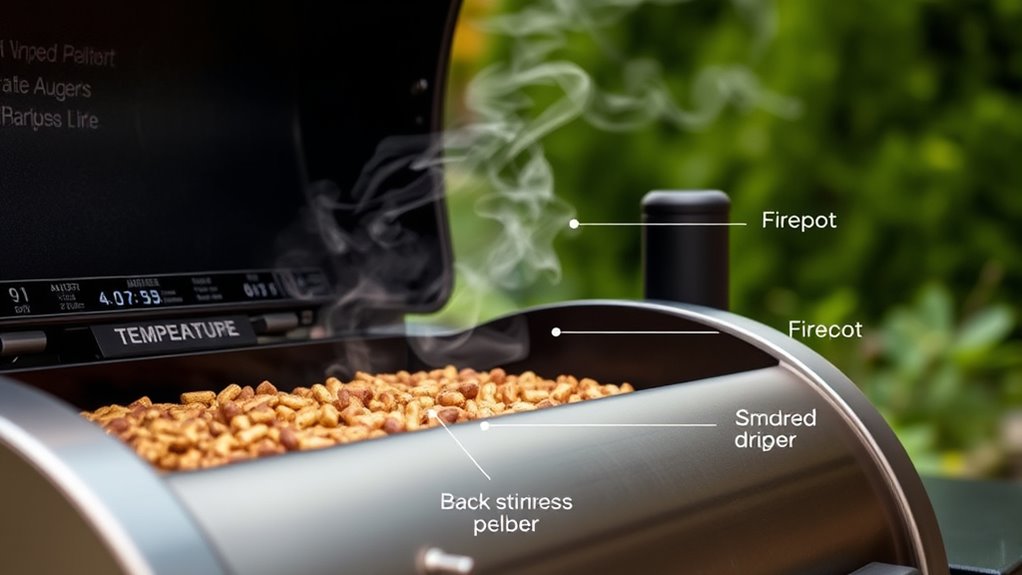

A pellet grill works by using a hopper to store wood pellets, which are then fed into a firepot by an auger. An electronic igniter sparks to ignite the pellets, creating heat and smoke. A control board and fans regulate airflow and temperature, ensuring consistent cooking. The smoke infuses your food with flavor, while automation makes operation easier. If you keep exploring, you’ll discover how these components work together for perfect results.

Get kitchen gear delivered free with Prime
- Fast, free delivery on millions of items
- Prime Video, Amazon Music and more included
- Member-only deals all year
Key Takeaways
- Pellet grills use wood pellets as fuel, which are automatically fed into a firepot by an auger system to generate heat and smoke.
- Digital control boards monitor temperature via probes, adjusting the auger and fans for precise, consistent cooking.
- An electronic igniter sparks the pellets, creating a controlled flame that sustains steady combustion and smoke production.
- Fans circulate airflow and manage moisture, ensuring even heat distribution and flavor infusion without hot spots.
- Regular maintenance, such as cleaning ash and checking pellet flow, helps ensure reliable operation and consistent results.
What Is a Pellet Grill and Why Is It Popular?
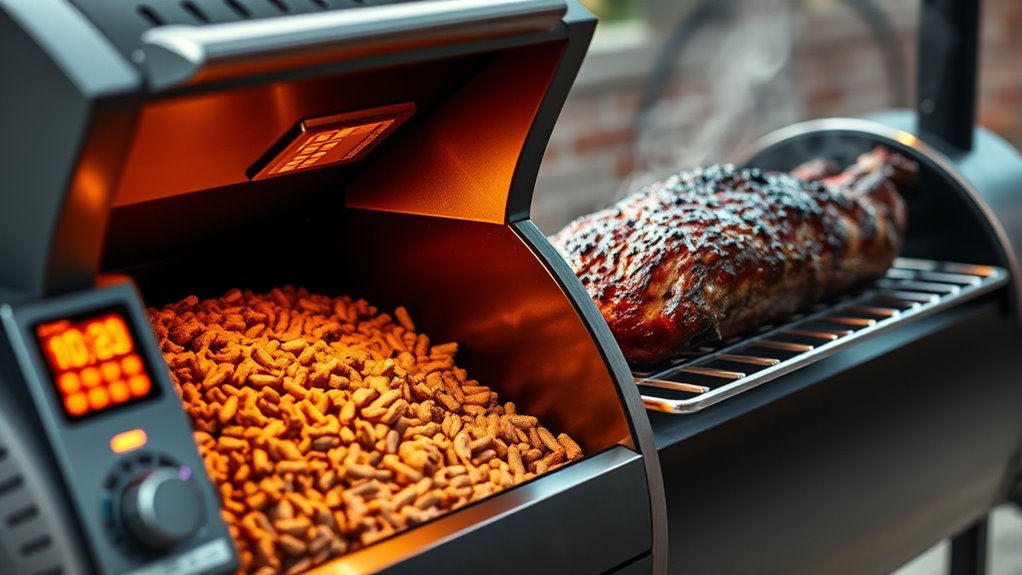
Have you ever wondered what makes pellet grills so popular among barbecue enthusiasts? The answer lies in their versatility and ease of use. Pellet grills use different wood types, like hickory, apple, or mesquite, to infuse food with rich, smoky flavors. This wide range of wood options allows you to customize your taste experience. Additionally, pellet grills are low-maintenance compared to traditional smokers, making them perfect for beginners and busy cooks alike. Proper grill maintenance, such as cleaning the hopper and ensuring the auger runs smoothly, keeps your grill performing at its best. Their consistent temperature control and simple operation make pellet grills a favorite for both casual and serious grillers. That’s why they’ve gained such popularity in the barbecue world.
The Core Components of a Pellet Smoker
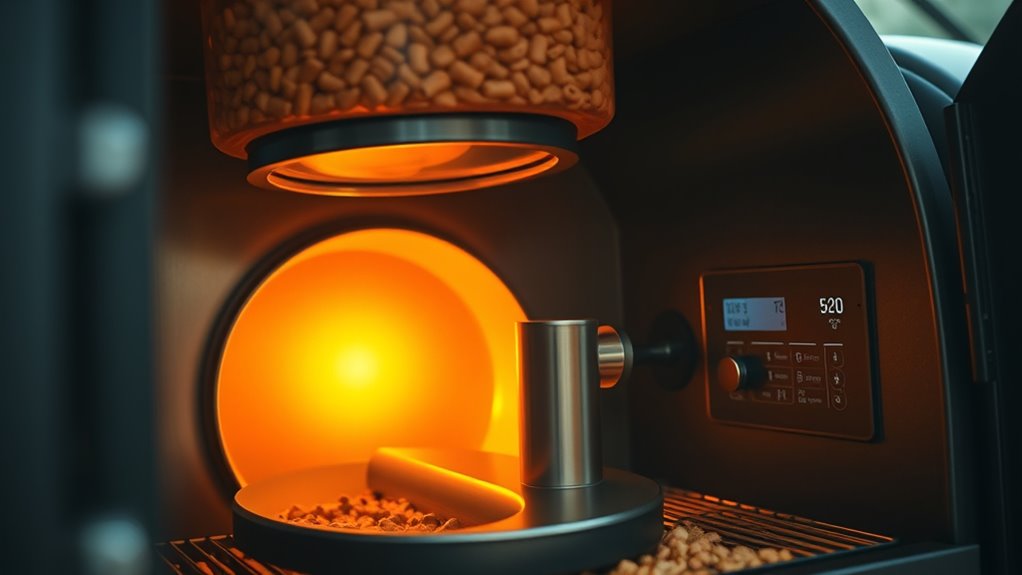
Understanding the core components of a pellet smoker is essential to appreciating how it functions. At its heart is the firepot, where the pellets are ignited to produce heat and smoke. To maintain consistent cooking temperatures, most pellet smokers include digital temperature probes, allowing you to monitor and adjust heat precisely. Instead of traditional wood chips, some models offer wood chip alternatives, such as infused pellets or flavor-enhanced options, giving you more variety. An auger system feeds the pellets from the hopper into the firepot steadily, ensuring continuous operation. The control board processes data from the digital probes, regulating the auger and fan to keep your desired temperature. These components work together seamlessly to deliver precise, flavorful cooking results with minimal effort on your part.
How the Pellet Hopper Feeds Fuel
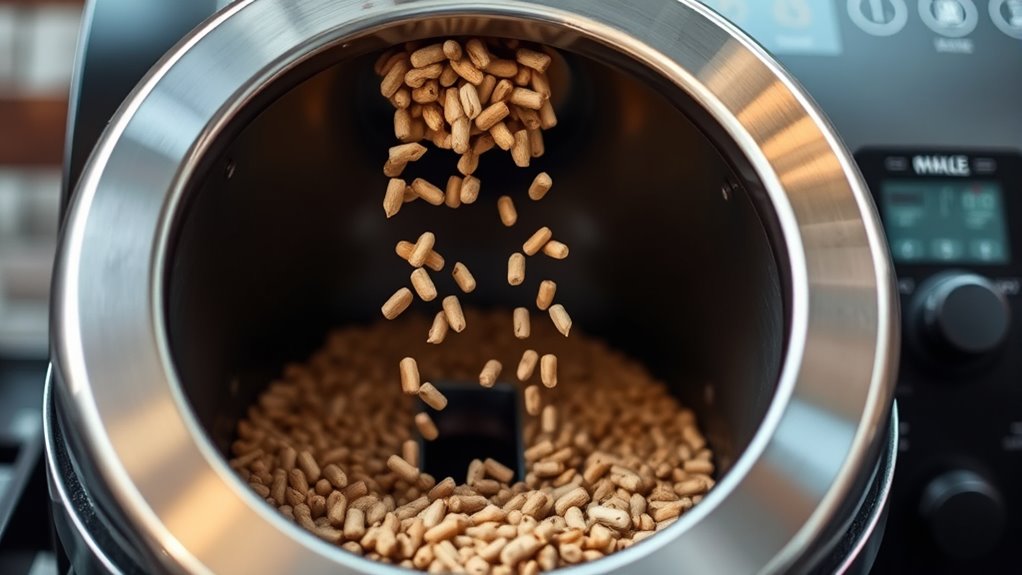
Your pellet hopper stores enough fuel to keep your grill running for hours, depending on its capacity. An automated system feeds pellets into the firebox steadily, ensuring consistent heat without manual refills. The feeding mechanism works smoothly, moving pellets from the hopper to the burn pot as needed to maintain your desired temperature.
Hopper Storage Capacity
Ever wondered how a pellet grill keeps fueling itself during long cooks? It all comes down to the hopper storage capacity. A larger hopper means you can load more pellet grain, allowing for extended cooking without frequent refilling. This not only saves you time but also maintains consistent temperature and flavor infusion throughout your cook.
Think of it as your grill’s fuel tank—more capacity equals fewer interruptions. Some models feature convenient features like:
- Easy-to-refill lids for quick access
- Clear windows to check pellet levels
- Secure lids to prevent spills
- Compatibility with various pellet types for flavor variety
Knowing your hopper capacity helps you plan longer cooks and ensures your pellet smoker operates smoothly, delivering rich smoky flavors every time.
Automated Fuel Delivery
Automated fuel delivery systems guarantee that your pellet grill maintains a consistent temperature by precisely feeding pellets from the hopper into the firepot. This process is controlled by a motorized auger that steadily moves pellets, ensuring a steady supply of fuel. Many pellet grills feature a digital display, allowing you to monitor pellet levels and adjust settings easily. Some models even offer remote monitoring, so you can keep an eye on your grill’s status from anywhere using your smartphone. This automation removes the need for constant manual refilling and guesswork, making your grilling experience more convenient. By delivering pellets smoothly and consistently, the system helps you achieve perfectly cooked meals without interruption or temperature fluctuations.
Feeding Mechanism Operation
How does the pellet hopper actually feed fuel into your grill? It uses an auger system that gradually pushes pellets into the firepot, ensuring a steady burn. This consistent feed is key to maintaining precise temperatures and flavor infusion. As you select different pellet types, you influence both the smoke profile and flavor, making your cooking more customizable.
Here’s how it works:
- Pellets sit in the hopper, ready to be fed
- An auger motor turns, pushing pellets forward
- Pellets drop into the burn pot, igniting with controlled airflow
- The process repeats smoothly, keeping your grill at the perfect temp
This automated feeding system simplifies cooking and allows you to explore various pellet blends for unique flavors and smoke levels.
The Role of the Auger in Pellet Delivery
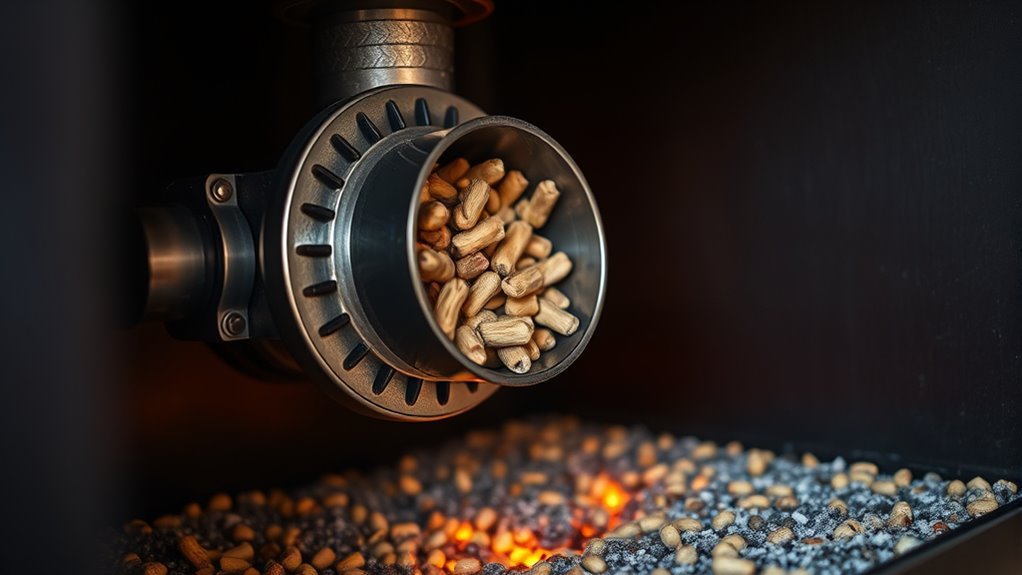
The auger is the engine behind consistent pellet delivery, ensuring your grill stays fueled throughout cooking. It moves pellets smoothly from the hopper to the fire pot, controlling the feed rate. This precise mechanism helps maintain steady heat, making your grilling experience more reliable.
Auger Mechanism Functionality
The auger in a pellet grill is responsible for delivering the right amount of fuel from the hopper to the burn pot. It moves pellets steadily, controlling airflow and heat. To keep it working smoothly, regular auger maintenance is essential—clean out dust and debris that can cause jams. Proper pellet storage tips help prevent moisture, which can clog the auger and reduce efficiency. When pellets are dry and stored in a cool, dry place, the auger can feed fuel without interruption. Keep an eye on the auger’s motor and gears, ensuring they move freely. If you notice feeding issues, check for blockages or buildup. Proper care keeps your pellet grill functioning reliably, delivering consistent heat and flavor.
Pellet Feeding Process
With the auger motor engaged, pellets move steadily from the hopper toward the burn pot, guaranteeing a consistent fuel supply. As the pellets feed through the auger, they begin to generate wood smoke, which is vital for flavor infusion into your food. This controlled delivery allows the smoker to maintain steady heat and produce a rich, smoky aroma. The auger’s precise operation prevents interruptions, so you get continuous smoke and flavor without gaps. The process guarantees that the right amount of pellets reaches the burn pot at all times, optimizing smoke production. This consistent pellet feeding mechanism is essential for achieving that perfect balance of flavor infusion and heat, making your smoked dishes both delicious and aromatic.
Consistent Heat Regulation
Consistent heat regulation in a pellet grill relies heavily on the precise operation of the auger, which controls how many pellets are delivered to the burn pot. When the thermostat detects a temperature drop, the auger feeds more pellets, raising the heat. Conversely, it slows down when the desired temperature is reached. To keep this process smooth, consider these tips:
- Use high-quality pellets for reliable burning and consistent heat.
- Regularly clean your grill to prevent pellet buildup that could jam the auger.
- Avoid moisture in your pellets, which can affect feeding and heat output.
- Check the auger for blockages during grill cleaning to maintain proper pellet flow.
Good pellet quality and regular grill cleaning ensure your auger functions efficiently, maintaining steady temperatures for perfect results.
The Combustion Process: Igniting the Pellets
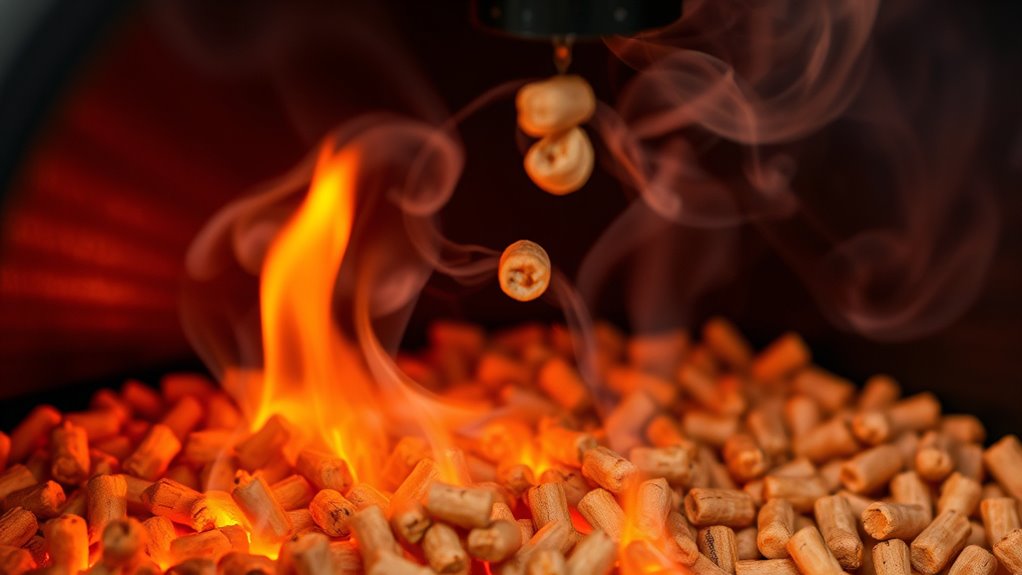
Have you ever wondered how your pellet grill gets started? It all begins with igniting the pellets, which requires reaching the right ignition temperature. When you turn on your grill, the igniter rod heats up and sparks flame ignition inside the firepot. Once the pellets reach their ignition temperature, they start to smolder and produce a steady flame. The flame ignition then spreads, igniting more pellets and creating the combustion needed for heat. This process is controlled by the grill’s electronics, which monitor temperature and adjust the igniter accordingly. The initial flame is vital—it kicks off the combustion process and guarantees a reliable start. From there, the grill maintains consistent heat as the pellets continue to burn steadily.
Temperature Control and Maintenance
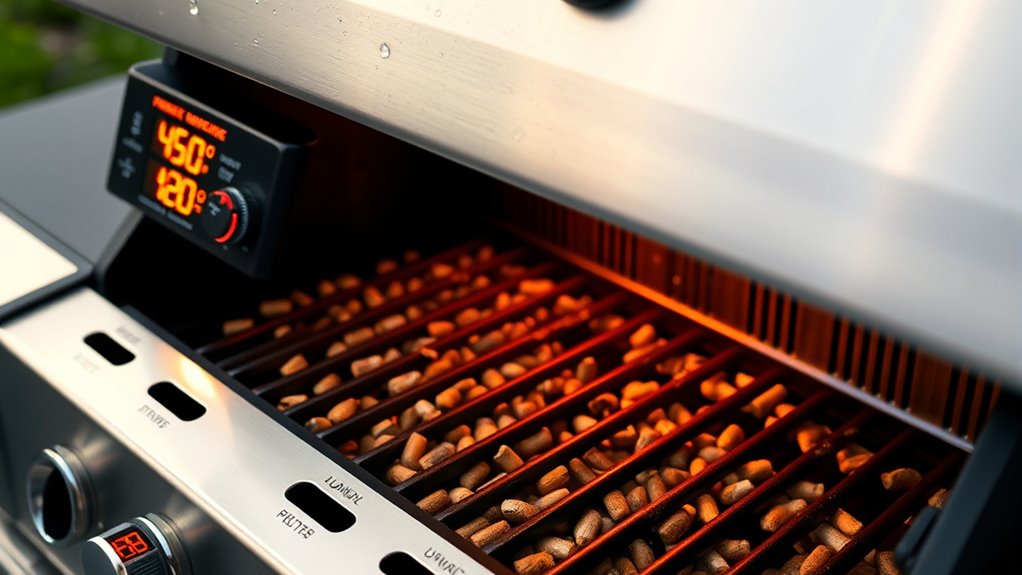
Once the pellets are ignited and burning steadily, maintaining the right temperature becomes the next focus. Achieving temperature stability is key to perfect results. To do this effectively, you’ll need to follow simple maintenance routines and monitor your smoker closely.
- Regularly check the digital control panel to keep the set temperature.
- Clean out ash and grease build-up to prevent airflow issues.
- Calibrate your grill periodically for accurate temperature readings.
- Keep the hopper filled with quality pellets to avoid fluctuations.
These steps help you maintain consistent heat and prevent fluctuations. Proper attention to these routines ensures your pellet grill functions smoothly, giving you reliable temperature control for every cook.
Smoke Generation and Flavor Production
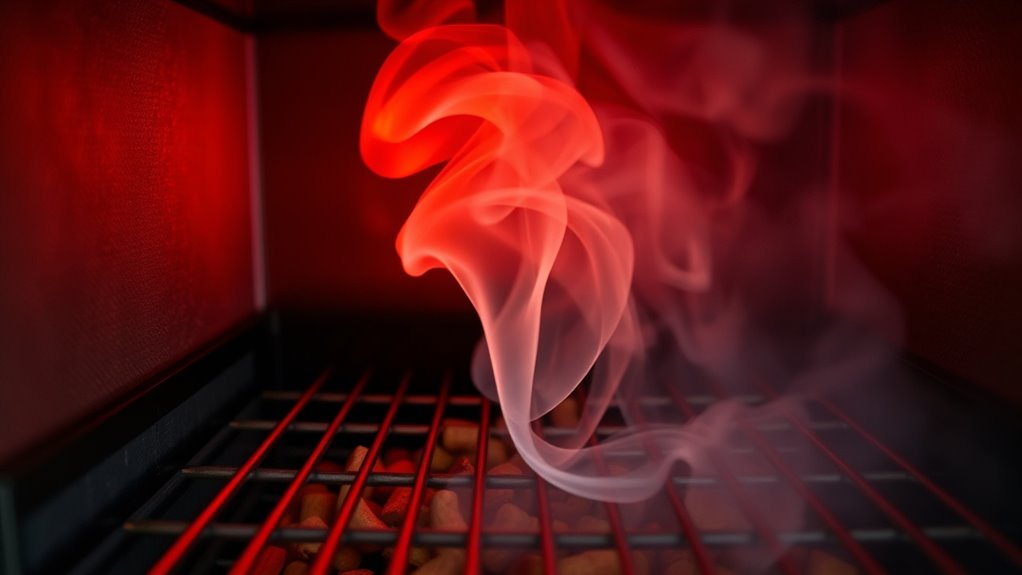
To produce rich smoke and flavor, you need to understand how your pellet grill generates smoke during the cooking process. When the pellets burn, they produce smoke that infuses your food with distinct flavors. If you want to vary the smoky profile, you can use wood chip alternatives like chunks or chips, which burn differently and influence flavor intensity. Proper smoke generation is also essential for smoke ring formation, the pink layer that indicates good smoke absorption. Achieving a consistent smoke ring depends on maintaining ideal smoke production without overwhelming the meat. Your grill’s combustion chamber heats the pellets just enough to produce continuous smoke, ensuring your food develops the desired smoky aroma and flavor. This process is key to making flavorful, perfectly smoked dishes.
The Importance of the Fans and Ventilation System
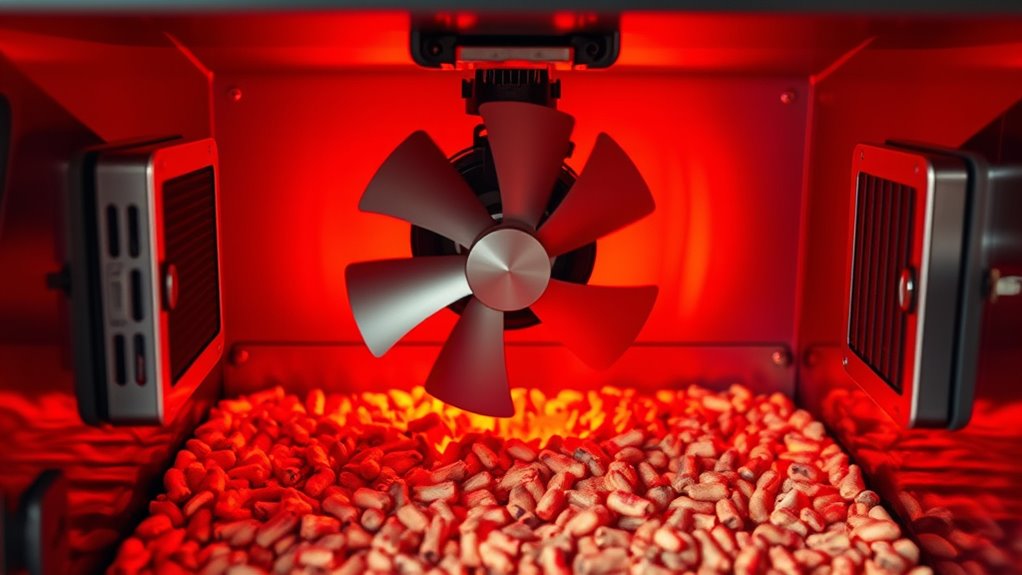
Fans and the ventilation system play a crucial role in maintaining consistent temperature and smoke flow throughout your pellet grill. Proper airflow efficiency depends heavily on fan placement, ensuring air circulates evenly. When the fan is positioned correctly, it pushes smoke and heat smoothly, preventing hot spots and temperature fluctuations. Good ventilation also helps control moisture levels, keeping your food tender and flavorful. If the fan is poorly placed, airflow may become uneven, leading to inconsistent results. So, check that your grill’s fan is positioned strategically for peak performance. Remember, a well-designed ventilation system keeps everything running smoothly, giving you better control and more delicious, evenly cooked meals every time.
Advantages of Using a Pellet Grill Over Traditional Methods
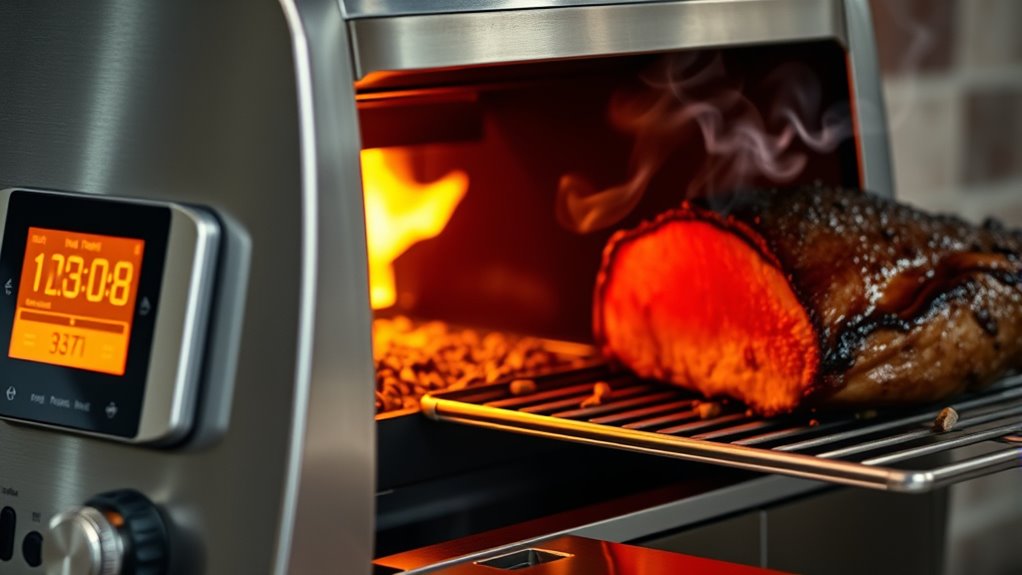
Pellet grills offer a level of convenience and consistency that traditional methods often can’t match. With precise temperature control, you can cook your food safely and evenly, enhancing food safety. Unlike charcoal or wood smokers, pellet grills produce less ash and mess, making cleaning maintenance simpler and quicker. You won’t have to spend extra time scrubbing or worrying about flare-ups, which helps keep your cooking environment safer. Additionally, pellet grills often come with digital controls and automatic feeders, reducing the chance of human error. This consistency ensures your food is cooked properly every time, reducing the risk of undercooked or overcooked meals. Overall, these advantages make pellet grills a more reliable, safer, and easier-to-maintain option for grilling enthusiasts.
Frequently Asked Questions
Can I Use Any Type of Wood Pellets in My Grill?
You can’t use any type of wood pellets in your grill; wood quality and pellet compatibility matter. Stick to high-quality pellets designed for your specific pellet smoker to guarantee proper combustion and flavor. Cheaper or incompatible pellets can cause issues like clogging or uneven heating. Always check your grill’s manufacturer recommendations to choose the right pellets, and avoid blends that might not burn consistently or produce the desired smoke flavor.
How Long Do Pellet Grills Typically Last?
Coincidentally, your pellet grill can last anywhere from 3 to 10 years depending on pellet quality and how well you maintain it. Regular cleaning, using high-quality pellets, and proper storage extend its grill lifespan. Cheaper pellets may cause more wear and tear, reducing longevity. With good care, you’ll enjoy consistent grilling for years, making your investment worthwhile and ensuring delicious meals for a long time.
Are Pellet Grills Suitable for High-Temperature Cooking?
Yes, pellet grills are suitable for high-temperature cooking. They offer precise temperature control, allowing you to reach temperatures up to 500°F or more, perfect for searing steaks. Their fuel efficiency means you don’t have to worry about wasting pellets during intense cooking. Just set the desired temperature, and the grill automatically adjusts, ensuring consistent heat and ideal results for high-heat recipes.
Do Pellet Smokers Require Special Cleaning or Maintenance?
You’ll want to keep your pellet smoker in top shape with regular cleaning and maintenance. Imagine clearing away ash and grease, much like tidying your workspace, making sure fuel efficiency stays high. A cleaning frequency of every few cooks prevents buildup and keeps your smoker running smoothly. By maintaining it, you ensure even heat, better flavor, and longer-lasting performance, making every barbecue a delicious success.
Is There a Risk of Pellet Jams During Operation?
Yes, there’s a small risk of pellet jams during operation. To prevent this, make sure your pellet feed system stays clear and free of debris, and use quality pellets to guarantee smooth feeding. Regularly check the auger and hopper for blockages, and keep the system clean. Proper jam prevention helps maintain consistent heat and ensures your smoker works efficiently without interruptions.
Conclusion
Now that you understand how a pellet smoker works, you can see it’s a true game-changer for flavorful, effortless grilling. With its precise temperature control and consistent smoke, you’re better equipped to cook like a pro. Don’t overlook the power of knowing the inner workings—it’s the secret sauce to mastering your grill. Once you’re in the know, you’ll realize that this tool is worth its weight in gold, making every cookout a guaranteed hit.
Halloween Picks
halloween
As an affiliate, we earn on qualifying purchases.